
What sports kit decorators need from a press
If you decorate teamwear, you are usually working on polyester tops, training tees, bibs and track jackets, often in short runs and tight deadlines. One order may be ten netball shirts for a local club, the next could be a school hockey set with numbers on the back, initials on the chest and sponsor graphics on sleeves. The press has to stay even across the platen, open and close smoothly, and keep temperature stable when you are moving from one job to the next.
For this type of work, most shops want reliable heat and pressure control, a platen size that suits adult garments and youth sizes, plus enough speed to manage match-day deadlines. In Gauteng especially, where orders can move from quote to print in the same afternoon, there is little room for rework. A press that heats unevenly will lift edges, scorch prints or leave patches where the transfer did not bond properly.
Typical flat press set-up for kit work
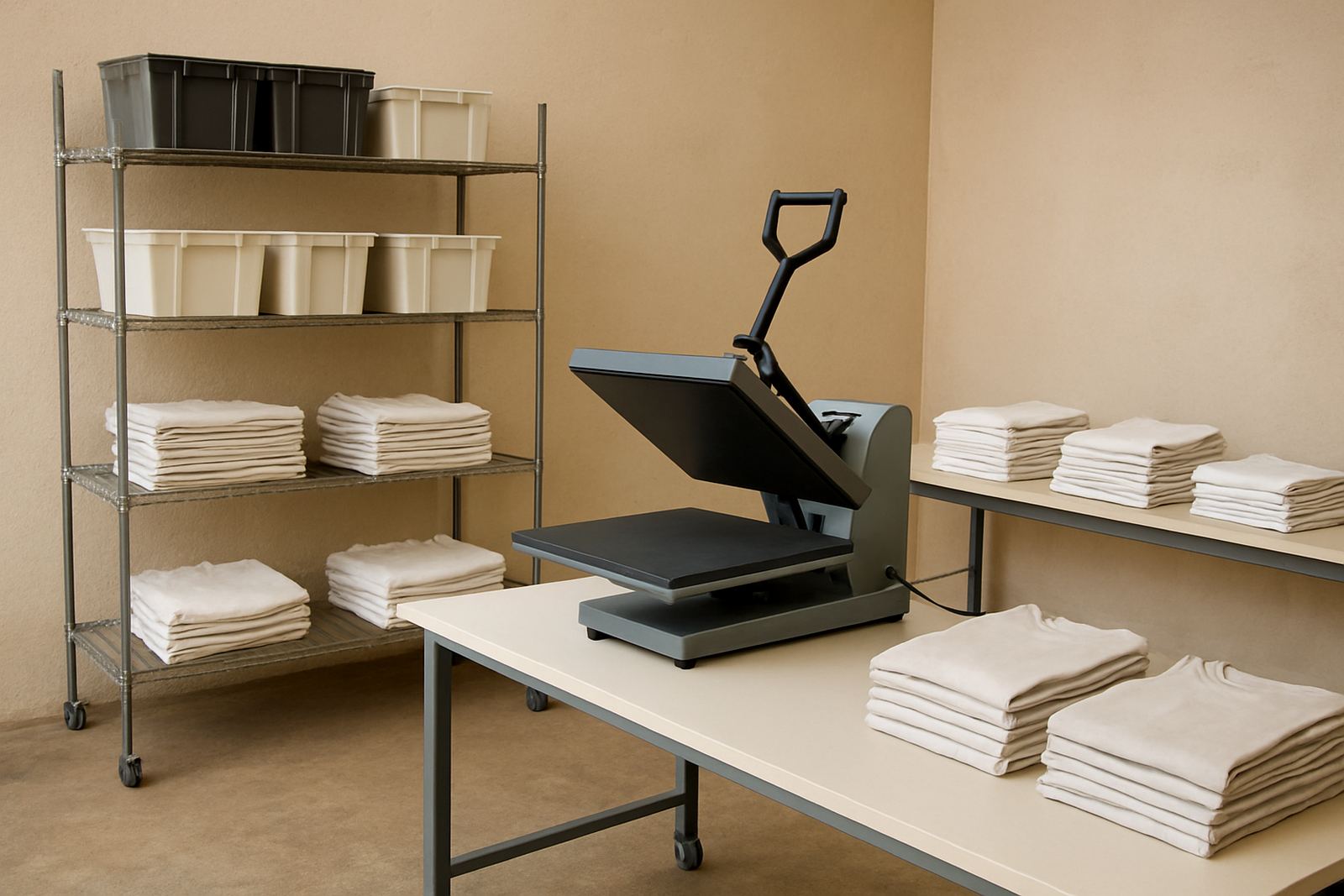
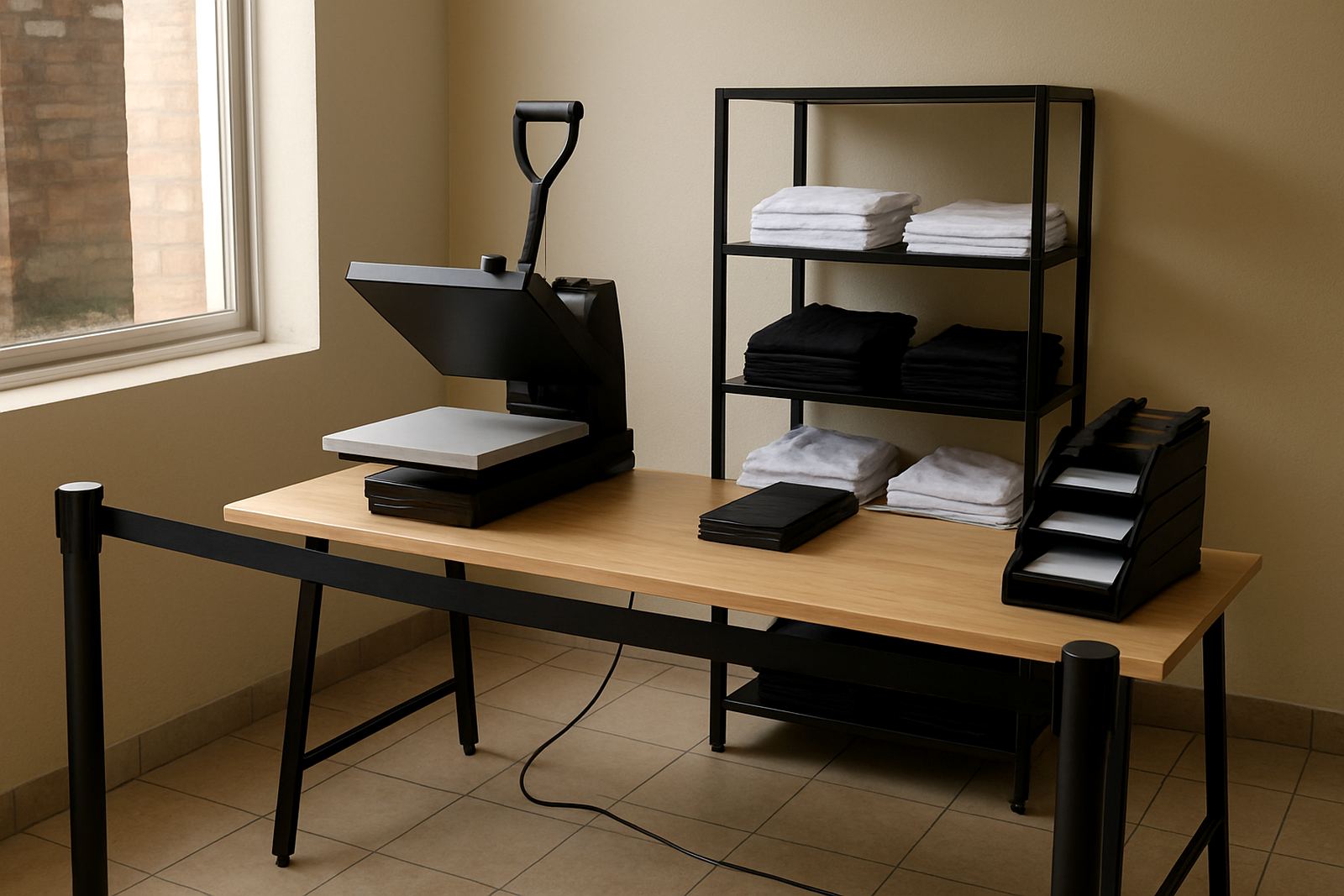
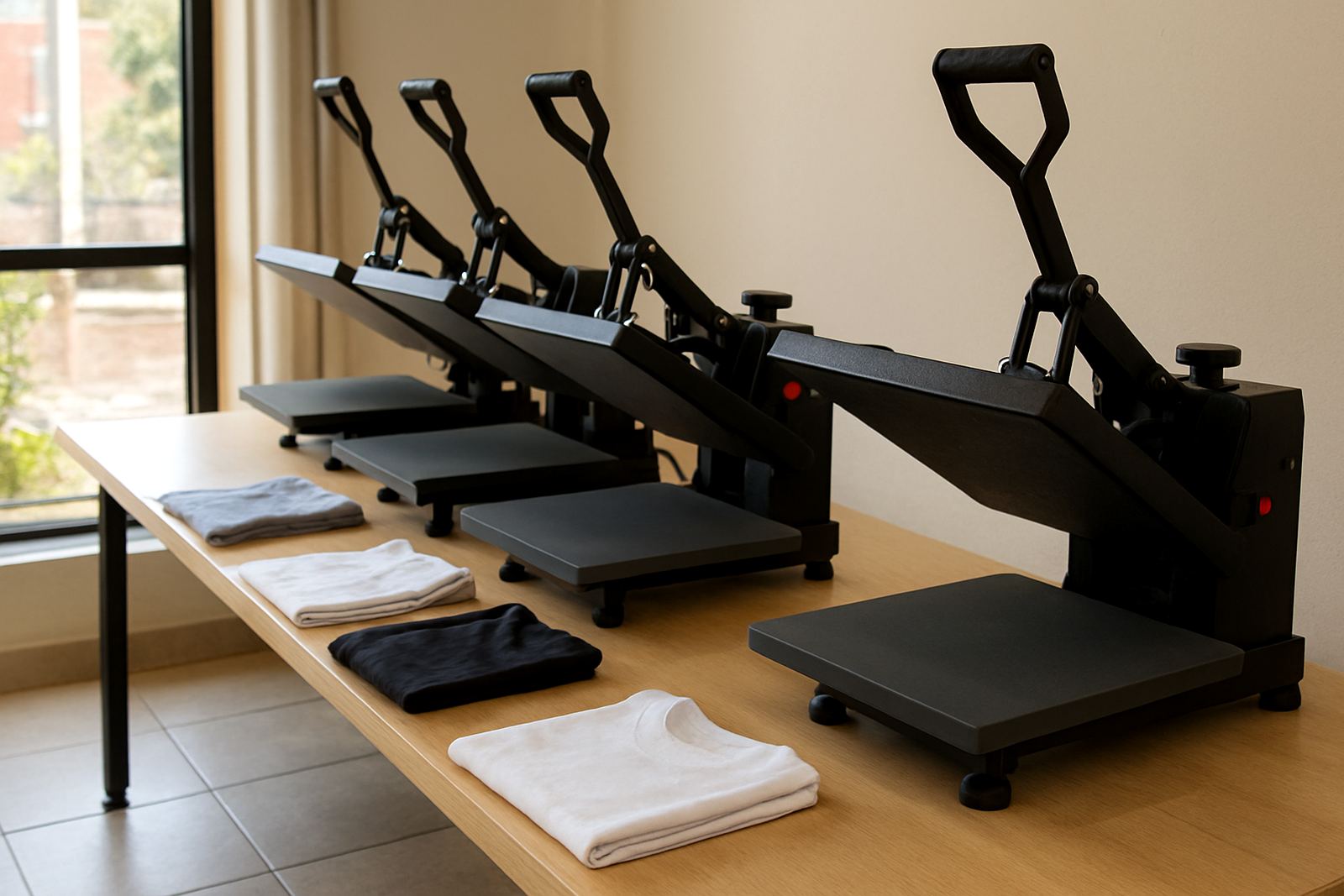
A practical sports kit set-up does not need to be complicated. Many smaller decorators start with one main flat press for front and back applications, then add a smaller platen for sleeves, shorts or smaller chest logos. If you are doing a lot of school and club work, a second unit can help when you need one station for numbering and another for sponsor graphics or heat application film.
- Main flat press for full front and back applications
- Smaller platen for sleeves, shorts, caps or youth garments
- Heat resistant tape, pressing pillows and alignment marks
- Spare lower pad covering for fast turnaround when one gets marked
- Digital temperature and timer control for repeat jobs
For shops in humid coastal areas like Durban or Cape Town, keeping transfers dry and storing garments properly matters just as much as the press itself. Moisture in the room can affect adhesion, and a garment that has picked up damp air may need a short pre-press before the transfer goes on.
Layout and planning for names, numbers and sponsor logos
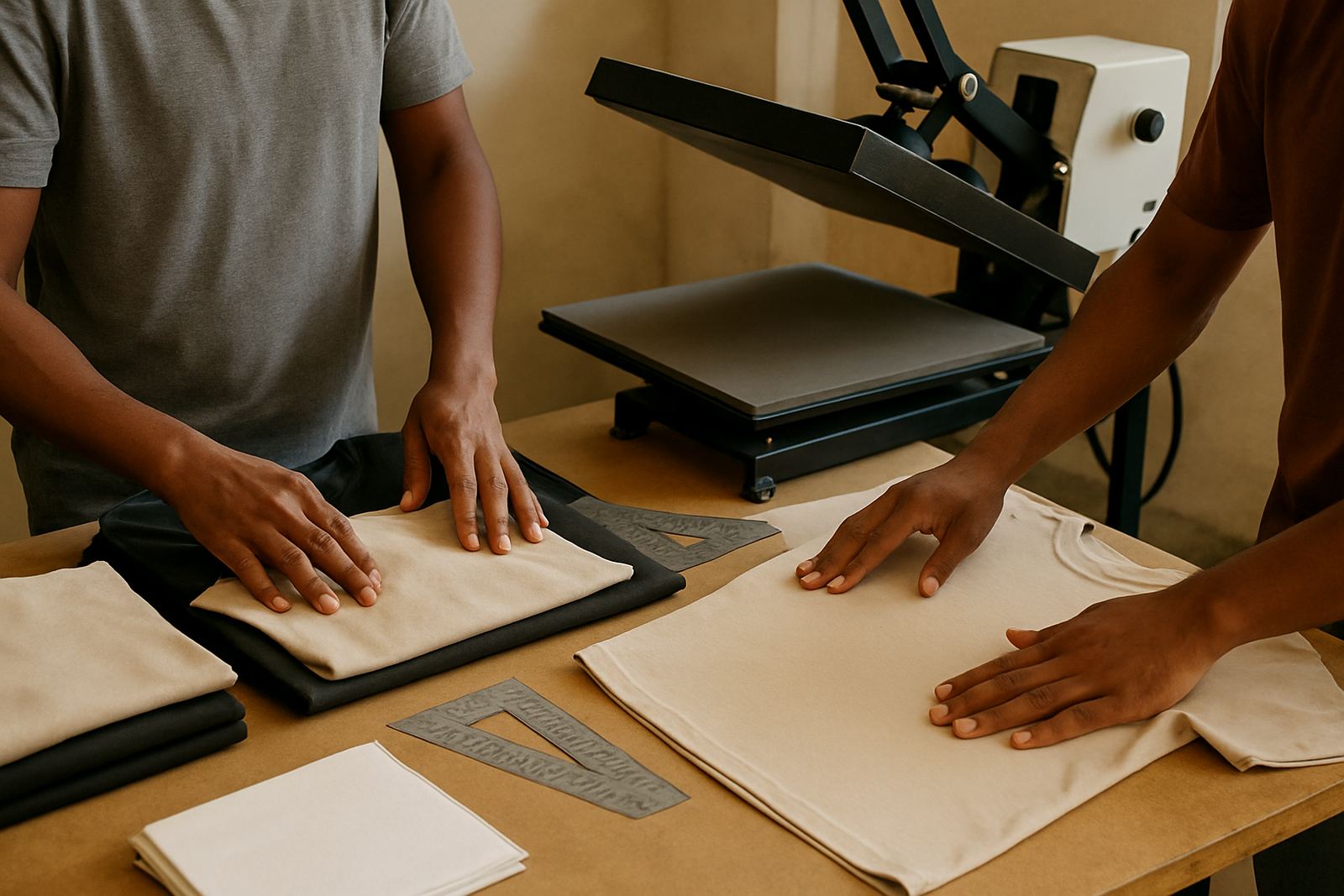
Good layout planning saves time and cuts waste. Sports kit jobs often involve repeat sizes, so a clear marking system makes the workflow easier. Keep a fixed position for chest logos, a second guide for numbers and a third for sleeve markings. If you do school orders, it helps to record the size breakdown and name list before you start pressing. That avoids mixing up a medium and a large which may look close on the bench but not on the player.
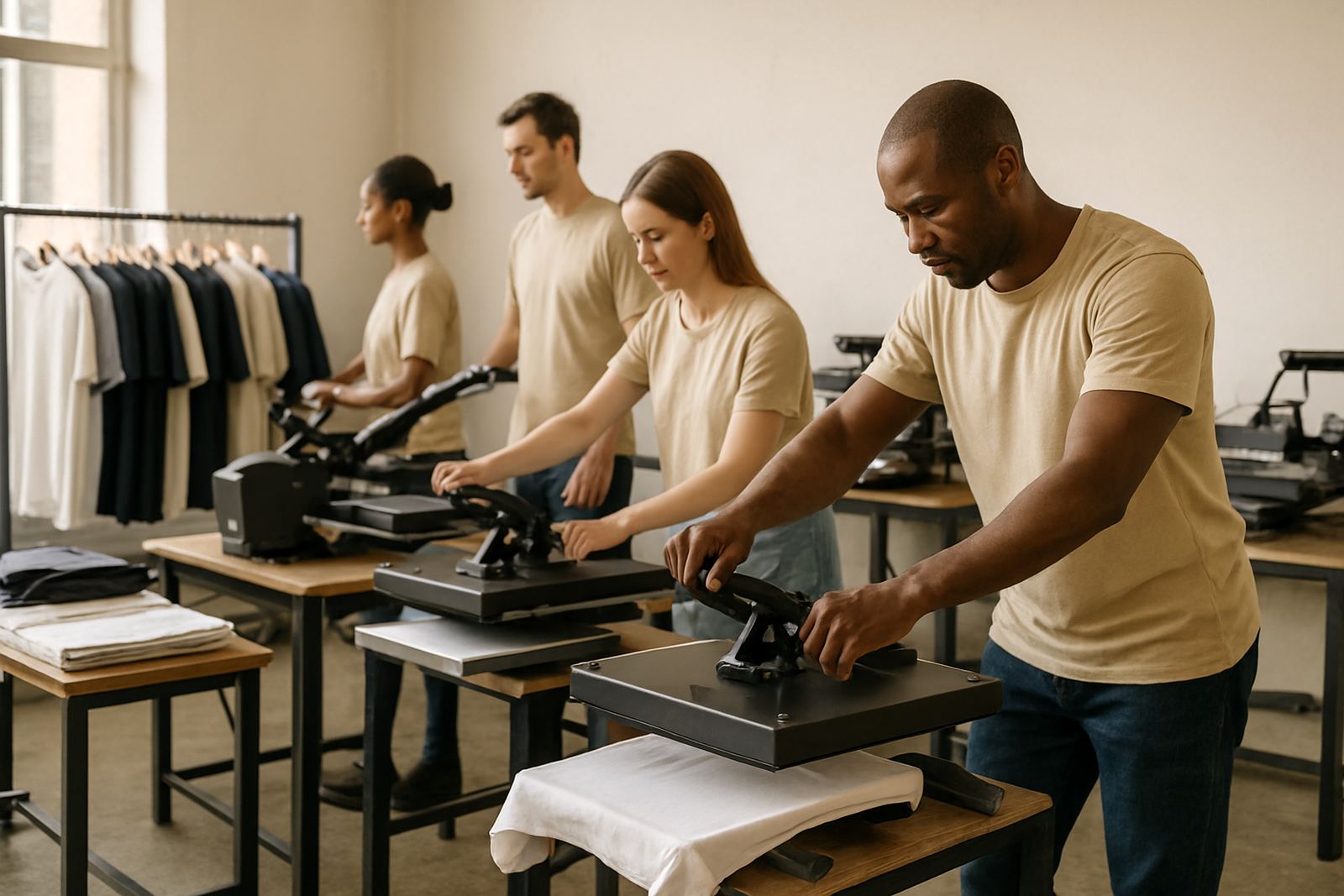
For resellers and print shops, the best results usually come from setting up a routine: check garment fabric, confirm transfer type, test one sample item, then run the batch in a consistent order. If the kit is sublimated or has a textured finish, you may need a different pressure setting and a shorter press time. A proper setup also helps when you are working with municipal or club orders that need matching branding across many garments.
- Confirm garment fabric before applying any transfer
- Test one item for heat, pressure and finish
- Use a ruler or guide for repeat placement
- Keep a written record of size, number and name changes
- Allow garments to cool as needed before packing
Common mistakes that slow down kit production
Most problems in sports kit decoration come from small process errors. Too much pressure can flatten the fabric and make the print look distorted. Too little pressure leaves corners lifting after washing. Pressing over seams, zips or thick stitching often causes uneven bonding. Another common issue is rushing garment prep, especially when the fabric still holds moisture from storage or transport.
Temperature errors are another regular fault. Some operators set the press too hot to save time, then end up with shiny marks or damaged transfers. Others keep the machine too cool and wonder why names peel after the first wash. If you are working with a busy teamwear schedule, it pays to check the controller, the pad condition and the platen surface regularly. A worn pad or damaged cover can affect every job that passes through the press.
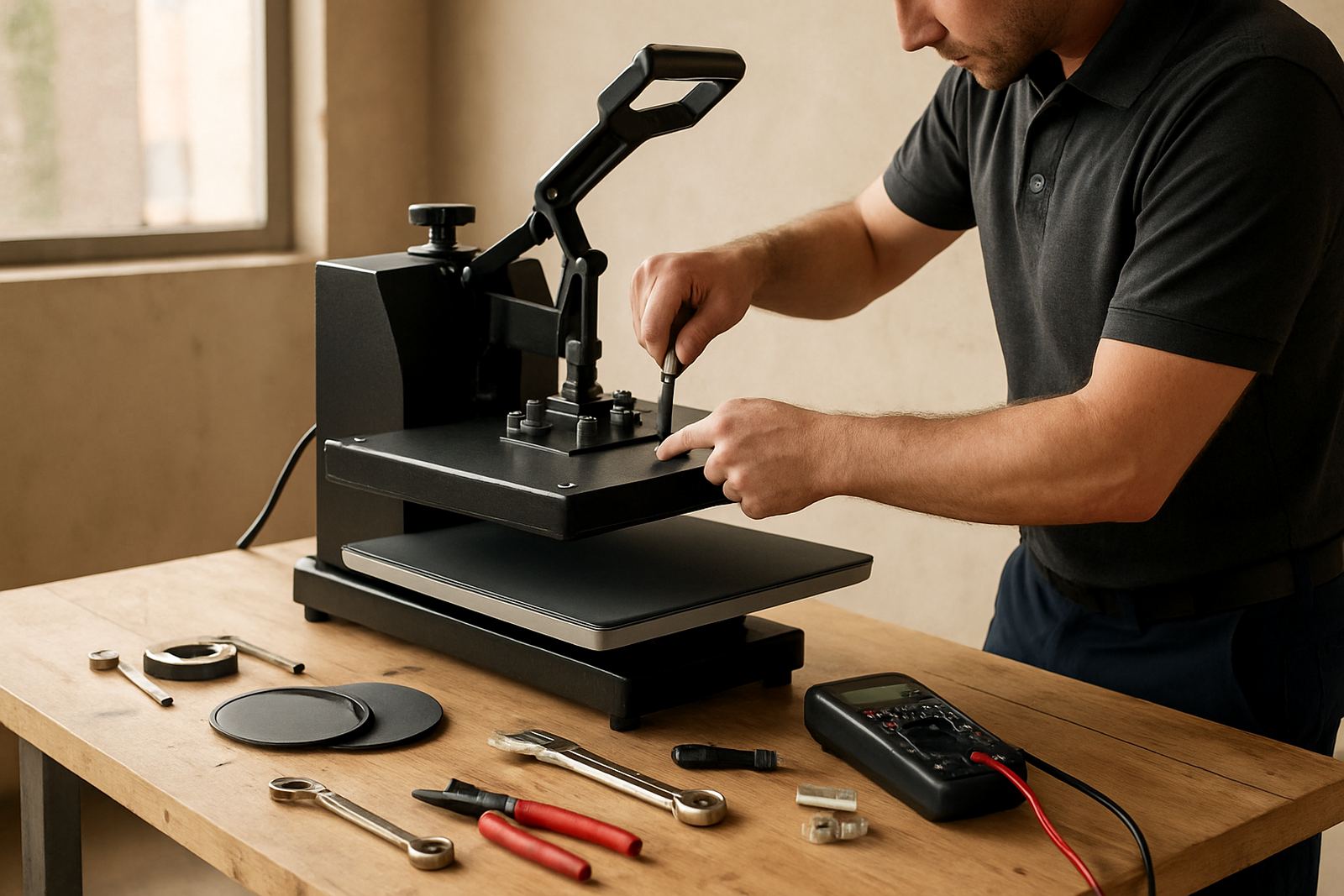
In our workshop, we often see machines that need temperature checks, pressure adjustments or controller repairs after being used hard for league seasons and school festivals. Preventive servicing before the busy months can save you a weekend of panic when a full order is waiting.
Budget ranges for South African decorators
Budgets vary depending on volume, size and whether you need a single press or a small workshop set-up. A starter press for hobby or light team orders may sit in a lower budget band, while a heavier daily-use unit for a print shop or reseller setup costs more. It is better to buy the right platen size and control system from the start than to replace a too-small press after a few months.
As a general guide, sports kit decorators in South Africa can expect the following ranges, depending on the machine size and features:
- Entry-level flat press for light use: around R6,000 to R12,000
- Mid-range unit for regular club and school orders: around R12,000 to R25,000
- Heavier workshop press with stronger build and better controls: around R25,000 to R45,000+
- Training, setup and first-time installation support: priced according to location and equipment needs
Courier supply is available nationwide, while Midrand, Johannesburg, Pretoria, East Rand and West Rand clients often use on-site setup and handover. For Durban, Cape Town and Bloemfontein, we help plan the install and support the handover so the press arrives ready for work.
Support that keeps the orders moving
Sports kit decoration is time-sensitive, especially when school fixtures, tournaments and sponsor deadlines all land in the same week. That is why support matters as much as the machine itself. FlatPress supplies new press setup, operator training, phone tech support, temperature checks, pressure adjustments, element replacements, controller repairs, pad and covering, pneumatic line service, preventive servicing, spares supply and loan unit support.
Our team works from Midrand and supports small garment decorators, hobbyists and professional print shops across Gauteng and nationwide. Mandla van Rensburg leads the business, with support from Ntombifuthi Xaba in sales, Riaan Ferreira in technical management, Kelebogile Mabena in training, Ridwaan Peters in the workshop, Nandi Dlamini in customer support and Willem Botha on logistics and installations. If your press goes down during a busy run, we aim to get you back to production with the right parts and practical guidance, not guesswork.
Whether you are supplying local clubs in Johannesburg or handling reseller orders for schools across the country, the right flat press setup makes the work cleaner and faster and helps keep repeat business coming in.