
What busy print shops need from a flat press
In a production shop, a flat heat press has to do more than press a shirt now and then. It needs to recover heat quickly, close square every time, and cope with back to back runs of transfers, names, numbers, labels and short orders without drifting out of spec. That matters whether you are running one machine or three, because one bad press can mean a reprint, a waste of vinyl, or a delayed delivery to a client in Johannesburg, Pretoria or further afield.
For print shops working on schoolwear, promotional garments and small brand orders, the real test is repeatability. Temperatures should stay steady, pressure should feel the same across the platen, and the timing should be reliable across a full day. A press that is fine for hobby use can struggle in a shop where operators change shifts and the machine is used hard from morning to late afternoon.
Typical equipment set for production work
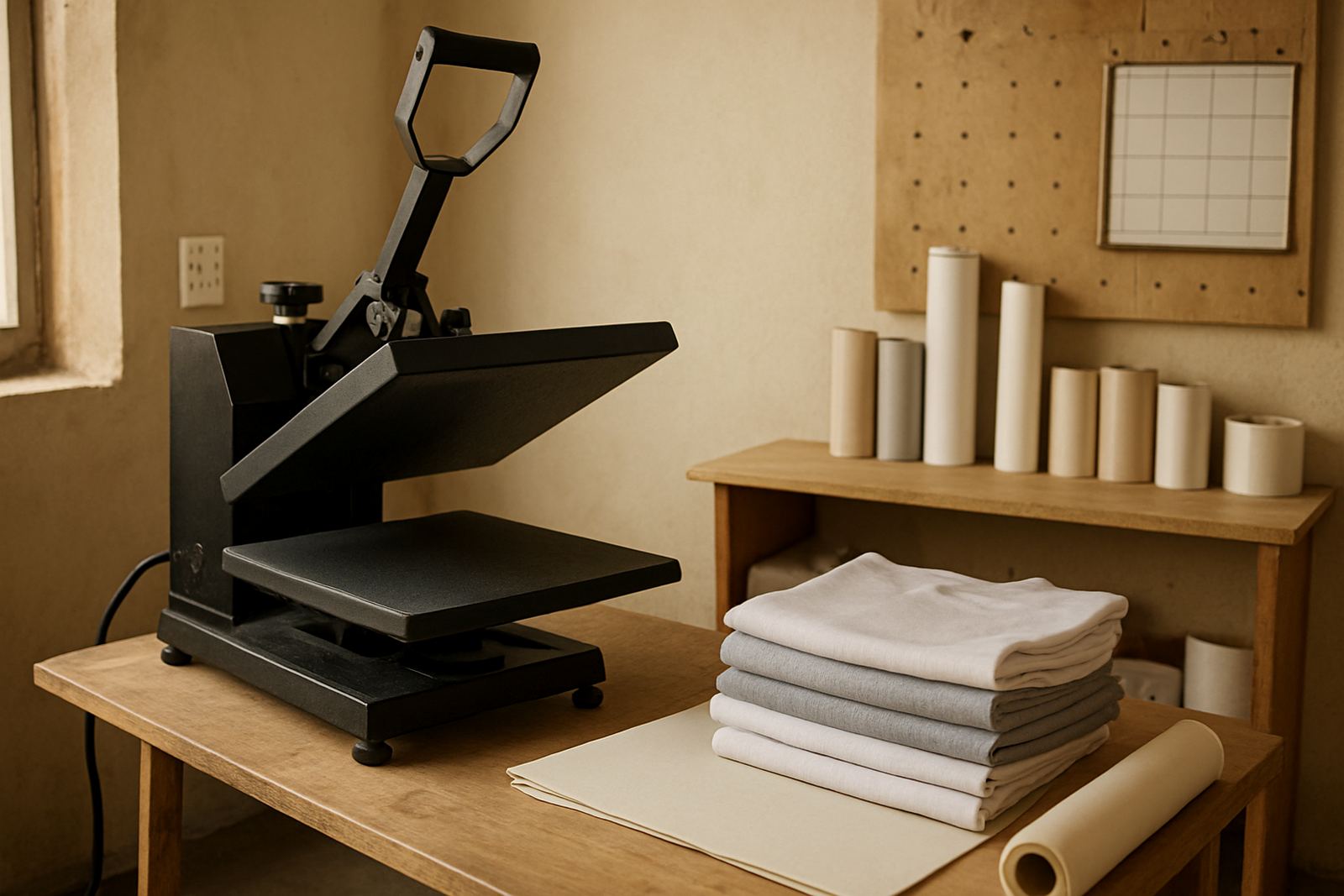
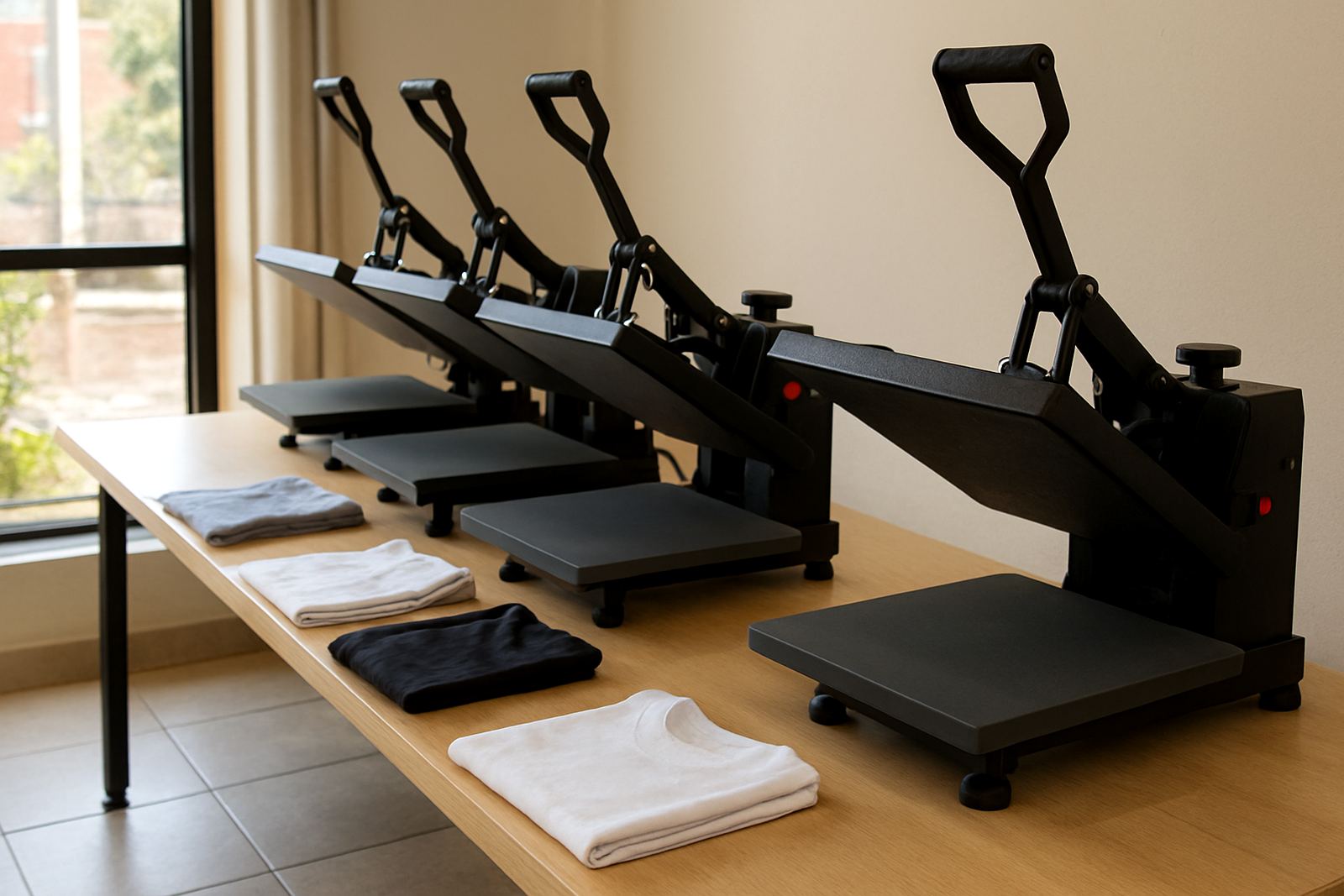
Most professional garment decorators use a mix of flat presses sized to the work they produce. A standard 38 x 38 cm or 40 x 50 cm press suits general T-shirts, tote bags and transfer work, while larger platens help with oversized artwork or youth and adult sizing across a mixed run. Some shops also keep a second unit as backup, because a failed controller or heater can stop production very quickly.
- Standard flat press for everyday T-shirt and transfer work
- Larger platen for bigger artwork and wider garment sizes
- Backup unit for peak periods or urgent rework
- Heat-resistant cover and clean lower pad for even pressure
- Spare element, controller parts and basic service kit on hand
Shops that handle frequent work should also keep a simple log of temperature checks, pressure settings and any odd behaviour from the machine. That record helps spot drift before it becomes a bigger fault.
Layout and workflow planning for production floors
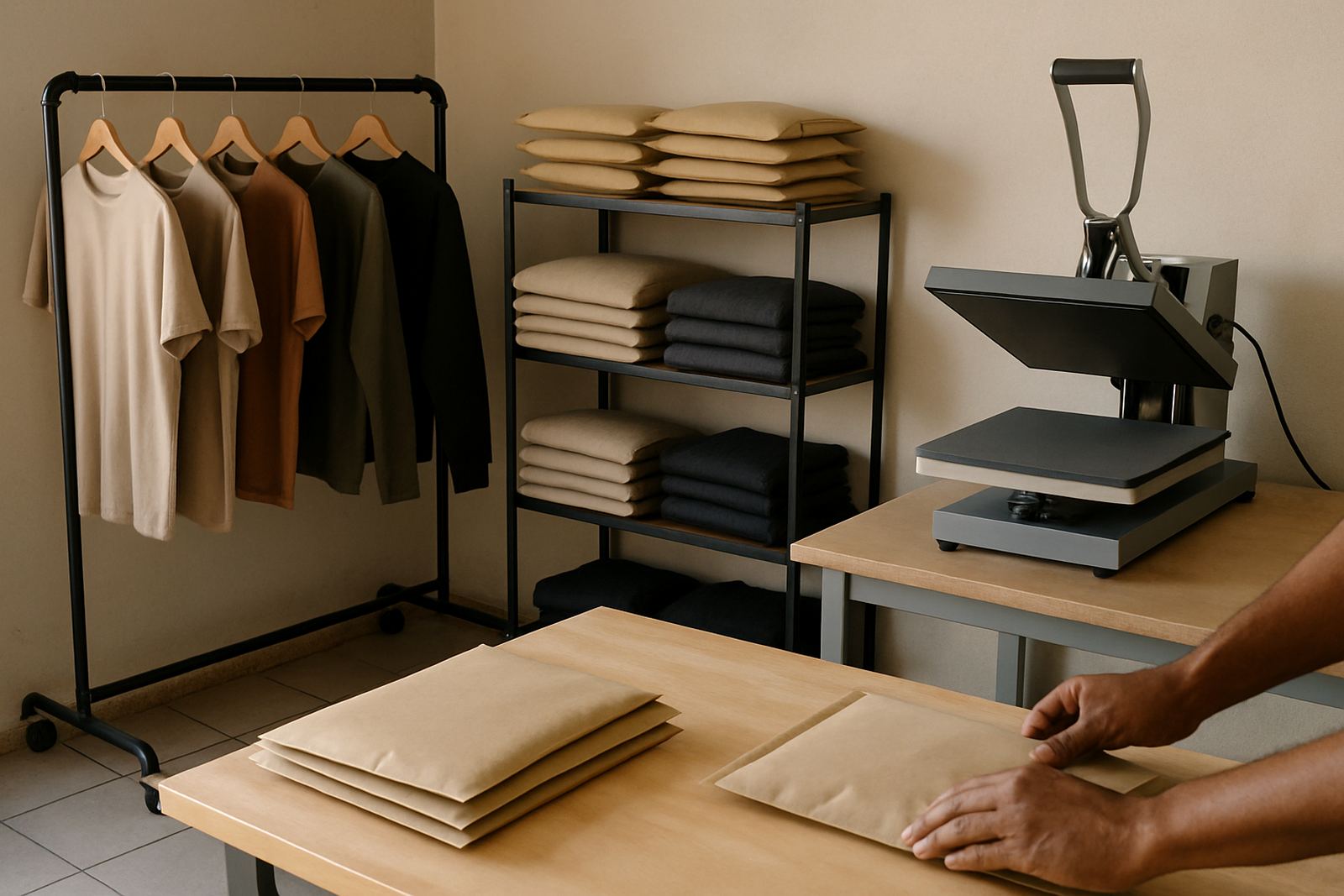
Good layout saves time and reduces operator error. Keep the press close to the pre-press and finishing area so garments do not travel far between stages. Leave enough space around the machine for safe loading, stacking and cooling, especially if the shop runs more than one operator. In tighter Gauteng workshops, the biggest mistake is pushing the press too close to a wall or packing material so the operator has to twist and reach.
Power supply should be planned properly too. Many shops work through load-shedding, so it helps to know which machines can stay on backup power and which should be switched off during outages. A press on unstable supply can give uneven heating, and that means rejected garments. In coastal towns like Durban or Cape Town, humidity can also affect transfer handling and storage, so paper, vinyl and finished stock should be kept dry and away from the press area.
- Allow clear walkways for cartons, blanks and finished garments
- Keep heat-sensitive consumables away from warm surfaces
- Use a stable table or stand so the press stays level
- Plan for safe cooling space after pressing
- Separate incoming stock from finished goods to avoid mix ups
Training that keeps output consistent across shifts
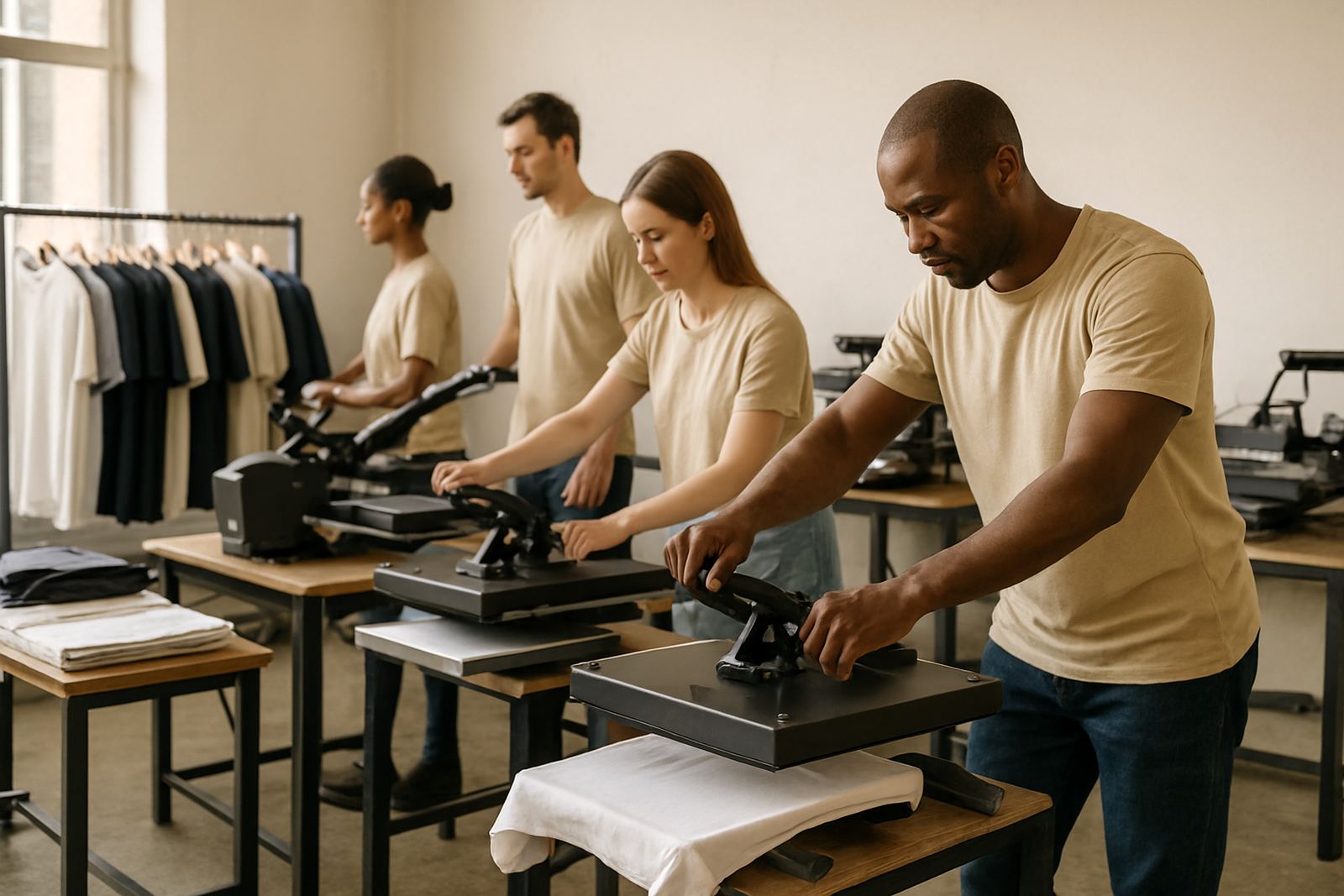
Professional shops often have more than one operator, and that is where small habits make a big difference. One person may close the press a little earlier than another, or set pressure by feel instead of checking properly. FlatPress provides operator training so the team uses the same settings and the same sequence every time, which cuts down on spoilage and complaints.
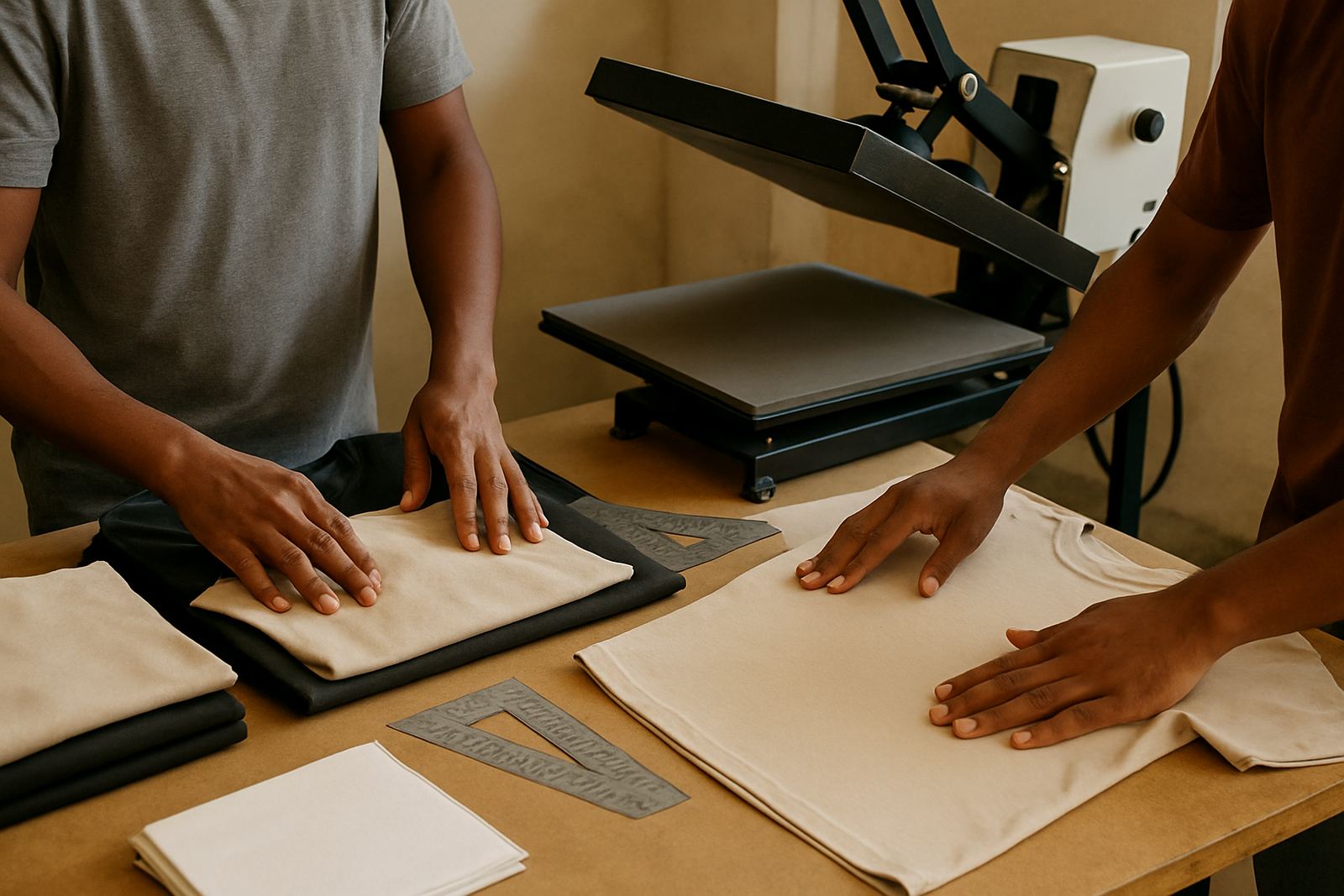
Training usually covers temperature control, dwell time, pressure adjustment, garment prep and how to spot wear before it becomes a fault. We also show teams how to handle common transfer problems like edge lift, ghosting and uneven coverage. When new staff join the shop, proper handover helps prevent costly mistakes. It also means the owner is not the only person who knows how the machine should run.
Service planning for long production runs
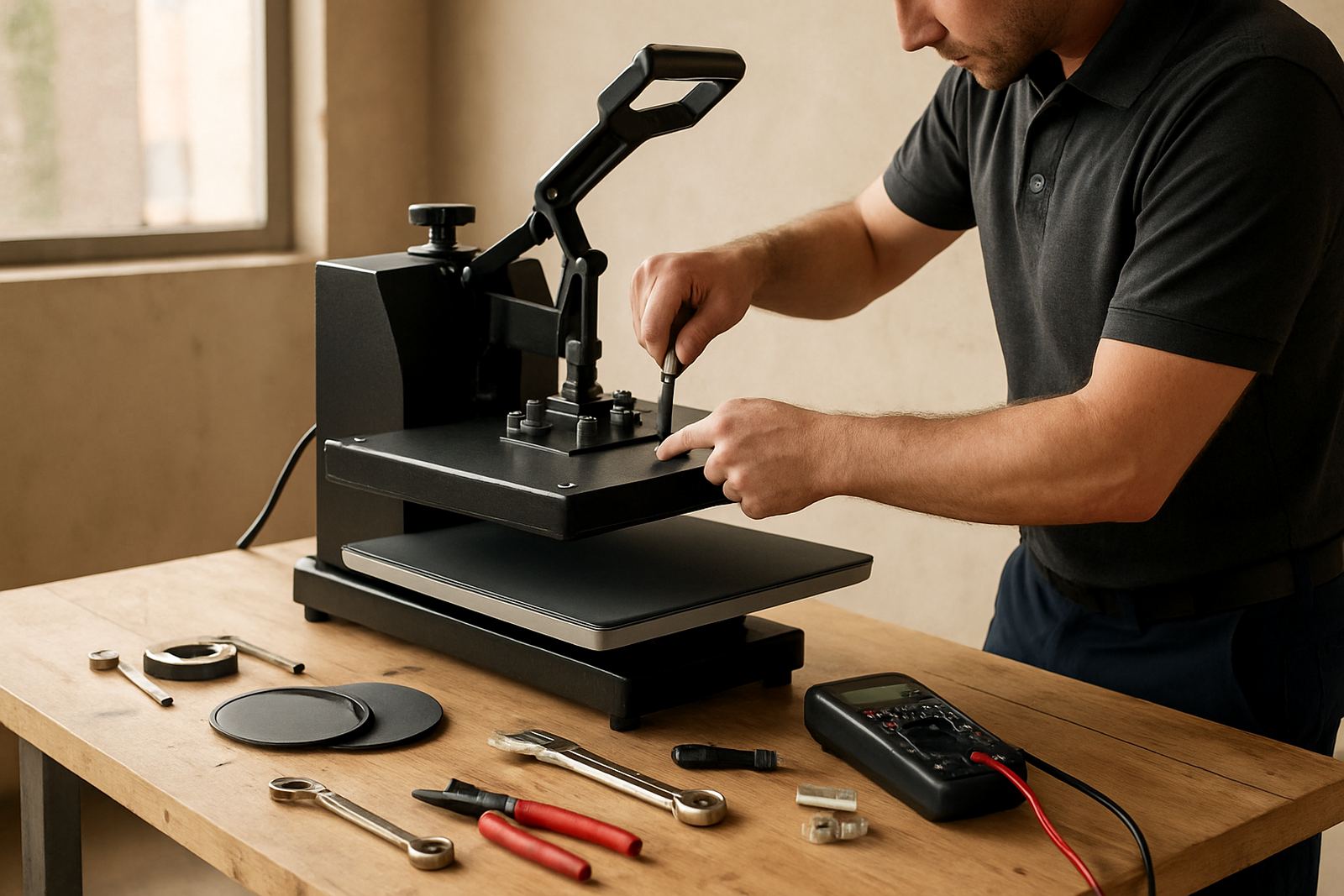
In a busy shop, preventive servicing is cheaper than an emergency stop. Heating elements wear, controller readings can drift, and pads lose shape or covering over time. If the machine is used daily, it makes sense to plan checks before the peak season hits, rather than waiting for a failure in the middle of a large order. We handle temperature checks, pressure adjustments, element replacements, controller repairs and pad and covering work for print shops across Gauteng and nationwide.
For shops in Midrand, Johannesburg and Pretoria, a regular service schedule can be set around turnover, while nationwide clients often use courier support for spares and unit movement where needed. If a press is down and the shop cannot wait, loan unit support can help keep orders moving while the fault is dealt with. Ridwaan and Riaan often see the same pattern: a small warning ignored for a week turns into a full stoppage on a Friday afternoon.
Budget ranges for shop owners planning upgrades
Budgets vary depending on size, capacity and whether the shop needs one press or a full production setup. A smaller flat press suitable for light commercial work may start from around R8 000 to R15 000, while a stronger production unit with better control and build quality can sit in the R18 000 to R35 000 range. If you need a second machine for backup, factor that in as well, because a spare press can save a deadline.
For servicing and repairs, shops should budget for callouts, parts and labour based on the fault. A pressure adjustment or temperature check is far cheaper than replacing a damaged controller or heater assembly. Some shops also choose to spend a little more on training and spares up front so they can keep production steady instead of paying for rush fixes later. It is a practical way to protect margins.
Common mistakes that slow production
The most common problems in print shops are usually not dramatic. They are small setup errors that repeat all week. Wrong temperature, uneven pressure, worn covering, dirty platen surfaces and poor garment prep can all reduce quality. A press that looks fine on paper can still give poor results if the lower pad has gone hard or the top element is not heating evenly.
- Using one setting for every fabric type
- Ignoring cold spots or slow heat recovery
- Running the machine with worn pad covering
- Letting operators guess pressure instead of checking it
- Waiting too long before arranging a service or repair
If your shop is producing repeat jobs every day, the aim should be simple: less rework, less downtime, and fewer surprises. That starts with the right press, proper training, and service support that matches the pace of the floor.