

Power, Heat and Layout Planning That Saves Time
Load-shedding and uneven venue power can interrupt a live activation, so planning starts with electricity. A flat press should be placed where the cable run is short and the plug point is protected. If the venue has a generator, test the press on that supply before the event day, because voltage swings can affect heating and controller behaviour. In coastal areas such as Durban and Cape Town, humidity can also affect transfer handling and adhesive performance, so keep artwork sealed and garments dry until use.
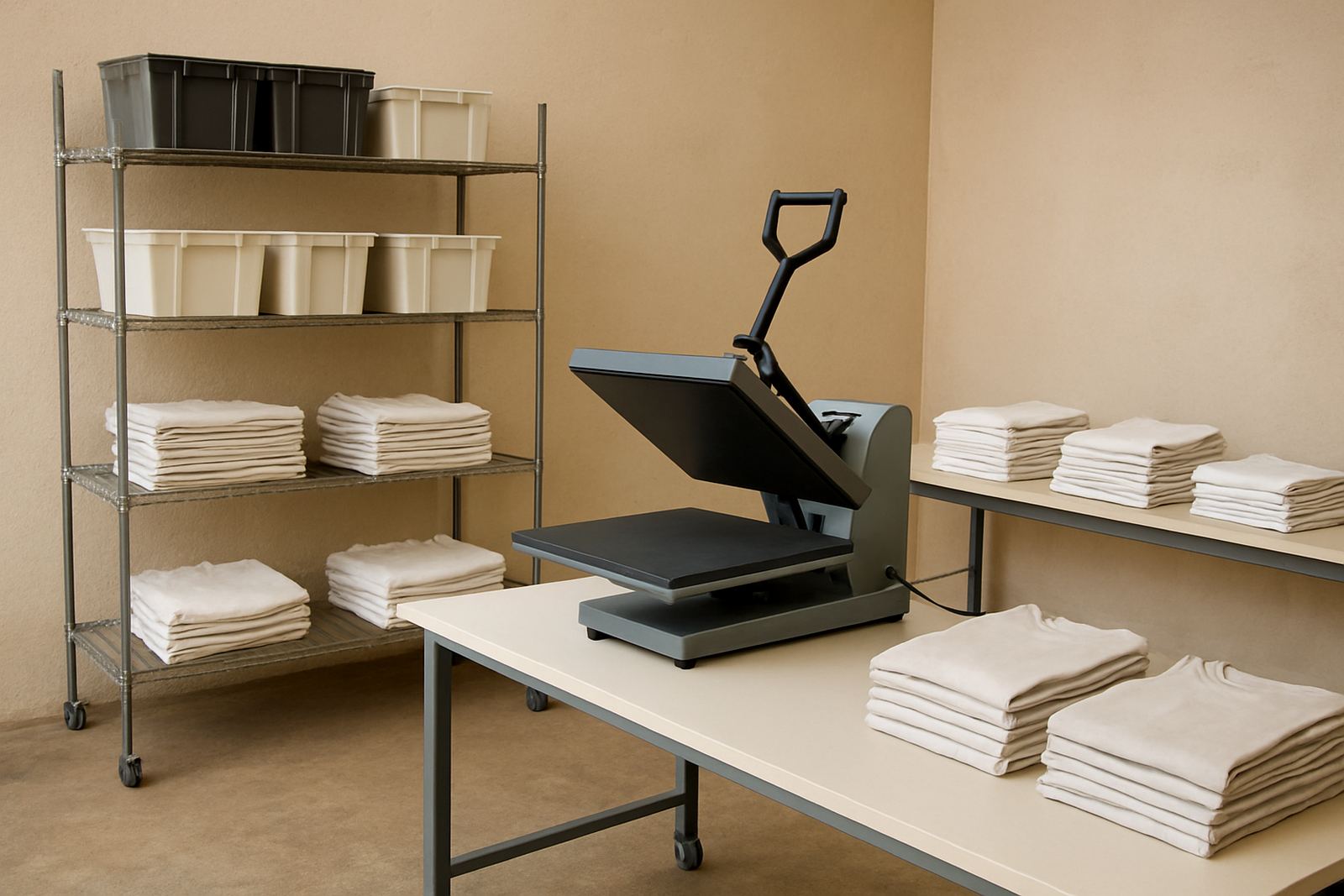
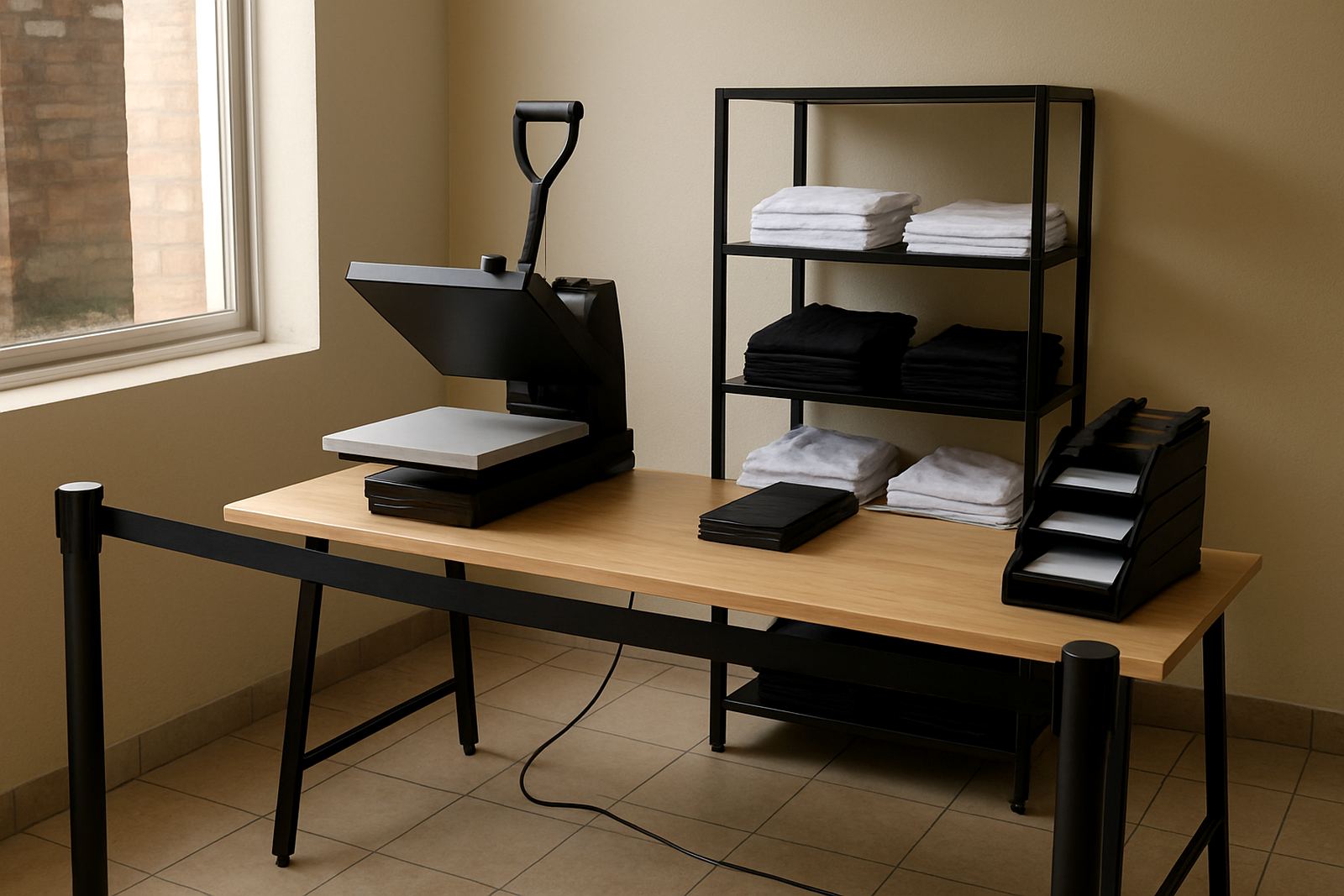
Allow enough space around the machine for the lid to open fully and for the operator to move without bumping into tables or crowd barriers. A cramped table slows the team down and increases the risk of burning sleeves, warping transfers or touching the hot plate. For municipality-led activations and public events, check the venue rules on power draw, fire safety and cable management before arrival.
- Place the press on a stable table at comfortable working height
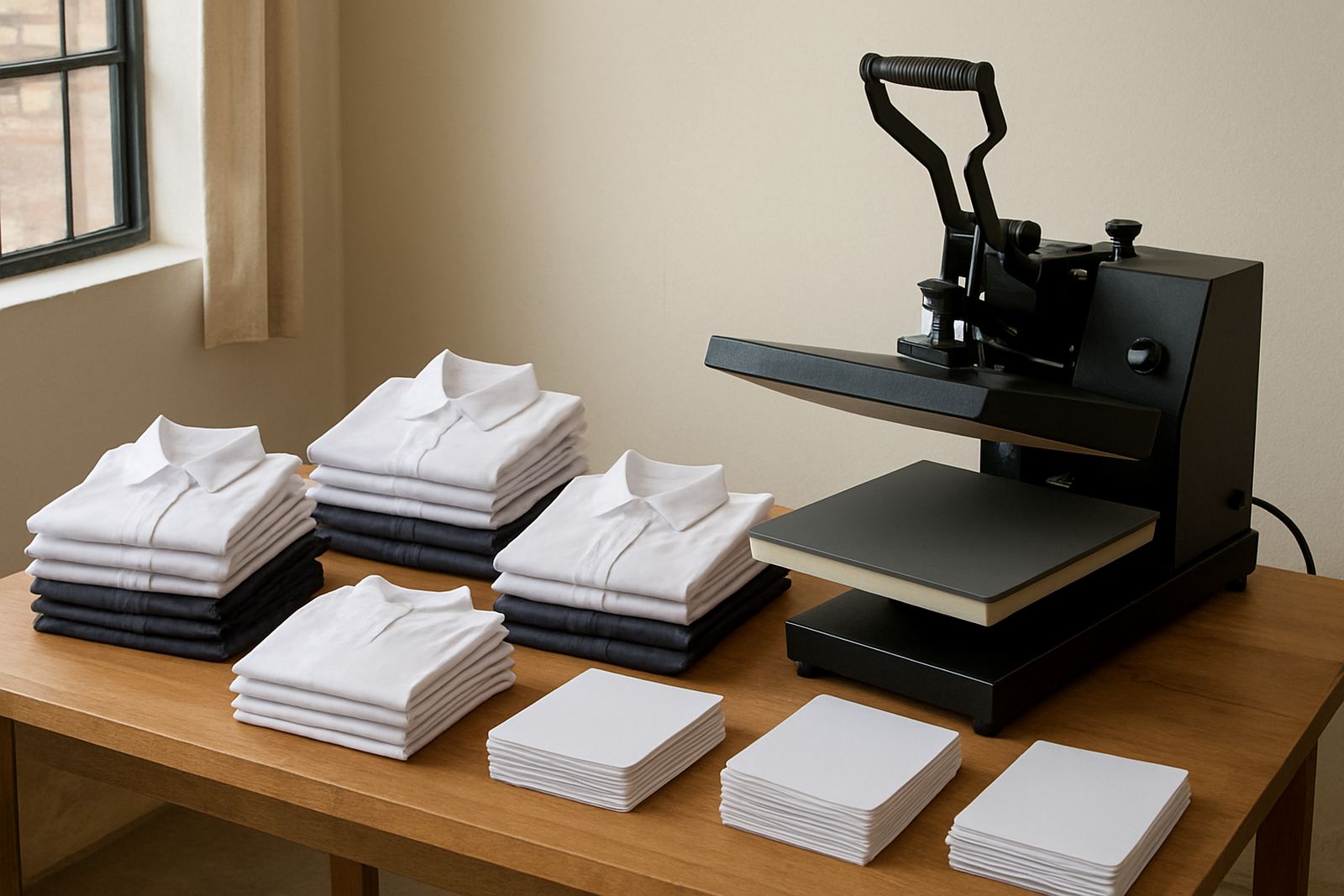
- Keep finished garments in a separate stack from blanks
- Use heat-safe gloves where operators need to reposition garments
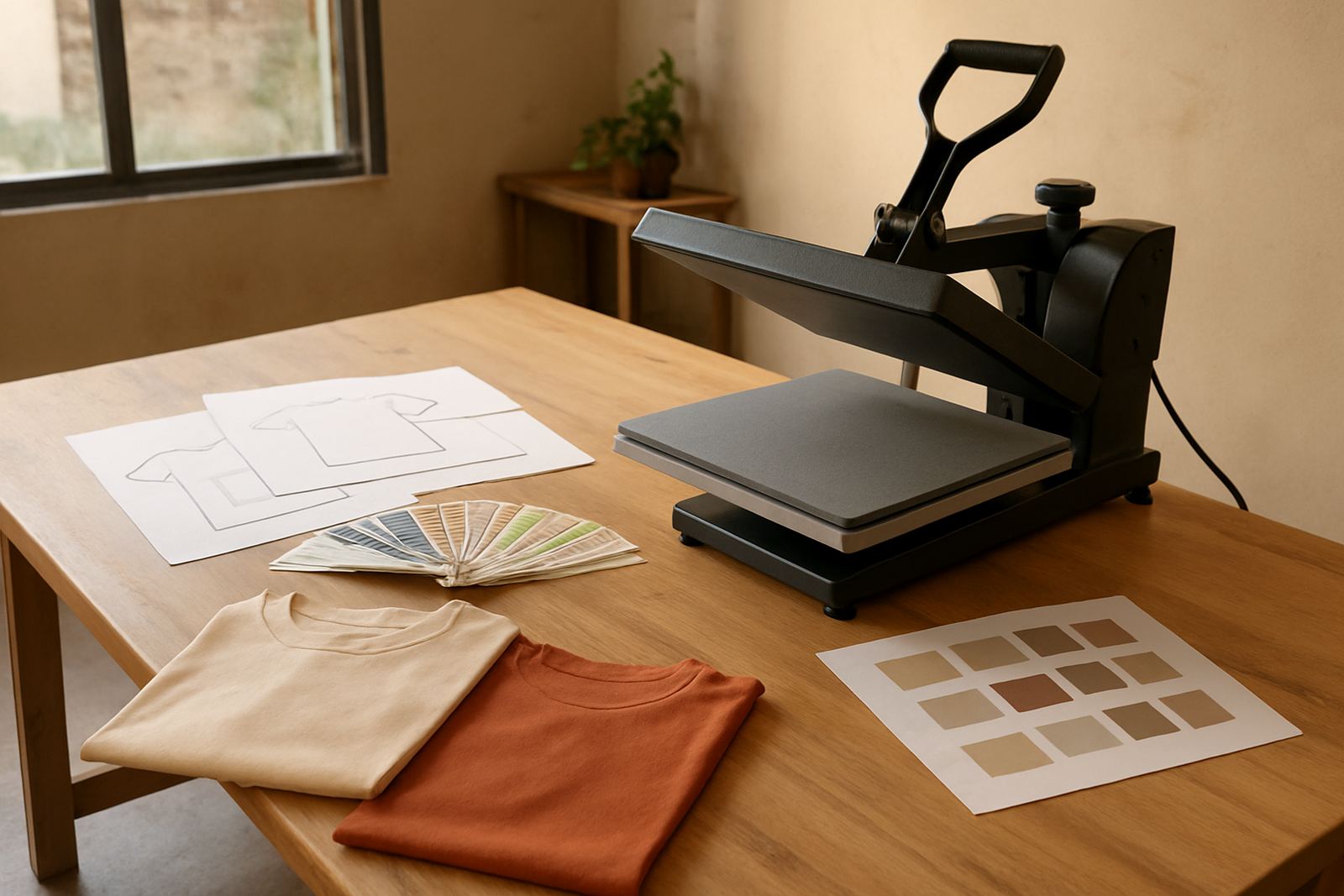
- Keep a small staging tray for transfer sheets, tape and test prints
Typical Equipment Set for Event Teams
A practical activation kit does not need to be complicated. Most teams need a flat heat press suited to T-shirts and similar garments, together with basic spares and clean tools for repeated use. If the work includes different garment weights or a mix of cotton and poly blends, the team should also keep sample settings written down so every operator can follow the same numbers. That helps when different staff members rotate during the day.
FlatPress supplies setup, training and support for new presses and existing machines used at events. We also handle temperature checks, pressure adjustments and controller repairs when the press is not reading correctly. For teams moving between Johannesburg, the East Rand, Pretoria and Midrand, a loan unit can help keep a campaign on schedule if there is an unexpected fault.
- Flat heat press with accurate temperature control
- Spare lower pad cover and heat-resistant sheet
- Basic transfer tools, alignment guides and cutting mat
- Backup element, controller support and cleaning kit
- Transport protection for moving equipment between venues
How to Run a Controlled Pressing Workflow
A good activation workflow keeps the queue moving while protecting quality. One person should receive the garment, check the size, place the transfer and pass it to the press operator. The operator then presses using one agreed time, temperature and pressure setting for the event. A third person can fold and bag the finished item, which helps if customers are collecting from a branded stand or queue point.
Training matters because a fast event can expose bad habits. Over-pressing can scorch some fabrics and leave shiny marks. Too little pressure can cause lifting at the edges. If the team is printing for multiple sizes or different sponsor logos, label each transfer stack clearly. It sounds basic, but it prevents mix-ups when people are working quickly and there is noise, music and foot traffic all around. We’ve seen a single wrong setting spoil a whole batch of 40 shirts in less than an hour.
For larger activations, the workflow should include a simple shift checklist: warm-up test, sample press, first garment approval, mid-shift check and end-of-day clean-down. That keeps the machine ready for the next event and reduces repair callouts after the fact.
Common Mistakes We See at Temporary Events
Many event teams lose time through avoidable setup errors rather than machine failure. The most common one is arriving without testing the press on site. A machine that worked in the workshop can behave differently in a tent, hall or back-of-house area if the power supply is weak or the table is uneven. Another mistake is pressing garments straight out of sealed packaging without checking for moisture. Damp fabric can affect adhesion and leave a cloudy finish.
Other problems come from rushed handling. Transfers placed slightly off-centre look unprofessional, and if the operator is trying to move too fast the pressure is often inconsistent. Some teams also forget to pack a spare cover or cleaning cloth, then end up working with lint, glue residue or old scorch marks on the pad. That small neglect can turn into a visible quality issue for the client or sponsor.
- Not testing power and temperature before doors open
- Using one setting for every fabric type
- Placing transfers without alignment marks
- Skipping pre-event training for temporary staff
- Leaving the press dirty between runs
Budget Ranges for Event Activation Teams
Budget depends on whether you need a single machine for occasional events or a proper field kit for frequent activations. A basic flat press package for small teams can start from about R8,500 to R15,000, depending on size and controller type. Mid-range setups with better pressure control, stronger platen coverage and accessories usually sit between R16,000 and R28,000. For busy print teams or agencies doing repeated campaigns across Gauteng and nationwide, a more complete setup with backup support and spare parts can run from about R30,000 to R55,000.
Training, setup and servicing are worth including in the budget from the start. An operator training session and on-site setup can save wasted stock and reduce downtime. Preventive servicing is usually far cheaper than an emergency repair during a live campaign, especially if the equipment is moved often between venues. For Durban, Cape Town and other coastal work, factor in extra care for humidity, storage and transport. If you need loan unit support during a fault, that can protect a campaign from missing a delivery window.
To get the right fit, tell us the kind of events you do, how many garments you press per day and whether the work is mostly cotton, poly or mixed fabric. From there we can advise on setup, pressure settings and the spares you should keep in the box. It’s better to plan this properly than patch things up on event morning.