
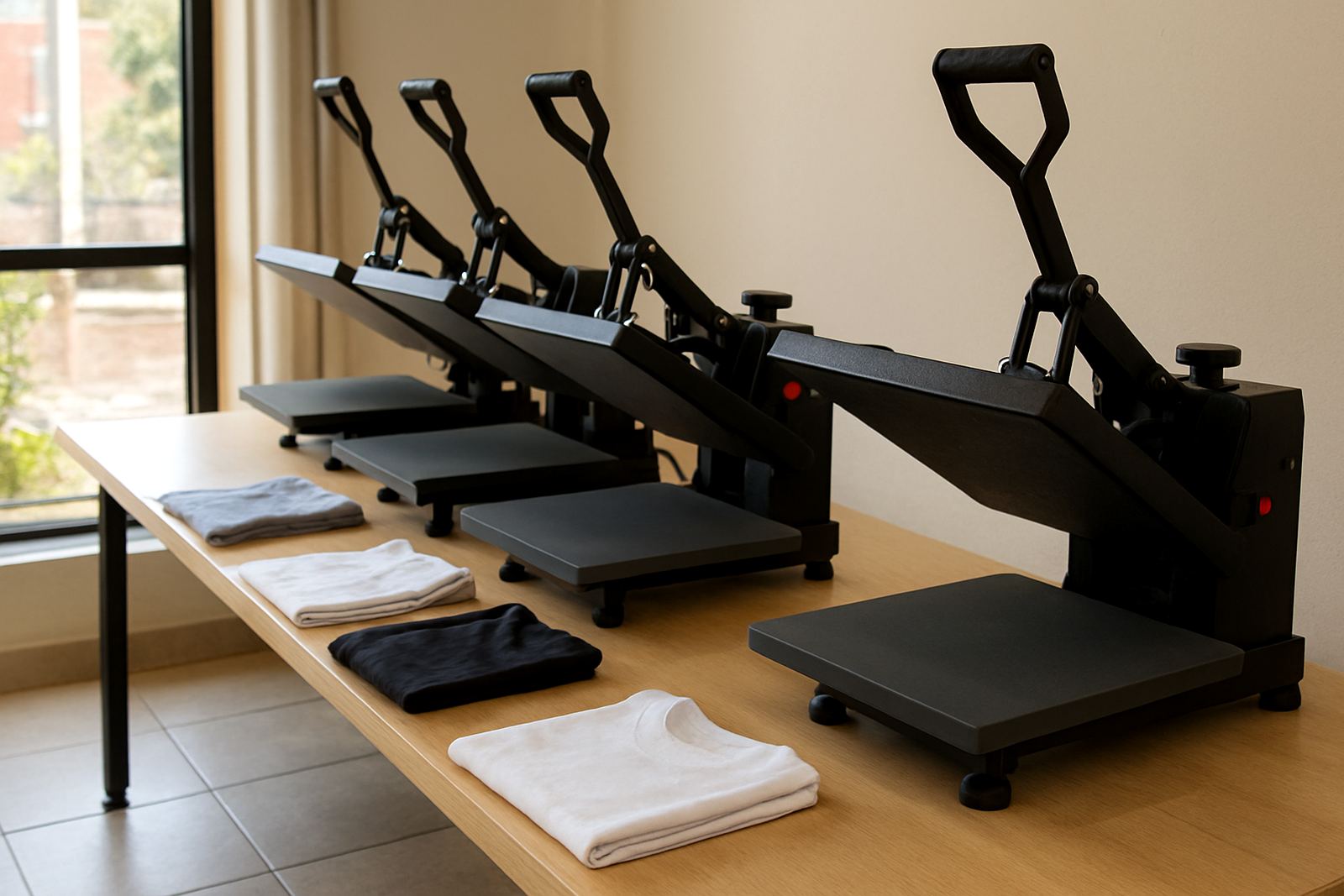
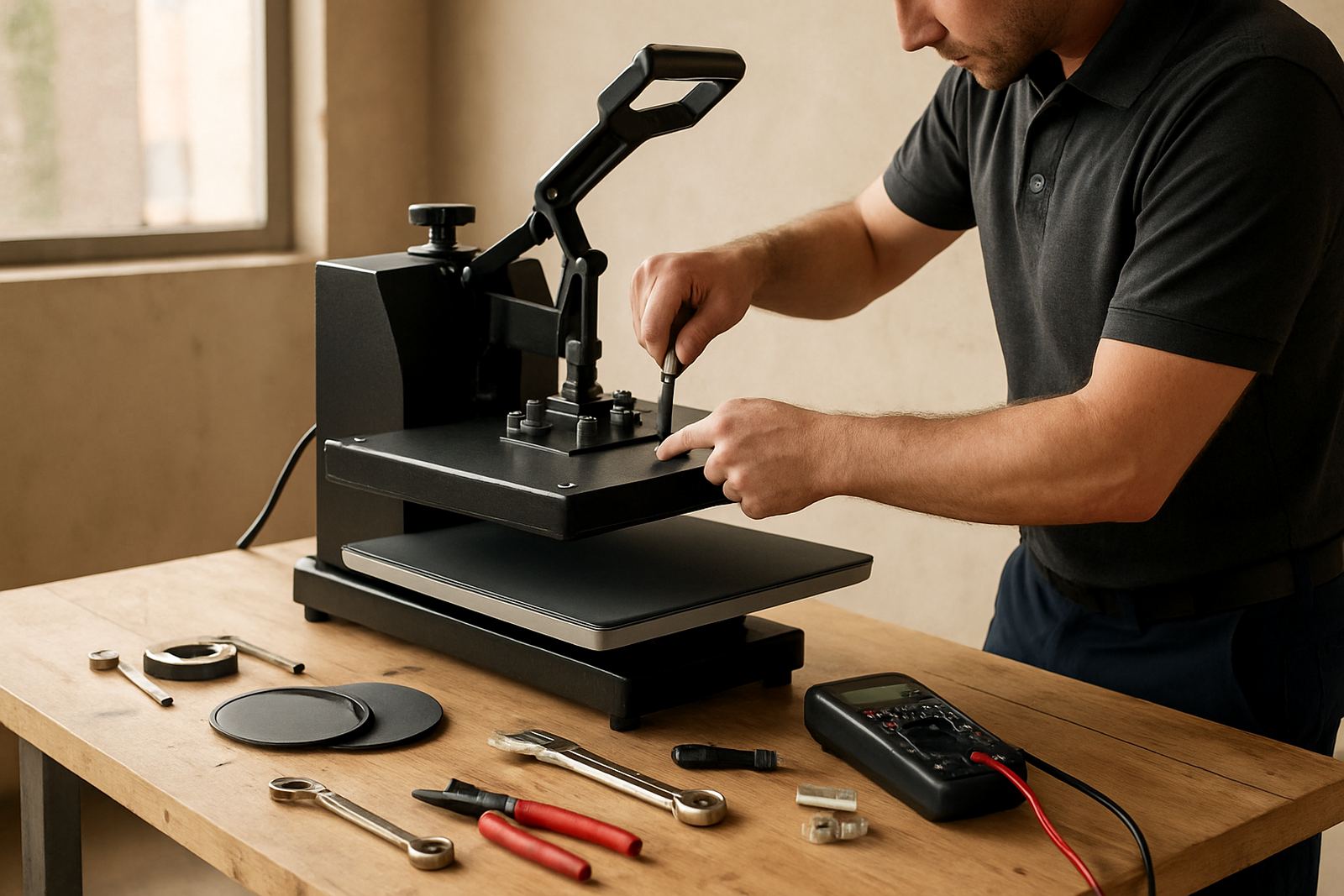
What small decorators usually need from a heat press
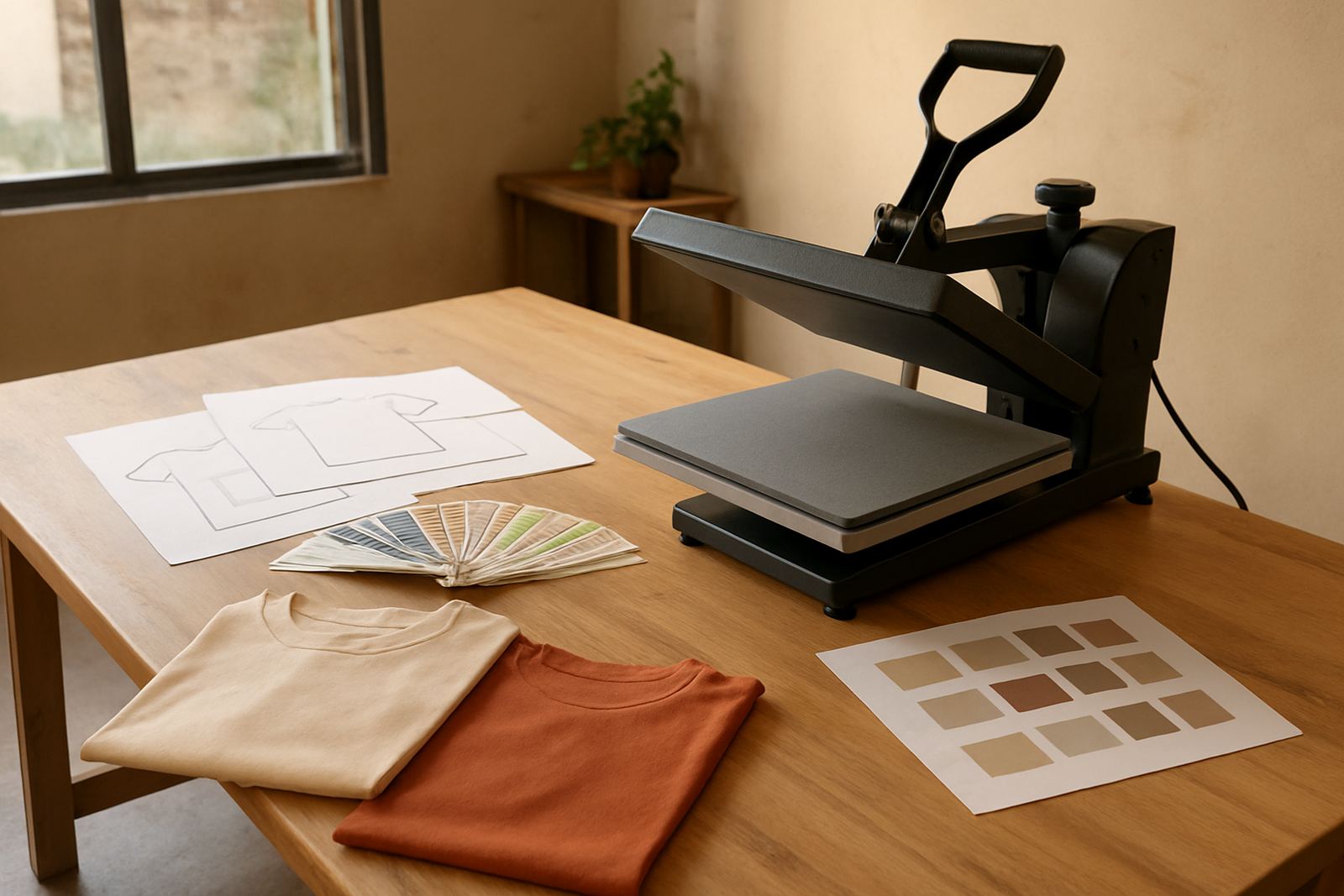
Small garment decorators often start with mixed work: a few custom T-shirts today, a repeat school order tomorrow, then a rush job for a market or local event on Friday. In that kind of setup, you need a flat press that comes up to temperature quickly, keeps pressure even across the platen and does not need constant fiddling between jobs. A unit that is easy to learn matters just as much as one with a big plate size.
Most small shops do best with a press that matches the products they actually sell, not the biggest machine available. A 38 x 38 cm or 40 x 50 cm flat press is often enough for adult tees, kiddies sizes, transfer sheets and tote bags. If you work from home or a back room in Alberton, Randburg or Boksburg, the machine must also fit through the door, sit on a sturdy table and plug into a proper circuit without tripping the rest of the place.
- Single press users usually need quick changeovers between sizes and artworks
- Repeat jobs need steady heat and pressure from one order to the next
- Beginners need clear controls, basic training and simple fault finding
- Busy side-hustles benefit from a spare cover, pad and backup controller plan
A practical starter equipment set for repeat work
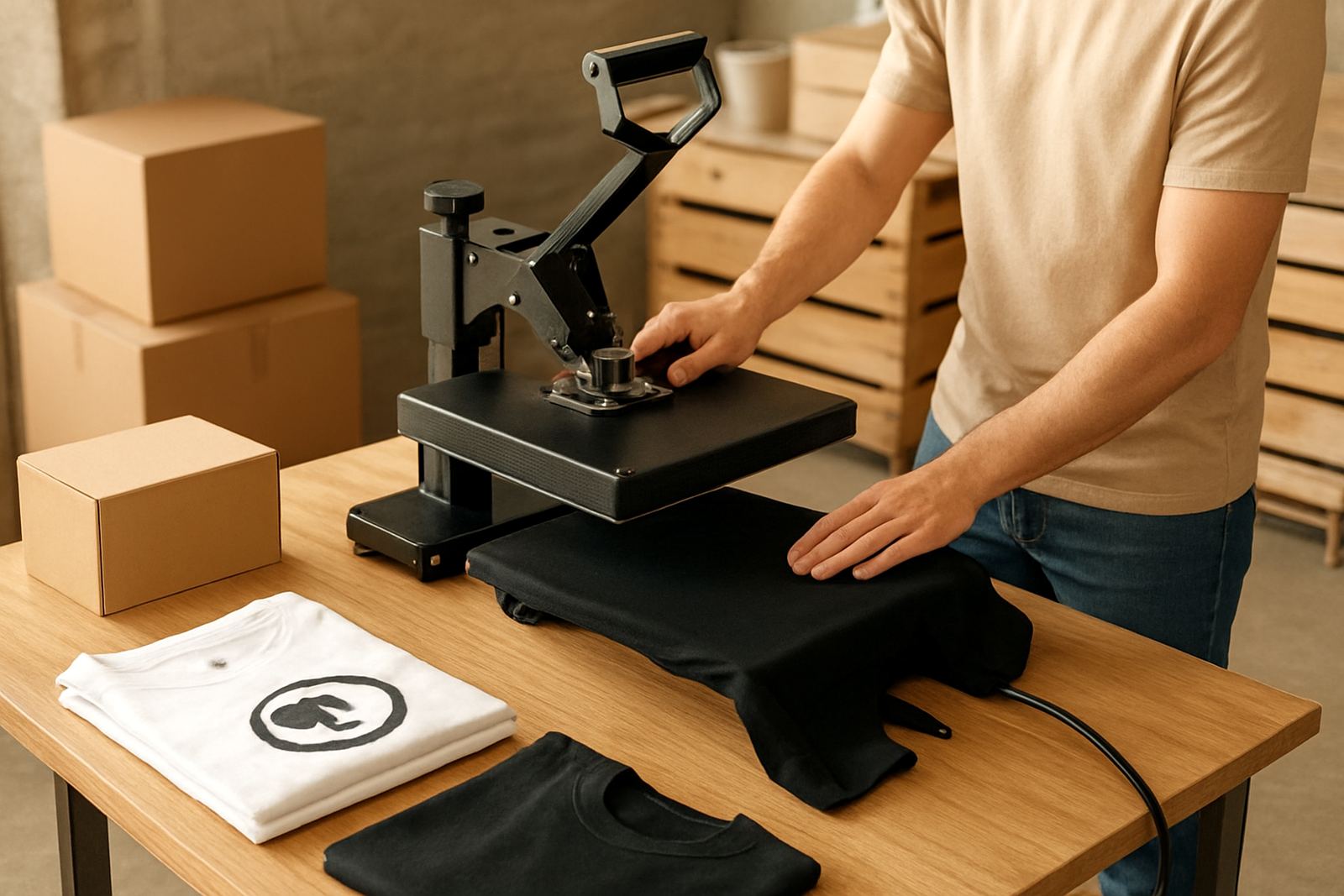
A basic small-shop setup normally includes the flat heat press, a clean working table, heat-resistant cover sheets, a trimming area for artwork and a safe place for finished stock. If you are pressing transfers from a small cutter or outsourcing artwork, make sure your workflow keeps blanks, printed sheets and pressed items separate. That saves time and cuts down on mispresses, which can get expensive fast.
For decorators handling a steady stream of local orders, it helps to choose equipment that can take daily use without making every job a gamble. A press with a strong frame, even heating and a reliable timer is easier to live with than one that looks fine but drifts on temperature. If you are pressing in a room that gets hot in summer, or in a coastal area with humidity like Durban, basic servicing and clean storage matter more than people think.
- Flat press with a platen size suited to your main garment sizes
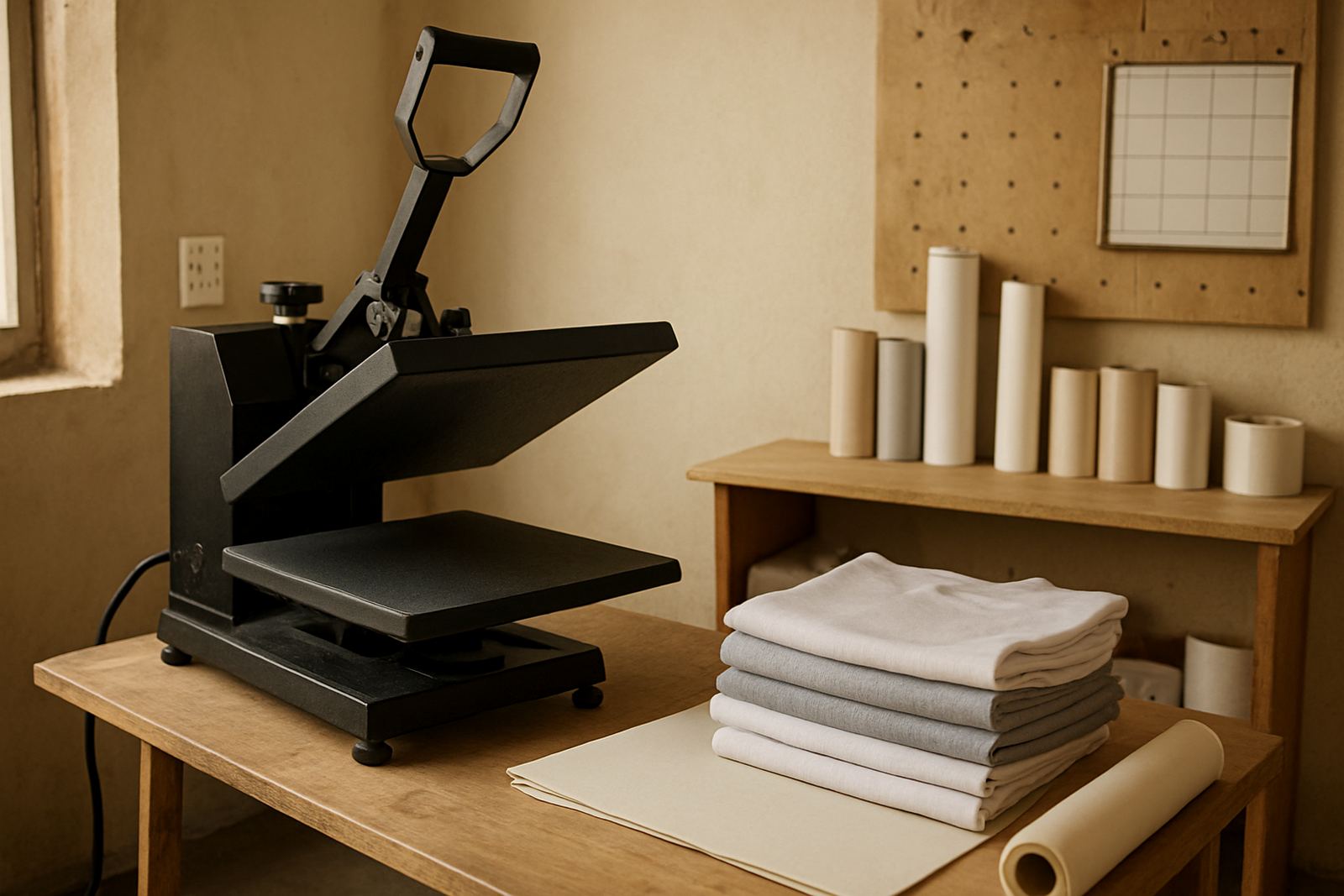
- Extra Teflon or protective sheets for transfer work
- Heat-resistant pad and replacement covering for worn foam
- Sturdy table, power protection and a clear packing area
- Spare fuses, controller support and a simple service schedule
How to plan the layout so one person can work faster
Small operators often lose time by walking back and forth across a cramped room. The press should sit close to the prep area, with blank garments on one side and finished stock on the other. Leave enough space to open the top platen fully and move around the machine without bumping into shelves or rolls of transfer material. In a tight Midrand workshop or garage setup, this small bit of planning can save a lot of frustration.
If you are working alone, the layout must support a smooth routine: check the artwork, position the garment, align the transfer, press, peel if needed, then fold and pack. Keep the printer, cutter or artwork source close enough to reduce handling, but not so close that paper dust or fabric lint ends up on the platen. A little order in the room also makes training easier for a helper or family member stepping in when orders pick up.
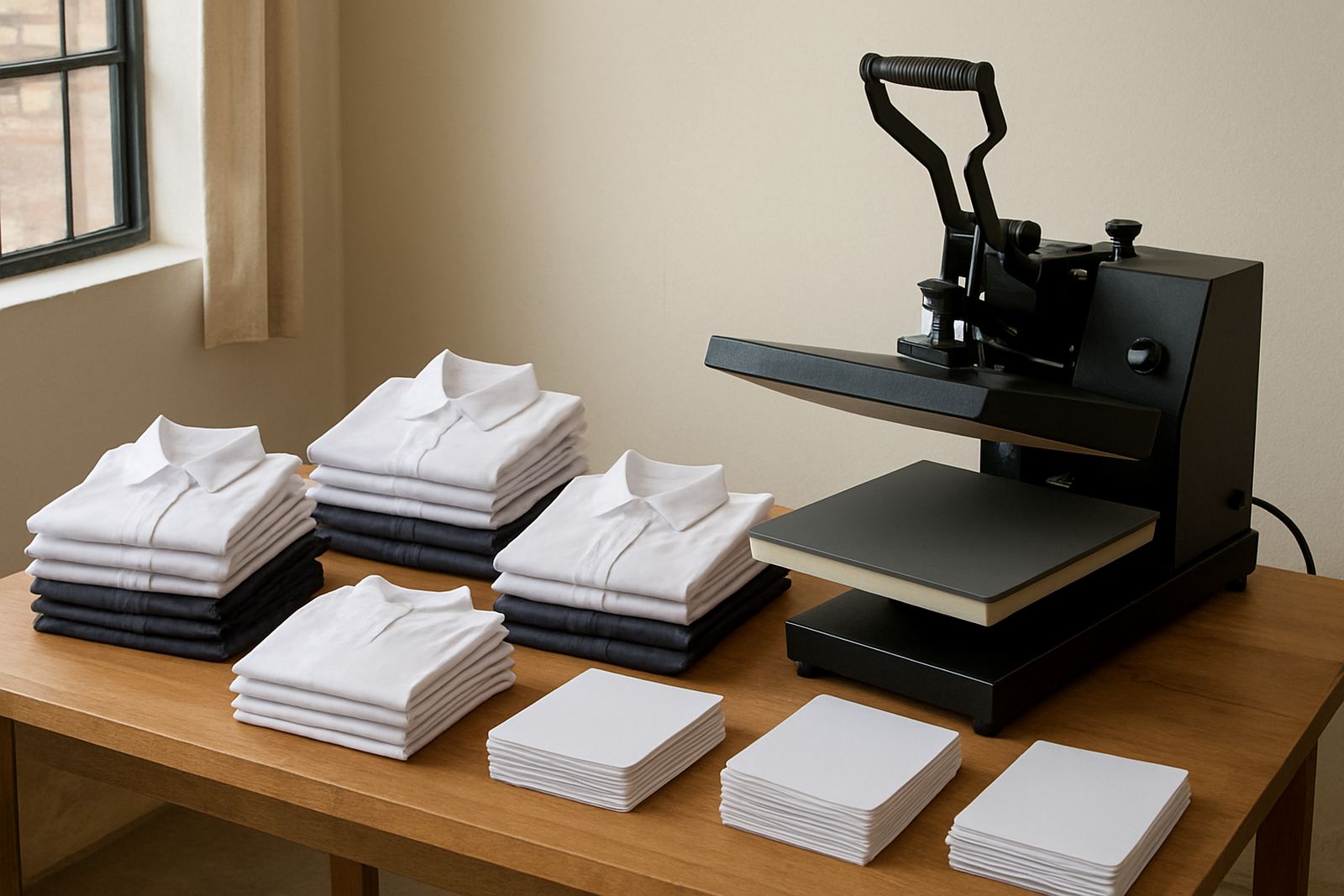
For shops serving schools, corporates or local clubs, it helps to set one shelf aside for repeat client jobs and another for urgent one-off work. That way you can see what is ready, what still needs pressing and what must go out with the courier. Simple labelling, even with handwritten tags, is often enough to keep the day moving.
Training points that prevent expensive mistakes
Most pressing problems come from the basics: wrong temperature, uneven pressure, rushed timing or pressing on the wrong garment type. A small decorator who understands those four things will waste less material and get cleaner results. During setup we usually focus on how the press behaves on actual stock, not just on the settings printed on the controller.
New users also need to learn the difference between soft pressure and a firm press, because that changes with garment thickness, seams and transfers. A hoodie or zip top needs different handling from a lightweight cotton tee. If you do a lot of repeat orders, write down the working settings for each transfer type and keep them near the machine. That small habit avoids guesswork when the room is busy or when load-shedding forces you to restart later in the day.
- Do a proper temperature check before starting a production run
- Test pressure on sample fabric before pressing customer stock
- Let the platen warm through fully before judging the reading
- Keep a simple log of settings for each garment type and transfer type
- Replace worn covering early rather than waiting for marks on prints
Common faults we see in small shops
In small businesses, the press is often used hard and serviced too late. We commonly see loose handles, tired heating elements, controllers that read low or high, and worn pads that leave uneven marks. Some operators also keep pressing with a damaged cover because the machine still switches on, but the finish on the garment tells the real story. If the pressure feels inconsistent, stop and check it before the next batch.
Power quality can also affect output, especially where there are surges, brownouts or repeated switching during load shedding. A machine that worked fine last month may start behaving oddly after a power event. In those cases it is worth checking the controller, wiring and element before assuming the whole press is finished. A quick call for phone tech support can save a service trip, and in many cases the fix is straightforward.
For decorators in places like Pretoria, the East Rand or the West Rand, dust and workshop heat can shorten the life of moving parts too. Regular cleaning, basic checks and a planned service interval keep the press more predictable. It is cheaper to replace a covering or controller board in time than to lose a client order on a Friday afternoon.
Budget ranges to expect in Rand
Small decorators usually ask what it costs to get set up properly, and the answer depends on the size of the press, the level of training needed and whether you want backup support after delivery. A basic entry-level flat press setup can start around R8 000 to R15 000 for someone doing light, occasional work. For a better-built unit with more consistent heat and pressure, many small shops plan in the R15 000 to R30 000 range.
If you want a more productive setup for steady daily orders, with stronger components and easier servicing, the budget can move into the R30 000 to R55 000 range or more, depending on the specification. Add the cost of spare covers, a replacement pad, basic electrical protection and initial training. That might feel like a lot at the start, but it is usually less expensive than replacing damaged stock and reprinting failed jobs.
We also help with loan unit support in some cases where a machine is down and orders cannot wait. That is useful for small businesses with paying customers already lined up, because missed delivery dates can hurt more than a repair bill. A good press should pay for itself through repeat work, not sit idle while you wait for the next chance to print.
How FlatPress supports small decorators across South Africa
FlatPress works with independent decorators who need practical help, not unnecessary upselling. From our Midrand base, we support small garment printers across Johannesburg, Pretoria, the East Rand, the West Rand and further afield by courier, including Durban, Cape Town and Bloemfontein. That means new press setup, operator training, temperature checks, pressure adjustments, element replacements, controller repairs, pad and covering work, pneumatic line service, preventive servicing and spares supply.
Many clients start with one machine and grow into a second press once local demand builds up. Others simply need reliable backup support so they can keep taking orders without stress. Whether you run from a home workshop, a small retail unit or a compact production room, we help you choose a setup that matches the way you actually work. The aim is simple: fewer faults, cleaner prints and a press that keeps earning its keep.
When you are ready to talk through a setup, send your enquiry through the contact page and we will take it from there. We work with small shops that want clear advice, practical servicing and support they can rely on, not a pile of confusing options. If the machine fits your space and your order pattern, it usually lasts longer and costs less to run in the end.