

What schoolwear printers usually need on a busy week
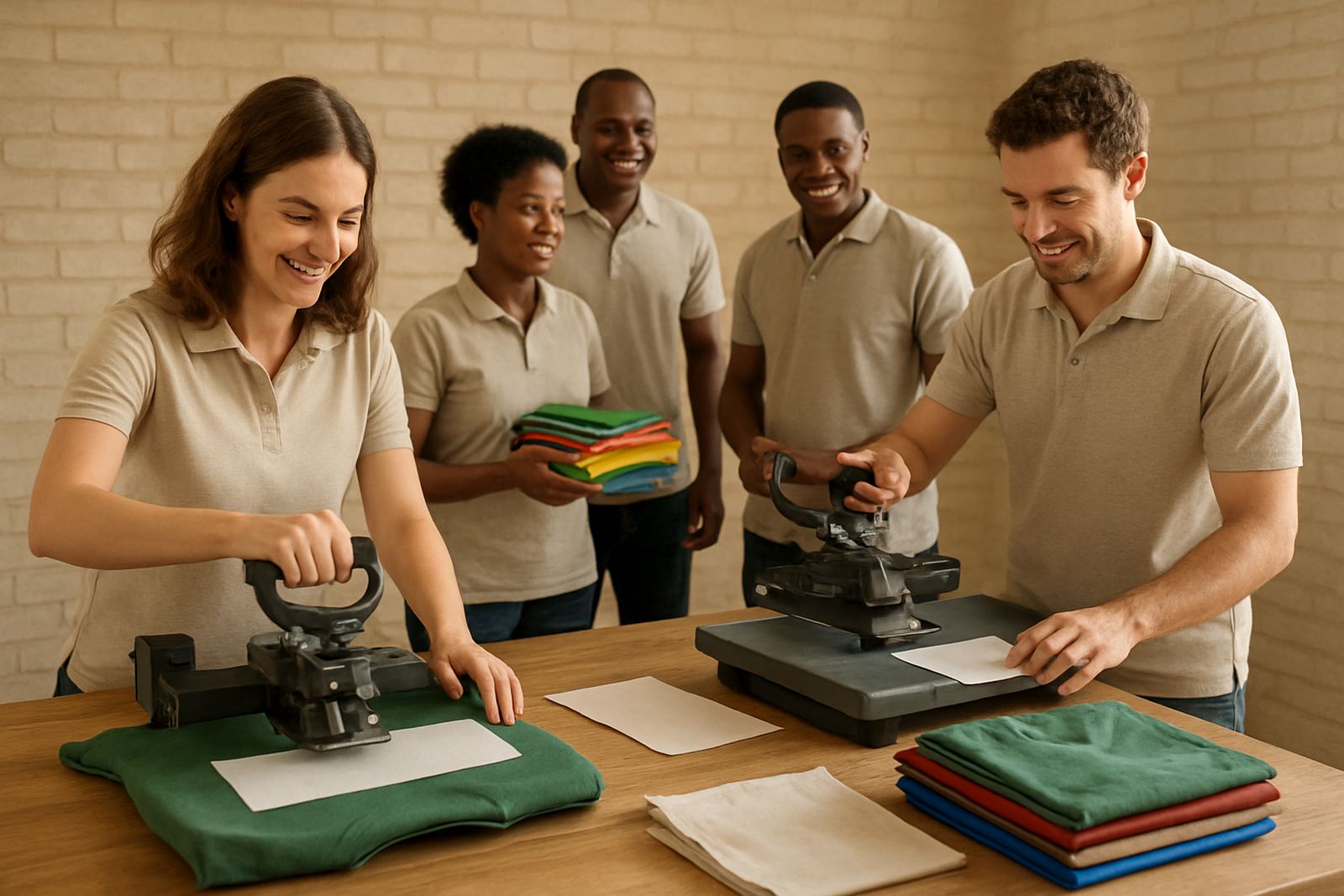
Most schoolwear printers are working with a mixed run of small orders rather than one large batch. One day it is 20 T-shirts for a rugby tour, the next it is 15 tracksuit tops, then collar badges, staff shirts and a stack of leavers day orders that all need different names. That means the press has to be dependable, easy to set for repeat jobs and simple enough for different operators to use without wasting garments.
In Midrand, Johannesburg, Pretoria and the East Rand, many small shops run schoolwear work alongside general garment decoration. A flat heat press suits that mix because it handles name labels, transfer graphics, badge appliques and light on-garment branding without needing a lot of floor space. For a new schoolwear printer, the main priorities are consistent temperature, accurate pressure and a platen size that fits the largest common school garment you plan to do.
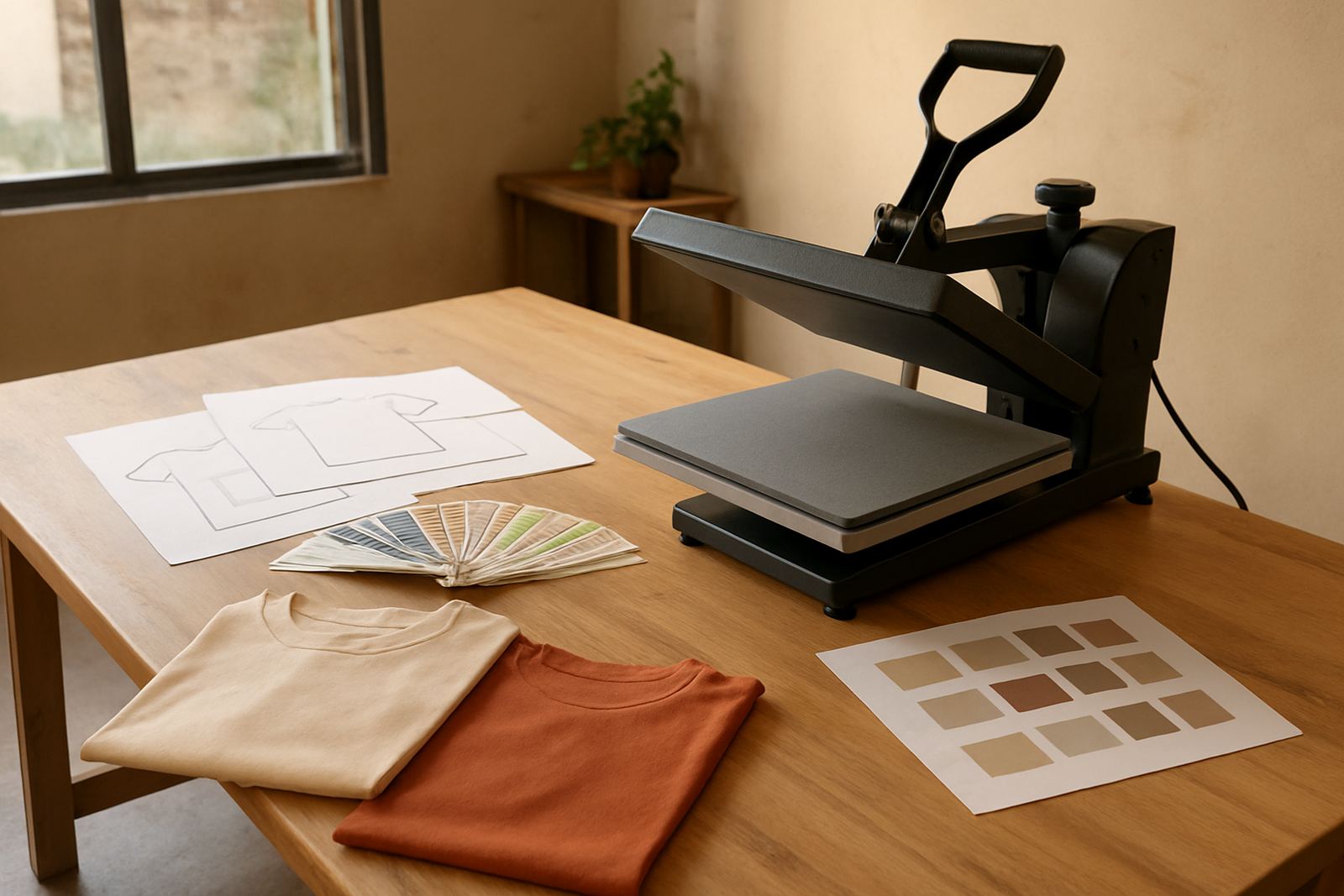
Typical press set for names, badges and garment transfers
A schoolwear setup does not need to be complicated, but it should be matched to the type of work. Smaller shops often start with one flat press and a few accessories, then add support items as orders grow. If you are doing sportswear for schools around Durban or coastal Cape Town, you also want equipment that can cope with humid storage rooms and rushed turnaround times.
- Flat heat press for T-shirts, hoodies and tracksuit tops
- Spare lower and upper pads for cleaner production changes
- Temperature controller checks for accurate heat across the platen
- Pressure adjustment support for different fabric weights
- Replacement elements for long term uptime
- Covering and pad service for worn or uneven press beds
- Loan unit support when a machine needs workshop attention
For many schoolwear printers, a medium size platen is the best starting point because it handles most front and back placements, while still fitting smaller names and school logos neatly. If your orders often include blazer pockets, PE tops or small crests, the layout of the press area matters just as much as the machine itself.
Layout advice for school order flow and repeat work
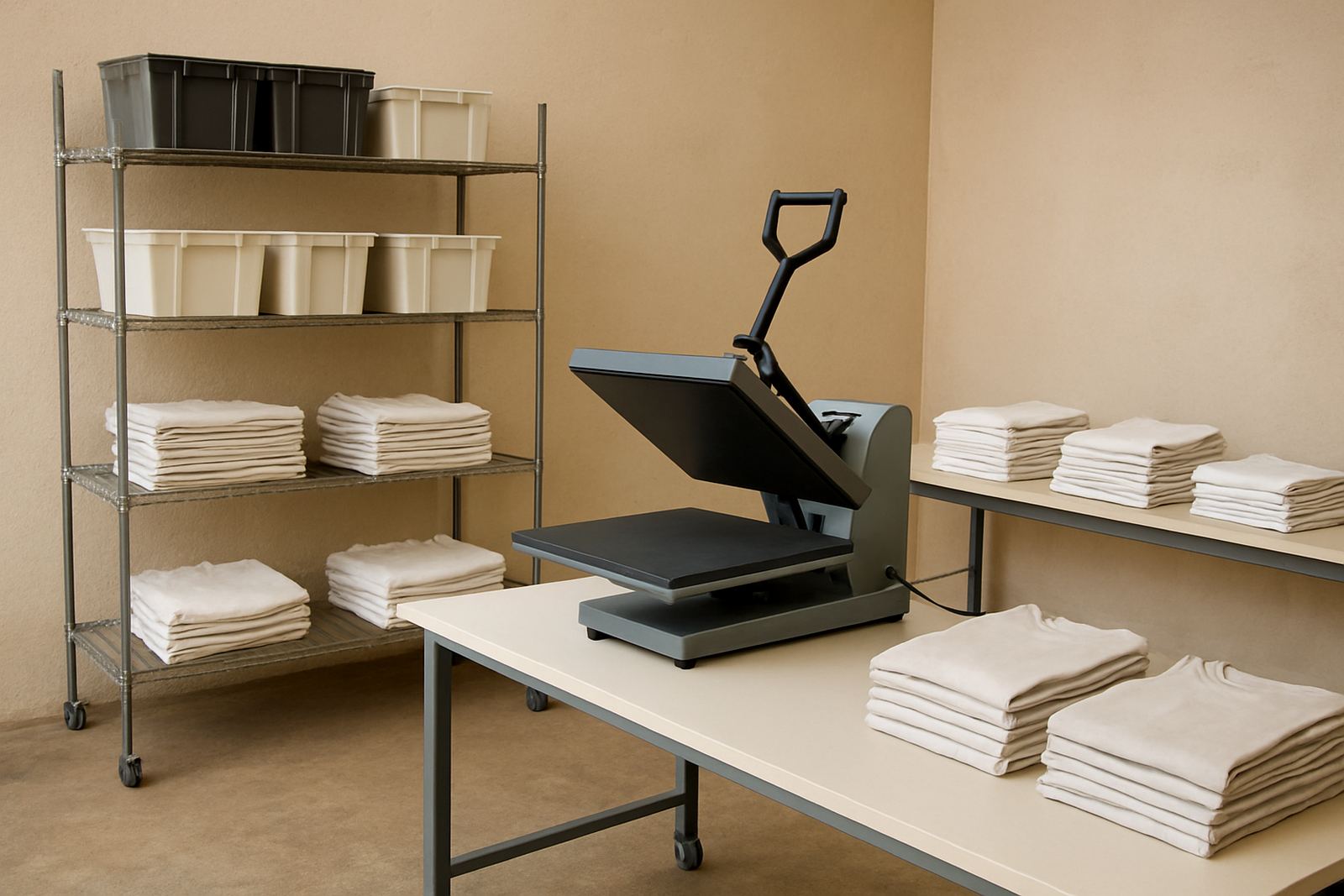
A practical workspace saves time when orders come in waves before term starts or before inter-house events. Keep your press close to the finishing table, with heat transfer storage, printed names and garments all within easy reach. This reduces handling mistakes, which are common when a team is rushed and swapping between sizes all day. A tidy layout also helps when load-shedding interrupts the flow and you have to restart without losing track of names or sizes.
It helps to mark out separate zones for pressing, cooling and packing. One area for garments waiting to be pressed, one area for finished items and one area for school labels and notes. If you are working from a small unit in Pretoria West, Boksburg or Bloemfontein, even a simple floor plan can improve output and cut avoidable errors.
- Keep the press operator facing the supply table to reduce movement
- Store names and badges in labelled batches by school and size
- Leave enough clearance around the machine for safe opening and closing
- Use a stable work surface for transfers, cover sheets and packing slips
- Plan for a backup power routine during outages and brownouts
Common mistakes that cost time and garments
Schoolwear work is detail heavy, so small mistakes show quickly. A badge placed 10 mm off centre can ruin the look of a blazer or rugby top. Too much heat can mark a polyester blend, while too little pressure leaves a transfer lifting after the first wash. Another common issue is not checking the garment type before pressing, especially when the same order includes cotton tees and synthetic sports tops.
We often see shops losing time because the press has drifted out of temperature or the pressure setting is left too light after changing fabric type. A worn pad can also create an uneven finish, particularly on school badges where the design must sit flat. If your machine starts giving uneven results, it is worth checking the element, controller and covering before the next rush order. A small fault now can turn into a bigger problem by Friday afternoon, and that is when school deadlines bite.
- Pressing without confirming fabric content and transfer settings
- Using the same pressure for all garment types
- Ignoring worn pads, covers or dirty platens
- Letting different operators guess timings instead of following one process
- Leaving controller faults until the machine stops completely
Budget ranges for a schoolwear pressing setup
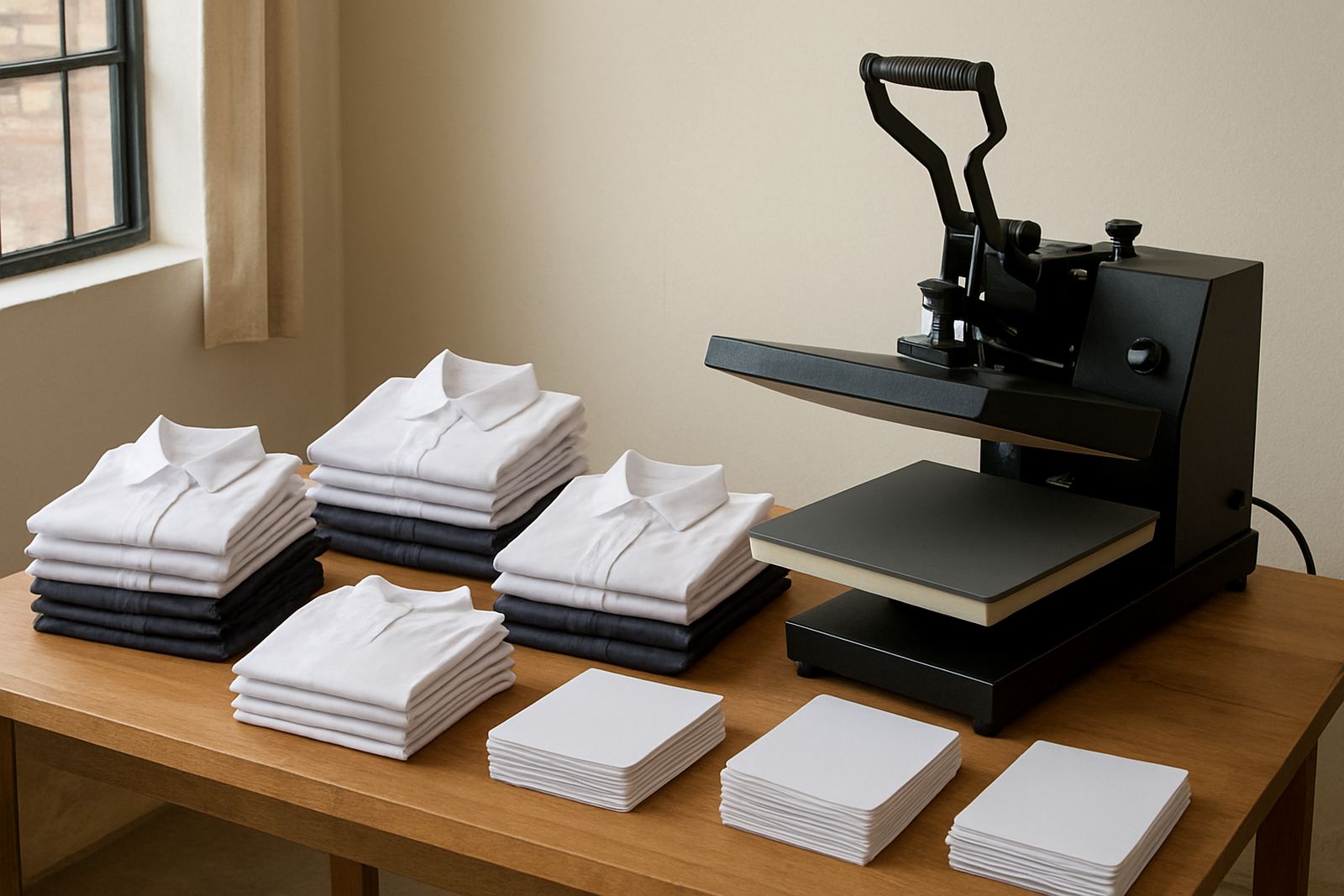
Budget depends on whether you are starting from scratch or replacing an older unit. A small schoolwear printer can begin with one press and basic support items, then build up as regular orders come in. In Rand terms, many entry level setups sit in the lower range, while a more serious production unit with better controls and backup parts will cost more but usually pays off through fewer stoppages.
As a practical guide, a basic single press schoolwear setup can start from around R12 000 to R25 000 depending on size and specification. A more capable shop setup with stronger controls, added accessories and spare support stock can run from about R25 000 to R55 000 or more. If you need installation, training, workshop repairs and couriered spares to outlying towns, it is wise to budget for service as well, not just the machine.
For schoolwear printers in Gauteng and beyond, delivery and servicing also matter. A cheap machine that sits idle during peak season is far more expensive than a properly set up press with parts on hand and someone who knows how to use it.
How FlatPress supports schoolwear printers nationwide
FlatPress works with small garment decorators, hobbyists and print shops that handle schoolwear names, badges and graphics. From our Midrand base, we support customers in Johannesburg, Pretoria, Durban, Cape Town, Bloemfontein, the East Rand and the West Rand, with courier supply nationwide where needed. Our team includes sales, technical support, training, workshop repair and logistics, so the support matches the type of job, not just the machine.
For schoolwear printers, that means help with new press setup, operator training, phone tech support, temperature checks, pressure adjustments, element replacements, controller repairs, pad and covering work, pneumatic line service, preventive servicing, spares supply and loan unit support. Whether you are starting a small side line in Midrand or running daily school orders in Cape Town, the goal is the same: steady output, clean finish and fewer wasted garments.