
What church groups usually need from a flat heat press
Most church groups start with a small but busy operation: youth camp shirts, choir tops, women’s ministry apparel, men’s fellowship tees and fundraiser orders for church events. The work often happens after hours or on Saturdays, so the press must be practical, not fussy. A good setup should heat evenly, hold pressure properly and allow different people to use it without having to relearn the machine every time.
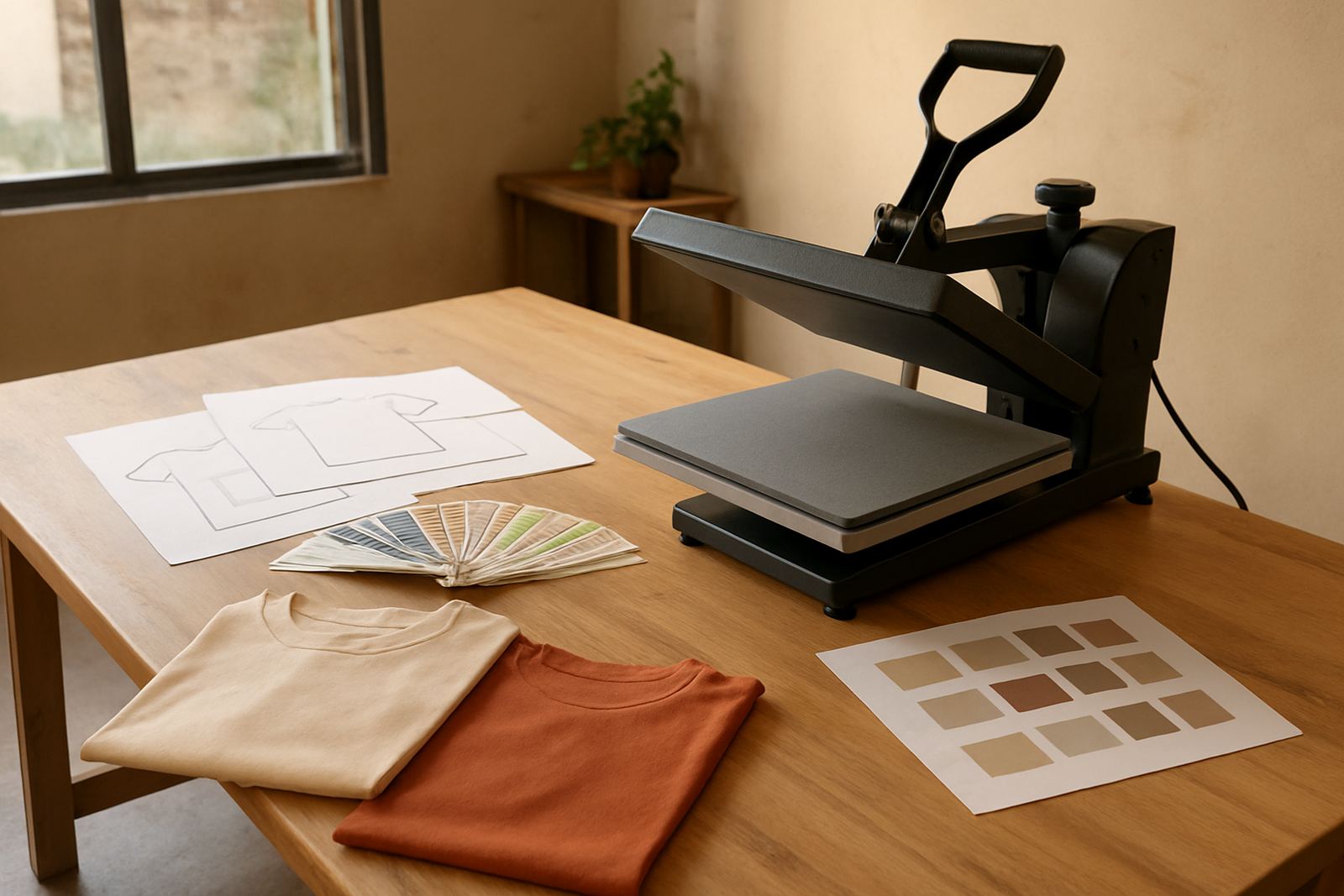
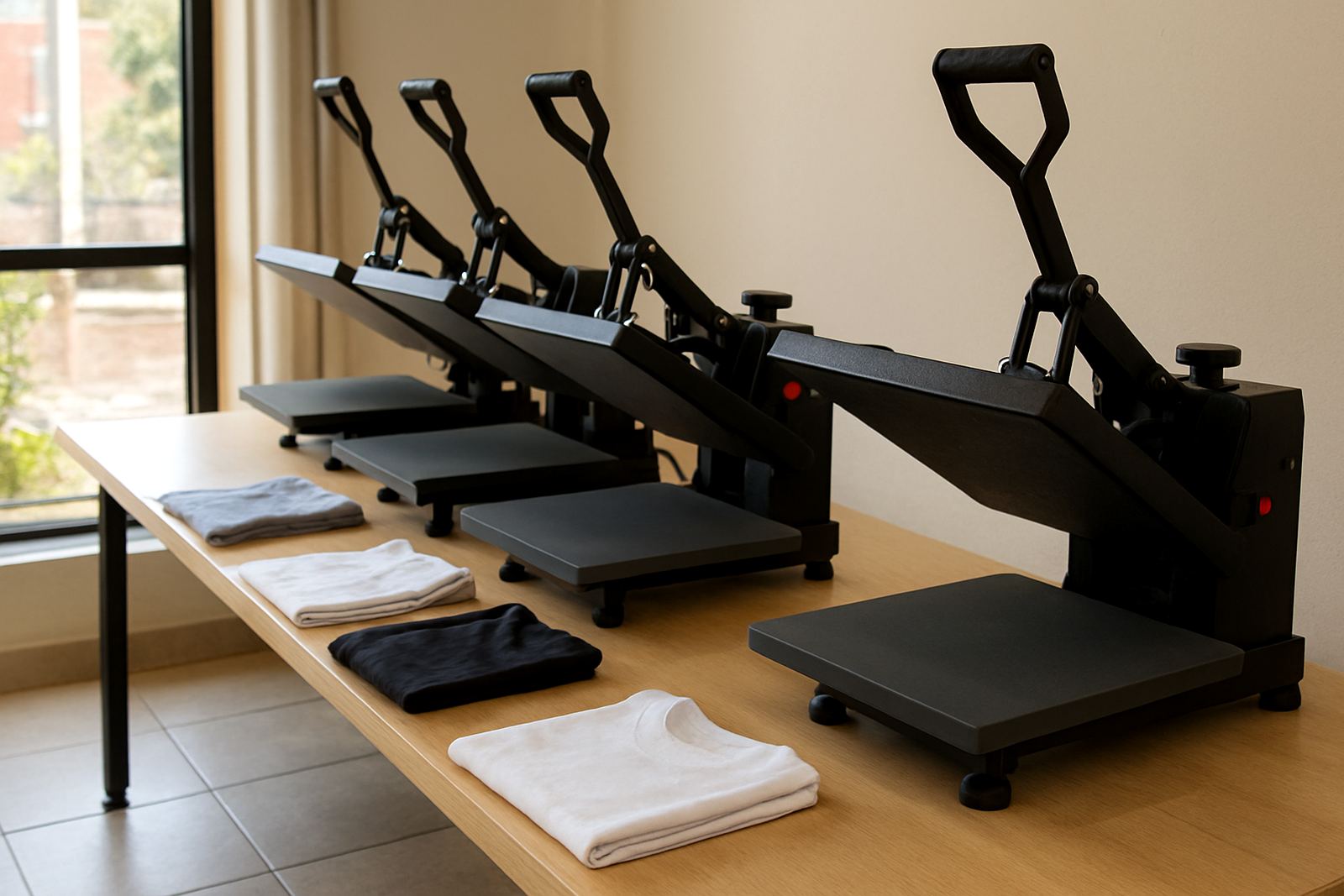
For this use case, the usual kit is a flat press for T-shirts and transfers, a stable worktable, heat resistant sheet material, a small trimming area and storage for blanks, transfers and finished stock. In churches with limited space, we often plan for a compact room, classroom corner or storeroom that can be locked after service. If the group is printing in a hall or youth room, it helps to keep everything on one side so the workflow stays clear and the room can still be used for other things.
Typical equipment sets for small and medium church print runs
Not every group needs the same size press. A small church team doing 20 to 50 shirts at a time may manage well with a manual flat press and basic accessories. Larger groups handling annual camps, conference merchandise or ongoing sales to members often benefit from a more solid press with better temperature control and faster recovery between pulls.
- Entry level flat press for small runs and training days
- Mid-size press for weekly church orders and camp apparel
- Extra platens or interchangeable pads for youth sizes and tote bags
- Heat transfer sheets, cover sheets and alignment rulers
- Simple storage for blanks, vinyl or printed transfers
- Spare heating element, controller support and replacement covers
For churches in humid coastal areas like Durban, and even in damp winter conditions inland, storing transfers and blanks in a dry cupboard helps avoid wrinkling and contamination. In Midrand and surrounding Gauteng areas, many groups also ask for setup that can cope with load-shedding, so a planned start up procedure matters. A press that is left switched off and then rushed after power returns can give uneven results if no one checks the temperature first.
Planning the workspace so volunteers can press safely
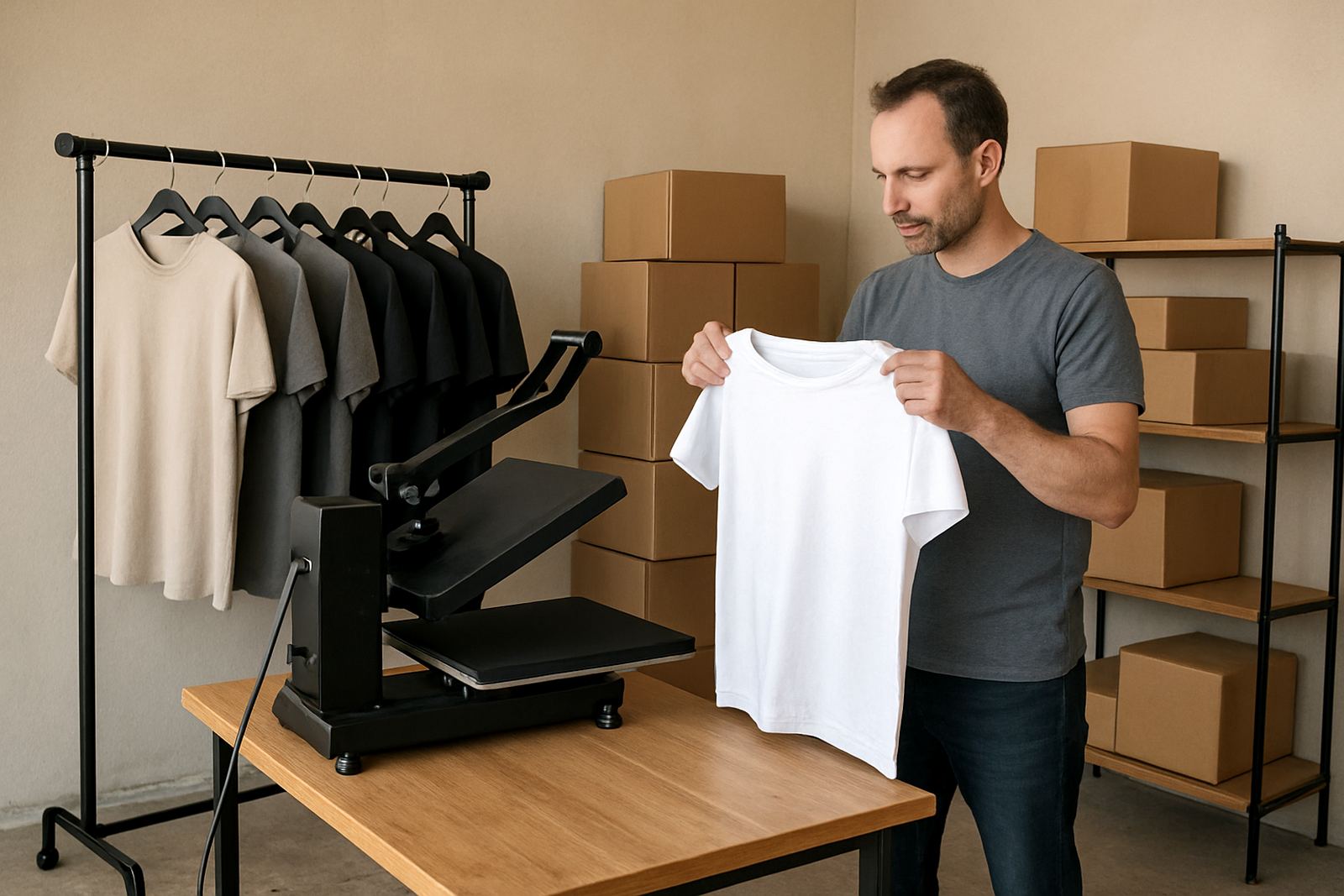
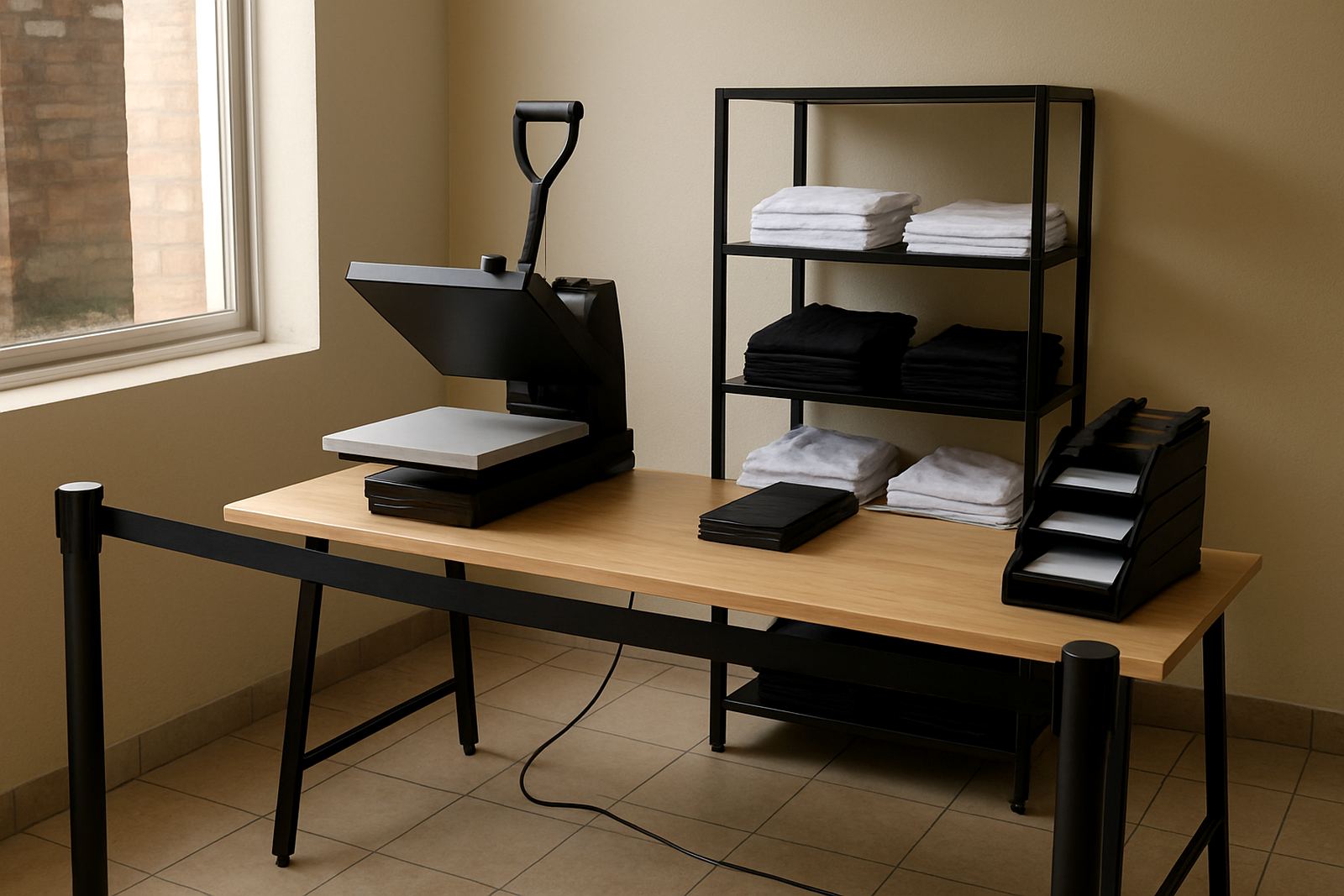
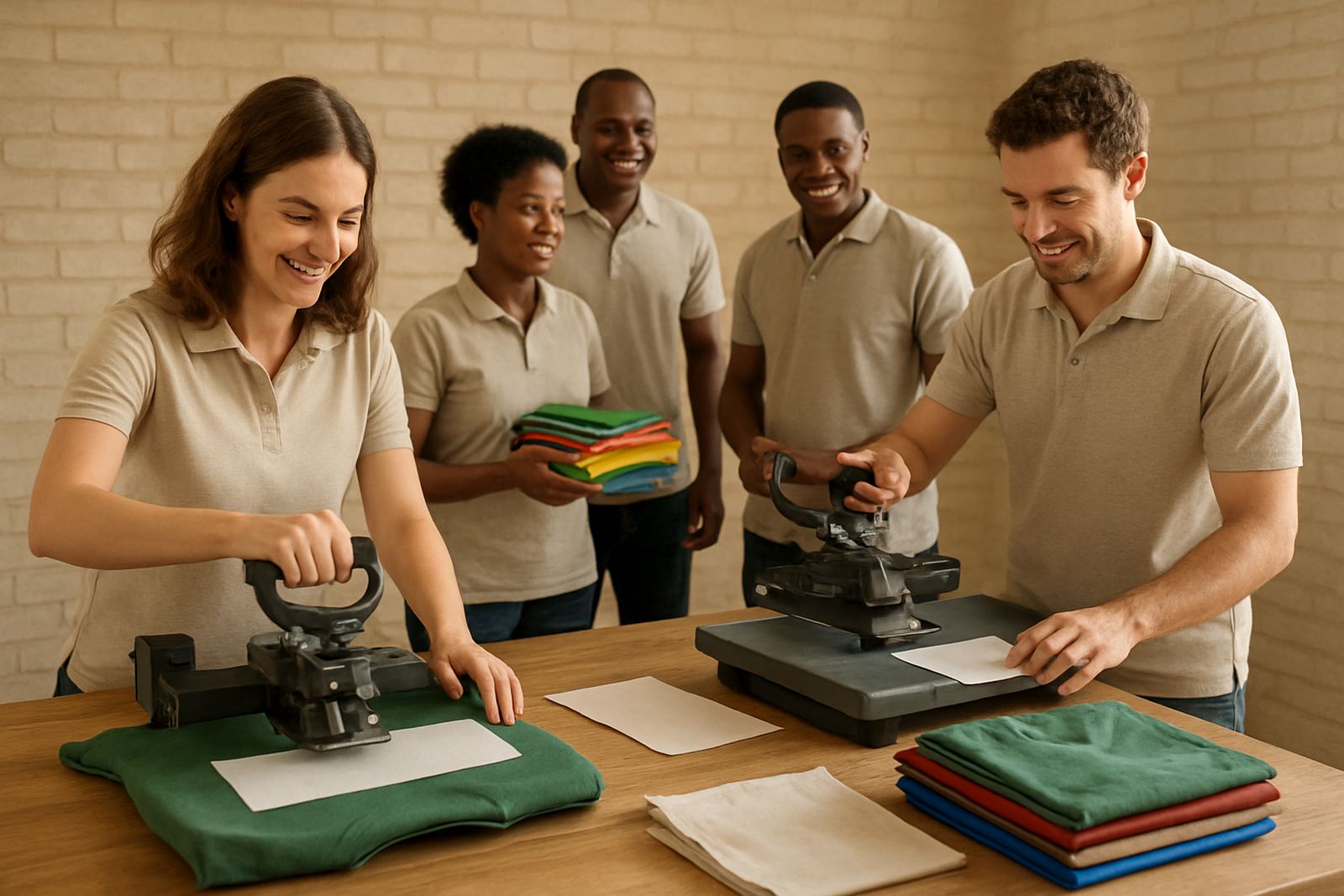
Church group printing usually happens with part-time helpers, not full-time operators, so the layout must reduce mistakes. Keep the press on a firm table at a comfortable height, with enough space to the left and right for loading and unloading shirts. Put the heat source away from children’s access, coffee stations and walkways. If the room also stores sound equipment, printed flyers or communion supplies, use clearly marked shelves so clothing stock does not get mixed up.
A sensible layout also cuts wasted time. One side of the room should be for blank garments and sorting, the centre for pressing, and the other side for cooling, folding and packing. If the group sells shirts at church fairs or community events, pack orders in numbered bundles so distribution is easy after service. It sounds basic, but small groups lose a lot of time when tops are folded without size marks or when youth and adult stock gets mixed together.
- Keep the machine on level ground and test pressure before the first order
- Leave enough room for sleeves, hoodies and larger prints
- Store transfers flat and out of direct sun
- Use one checklist for every volunteer shift
- Label boxes by size, colour and event date
Common mistakes church groups make with shirt printing
The most common mistake is buying a press only on price, then finding out that the heat is uneven or the pressure is hard to set. Another problem is underestimating training. A machine can be simple, but volunteers still need to know how long to press, how much pressure to use, and when a shirt needs a second check. We also see groups using the same settings for all garments, even though cotton, poly blends and different transfer types behave differently.
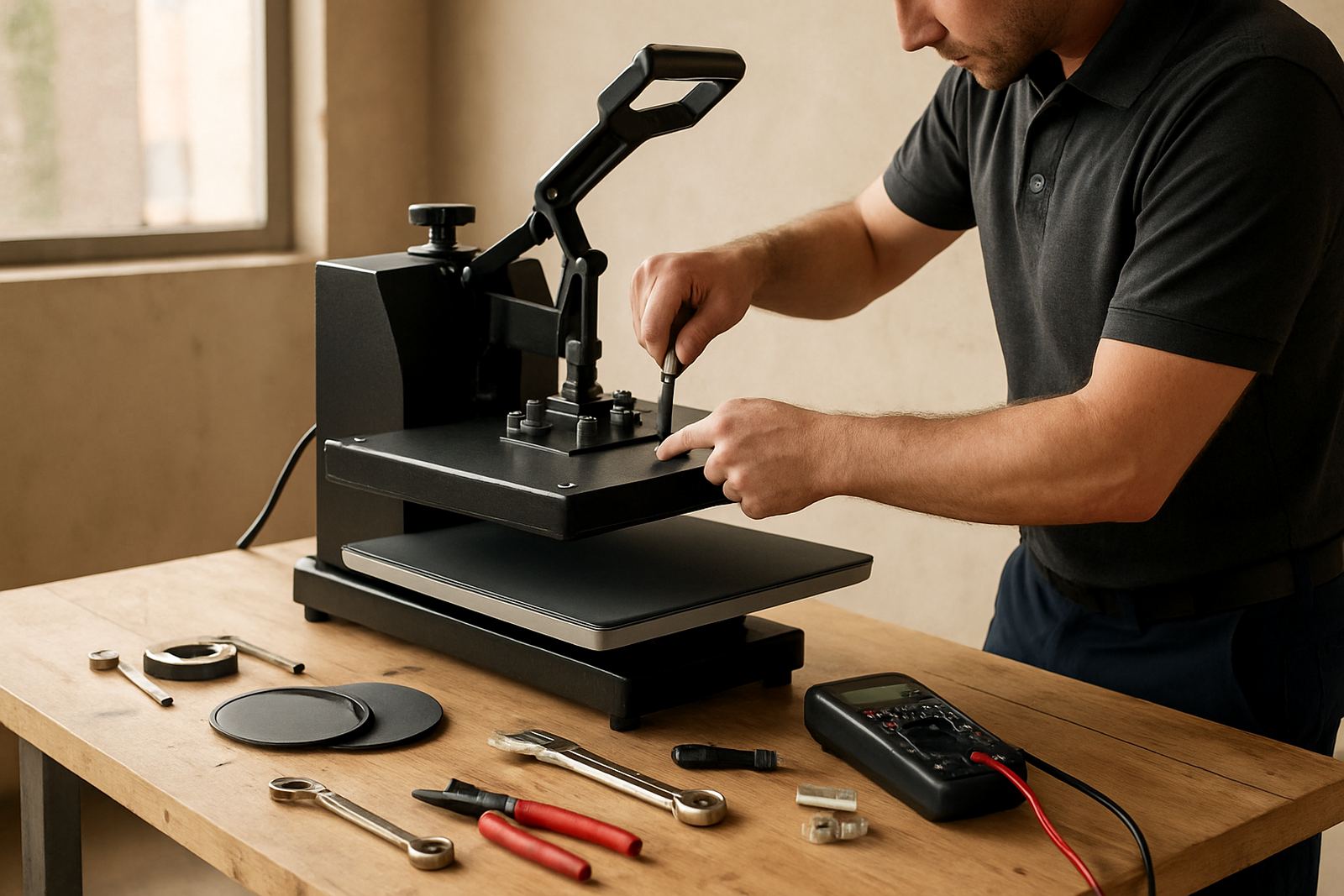
Another issue is poor maintenance. Dust, fabric lint and adhesive build up over time, especially when the press is used in a shared hall or storeroom. If the pad covering gets scorched or compressed, print quality drops fast. A tired controller can also cause heat drift, which means shirts start looking fine in the morning and patchy by the afternoon. That is where regular servicing and quick phone support help a lot, because a church order rarely has the luxury of waiting for weeks.
Budget ranges for church group printing in Rand
Budgets depend on how many shirts the group wants to produce, how often the press will be used, and whether the team needs delivery, setup and training. A very small church group setting up a simple internal fundraiser may start with a basic package in the lower thousands. A busier ministry printing through the year may need a stronger machine, spare parts and a proper handover so several people can operate it.
As a working guide, many church groups should budget around R12,000 to R25,000 for an entry level setup, and R25,000 to R45,000 for a more capable mid-range package with better support. Larger groups that want a more durable setup, extra accessories and planned servicing can go beyond that. Freight to Durban, Cape Town, Bloemfontein or other outlying towns can also add to the total, so it is worth planning the full cost before the first order is taken. It is better to buy once than to replace a machine after a few rushed fundraisers.
- Basic starter setup: around R12,000 to R25,000
- Mid-range church production setup: around R25,000 to R45,000
- Ongoing spares, covers and servicing: budget extra each year
- Courier and install costs may vary by town and order size
How FlatPress supports church groups after the first order
Church teams often need more than the machine itself. They need help with setup, practical training and someone who can explain what to do when a shirt starts lifting at the corners or the temp seems to wander. FlatPress supports small garment decorators, hobby users and professional print shops, and that includes ministry groups that print for their own events and community drives. We help with new press setup, operator training, temperature checks, pressure adjustments, element replacements, controller repairs, pad and covering changes, pneumatic line service, preventive servicing, spares supply and loan unit support where available.
From our Midrand base, we supply and service church groups in Johannesburg, Pretoria, the East Rand, West Rand, Durban, Cape Town and Bloemfontein, with nationwide courier support where needed. If your team is planning a youth camp, women’s day, choir anniversary or fundraiser run, the best time to sort the press is before the order is promised. That gives the group time to test samples, train volunteers and avoid the last minute panic that usually comes with big event printing.