When promotional clothing orders start stacking up
If you supply branded clothing for companies, schools, clubs or campaign work, your press usually has to handle mixed jobs in the same day. One hour it is 20 cotton T shirts for a roadshow, the next it is tote bags or staff tops with a simple left chest logo. That kind of work needs a flat heat press that heats evenly, closes square and stays consistent from the first garment to the last.
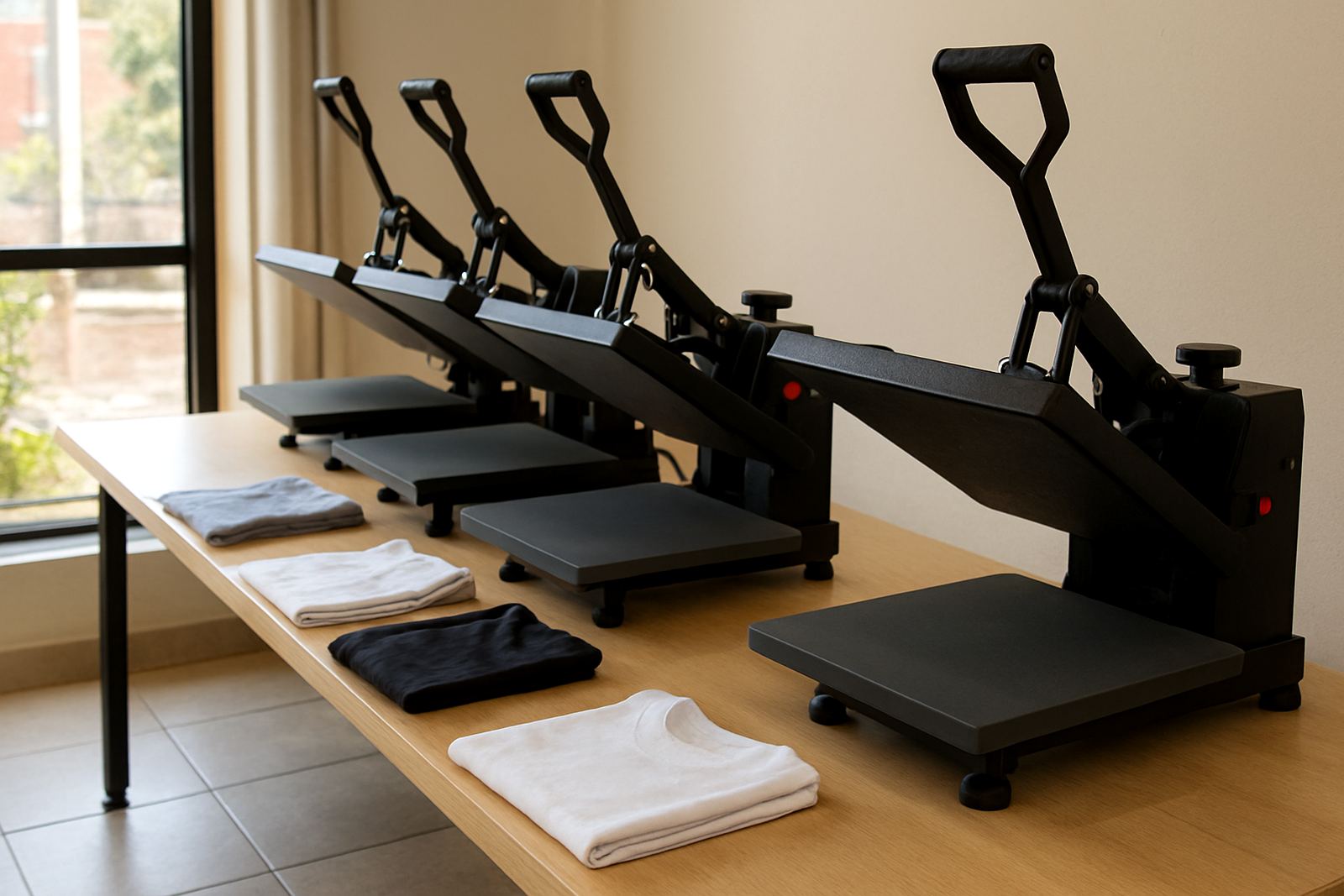
We work with small garment decorators, in-house marketing teams and print shops in Midrand, Johannesburg, Pretoria, Durban, Cape Town, Bloemfontein and the East Rand. Some clients run one machine and do everything themselves. Others have a full production area with a cutter, a heat press and a drying rack, plus a second machine for back-up when orders pick up before an event. A press that is set correctly saves time, reduces rejects and helps protect profit on each garment.
For promotional clothing suppliers, the biggest pressure is often not the artwork, its turnaround. A client may confirm artwork late on a Tuesday and want stock ready by Thursday morning. If the press temperature drifts or the pressure is uneven, the whole batch can be affected. That is why setup, temperature checks and operator training matter just as much as the machine itself.
Typical flat press set-up for clothing work
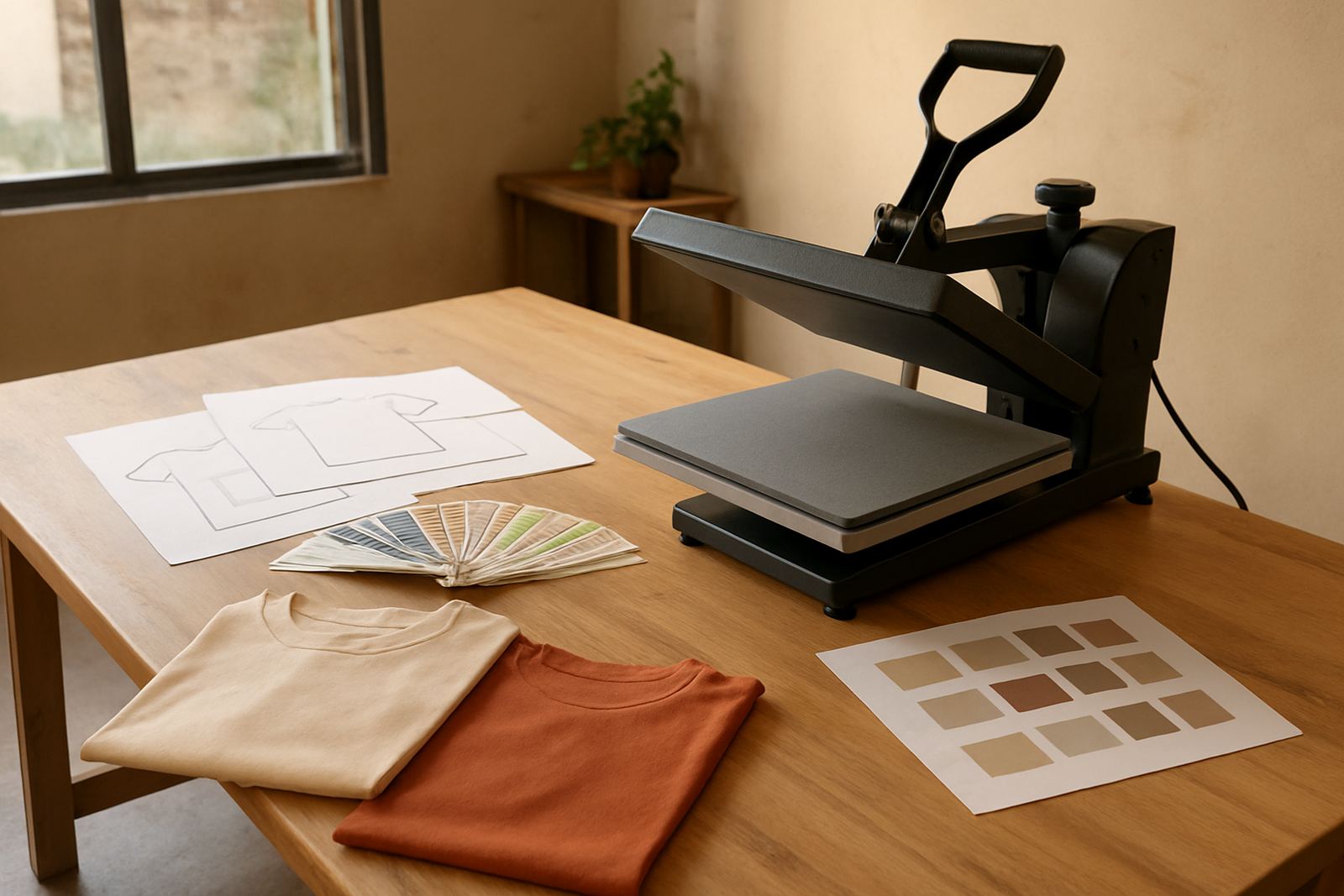
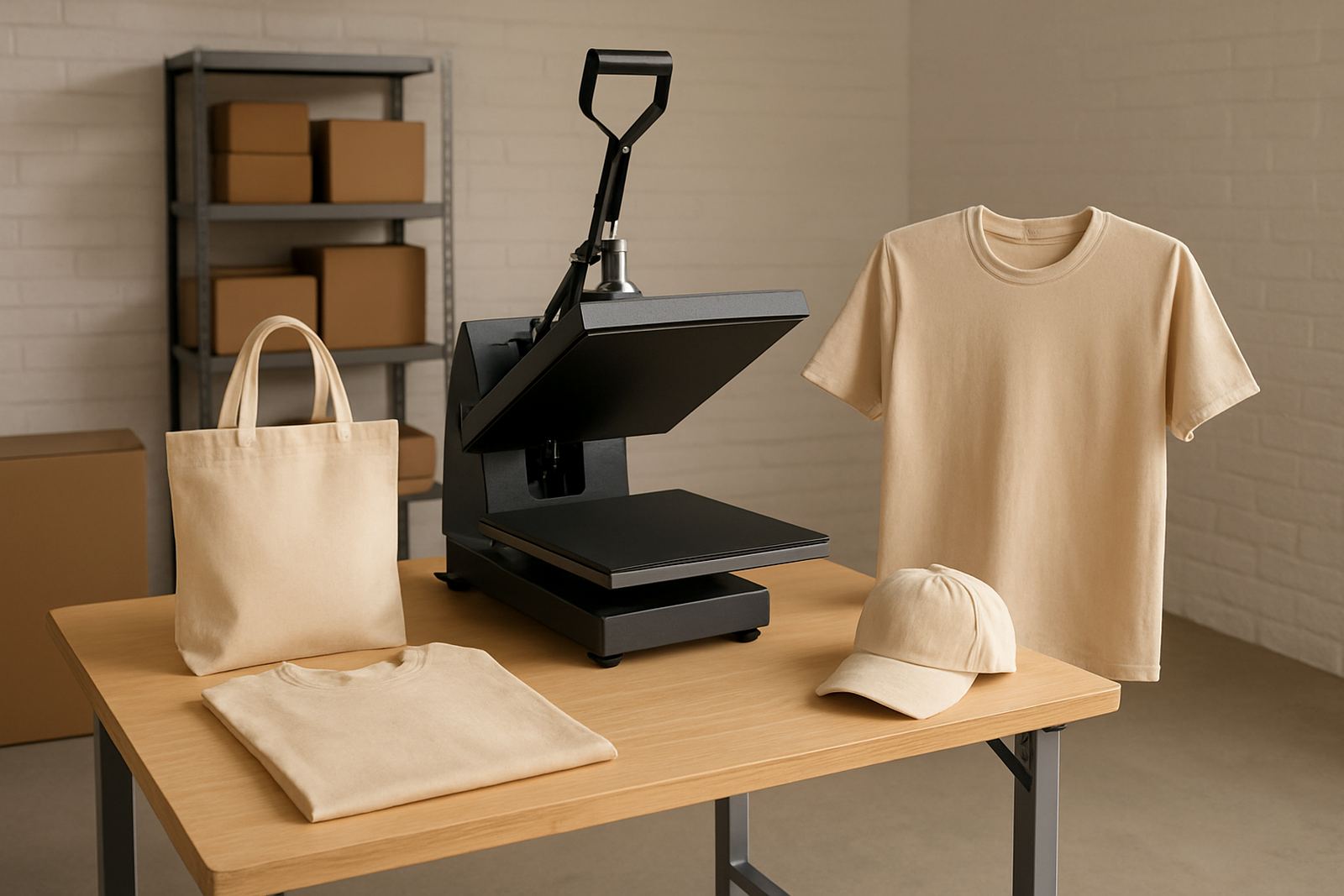
Most promotional clothing jobs rely on a flat press with a stable lower platen, a heating top platen and clear temperature and timer controls. Depending on the volume, some sites use a single manual unit while others prefer a pneumatic line for more repeatable pressure on heavier runs. In a busy shop, a second unit can be kept ready for transfers, sleeves or smaller sizes so there is less downtime between orders.
- Manual flat press for small to medium daily output
- Pneumatic flat press for repeatable pressure on longer runs
- Heat resistant pad and cover for clean transfer results
- Spare controller or element support for faster repairs
- Loan unit support when a machine needs workshop attention
The right set-up depends on the kind of garments you handle. Lightweight promotional tees need a press that comes up to temperature quickly and holds even heat. Heavier hoodies and workwear may need more pressure and better platen alignment. In humid coastal areas like Durban and Cape Town, storage conditions matter too because moisture can affect transfer results and paper stock if your area is not properly managed.
Planning the layout around event clothing production
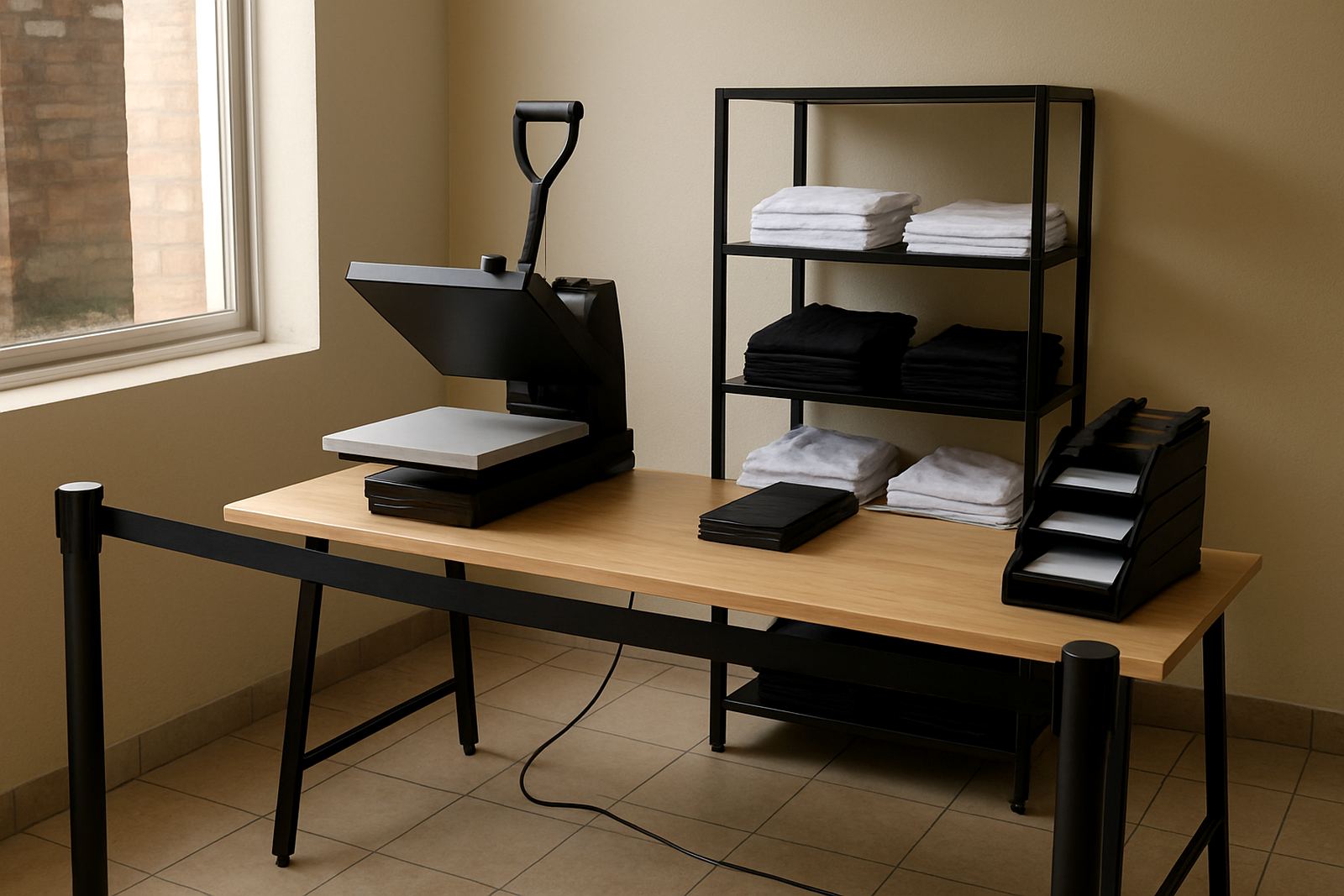
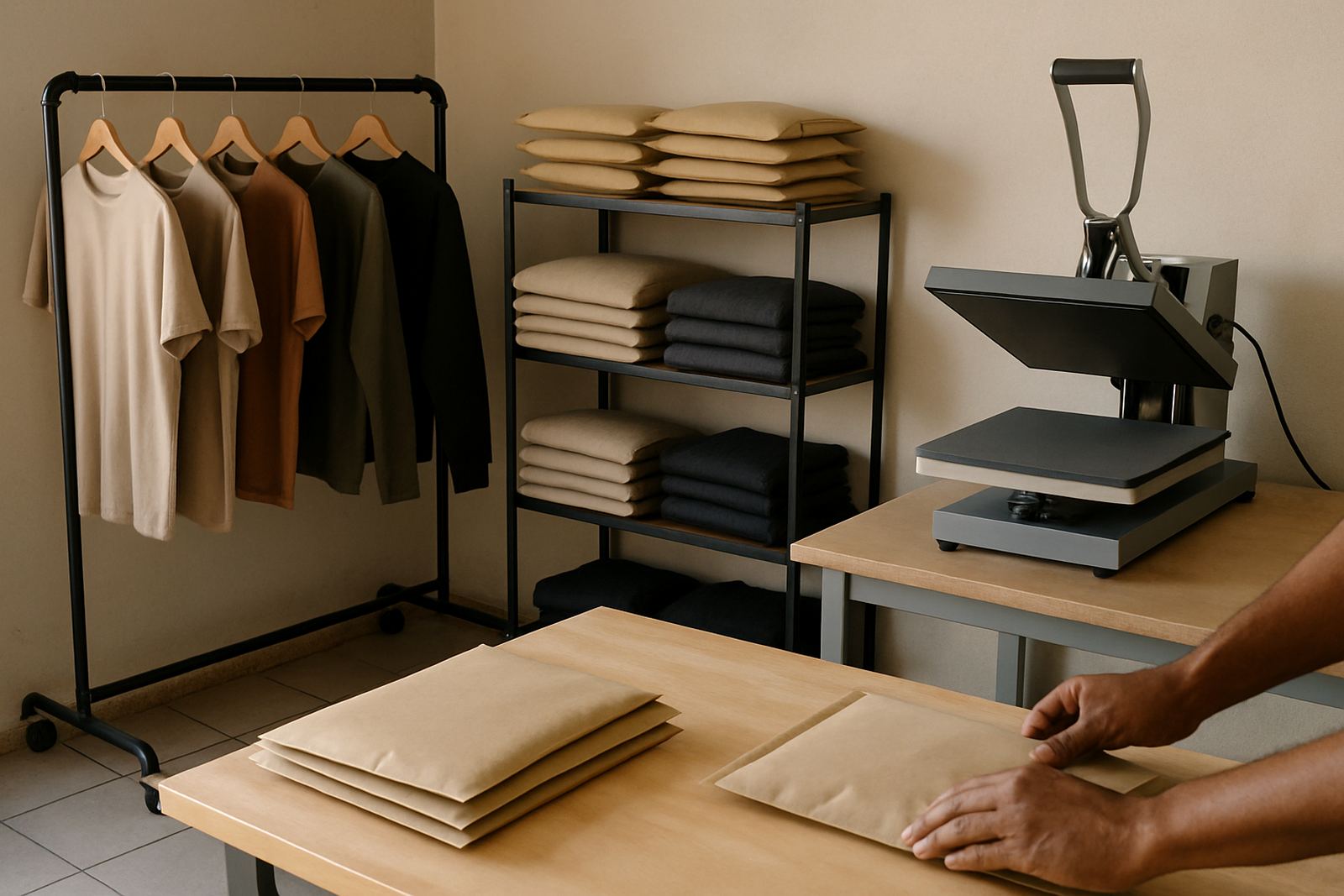
A good layout makes a big difference when you are filling sponsor orders, campaign packs or staff uniform runs. Your press should sit close to the garment staging area, transfer storage and packing space so operators are not walking back and forth with every piece. In a small Midrand or Johannesburg workshop, a simple U-shaped flow often works well: artwork prep on one side, pressing in the middle, and folding or packing on the other.
Leave enough room around the press for loading, moving hangers and checking finished items. If you do a lot of left chest branding, sleeve prints or varied sizes, plan for trays or racks that keep work organised by order number. It is also worth thinking about power points and load-shedding backup. A press that sits idle during a power cut can delay dispatch, so some businesses add inverter support or schedule pressing for the parts of the day when power is most stable.
- Keep transfer paper, garments and finished stock in dry storage
- Place the press near a packing table to reduce handling
- Mark one area for rejects and rework so mistakes do not mix with approved stock
- Use clear order labels for size, colour and print position
Common mistakes on promo clothing jobs
Many clothing suppliers lose time on the same avoidable issues. The first is inconsistent temperature. If a machine is running hotter on one side, you may see patchy bonding or transfer edges lifting after washing. The second is poor pressure setting. Too much pressure can flatten garment texture or leave marks, while too little pressure can cause weak adhesion. A third problem is rushed operator handling, especially on fast event work where every piece looks the same but the garments are not all identical.
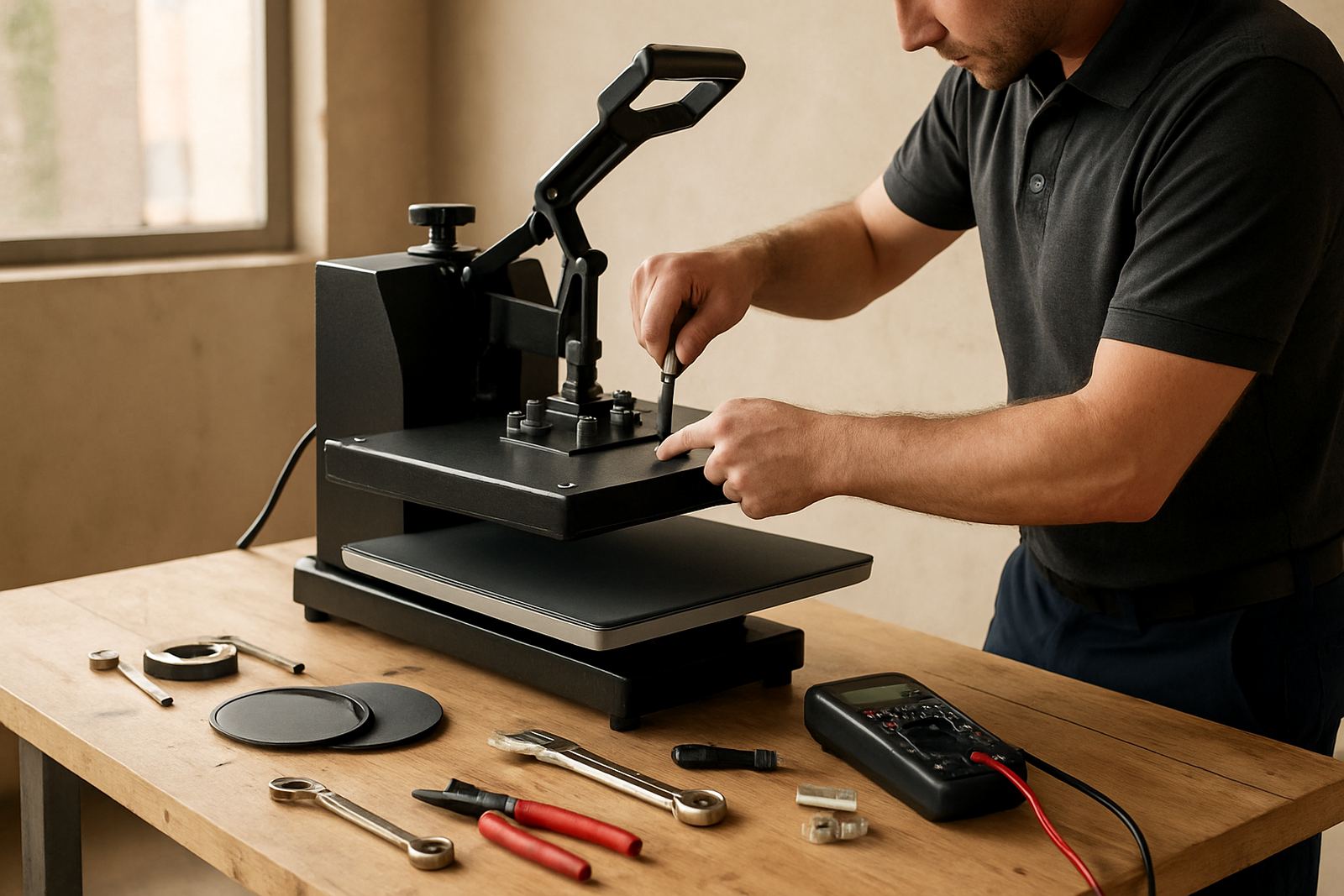
Another common mistake is not checking the press pad and covering often enough. Worn padding can change the feel of the press and affect final results, especially on thicker garments. On some sites, the controller is never checked until it fails, which usually means an urgent repair during a busy week. Preventive servicing is cheaper than losing a Friday delivery because the machine stopped heating properly. It is also worth keeping an eye on cables, hinges and platen alignment, since small wear can turn into bigger downtime.
For new teams, training makes a big difference. A good operator should know how long to preheat, how to test pressure, how to verify temperature and when to hold back a job that is not ready. That kind of discipline protects both stock and margins.
Budget ranges for promotional clothing suppliers
Budgets vary depending on output, garment type and whether you are buying one press or setting up a full production line. Smaller start-up suppliers often begin with a dependable manual flat press and basic training, while larger print shops add spares, a second machine and service support from the start. If your work is seasonal, it can also make sense to budget for a loan unit so production does not stop when repairs are needed.
As a practical guide, South African clothing suppliers often plan in these ranges:
- Entry-level setup for smaller order volumes: from about R8 000 to R18 000
- Mid-range setup with better control and workflow support: from about R18 000 to R45 000
- Higher-output setup with pneumatic pressure and service backup: from about R45 000 upwards
- Workshop repairs, elements, controllers and pads: priced according to the fault and machine type
If you are supplying promotions across Gauteng or shipping nationally, the real cost is not only the machine. Downtime, rejected garments and missed collection times all add up. A setup that is correctly installed and supported usually pays for itself by keeping urgent orders moving and reducing waste.
Support that keeps clothing orders moving
FlatPress supports promotional clothing suppliers with new press setup, operator training, phone tech support, temperature checks, pressure adjustments, element replacements, controller repairs, pad and covering work, pneumatic line service, preventive servicing and spares supply. We also assist with loan units where available, which helps when a machine is booked for workshop attention and a deadline is still close.
Clients reach us through the enquiry form on our contact page, and we work from our Midrand base while supplying Johannesburg, Pretoria, the East Rand, the West Rand, Durban, Cape Town, Bloemfontein and other areas nationwide by courier. Whether you are pressing 15 shirts for a local event or 500 items for a corporate campaign, the aim is the same: steady heat, correct pressure and fewer surprises on dispatch day. That is the difference between chasing faults and running a shop that can trust its equipment.