
The daily reality for online shirt sellers
Most online apparel sellers do not need a factory line. You need a press that can handle 10 to 50 orders at a time, switch between sizes quickly, and keep the finish consistent from the first shirt to the last. That is especially true when orders come in bursts after payday, weekend promos, or a social media campaign.
In practice, the work space is usually small. A back room in Midrand, a garage in Johannesburg, or a spare storeroom in Pretoria often has to do double duty as packing area and pressing area. The machine must be easy to use, safe for one person, and stable during load-shedding or after power returns when voltages can fluctuate.
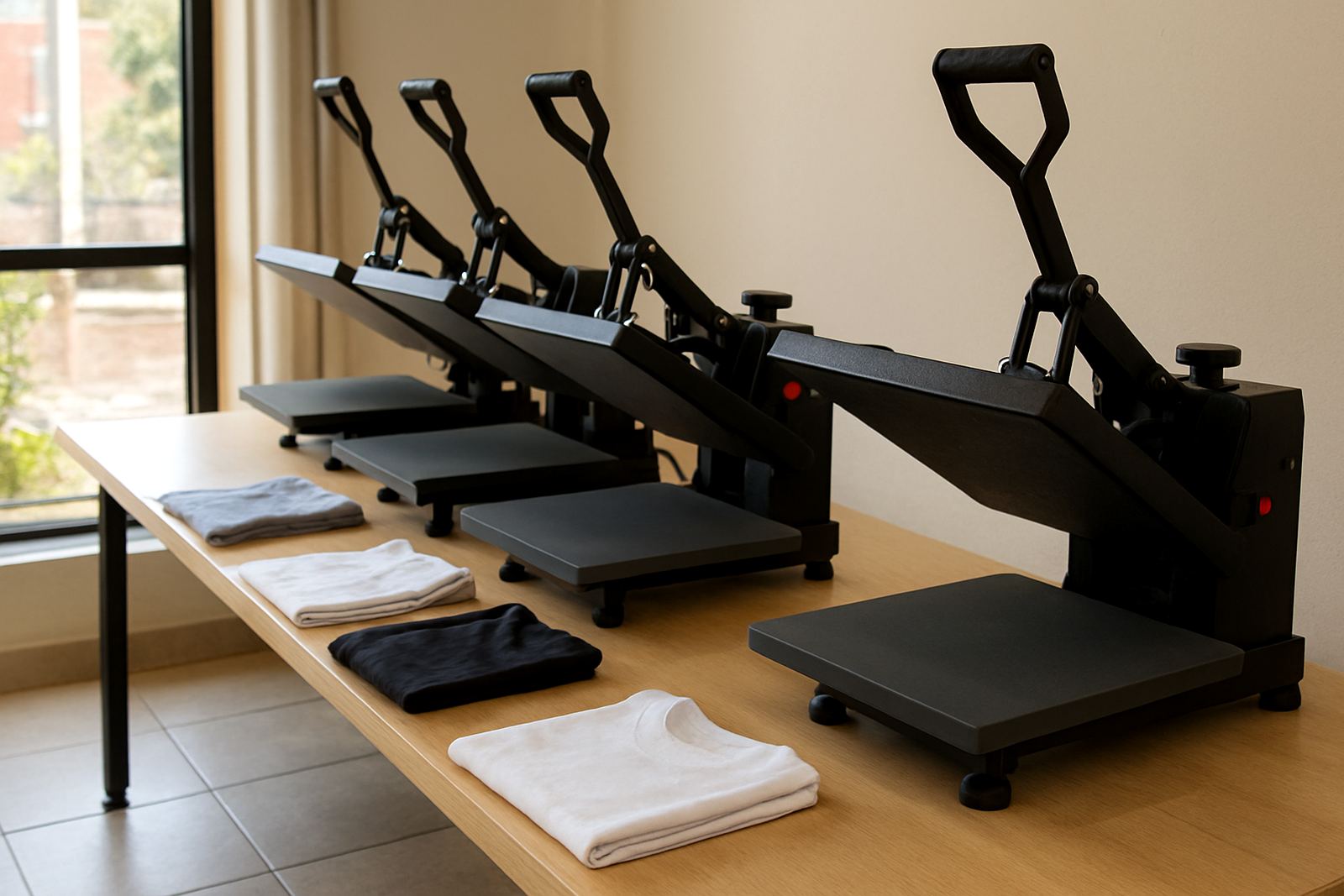
Typical flat press setup for batch orders
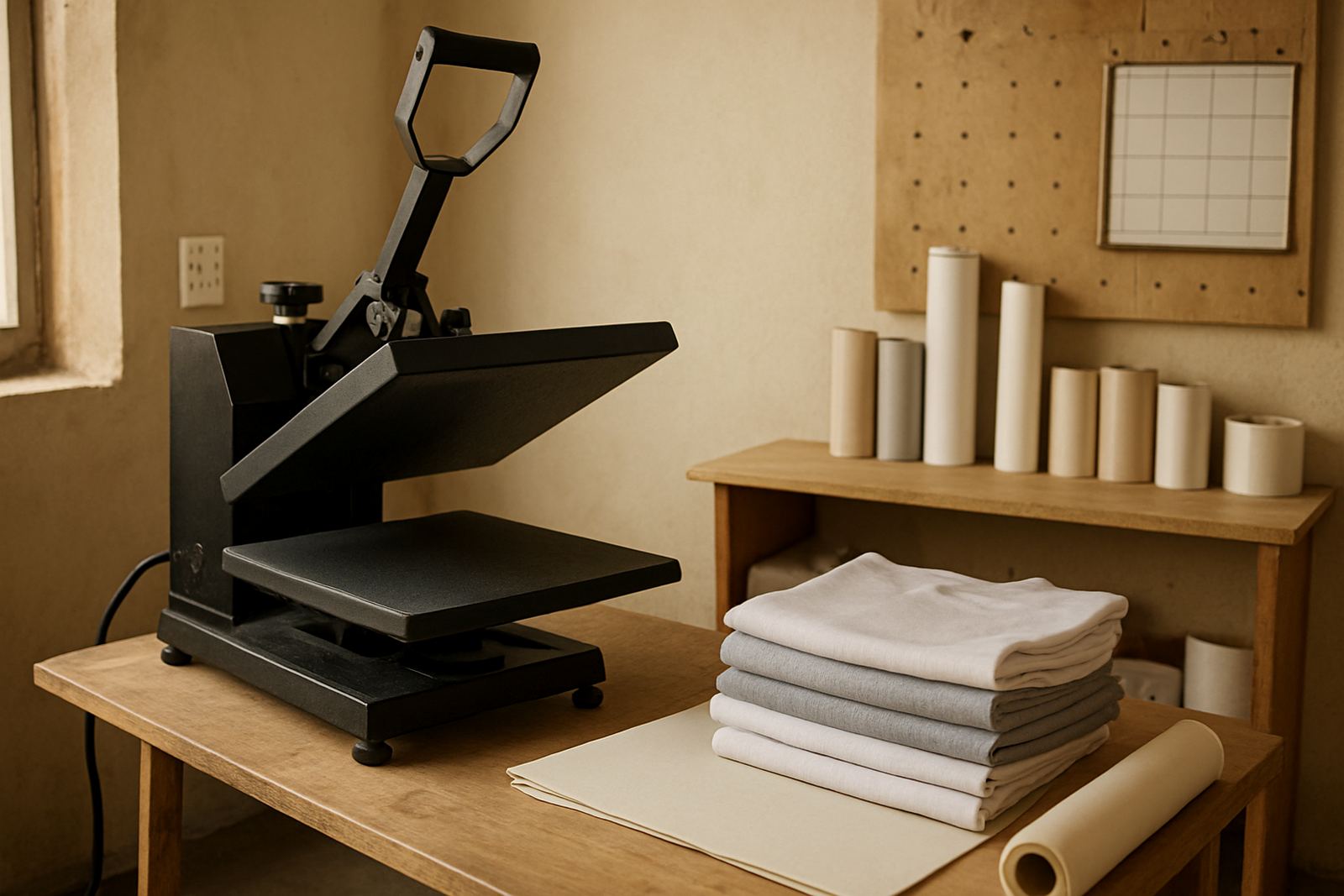
For online sellers pressing direct-to-garment transfers, vinyl or DTF transfers onto cotton and polycotton tees, a single flat press is usually the core machine. A 38 x 38 cm press suits small runs and youth sizes. A 40 x 50 cm unit gives more room for larger artwork, hoodies and tote bags. For growing shops, a swing-away or clamshell style unit with digital time and temperature control is common.
- Flat heat press with even platen pressure
- Heat-resistant silicone pad and cover
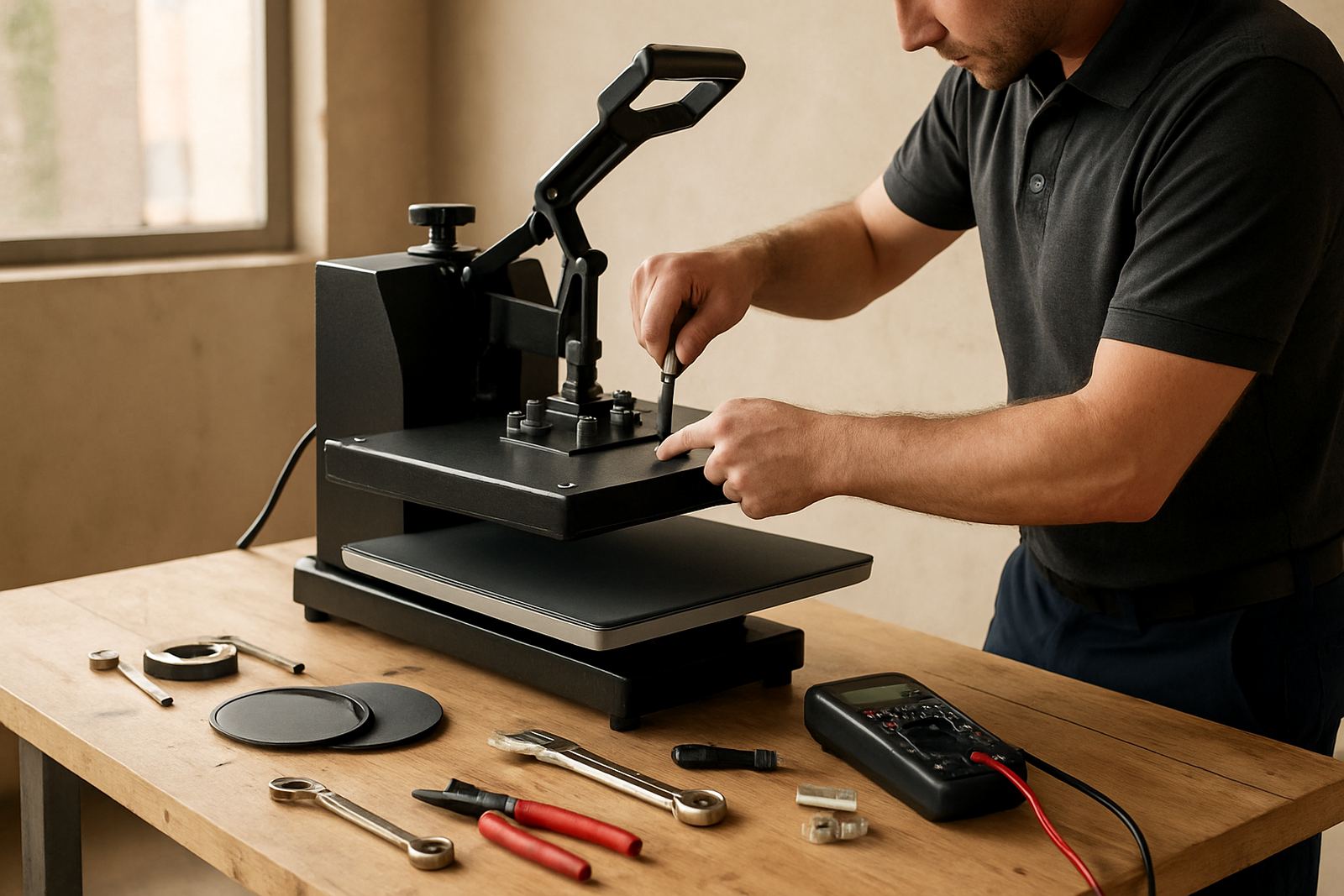
- Spare fuse, controller access and basic tools
- Test transfer sheets and sample garments
- Heat tape, Teflon or protective sheet, and lint roller
For sellers working from coastal areas like Durban or Cape Town, storage matters too. Keep transfer media and finished garments in a dry area, because humidity can affect adhesive performance and curl on some materials. A small dehumidifier or sealed storage tubs can save a lot of wasted stock.
Layout and workflow that save time
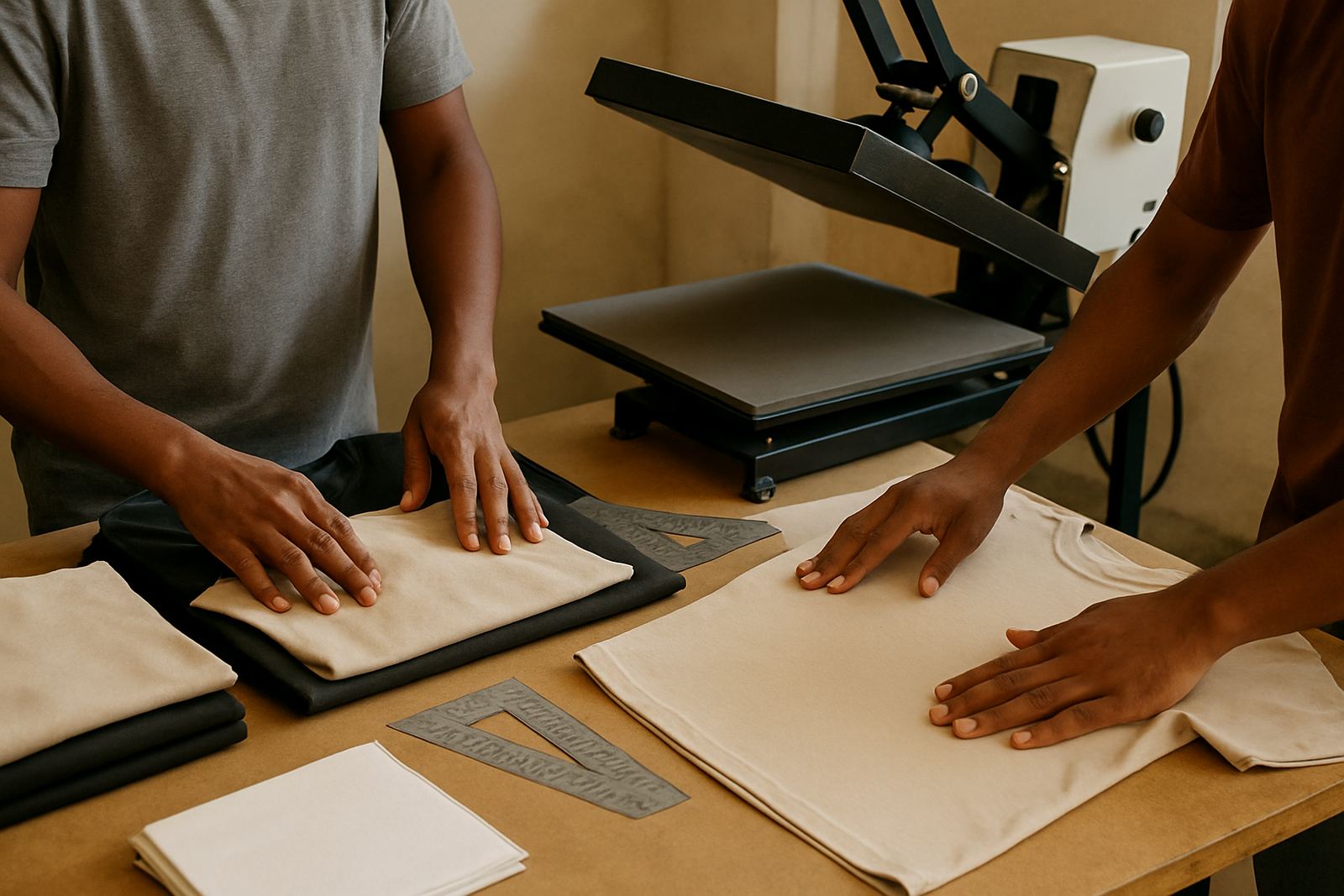
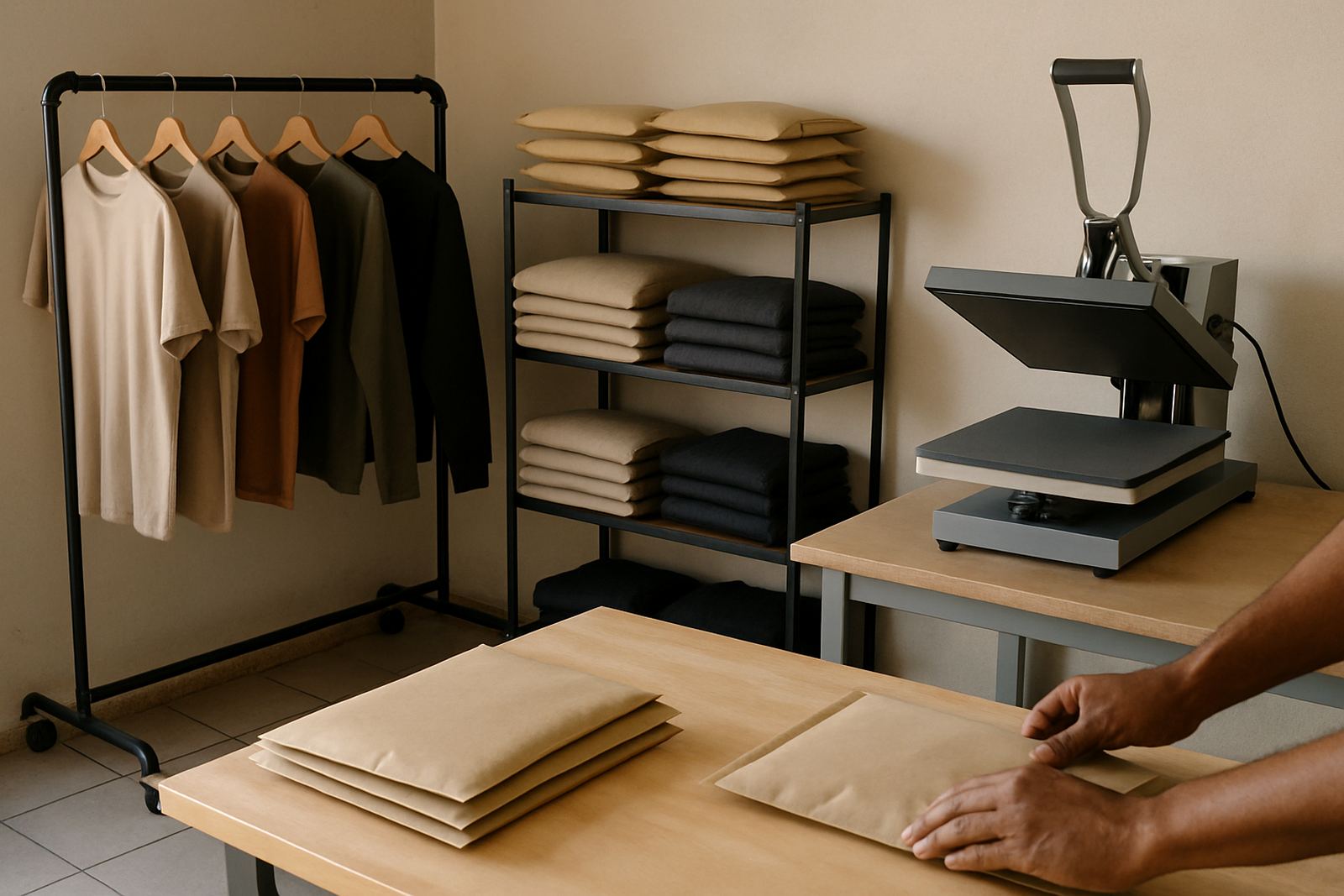
A good layout reduces mistakes and keeps your fulfilment moving. Place your press close to the garment sorting table, with finished packing boxes on the opposite side. Keep blanks by size and colour in clearly marked tubs, and store printed transfers in order by customer name or order number.
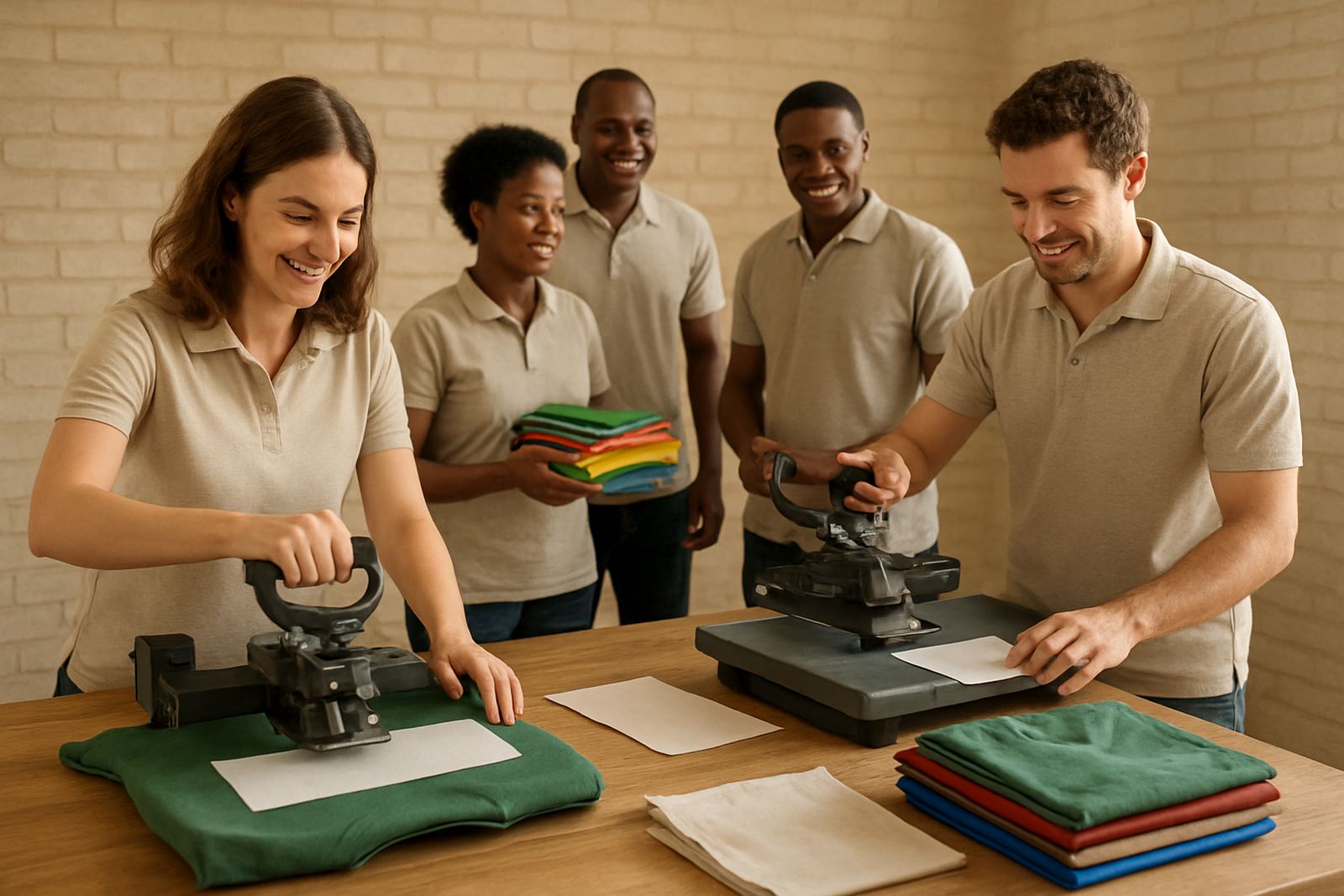
The aim is to avoid backtracking. If one person is unpacking orders, another should not have to cross the room to check sizes every few minutes. A simple flow of receiving, sorting, pressing, cooling and packing works best for small e-commerce teams.
- Leave space around the press for safe movement and heat dissipation
- Use a strong table at waist height to reduce fatigue during long sessions
- Keep a small QC area for checking print alignment, creases and ghosting
- Plan for backup lighting and power protection during outages
Common mistakes that cost online sellers money
Many first-time sellers assume the press is the only investment. In reality, small errors in setup can cause spoilage, returns and delays. Wrong pressure, uneven heat, or rushing cooldown time can leave marks on the garment. A press that has not been checked after moving to a new premises can also be slightly out on temperature, which is easy to miss until several shirts have been wasted.
Another common issue is overcommitting to sales before the work area is ready. If your pack out is 30 orders a day but your press can only safely do 15 in one sitting, you will build a backlog fast. It is better to set realistic daily output and then scale once the process is proven.
- Pressing at the wrong temperature for the transfer type
- Using too much or too little pressure
- Not testing garments from different suppliers
- Skipping pre-pressing to remove moisture and wrinkles
- Ignoring worn pads, damaged covers, or controller faults
Budget ranges in Rand for a small order-based business
A starter setup for an online apparel seller can begin at roughly R12 000 to R25 000 for a dependable flat press, basic accessories and initial setup. If you want a larger platen, improved pressure control, spare parts and a backup unit, budget closer to R25 000 to R45 000. More active shops, or those running daily batch work, often plan for R45 000 plus when including support items and installation.
Those figures can shift depending on transport to outlying areas, installation needs, and whether you want operator training on site. In Gauteng, many sellers start in Johannesburg or Pretoria and expand to East Rand or West Rand once order volumes justify a second machine. Nationwide courier supply is often the practical route for smaller towns too.
Support that keeps orders moving
When you rely on daily production, downtime is expensive. That is why online sellers often value phone tech support, temperature checks, pressure adjustments and spare parts supply just as much as the machine itself. A quick fix on a controller or element can save a week of missed orders.
FlatPress works with small garment decorators, hobbyists and professional print shops from our Midrand base, with setup and servicing in Johannesburg, Pretoria, Durban, Cape Town, Bloemfontein and beyond. Our team handles new press setup, operator training, preventive servicing, pad and covering replacement, pneumatic line service, loan unit support and workshop repairs so you can keep shipping. A good press should earn its keep every week, not sit waiting for attention.