
What uniform resellers need from a heat press
Uniform resellers usually work on repeat orders, mixed garment sizes and time pressure. One day it is 20 golf shirts for a school, the next it is 8 jackets for a logistics team or 60 aprons for a restaurant group. The press has to hold temperature, close squarely and give the same result from the first item to the last.
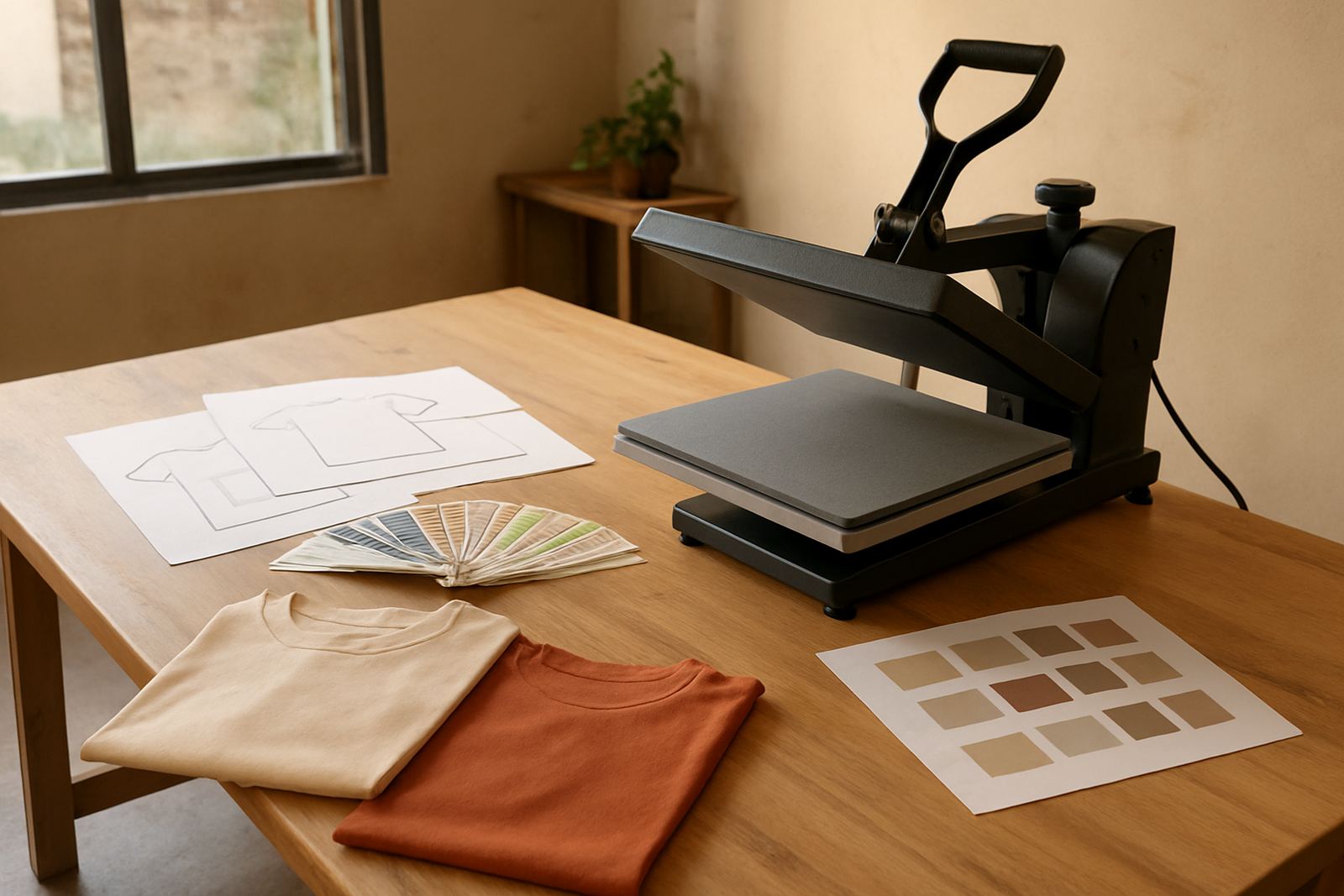
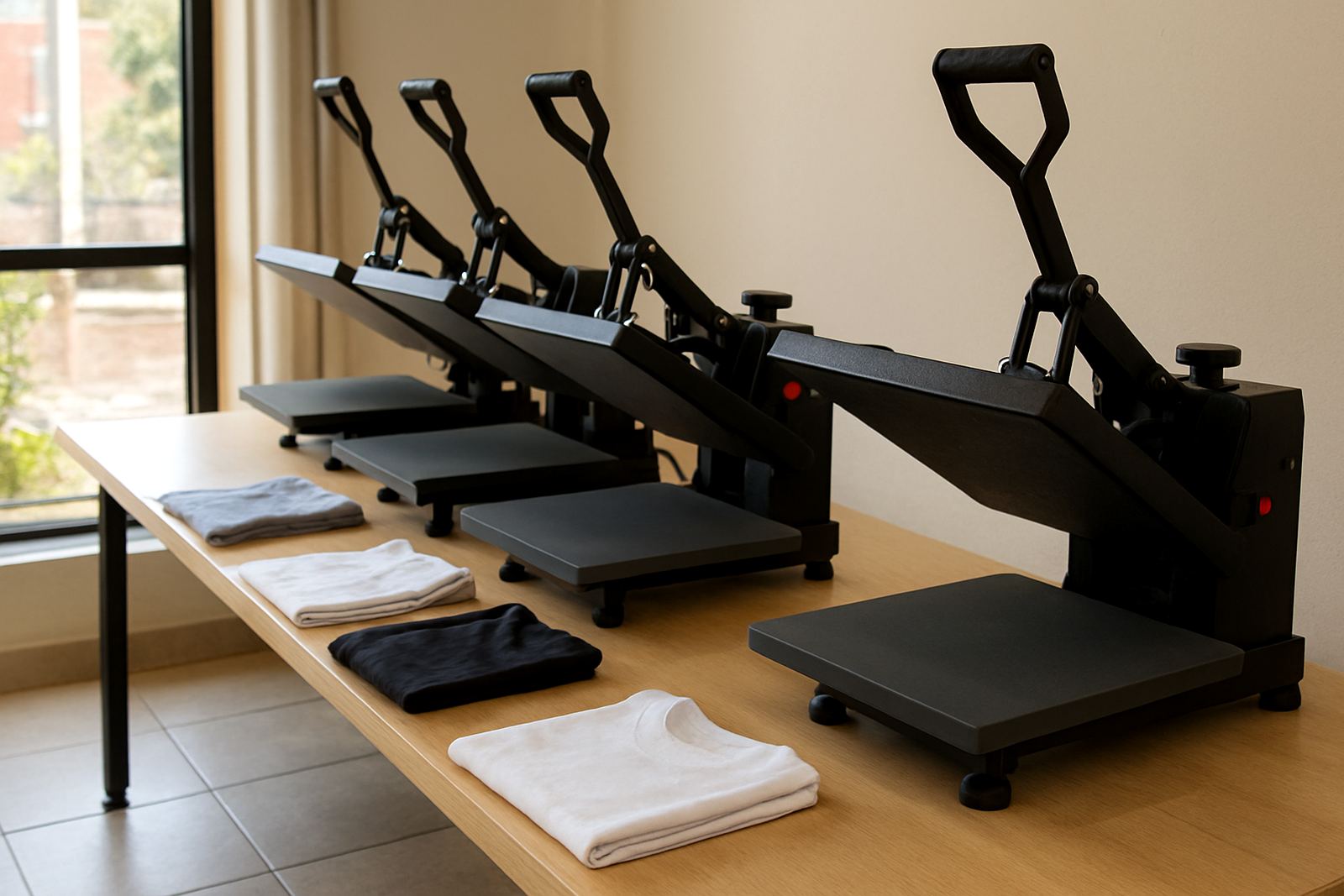
For this use case, we normally recommend a flat heat press with a clear digital controller, even platen pressure and enough opening space for thick garments. A 38 x 38 cm or 40 x 50 cm machine suits most shirt, transfer and name applications. Bigger garments may need a wider plate or a clamshell with extra clearance, depending on the items you handle most.
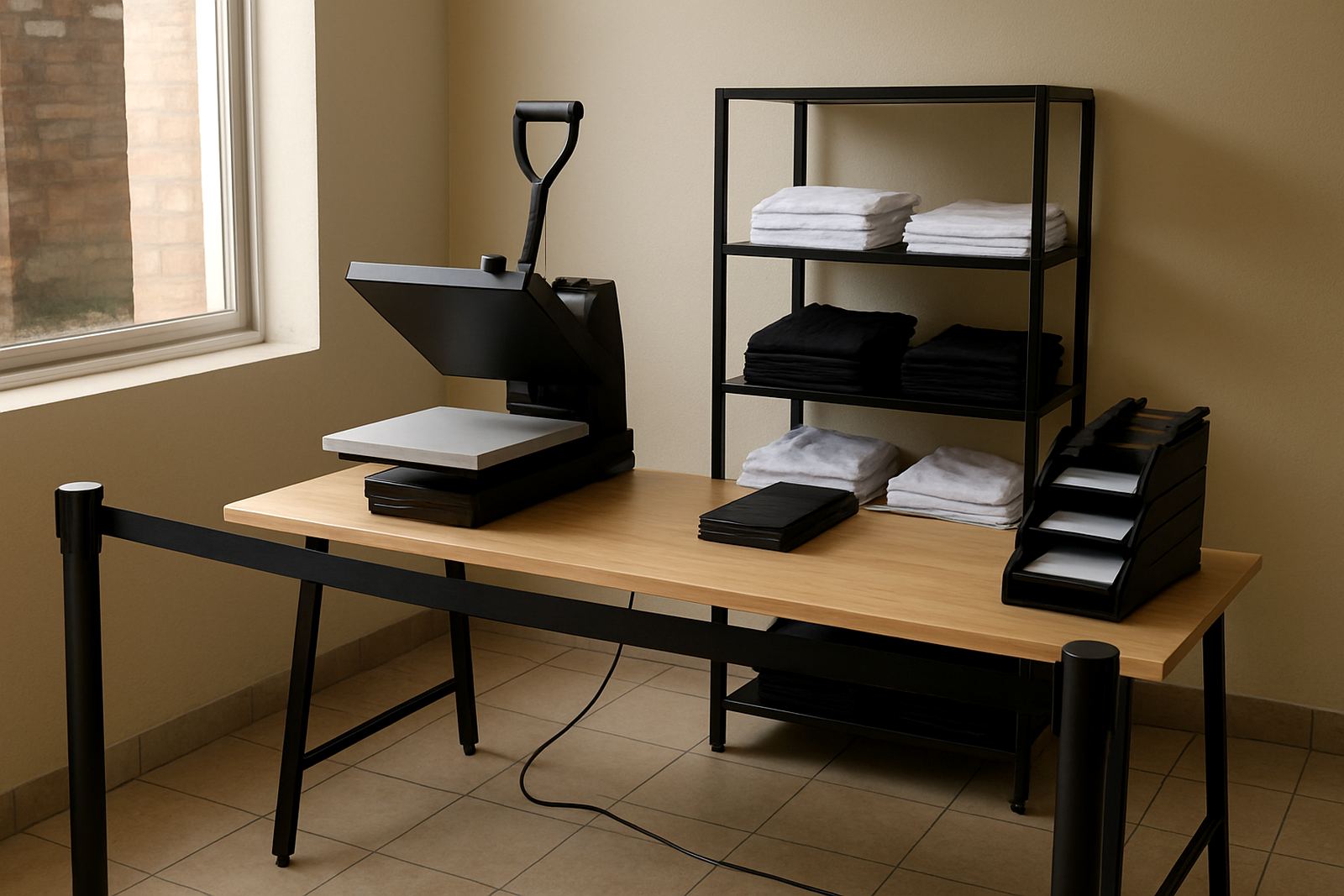
Typical equipment set for workwear orders
A reseller setup can start simple and still be reliable. The important part is matching the press size and accessories to the work you sell. In Midrand, Johannesburg, Pretoria and the East Rand, many clients begin with one press and add another once order volume grows.
- Flat heat press for names, logos and transfer film
- Heat resistant cover sheet or protective top layer
- Spare bottom pad and replacement covering
- Temperature tester or routine temperature checks
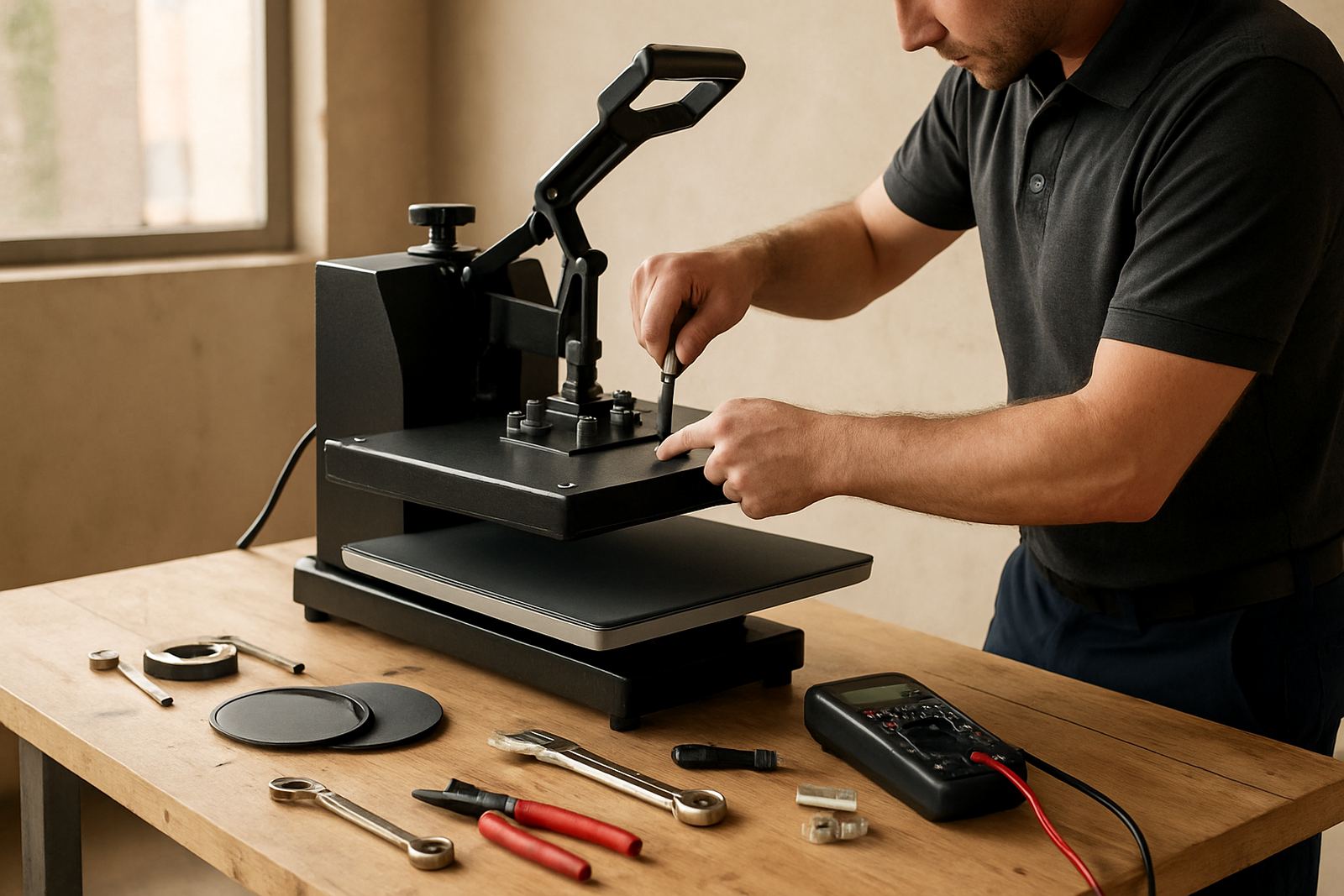
- Basic tools for pressure adjustment and element changes
- Transfer storage area kept dry and away from dust
- Optional loan unit support during repairs or servicing
If you are pressing on cotton-rich work shirts, poly-cotton blends or heavier outerwear, the main concern is even heat. Coastal humidity in Durban can affect storage and some transfer materials, so your holding area must stay dry. In Cape Town and Bloemfontein, dust and temperature changes can also affect prep if garments are left open too long.
Layout and planning that save time on small batches
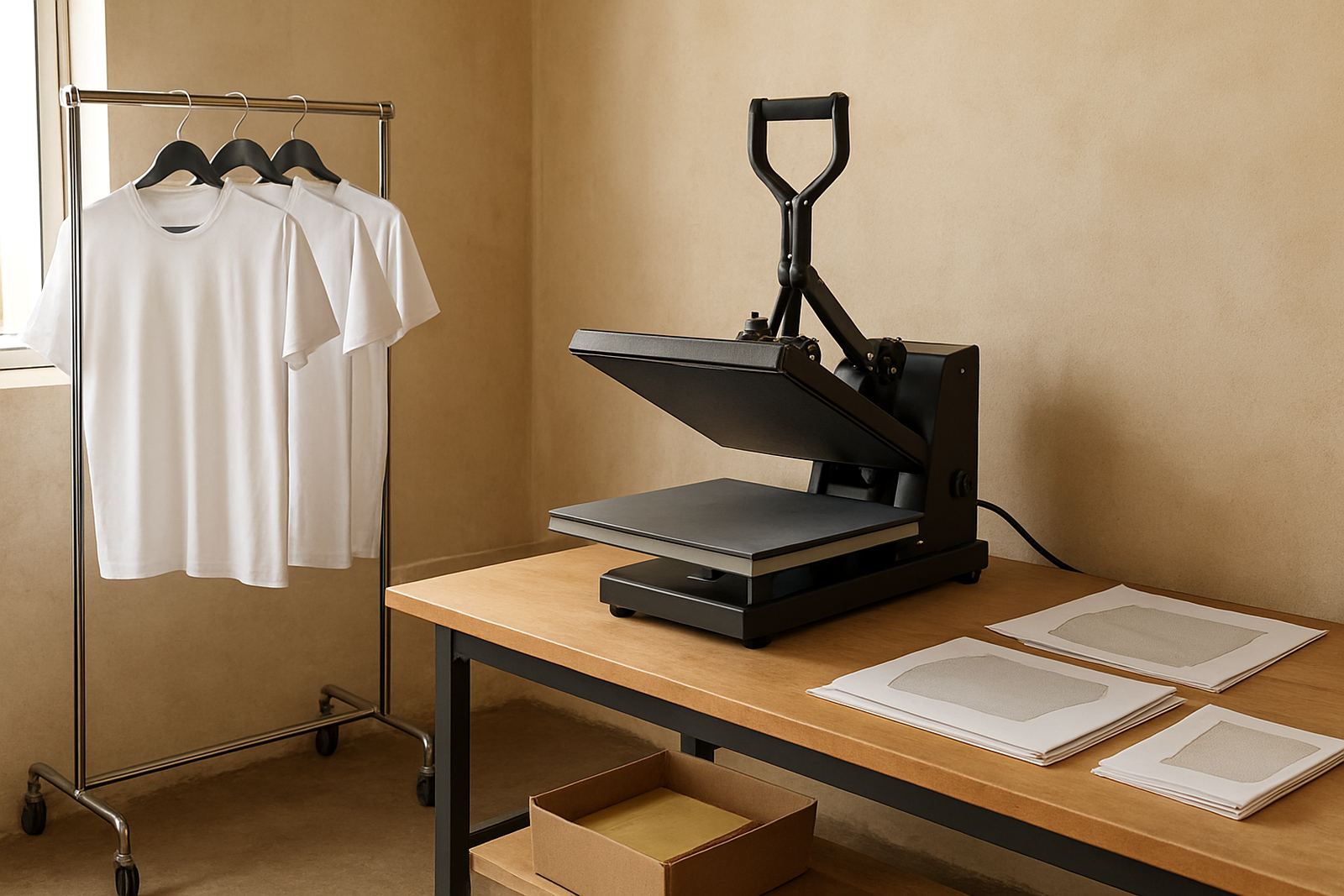
A reseller does not need a big factory floor, but the workflow must make sense. Keep garments in one clean area, transfers in another, and finished stock separate from unpressed stock. Leave enough space to lay a shirt flat without stretching the neckline or wrinkling the front panel.
Plan the room so the press sits near power and a clean packing area, not next to heavy traffic. If you are in a shared workshop in Randburg, Centurion or on the West Rand, make sure the machine has proper ventilation and a stable surface. Many problems come from poor table height, rushed loading or operators twisting the garment at the last second.
- Measure the largest garment you sell before choosing press size
- Allow room for labels, sleeves and zips on workwear tops
- Keep a bin for test prints and spoiled transfers
- Store colour-coded sizes and orders separately to avoid mix ups
- Mark a clear cooling area so finished pieces are not stacked hot
Common mistakes that damage resale margins
Most bad pressing outcomes are not caused by the garment, but by setup and handling. Wrong temperature, uneven pressure and poor timing can lead to lifting edges, scorch marks or a transfer that looks fine on day one but fails after washing. That means returns, rework and unhappy clients, and it eats into your margin fast.
Another common problem is using one setting for everything. A light poly shirt, a thick fleece and a padded hi-vis jacket do not behave the same way. Operators should know when to lower temperature, increase dwell time or adjust pressure. It also helps to check the controller if results start changing during the day, because a drifting temperature can show up after a few batches.
- Pressing over seams, pockets or thick labels without checking pressure
- Not pre-pressing damp garments before applying transfers
- Using worn pads that create uneven contact
- Loading stock that has absorbed moisture from a humid store room
- Letting staff guess settings instead of using a standard sheet
Budget ranges for starting or upgrading
Budget depends on order size, garment type and how much support you need at the start. A basic starter press for a reseller operation may begin from about R8 000 to R18 000, depending on size and control features. Mid-range setups for steadier production often sit between R18 000 and R45 000, especially when you factor in better pressure control, extras and a spare covering.
For a small shop that wants faster turnaround and fewer interruptions, a more capable setup with backup support, training and servicing can move higher than that. It is usually better to buy once than to replace a machine after repeated failures. We also help clients plan for spares, controller repairs, element replacements and periodic servicing so the press keeps earning its keep.
If you are operating from Midrand, Sandton, Pretoria East, Durban North, Cape Town south suburbs or Bloemfontein, courier delivery and remote support can help you stay moving without waiting weeks for a fix. For some clients, loan unit support is the difference between missing a tender deadline and keeping the job on track.
How FlatPress supports uniform resellers
FlatPress works with small garment decorators, hobbyists and print shops that sell branded workwear across South Africa. We handle new press setup, operator training, phone tech support, temperature checks, pressure adjustments and workshop repairs from our Midrand base. If a machine needs a new element, controller repair or pad replacement, we can assist with the practical side of keeping it working.
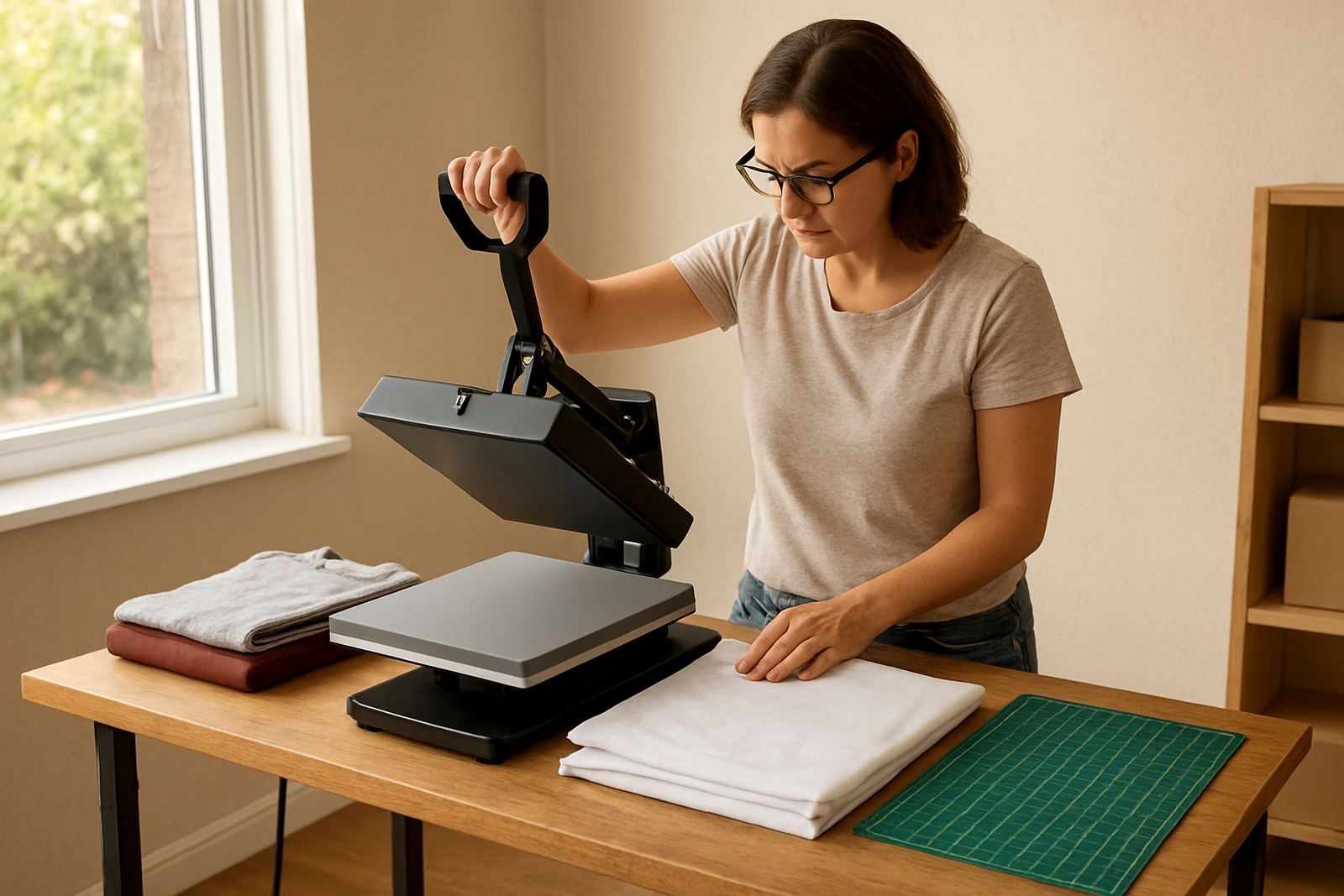
For reseller teams, training matters just as much as the machine. A good operator knows how to load a shirt square, read the controller, test pressure and spot a problem before a bad batch goes out. Kelebogile Mabena coordinates training, Riaan Ferreira handles technical checks, Ridwaan Peters manages workshop repairs, and Willem Botha supports logistics and installations. Mandla van Rensburg leads the business, with Nandi Dlamini overseeing customer support and Ntombifuthi Xaba on sales guidance.
Whether you are supplying a few embroidered-style heat transfers a week or running repeated uniform runs for schools, security teams or factories, the aim is the same: consistent results, fewer reworks and a press that is ready when the order lands. That kind of reliability matters when the client wants clean names, clear logos and no excuses.