
Your first press should match the work you want to sell
Most start-up print shops begin with T-shirts, tote bags, school event wear and short transfer runs. A flat heat press is usually the first machine because it handles a wide range of jobs without taking up much space. For a new operator, the main choice is not only the price of the machine, but whether it can keep a steady temperature, even pressure and repeatable timing during busy days.
In Midrand, Johannesburg and Pretoria we often see new owners trying to buy the cheapest unit available, then struggling with uneven prints, scorched garments or weak transfers. A dependable first press saves time and reduces waste. For small shops, that matters more than having every extra feature on day one. If your work is mostly cotton T-shirts and standard transfer prints, a straightforward flat press with good heat recovery is normally the best place to start.
- Suitable for heat transfer vinyl, printed transfers and many garment decoration jobs
- Works well in small rooms, garages and front-of-shop spaces
- Easier to train staff on than a complicated setup with unnecessary extras
Typical starter equipment for a small garment shop
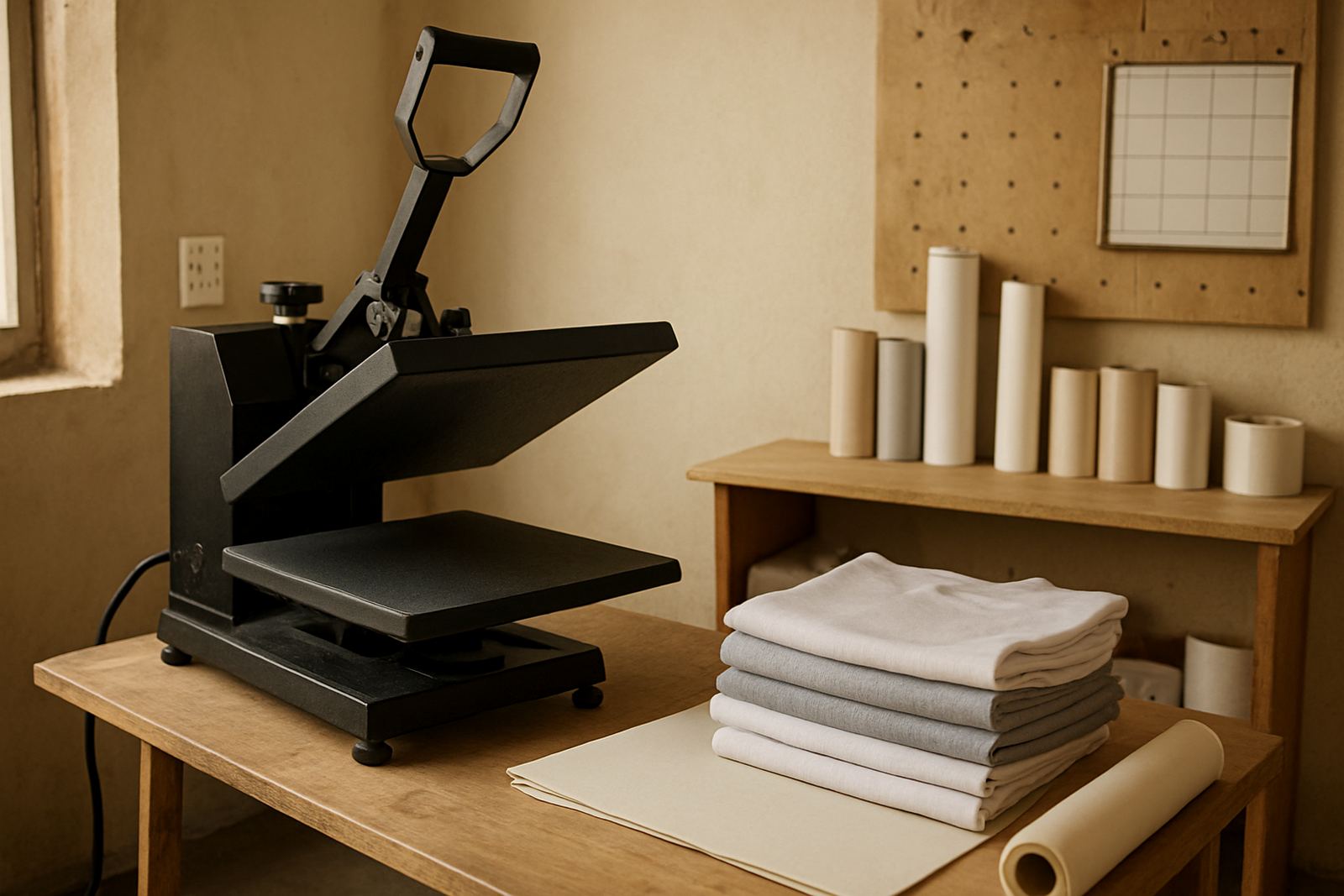
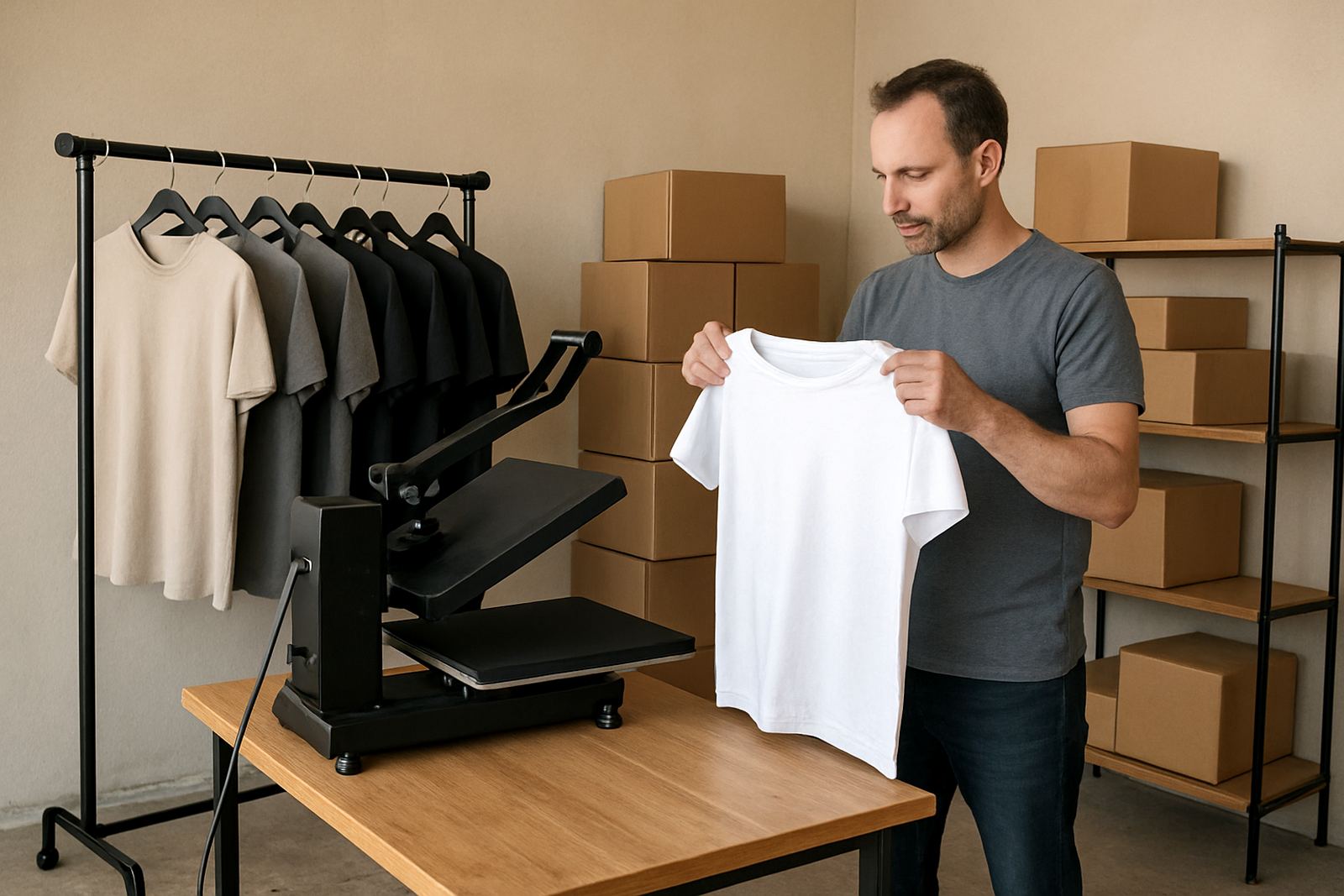
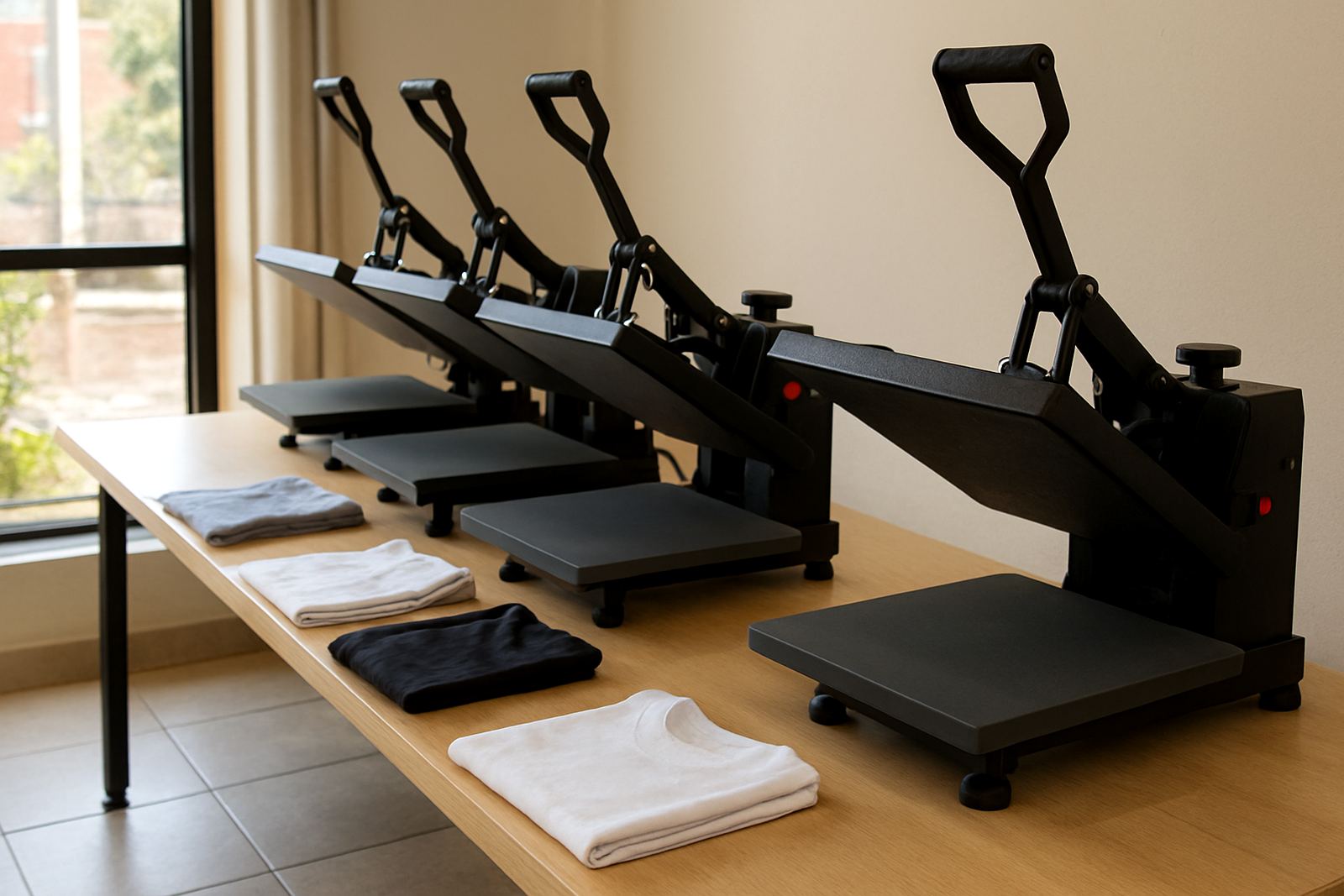
A new print shop does not need a huge workshop. A sensible starter set usually includes one main flat heat press, a sturdy table, a heat-resistant cover or pad, and a clean storage area for blanks and transfers. If you are planning to print from home in Randburg, or from a small unit in Centurion or Boksburg, keep the layout simple so the operator can move from prep to pressing without crossing busy walkways.
We also recommend basic tools for checking pressure, temperature and pressing time. In South Africa, power interruptions and load-shedding make it important to know how your press behaves when electricity returns. A good start-up setup should be easy to restart, easy to clean, and simple enough for one person to run when necessary.
- Flat heat press sized to your garment range, commonly A3 or larger platen sizes
- Heat-resistant pad and spare covering for clean contact surfaces
- Basic timer, heat test materials, and a small toolkit for daily checks
- Space for finished work, incoming garments and transfer stock
Planning your layout before the first order arrives
Good planning prevents a lot of mistakes. Put the press on a stable surface at a comfortable working height, with enough clearance to open it fully and handle garments safely. Leave room for the operator to move left and right without squeezing past shelves or boxes. If you plan to grow into a second press later, allow space now so you do not need to reorganise the whole room after the first busy season.
Ventilation matters too, especially in warmer inland towns and humid coastal areas like Durban. A start-up shop should keep the room tidy, dry and free from clutter. Moisture in the air can affect transfers and adhesive performance, while dust and lint can mark finished garments. For premises in shopping centres or industrial parks, check any building rules that affect electrical load, extractor use or operating hours.
- Place the press near power points, but away from foot traffic and door swings
- Keep transfers, blanks and packaging in separate, labelled sections
- Use shelves or tubs for completed work so items do not get mixed up
- Allow space for safe cooling before packing or folding garments
Training the operator from day one
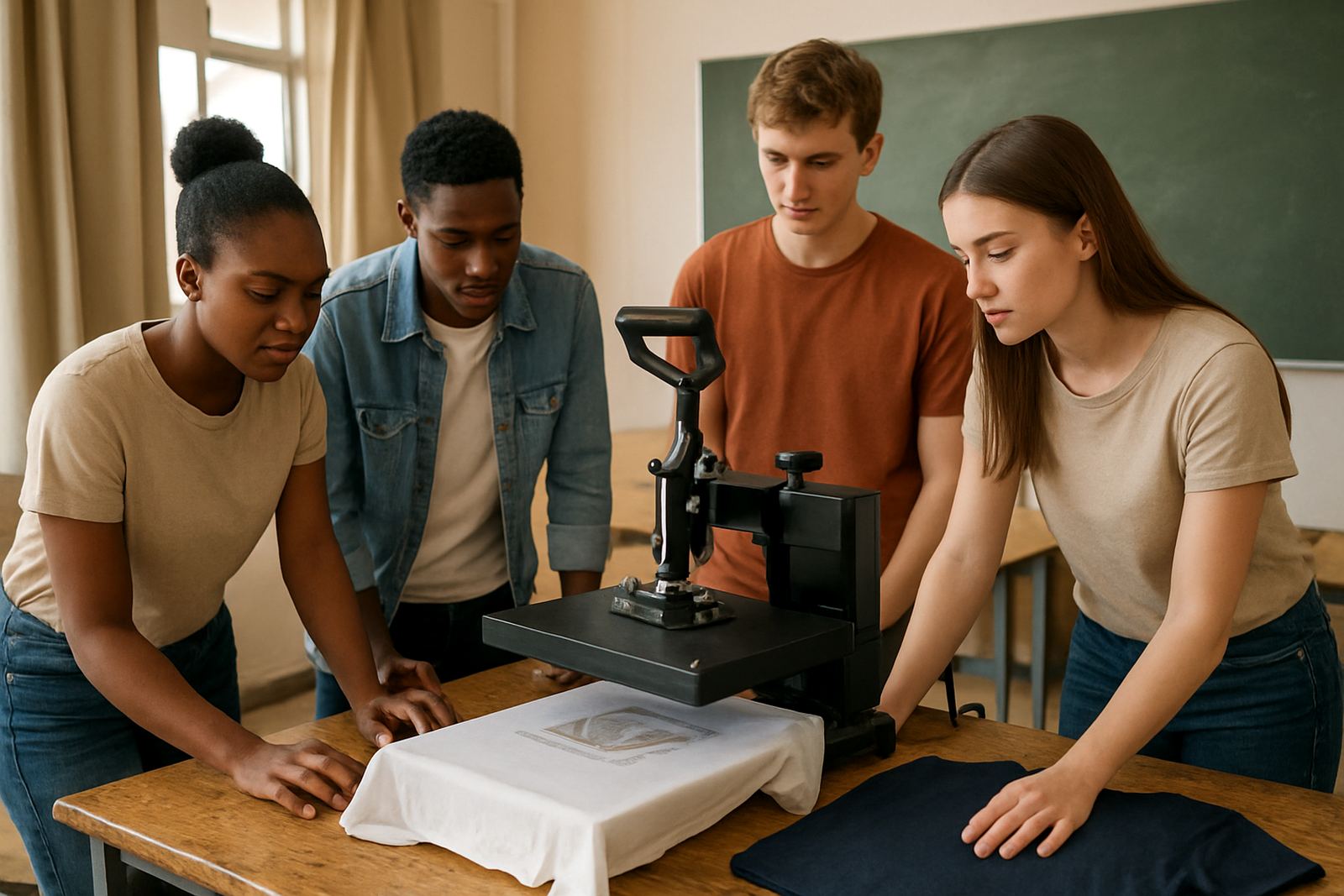
Many start-up print shops lose money because the press is installed but the operator has not been shown how to use it properly. Correct temperature, pressure and timing must be understood from the first day. If the settings are too high, garments may shine, shrink or scorch. If pressure is too light, the transfer can lift after washing. Training should cover the full routine, from switching on and warming up to checking a finished print.
FlatPress provides setup and operator training for small businesses, hobbyists and growing shops across Gauteng and nationwide by courier support where suitable. We show practical daily methods that help new owners work with confidence. That includes how to judge pressure on different fabrics, how to handle common print sizes and how to keep a simple log of settings for repeat jobs. A little record keeping saves time later when the same customer returns.
- Setting temperature and timing for different transfer materials
- Checking pressure on cotton, blends and thicker garments
- Cleaning the platen area and keeping the cover in good condition
- Recognising when a job needs a second press or a setting change
Common mistakes that cost new shops money
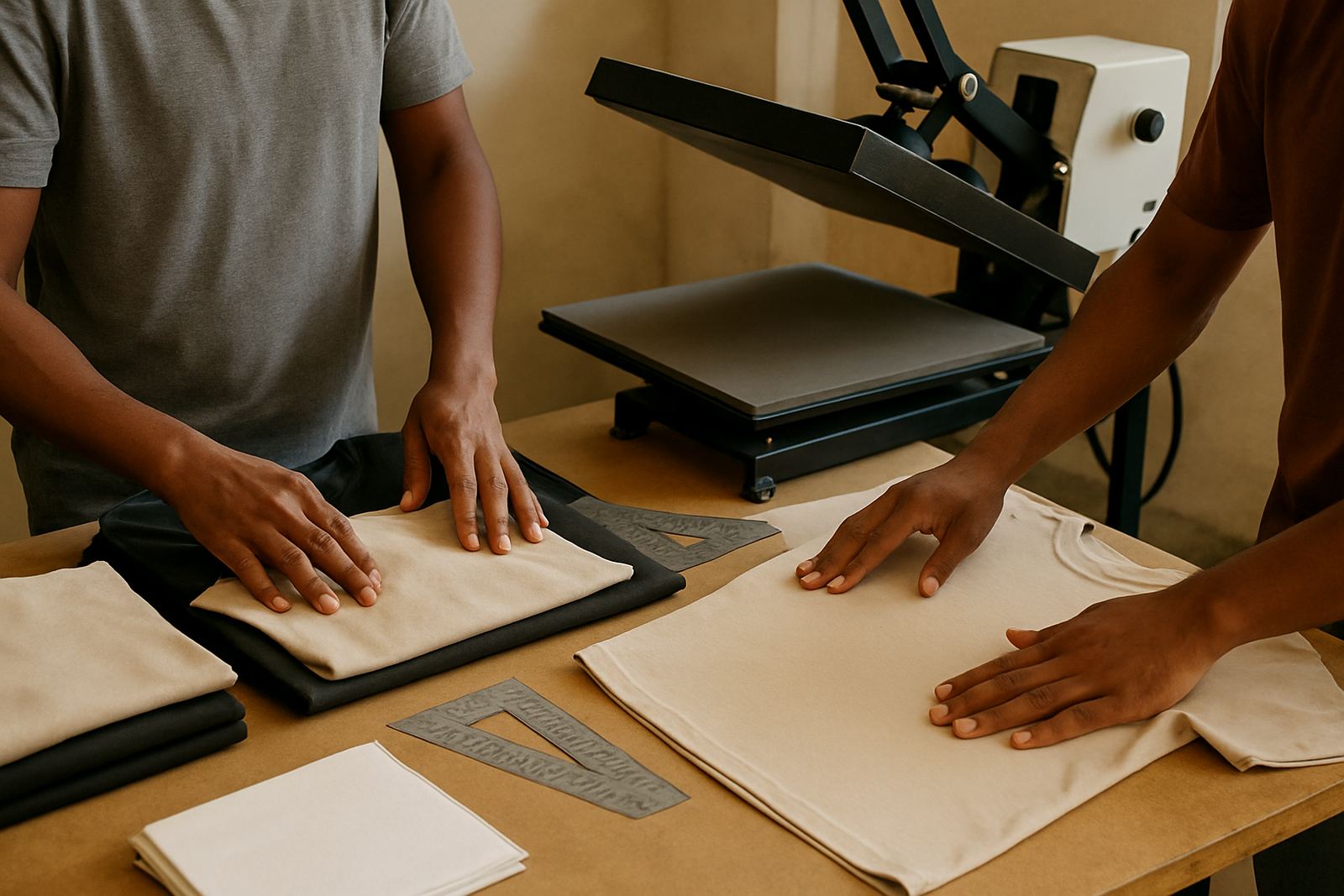
The most common mistake is buying a press that looks acceptable on paper but cannot hold settings properly during regular use. Another frequent problem is rushing into production before testing a few sample garments. New operators also forget that the garment itself matters. Pre-pressing can remove moisture and flatten seams, but it must be done carefully or the print can shift. In busy weeks, a small mistake repeated ten times becomes expensive very fast.
Other errors include using the wrong cover thickness, ignoring worn elements, and running the machine without proper checks after power interruptions. If your shop is in a coastal area, humidity can make materials behave differently from inland conditions, so it helps to test and adjust before taking on bulk work. A press that is kept clean and serviced on time will last longer and give better results, even in a small operation.
- Do not buy on price alone
- Do not skip sample testing before customer orders
- Do not overload one machine with more work than it can handle
- Do not ignore small faults like uneven heating or loose pressure
Budget ranges for a realistic start-up
Budget depends on the size of your shop, the type of garments you want to print, and how much support you need at setup. A basic start-up package with a dependable flat press, installation guidance and operator training often sits in the lower to mid range for new businesses. Shops that want a larger platen size, extra spares, or more detailed technical support should budget more from the beginning rather than trying to patch problems later.
For most start-up garment decorators, it is sensible to plan for the press, setup, training, some spare parts, and a small contingency for servicing. That avoids delays when you land your first school event or reseller order. If you are operating from Johannesburg, Pretoria, the East Rand, West Rand, or sending work out from Cape Town, Durban or Bloemfontein, courier delivery and installation planning can also affect the final figure. A typical start-up budget for a small flat press setup can range from around R15 000 to R45 000 depending on size and support. Larger or more specialised setups can sit above that.
- Entry-level single press setup: around R15 000 to R22 000
- Better specification setup with training and spares: around R22 000 to R35 000
- Higher capacity or more service-heavy setup: around R35 000 to R45 000 and up
Support that helps a new business keep moving
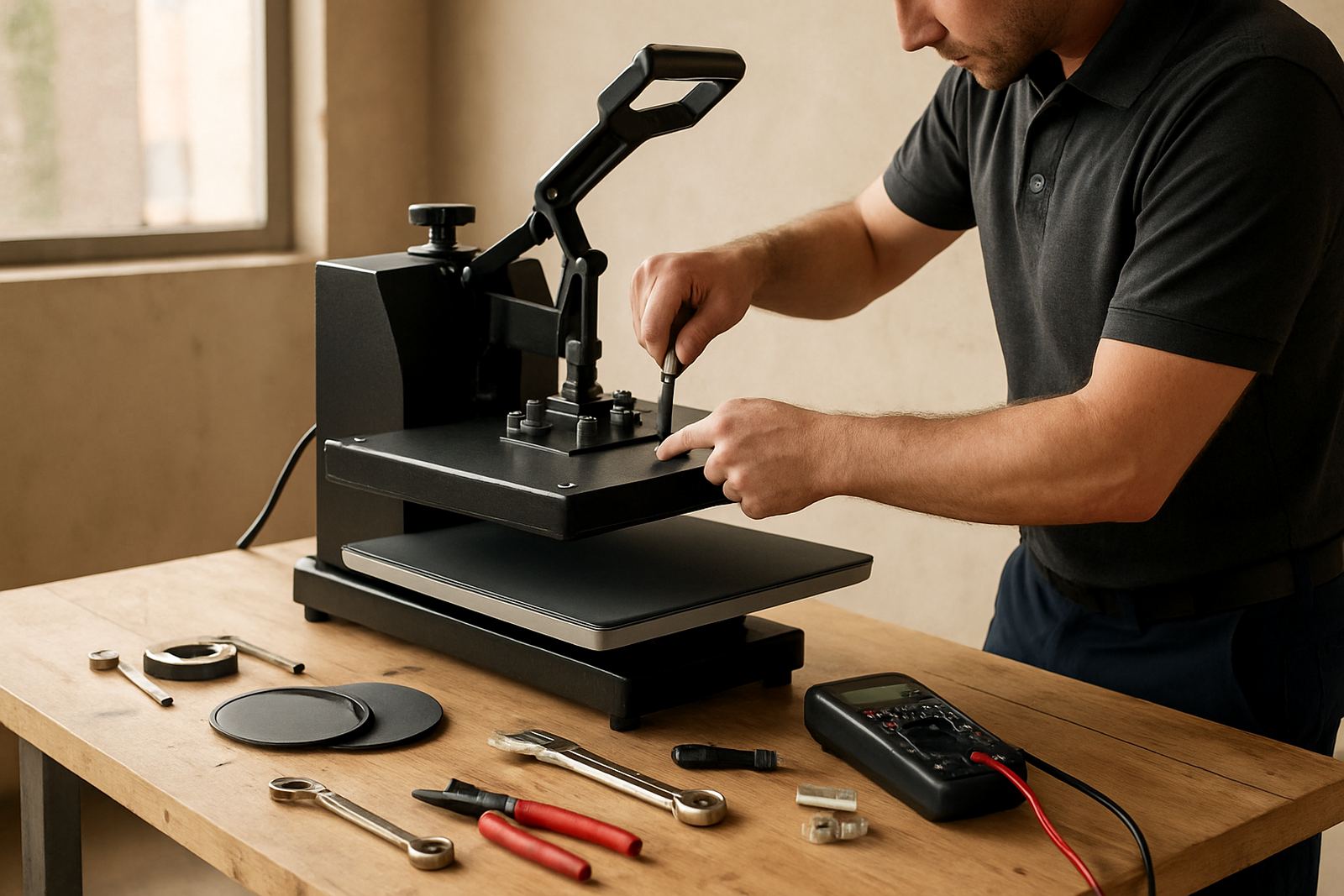
A start-up print shop needs support that is practical and easy to reach. That means help with new press setup, temperature checks, pressure adjustments, controller repairs, element replacements, pad and covering work, preventive servicing and spares supply. If a unit needs attention after a fault or a delivery issue, loan unit support may keep the business working while repairs are handled. For a new owner, that kind of backup can make the difference between taking an order and turning it away.
FlatPress works from Midrand and supports small businesses across Gauteng and nationwide. Whether you are opening in Sandton, Soweto, Pretoria East, Centurion, the East Rand or further afield, the aim is to keep your first press dependable and your operation simple. When the machine is set up properly and the operator knows what to do, a small print shop can build steady work without unnecessary stress. Mandla van Rensburg leads the business, with a team that understands both the workshop side and the day-to-day pressure of customer orders.