
Start With A Safe Power Point, Not An Extension Lead
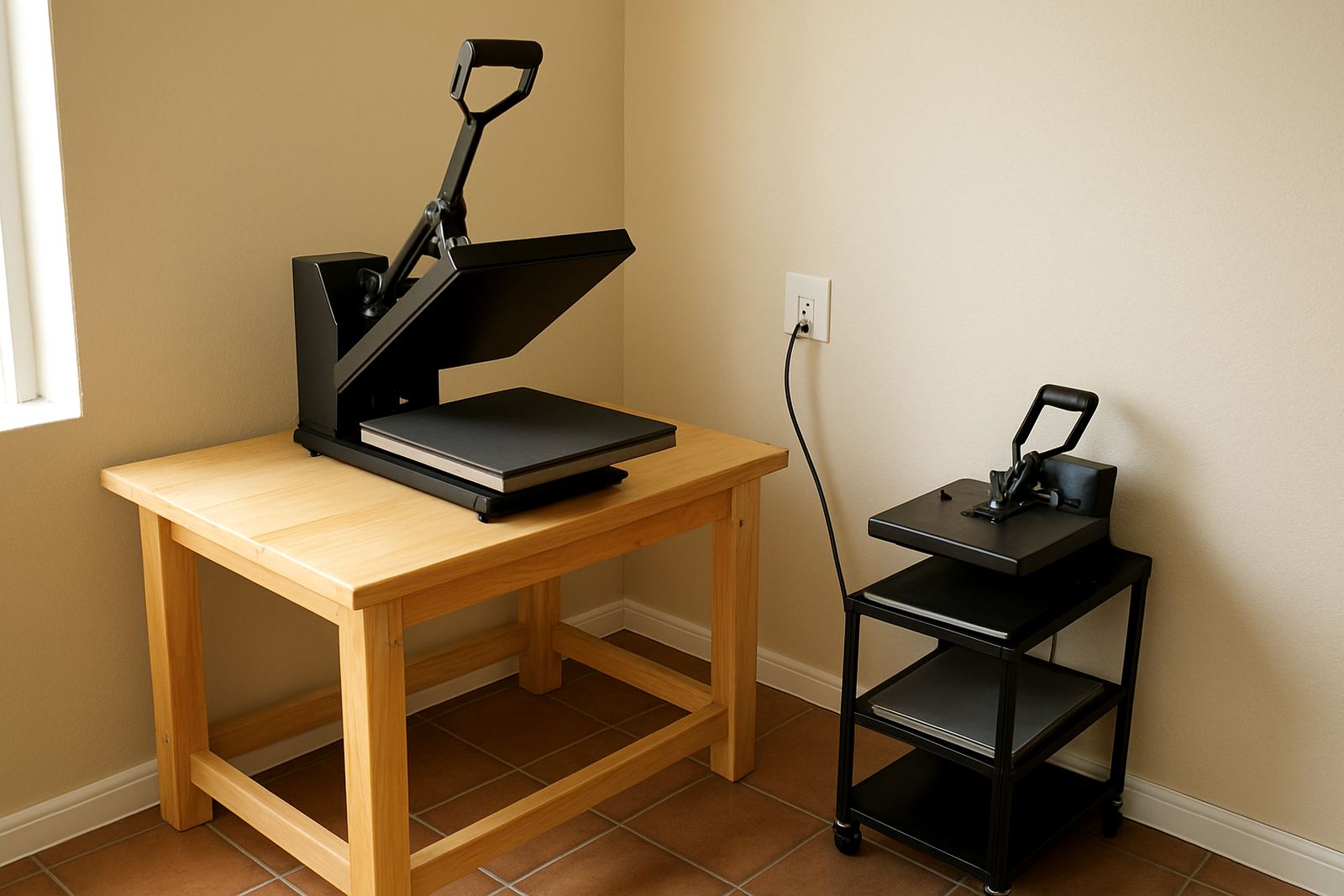
A home setup for flat heat presses should begin with the power supply. A press that heats fast and holds temperature needs a proper wall point on a circuit that can handle the load. In many South African homes, the nearest plug is not always the right plug, so it is worth checking before the first garment goes under the platen.
If the press is sharing power with a kettle, iron, printer and charging cables, you are asking for tripping issues and uneven performance. For small home operations, a dedicated point is far better than running long leads across the room. If your area gets load-shedding, plan for restart time too. A press that comes back on after an outage may need a fresh temperature check before you keep working.
- Use a properly rated wall socket close to the bench.
- Avoid thin extension leads that heat up under load.
- Keep the press away from loose multi-plugs and damp floors.
- After a power cut, check the display and platen temperature again.
Choose A Bench That Can Carry Heat And Weight
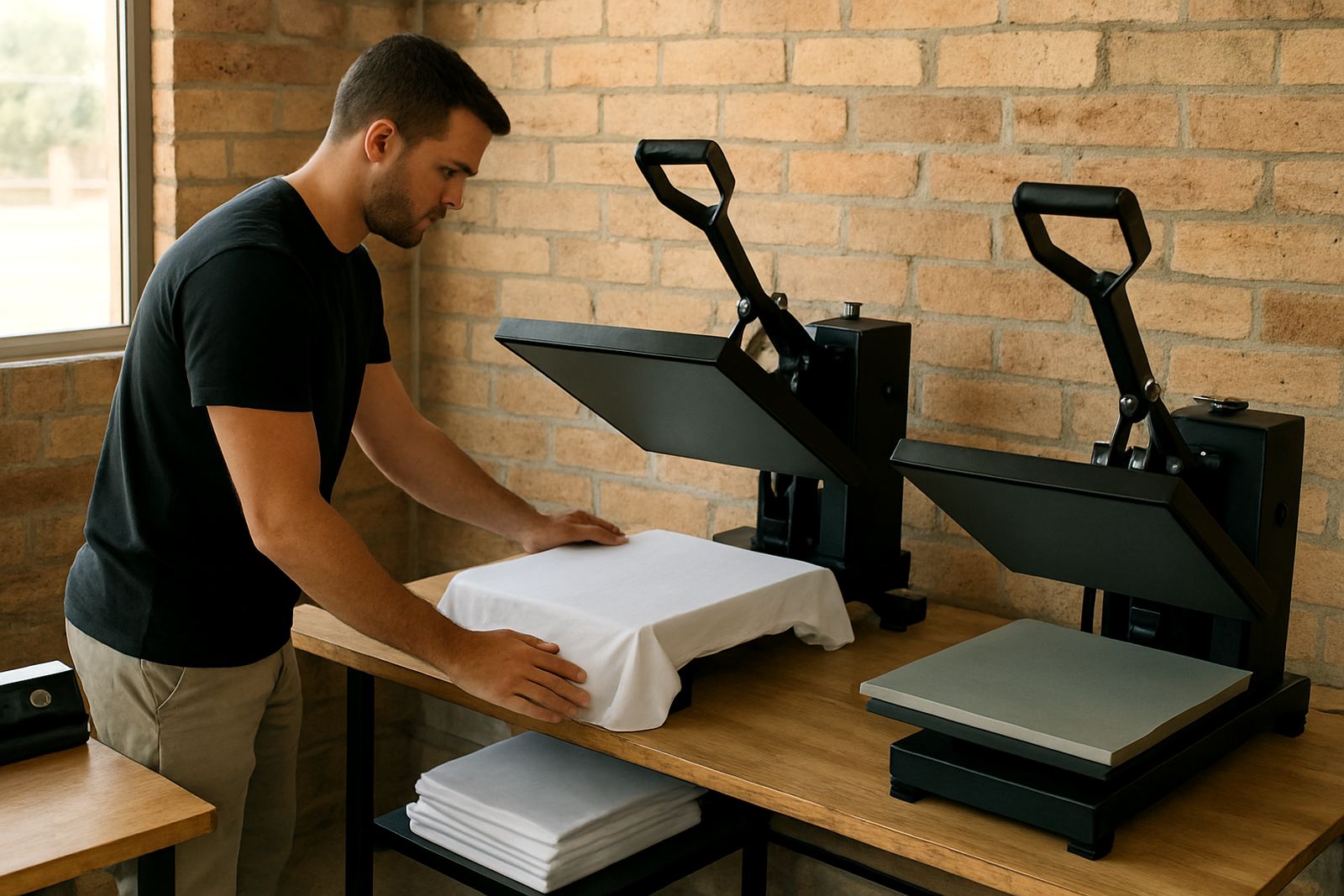
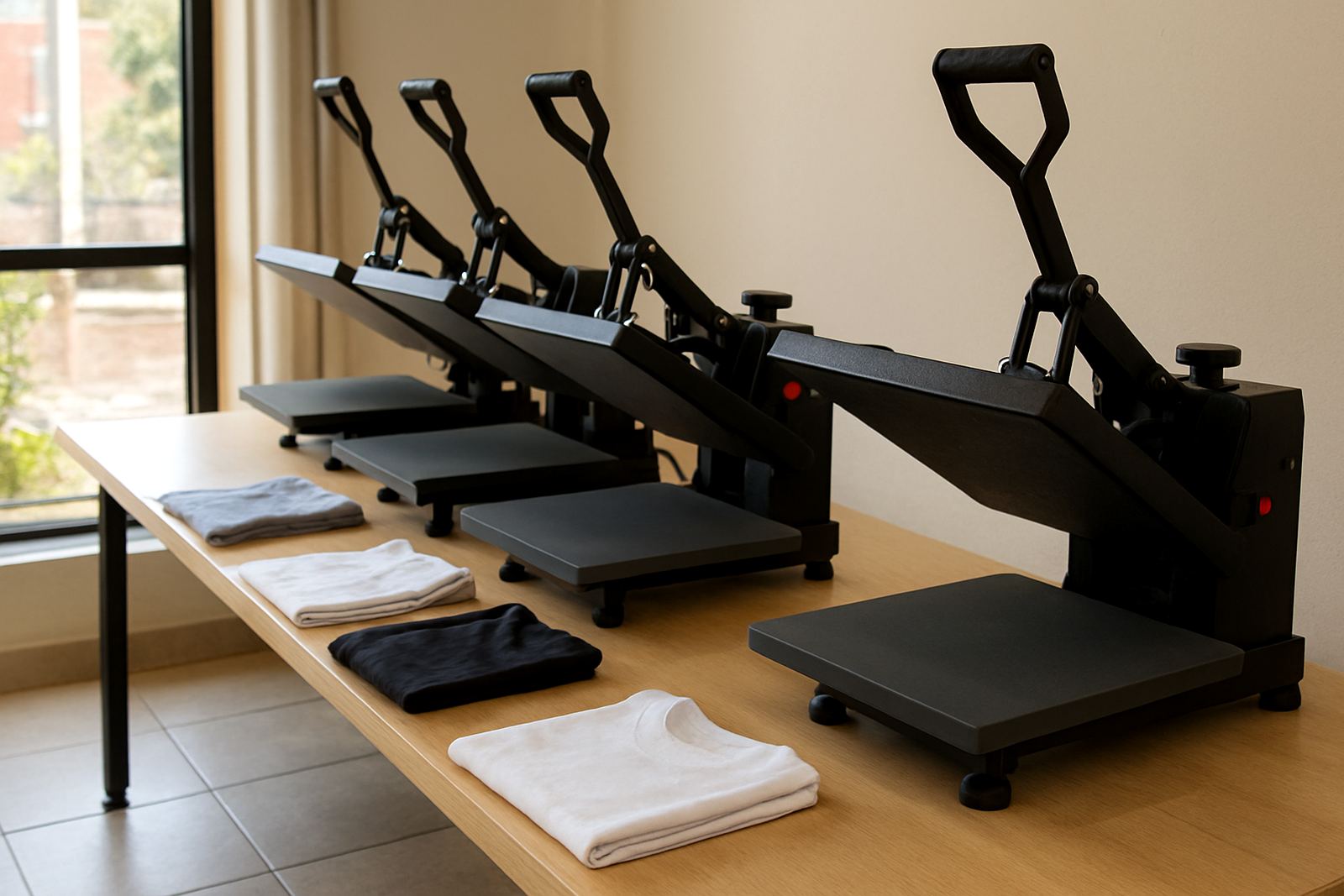
A heat press is not a light machine. The bench or table underneath it must stay steady when the handle comes down and the pressure is applied. A wobbly table can affect transfer quality and make it harder to keep your work consistent. For home use, a strong work surface at a comfortable height is usually better than a dining table pushed into service.
Leave enough space for garment prep, stacking finished items and keeping transfers flat. If the bench is too small, you end up folding shirts over one another, which leads to wrinkles and wasted time. A neat working area also makes it easier to keep track of quantities, sizes and customer names, which matters when you are doing a few jobs in the morning and more after school runs or a day job.
When you set the bench, think about your body as well. You will lift shirts, align artwork and close the press many times in a session. If the surface is too low, your back starts complaining by lunchtime. If it is too high, the press handle becomes awkward. A good fit saves time and strain, and that is something many home decorators notice only after the first busy week.
Ventilation Matters More Than Most Beginners Expect
Flat heat presses do not create the same fumes as all industrial processes, but they still need fresh air. Transfers, garments and some coatings can give off odours when heated. In a closed spare room, that smell builds up and the room becomes uncomfortable fast. Open a window if you can, and if the room is small, make sure air can move through it rather than just sitting still.
Coastal humidity can also affect your work. In places such as Durban, stored garments may carry extra moisture, and damp conditions can slow down drying, especially if you are pre pressing before applying a transfer. If the garment feels cool or slightly damp, give it an extra press to remove moisture first. That small step often improves adhesion and helps prevent lifting later on.
- Keep a window open or use a fan to move air across the room.
- Store blanks in a dry cupboard or sealed tub.
- Do not keep packaging, paper or fabric scraps too close to the hot platen.
- Let the press cool naturally, dont cover it while it is still warm.
Keep Your Materials Close But Your Workspace Clear
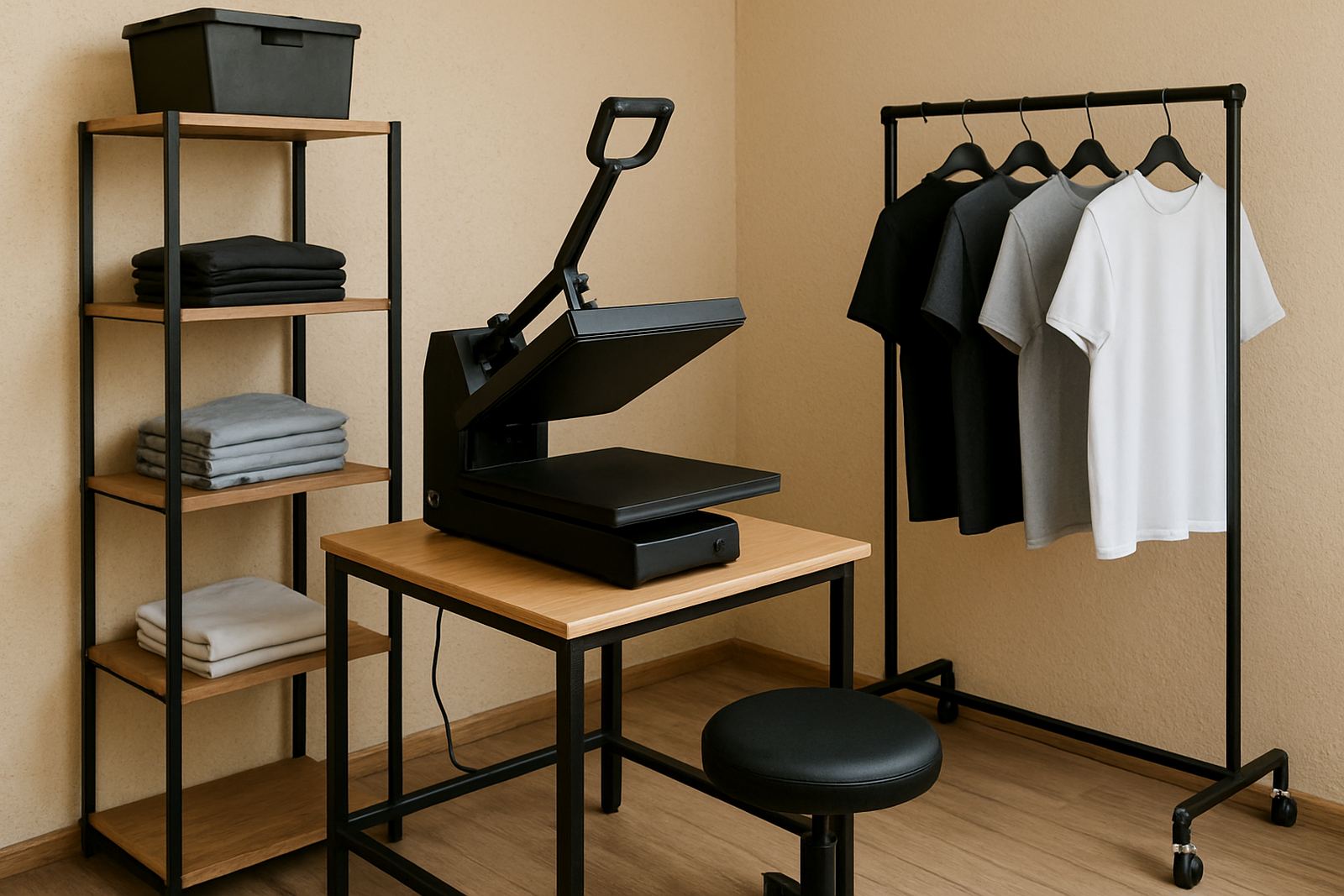
Home decorators often work in tight spaces, so layout is everything. Keep blanks, transfers, scissors, protective sheets and finished garments within reach, but not crowding the press. The goal is to move smoothly from one step to the next without crossing over cables or stacking items where heat can reach them. A cluttered room slows you down and increases the chance of mistakes.
It helps to set one zone for dirty work and one zone for finished pieces. For example, keep blank T-shirts and transfer stock on one side of the bench, and completed orders on the other. That way a pressed shirt does not end up under an unpressed one, and you reduce the chance of dust, lint or fingerprints getting onto fresh work. If you are printing from a home garage in Midrand or handling small orders in Pretoria East, that simple split between in and out areas makes daily work easier.
A small floor fan, a shelf for stock and a labelled container for spare covers, clips and protective paper can make a big difference. Good storage is not about fancy fittings. It is about knowing where everything is when an order comes in and you have a two hour window to finish it.
Train The Operator, Even If The Operator Is You
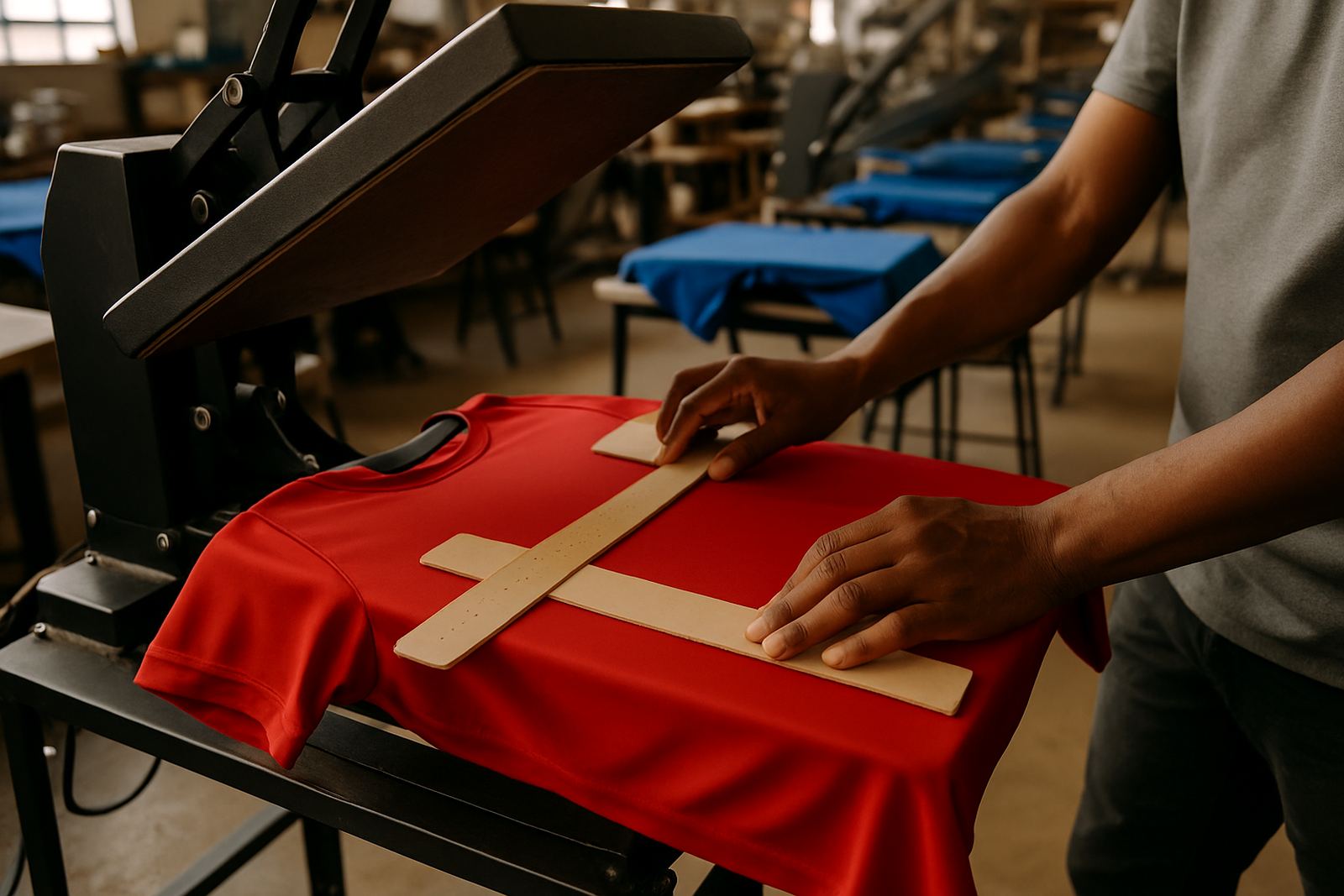
Home businesses sometimes skip training because the machine seems straightforward. In practice, good results depend on temperature, pressure, dwell time and garment handling. If any one of those is off, the transfer may crack, lift or leave marks. A proper setup and some hands-on guidance can save a lot of wasted stock, especially when you are starting out and every shirt counts.
Operator habits matter too. Wiping the platen, checking pressure settings and allowing the machine to stabilise before production are all part of a safer routine. If children or other family members are around, make sure they know the press stays hot long after a job is done. The handle, platen and even some surrounding metal parts can cause burns if touched too soon.
- Warm the machine fully before production.
- Check pressure on a sample garment before a full run.
- Keep children clear of the work area.
- Use basic records for temperature, time and material type.
Know When Home Work Needs Workshop Support
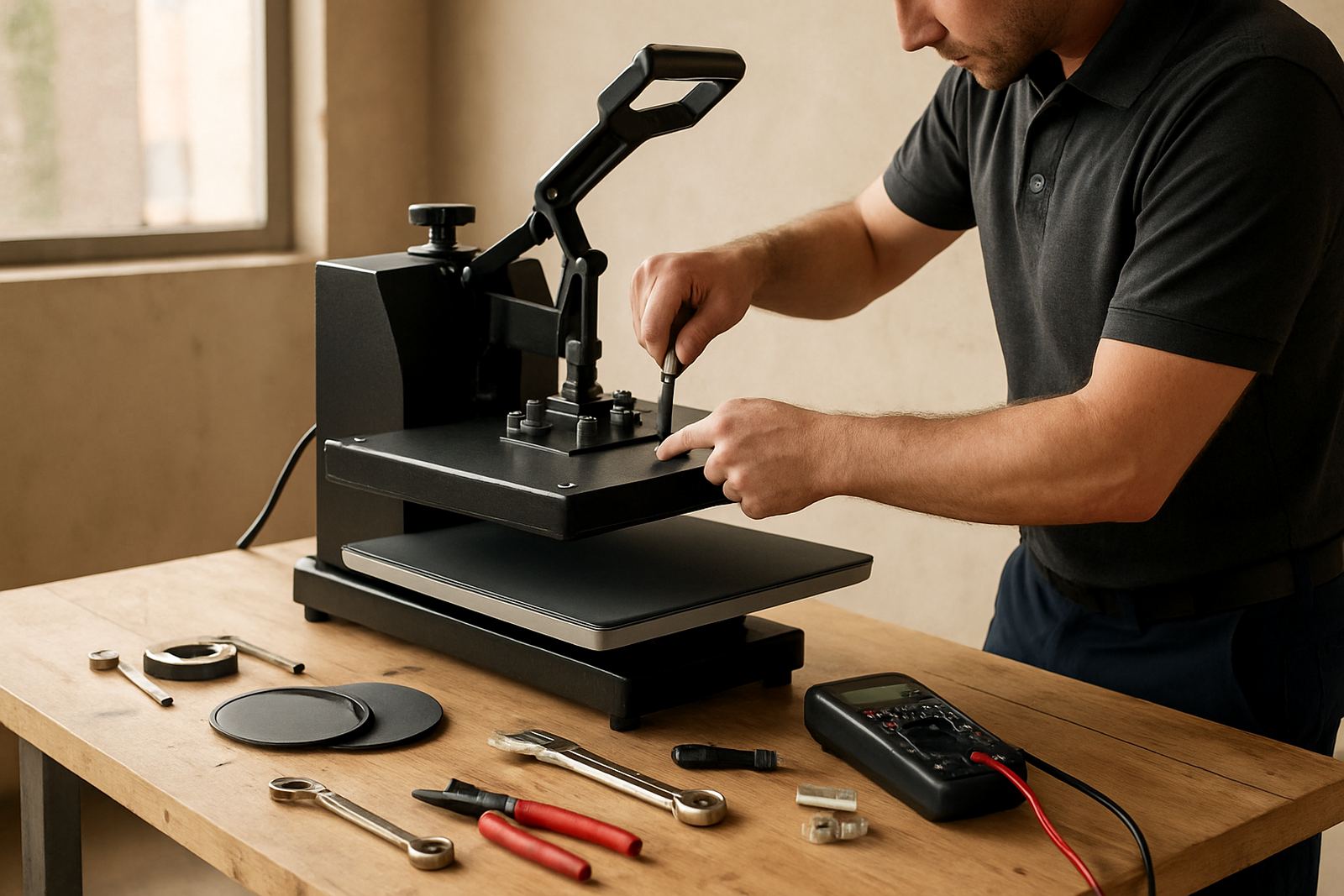
Some problems are small and some are not. A loose covering, a worn pad, a controller that does not read properly or a heating element that drops out can all stop production. If your press starts giving uneven heat, poor pressure or repeated faults, it is better to deal with it early than to keep forcing jobs through and wasting materials. That is where support, spare parts and testing become important.
For many home decorators, a loan unit can keep orders moving while repairs are done. That matters if you are working toward a school event, church order or a small retail deadline. In Gauteng, where many people run garment work from home between other commitments, downtime can hit hard. A quick check, a spare part or a temporary unit can keep cash flowing and customers happy.
If you are unsure whether the issue is electrical, mechanical or just a setup problem, get it checked before it becomes a larger repair. A press that is still closing but not holding correct temperature may seem usable for one more day, but that one more day often becomes a week of rework. A safe home setup includes knowing when to call for help and when to leave the machine out of service until it is sorted.