

Start With The Press, Not The Furniture
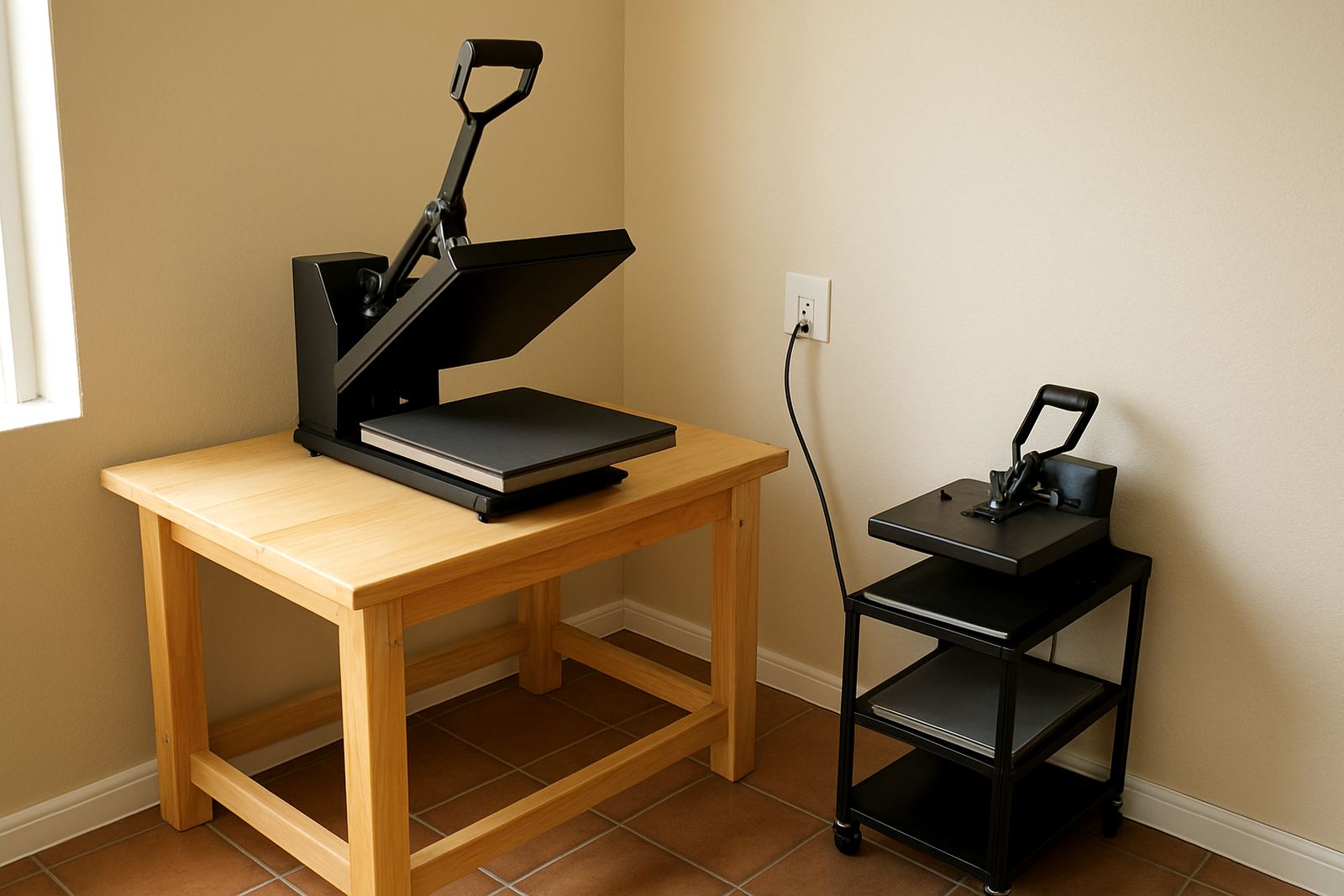
When floor space is tight, the first mistake is trying to squeeze the press in after the tables, racks and packing area are already fixed. Start with the press position and build the rest of the room around it. A flat heat press needs a stable surface, safe operator movement and enough room to load garments without brushing against storage, sewing machines or stacked stock.
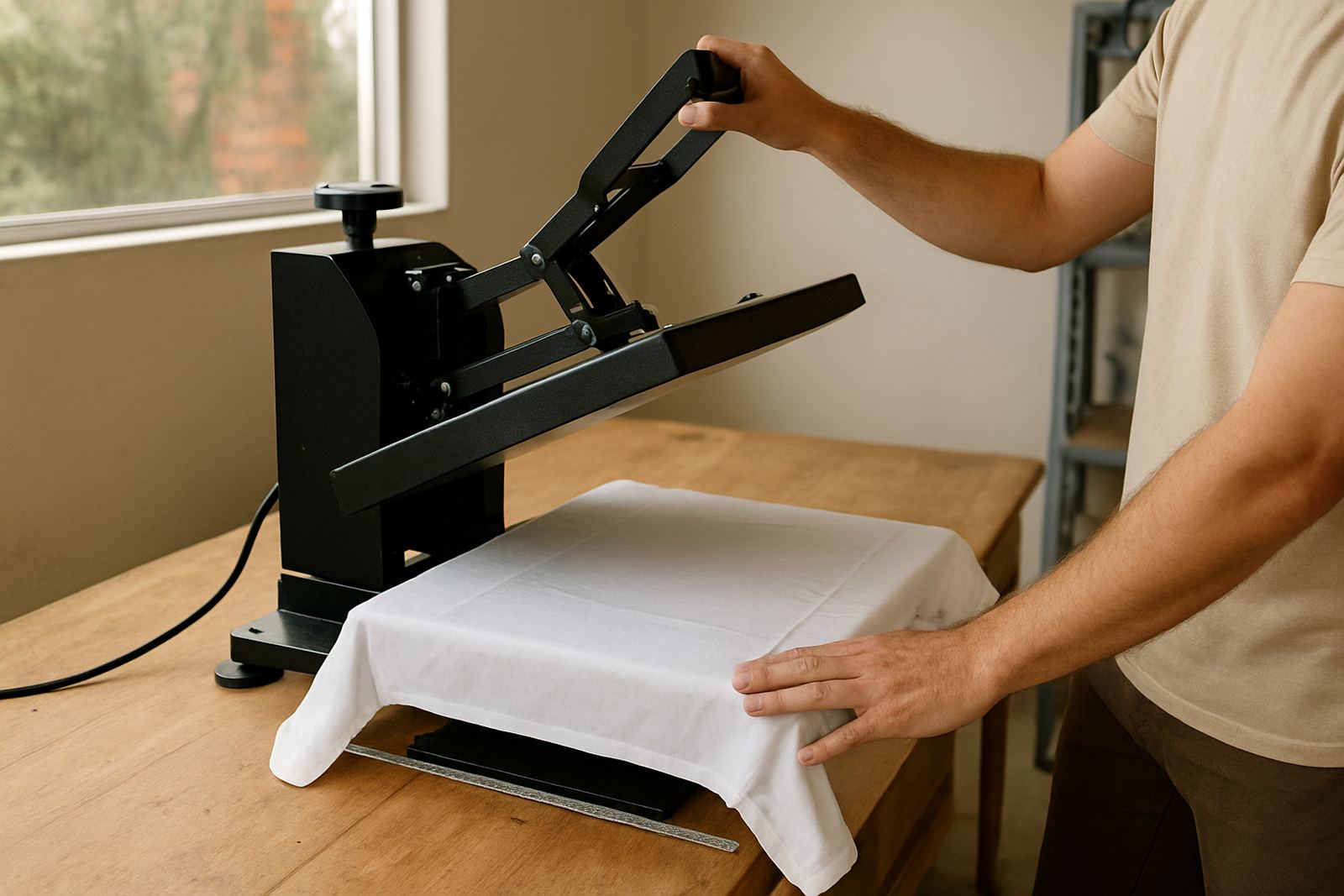
As a basic guide, allow space for the machine footprint, the lid movement, and a working zone around it. In a small room, that often means giving the press a dedicated corner or wall run rather than placing it in the centre where people cross back and forth. You want clear access from the front and one side, plus enough room to turn with a box of transfer prints or a pile of prepped T-shirts.
- Keep the press away from hanging garments and loose plastic sleeves
- Leave a clear path for the operator to move finished items out quickly
- Do not place it where door traffic, fans or packing noise will interrupt work
Use The Wall Space Properly
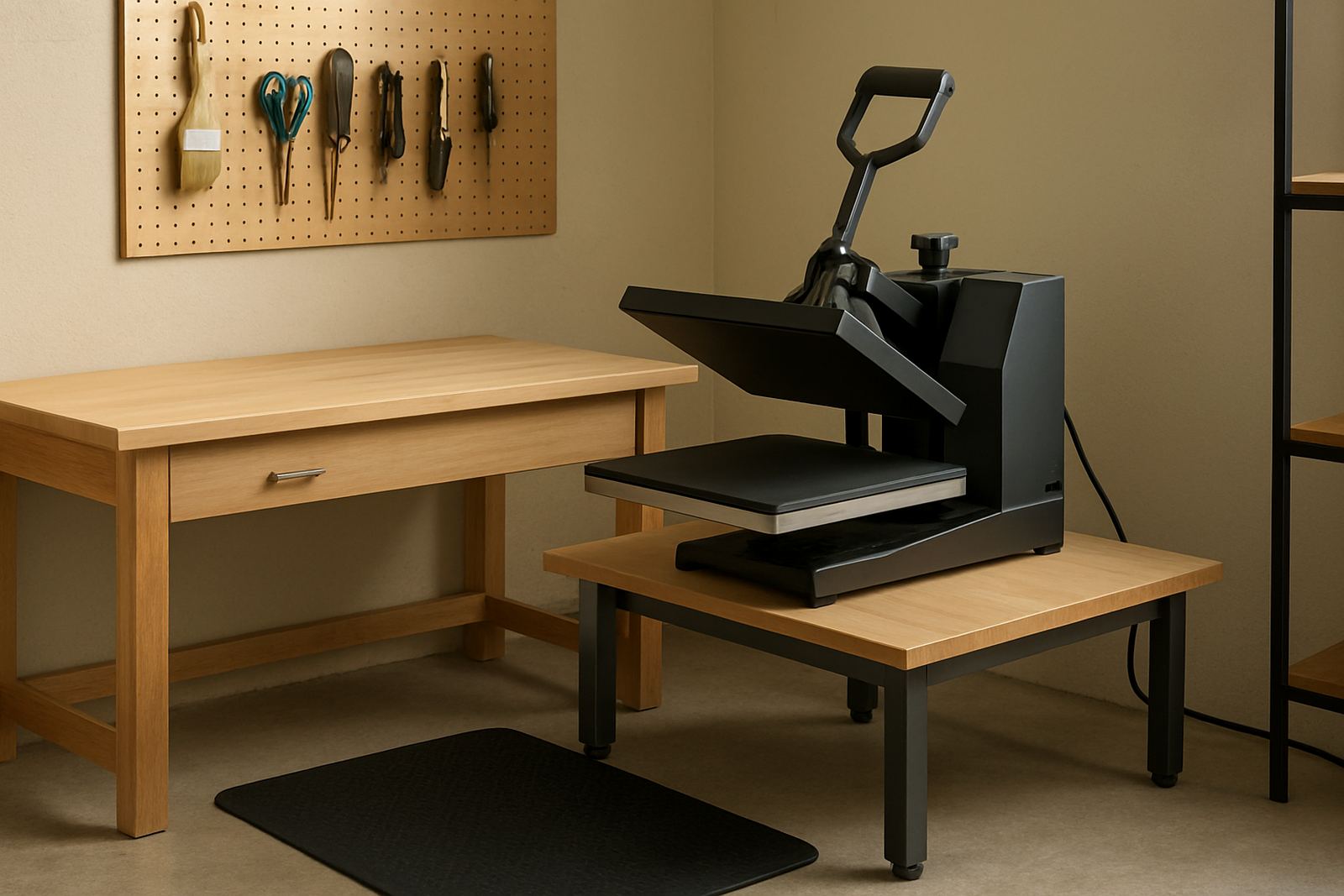
In many Midrand, Johannesburg and Pretoria workshops, the floor gets crowded because wall space is not used well. Shelving above waist height can store transfer paper, blank garments and spare coverings without taking up the press area. Pegboards or narrow wall racks are useful for tools, tape, lint rollers and cleaning items. The aim is to keep the pressing zone clean, open and easy to wipe down.
If your room is narrow, place the press with its working edge facing the longest open line in the room. That lets the operator load, press and unload without twisting around a corner. It also helps if the controller, cable and air line, where fitted, can run neatly along the wall instead of across walkways. Loose cables are a trip risk and they get damaged quickly in busy shops.
- Use high shelving for stock that is not needed every hour
- Keep heat-sensitive items away from the press platen area
- Run cables and hoses in a neat line, not across the floor
Build A Press Station, Not Just A Machine Spot
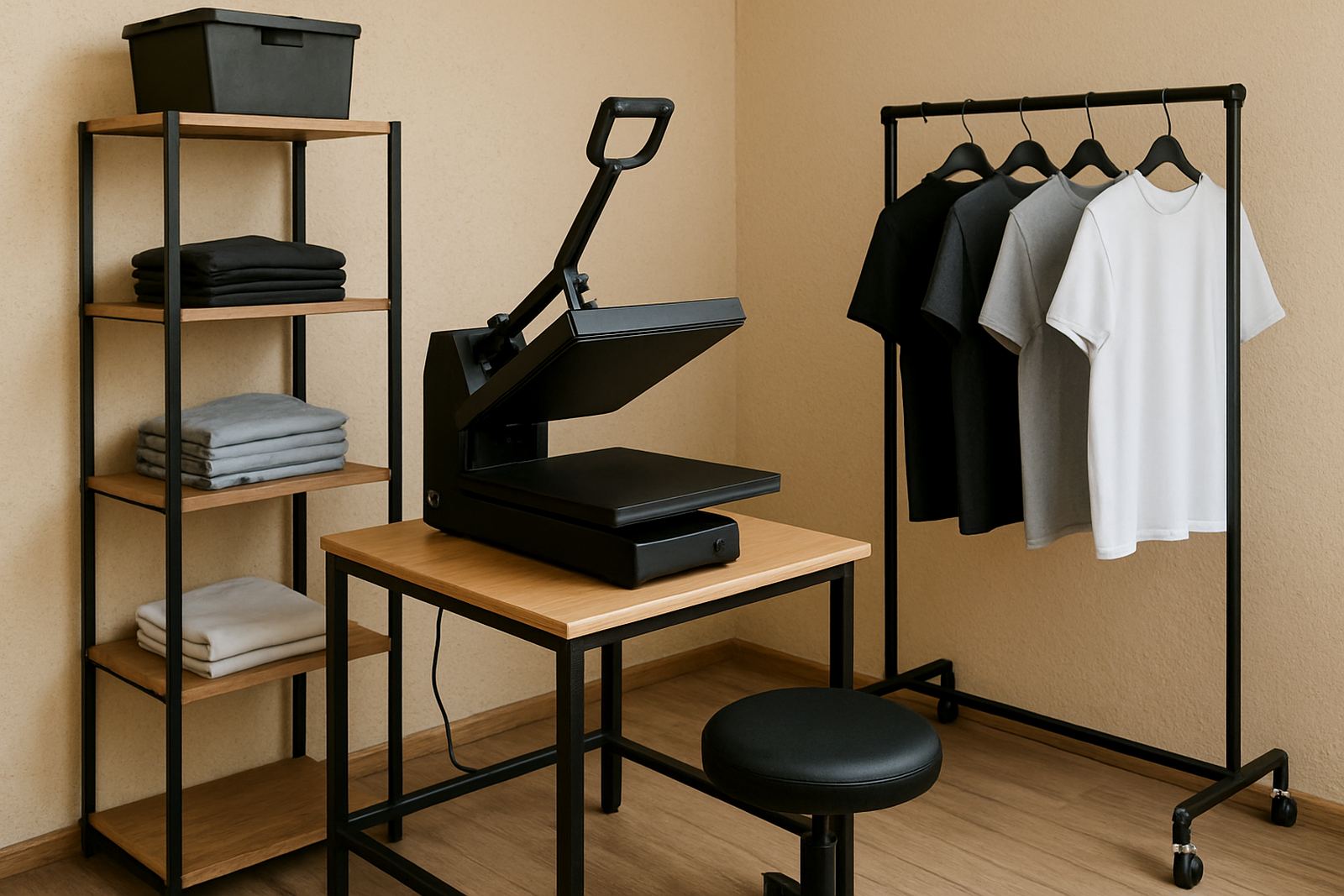
A proper press station saves space because everything needed for the job sits together. That includes the press, a small prep surface, a bin for waste backing paper, a cooling area for finished garments and a place for packing. When each item has its own place, operators do not leave tools on random surfaces or stack half-finished work next to the machine.
For small garment decorators in Durban or Cape Town, humidity and heat can make clutter worse. Transfers stick where they should not, garments pick up dust and operators move more slowly when they have to sort through piles. A tight but organised press station makes the room feel bigger than it is, because the workflow stays clean and direct.
If you are doing short runs, set up a simple one-way flow: prep, press, cool, fold, pack. That reduces backtracking and keeps two people from colliding in the same narrow patch. It also makes training easier for new operators, because the process is clear.
Choose The Right Press Size For The Room
Not every workshop needs the biggest press available. If your room is crowded, a machine that suits the size of the garments you print every day may be the better choice. A compact flat heat press can be more practical for T-shirts, tote bags, small transfer jobs and short production runs. Bigger platens are useful for larger prints, but they need more handling space and more room for the operator to work safely.
Think about what your jobs look like in real life. If most of your work is standard adult tees, schoolwear or promotional items, a well matched press is usually better than forcing a large machine into a tight room. If you do mixed work, consider how often you need the extra area versus how often it just takes up floor space.
- Match platen size to your most common job, not the biggest rare job
- Allow room for garment placement and alignment on every cycle
- Check whether the press opens safely without hitting shelves or walls
Plan For Load-Shedding And Daily Interruptions
Space planning in South Africa also means planning for power cuts, voltage issues and stop-start work. If the press area is too cramped, it becomes difficult to switch off safely, store half-pressed jobs or move work out of the way during load-shedding. Keep the press station close to a sensible power point, with proper cable management and enough room to shut down, cool and restart without rushing.
In a small workshop in the East Rand, one clothing maker turned a storage alcove into a press corner with a shelf above, a small prep table beside the machine and a rack for finished work behind. That let them keep sewing and cutting in the main room while the press ran beside the wall. The difference was not only convenience. They cut down on mistakes because the press operator no longer had to dodge people carrying bundles through the same space. It was a small change, but it made the floor plan work properly.
For preventive servicing, also leave enough access around the machine for cleaning, temperature checks and part replacement. A press jammed into a corner is slower to service and more likely to be neglected when work gets busy.
Keep The Area Safe, Clean And Easy To Service
Heat presses run best in a clean area with good airflow and clear movement. Dust, thread offcuts and loose transfer scraps build up fast in garment rooms, especially where cutting and packing happen nearby. Sweep the press zone daily and keep a small bin within reach. If the workshop is on a coastal side of the country, check for moisture and surface rust on nearby fittings, plugs and exposed parts.
From a service point of view, the best layout is one that lets a technician reach the controller, element, pad and frame without moving half the workshop. That matters whether you are in Bloemfontein, Midrand or nationwide by courier. A machine that can be checked properly is easier to keep in working order and less likely to sit unused because nobody can get to it.
- Keep the floor dry and free of trim waste
- Leave access for maintenance on both sides if possible
- Store spares and covers where they are close, but not in the heat zone
A Small Room Can Still Run Well
Good workshop layout is about discipline, not square metres. If the press area is planned properly, a small room can handle steady work without feeling cramped. The trick is to give every item a place, keep the walkways open and treat the press as a work centre, not an afterthought. That is usually what separates a rushed setup from one that keeps producing clean results day after day.
FlatPress helps small garment decorators, hobbyists and print shops set up presses, adjust pressure, check temperature and keep the equipment working. If your room is already full and you are trying to fit in one more machine, a practical layout review can save time and prevent costly mistakes. Sometimes the answer is not a bigger room. It is better use of the one you already have.