
Why repeatability matters once the run gets longer
Most decorators can get a single good press. The hard part is keeping that same result on shirt number 5, 25 or 80, especially when the workshop is busy and the machine is cooling and heating through the day. Repeatability is not only about the press itself, it is about how the operator loads the garment, how the transfer is placed and how closely the settings stay where they should be.
For small garment decorators in Midrand, Johannesburg or Pretoria, repeatability often shows up in customer complaints before it shows up in the workshop. One print sits flat, the next one looks slightly lighter, and a third has a faint edge lift. On bigger runs, those small differences add up fast. A steady process saves reprints, saves blanks and keeps delivery times under control.
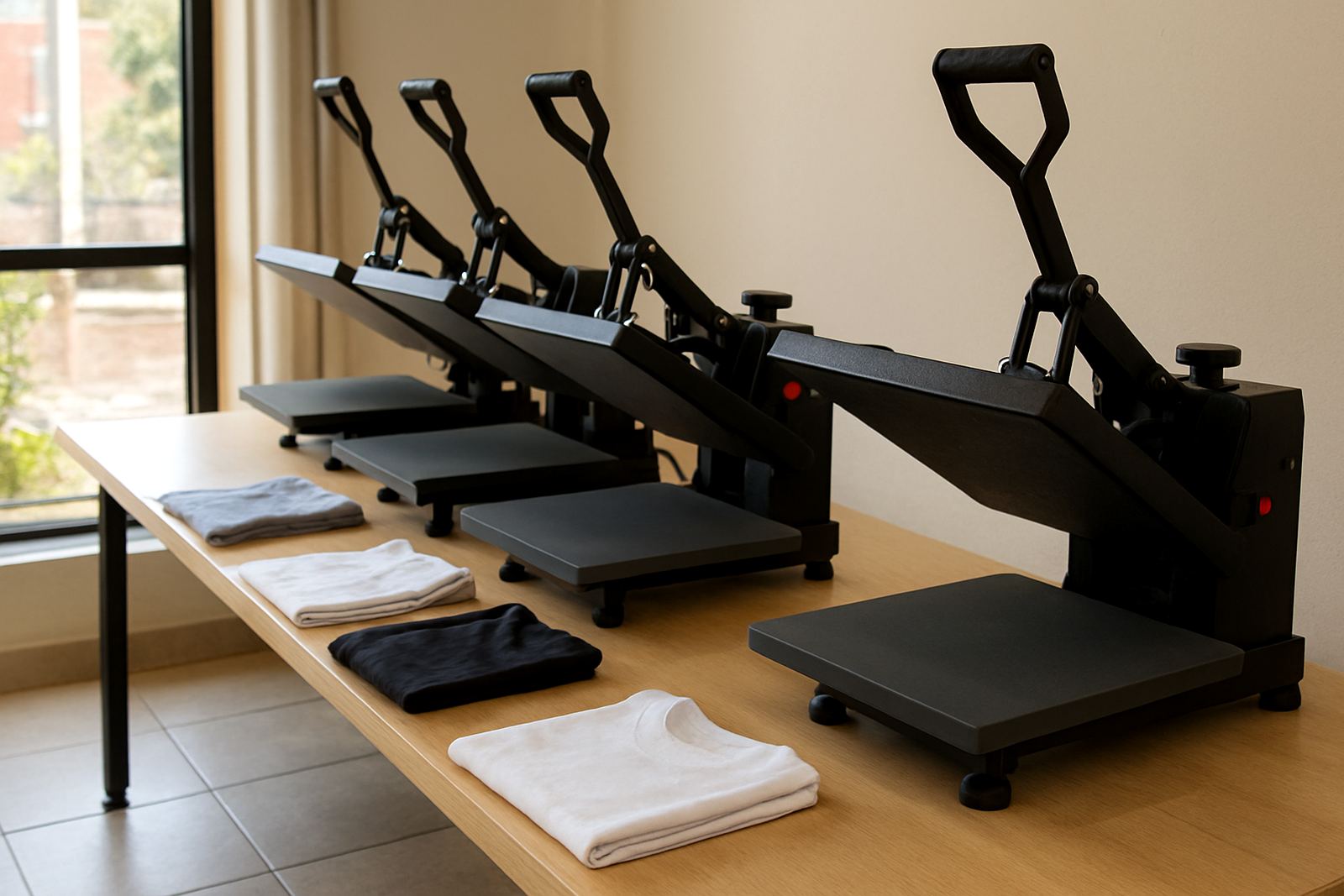
On a flat heat press, the goal is simple: same position, same temperature, same pressure, same dwell time. It sounds basic, but that is exactly what makes a transfer line up cleanly from the first garment to the last.
Start with loading that can be repeated by anyone on the team
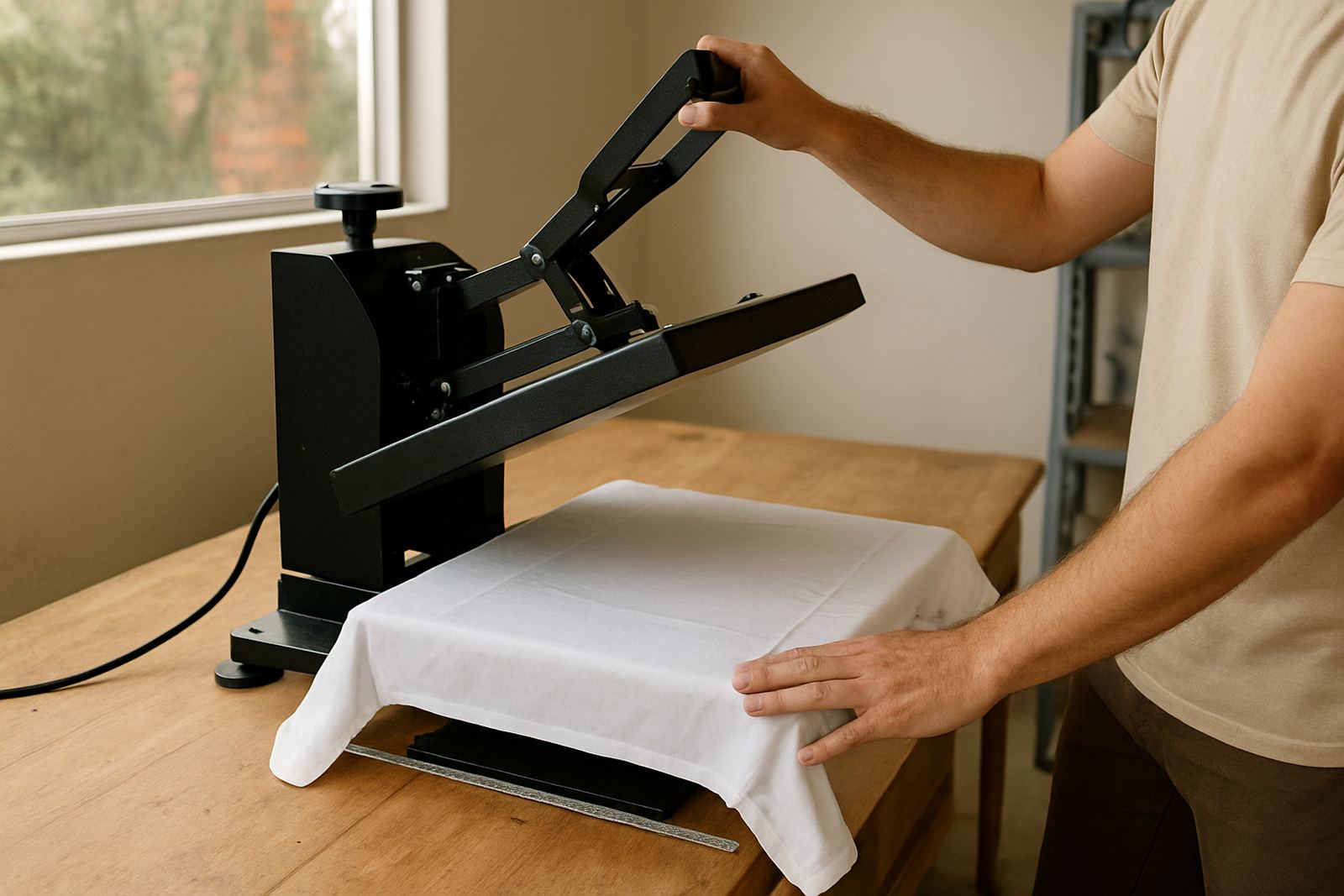
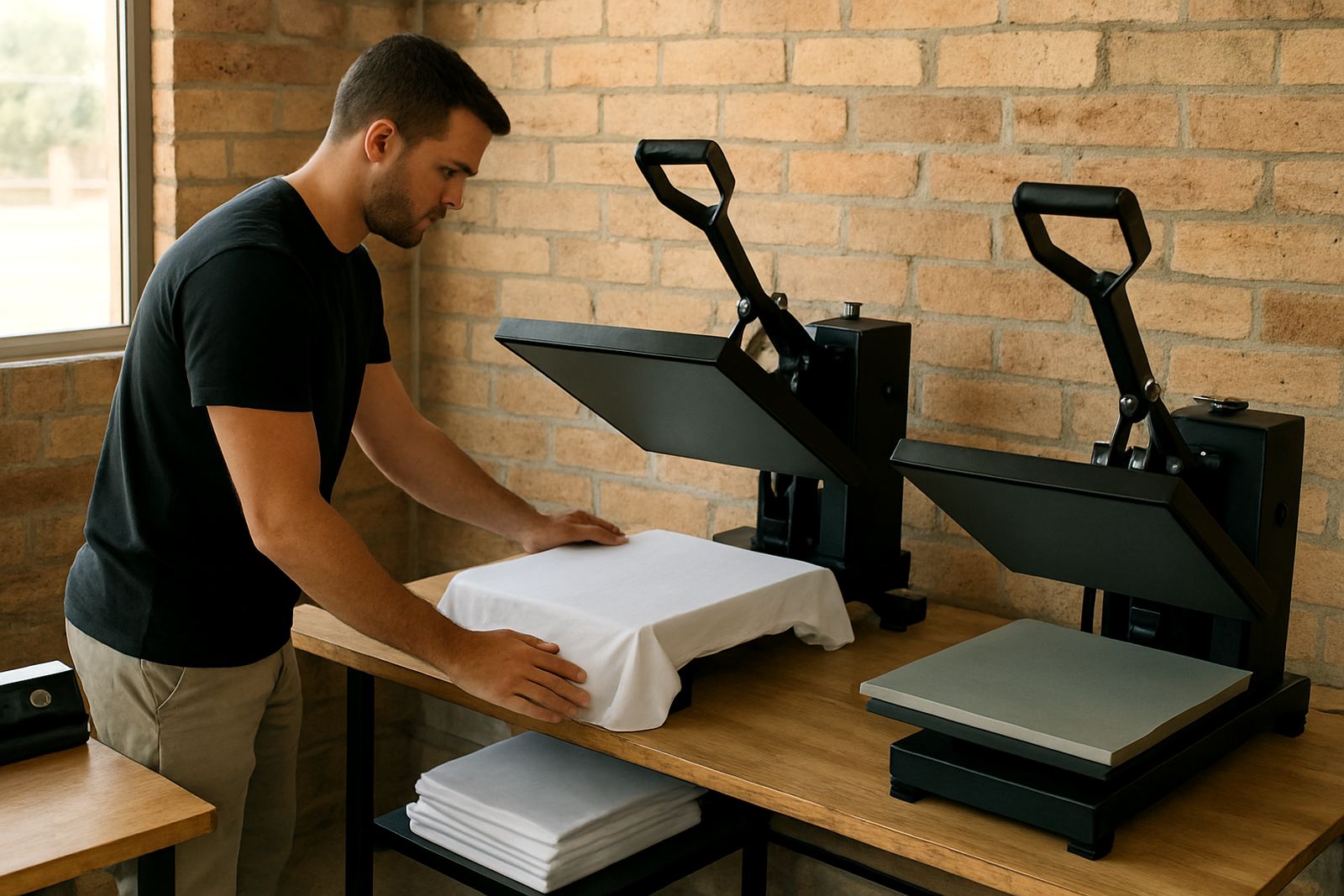
Consistent loading is where repeatability begins. If one operator centres the shirt by eye and another uses the collar seam as a guide, the final print position will drift. The same applies when folding, tugging or smoothing the garment before pressing. A simple loading routine makes the job easier for new staff and keeps experienced operators from building habits that slowly change the result.
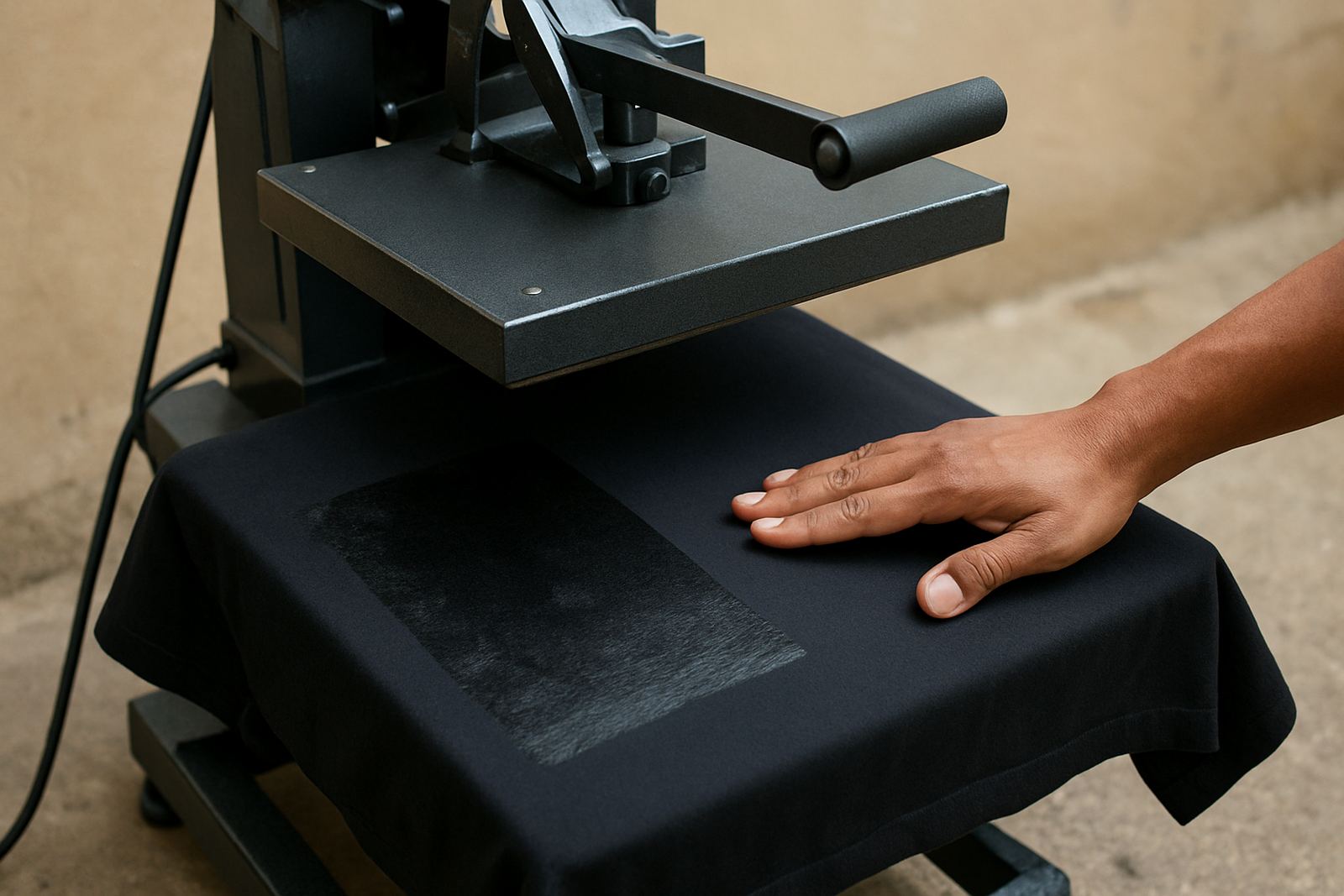
For T-shirt work, the garment should sit square on the platen with the same reference point every time. If you are using transfer prints, heat transfer vinyl or similar applications, the transfer should be aligned against a fixed visual guide, not guessed by eye from the edge of the shirt. That small discipline is what keeps left chest logos, back numbers and sleeves looking like they belong to the same order.
- Use one fixed loading method for every operator on the same job
- Mark your reference points on the platen where practical
- Keep seams, collars and side edges squared before closing the press
- Do not stretch the garment differently from one shirt to the next
In a busy shop in Durban or Cape Town, this kind of routine also helps when different people share the same machine across a shift. If the loading method is clear, the output stays steadier and the pressure on the operator drops as well.
Settings that stay put from the first press to the last
Temperature, pressure and time need to be checked before the run starts, then watched during the run. A press that was working properly in the morning can shift after a power interruption, a long idle period or a busy production stretch. Even a small change can affect adhesion, colour and finish. On larger orders, that difference can show as peeling edges, dull areas or transfers that look pressed in one area but not another.
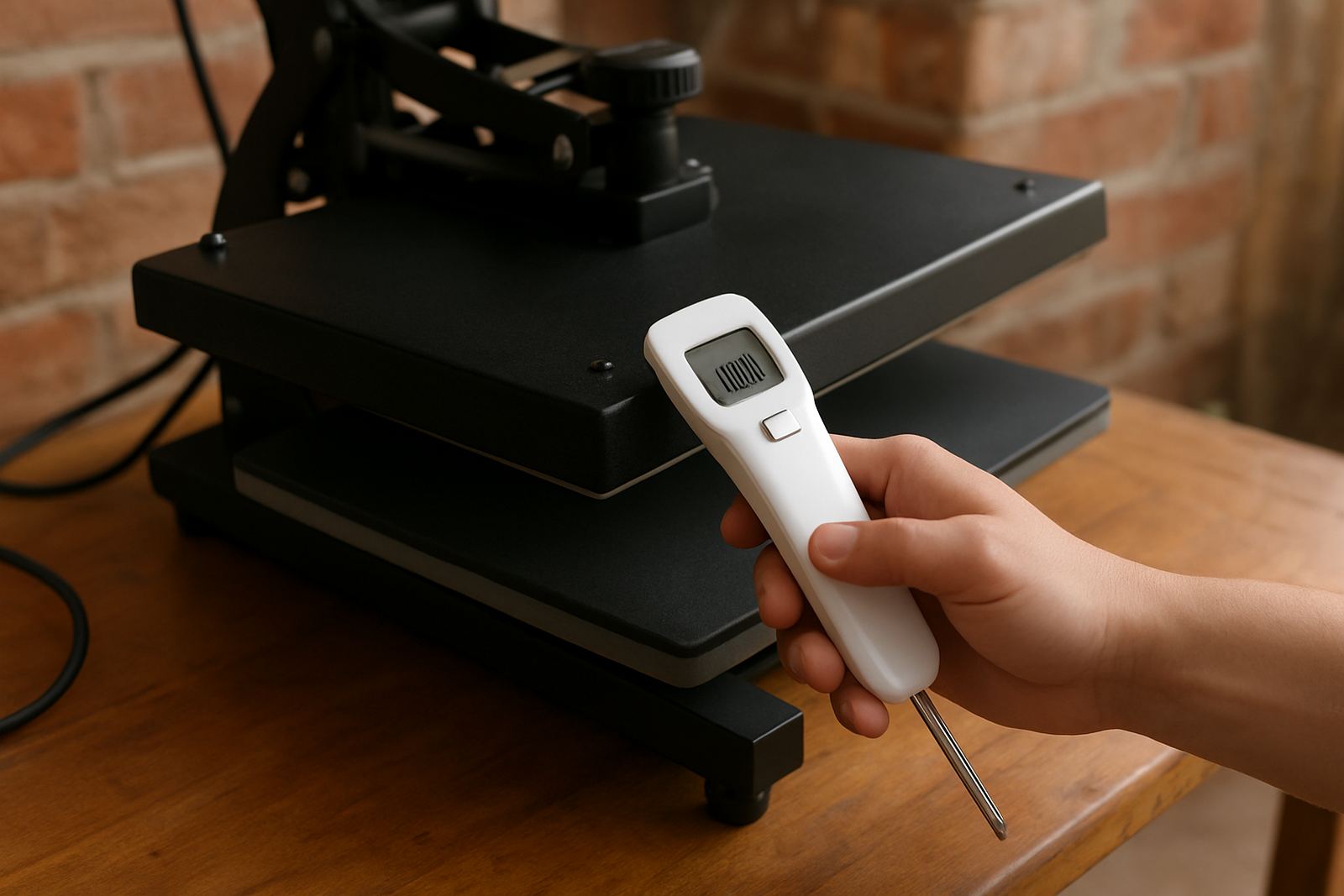
Do not assume the dial or controller is enough on its own. Temperature checks are important because the display and the actual platen heat are not always the same. Pressure also needs attention. Too light and the transfer may not bond properly. Too heavy and the artwork can flatten, distort or show press marks. A repeatable job uses one documented setting and keeps to it.
- Check actual platen temperature before production starts
- Confirm pressure on both sides of the platen if the machine allows it
- Record dwell time for each material type
- Re-check after a power cut or any unusual pause in the run
In Gauteng, load-shedding can interrupt a job halfway through and the press may take a while to come back to temperature. If the team resumes too quickly, the next garments may not match the first ones. That is why a short restart check is worth doing every time.
What preventative servicing does for long runs
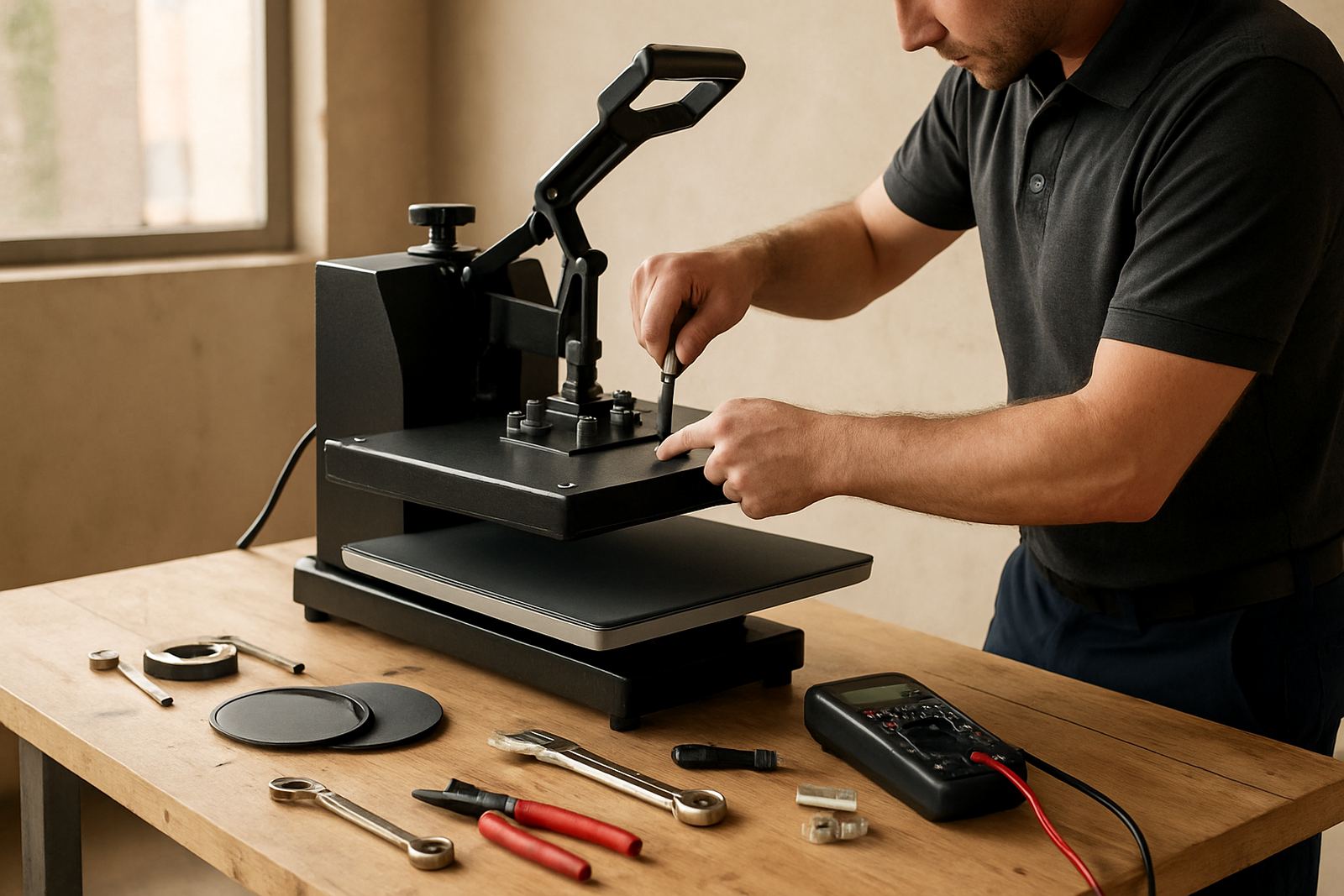
A press that is mechanically sound is easier to repeat with. Worn pads, loose fittings, tired elements and drifting controllers all make output less predictable. Preventative servicing keeps the machine in proper working order before those faults begin to show up on customer orders. That is usually far cheaper than reworking a large batch of shirts at the end of the day.
Service items that affect repeatability include temperature consistency, pad condition, pressure alignment and the condition of the heating element. If a press is slow to recover heat between cycles, the later garments in a run may not bond the same way as the first ones. If the pad has gone soft or uneven, pressure will vary across the platen. Those are small faults with big consequences.
We see this often with busy decorators in Midrand and the East Rand. A machine will seem fine for everyday work, but once an order grows beyond a dozen pieces the flaws start to appear. A service visit, a controller repair or a pad and covering replacement can bring the press back to a far more reliable standard.
Training the operator is part of the machine setup
Even the best flat heat press will not repeat well if the operator is unsure about the process. Training matters because it standardises the way the team works. When staff know how to load garments, check settings, adjust pressure and spot a problem early, the press becomes much easier to trust across a full run. The right training also shortens the learning curve for new staff, which is useful in shops that grow quickly or run on mixed shifts.
Good training should cover the practical points that affect repeatability, not just how to switch the unit on. That includes what to do when a transfer lifts on one corner, how to recognise uneven heat and when to stop the run rather than trying to push through it. A short pause to correct the setup is better than having to redo 40 shirts later.
- Loading and alignment using a fixed routine
- Temperature checks before and during production
- Pressure adjustment for different garment types
- Basic fault spotting so the team knows when to call for support
In some shops, one person does all the setup and another runs the rest of the batch. That can work, but only if the method is written down and followed the same way every time. Consistency needs a process, not memory alone.
A Midrand example from a busy transfer order
A print shop in Midrand was handling a 60 shirt corporate order for a local team event, with the work split over two days because of other jobs in the queue. The first day went well, but on day two the shirts were coming out slightly different. Some logos were a touch darker and a few edges were not sitting as neatly as they had the day before. The machine itself had not failed, but the routine had changed.
After a check of the loading method, pressure and platen temperature, the issue was traced to a combination of uneven pressure and a small temperature drift after a restart. The operator team reset the process, used the same reference point for every shirt and checked the heat before carrying on. The rest of the run matched much better and the order was completed without further rework.
That is the practical value of repeatability. It does not need fancy equipment. It needs a press that is set up properly, a team that follows the same steps and support when something starts to slip. For shops serving Johannesburg, Pretoria, Durban or anywhere else in South Africa, that discipline is what keeps production dependable.
Support that keeps output steady after the sale
FlatPress supports small garment decorators, hobbyists and professional print shops with new press setup, operator training, phone tech support and workshop repairs. Where needed, we also handle temperature checks, pressure adjustments, element replacements, controller repairs, pad and covering work, pneumatic line service, preventive servicing, spares supply and loan unit support. That practical backup matters when a machine is due for maintenance or a job cannot wait.
Our Midrand base supplies and services flat heat presses across Gauteng and nationwide by courier, including Johannesburg, Pretoria, Durban, Cape Town and Bloemfontein. For more involved work, we help customers through the enquiry form on our contact page so the right support can be matched to the machine and the production need.
Repeatability is not a theory, it is a workshop habit. The more consistent the loading, settings and checks, the more dependable the output becomes.