
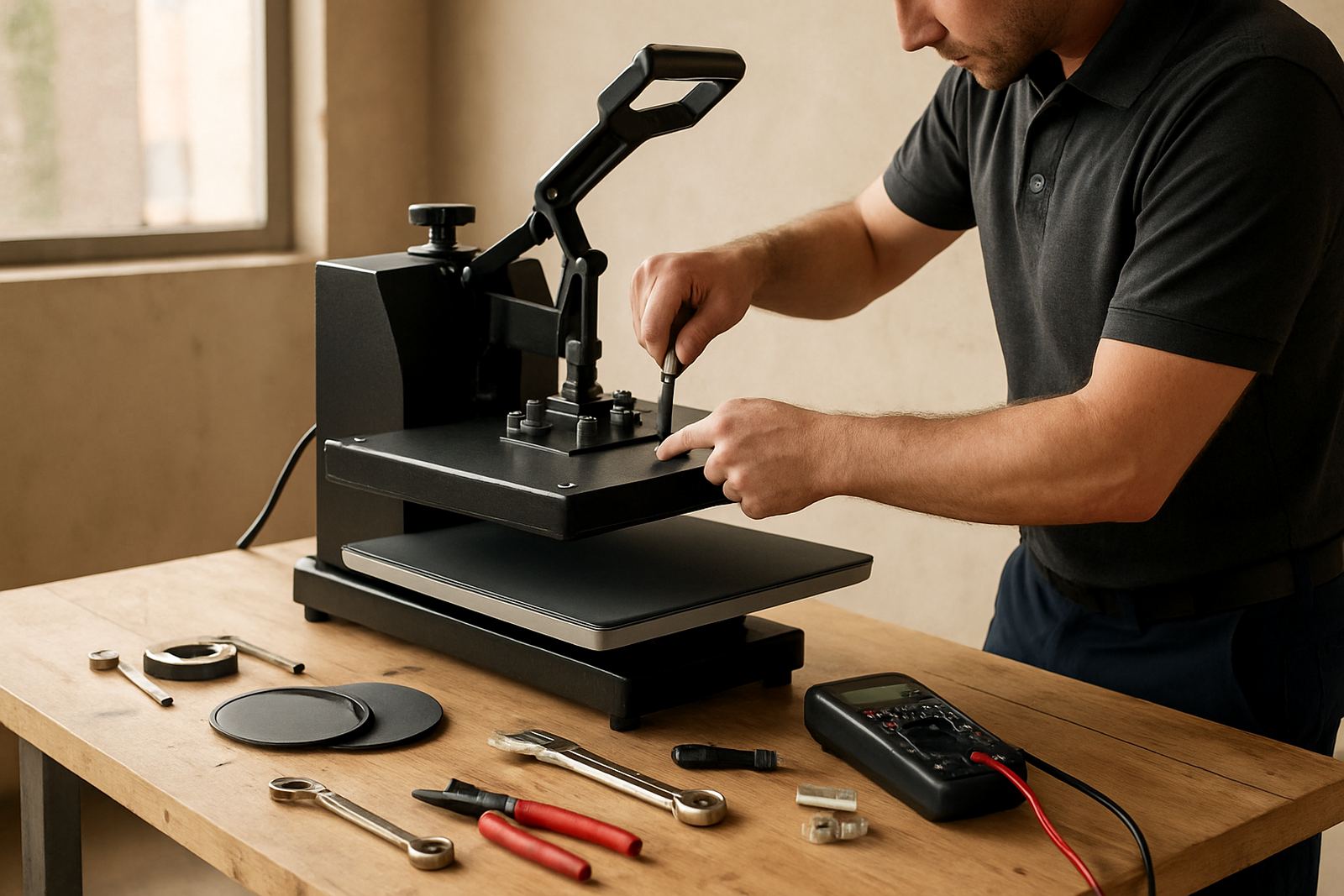
Start With Safety Before the First Press
Before anyone loads a T-shirt, they need to understand the machine, the heat involved and the consequences of rushing. A flat heat press can reach high temperatures quickly, and the platen, frame and garment surface all stay hot for longer than many new staff expect. In a busy shop in Midrand or Pretoria, that matters when orders stack up and someone is keen to keep the queue moving.
Good training starts with the basics: where the heat zones are, how the closing mechanism works, where hands must stay clear, and what to do if a garment shifts during the press cycle. New staff should also learn the difference between safe handling and force. A press that is too tight can damage fabric, while one that is too loose gives weak adhesion and poor wash durability.
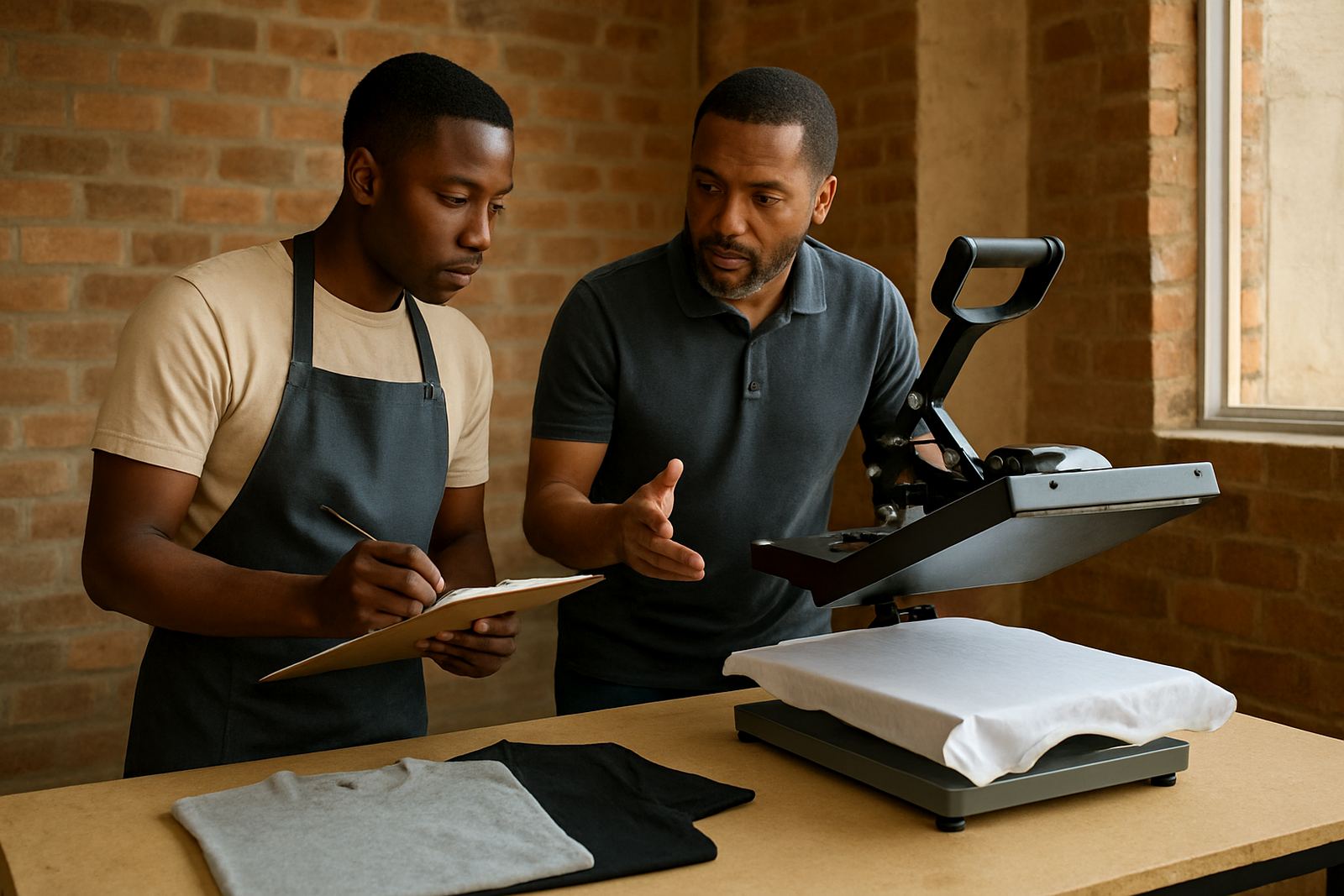
Keep the first session simple and repeat it if needed. One learner should operate the machine while another watches and notes the steps. That way, mistakes are picked up early and corrected before they become habits.
- Show the operator how to open and close the press without leaning into the platen.
- Explain the use of heat resistant gloves if your process requires them.
- Teach a clear no-touch zone around hot surfaces and moving parts.
- Make sure the learner knows where the isolator or power switch is before production starts.
Teach The Press Setup in Plain Steps
A new operator must know how to switch on the press, allow it to stabilise, and confirm that the temperature reading is correct before work begins. This sounds simple, but many bad press results come from skipping the warm-up or using guesswork after a load-shedding interruption. If the power cuts out and comes back, the machine may need a proper recheck, not just a quick restart.
Explain how your shop handles setup for different jobs. A vinyl transfer, sublimation paper or direct-to-garment pretreatment process each has its own temperature, time and pressure requirements. If the operator understands the reason behind each setting, they are less likely to treat every job the same. That is where waste starts.
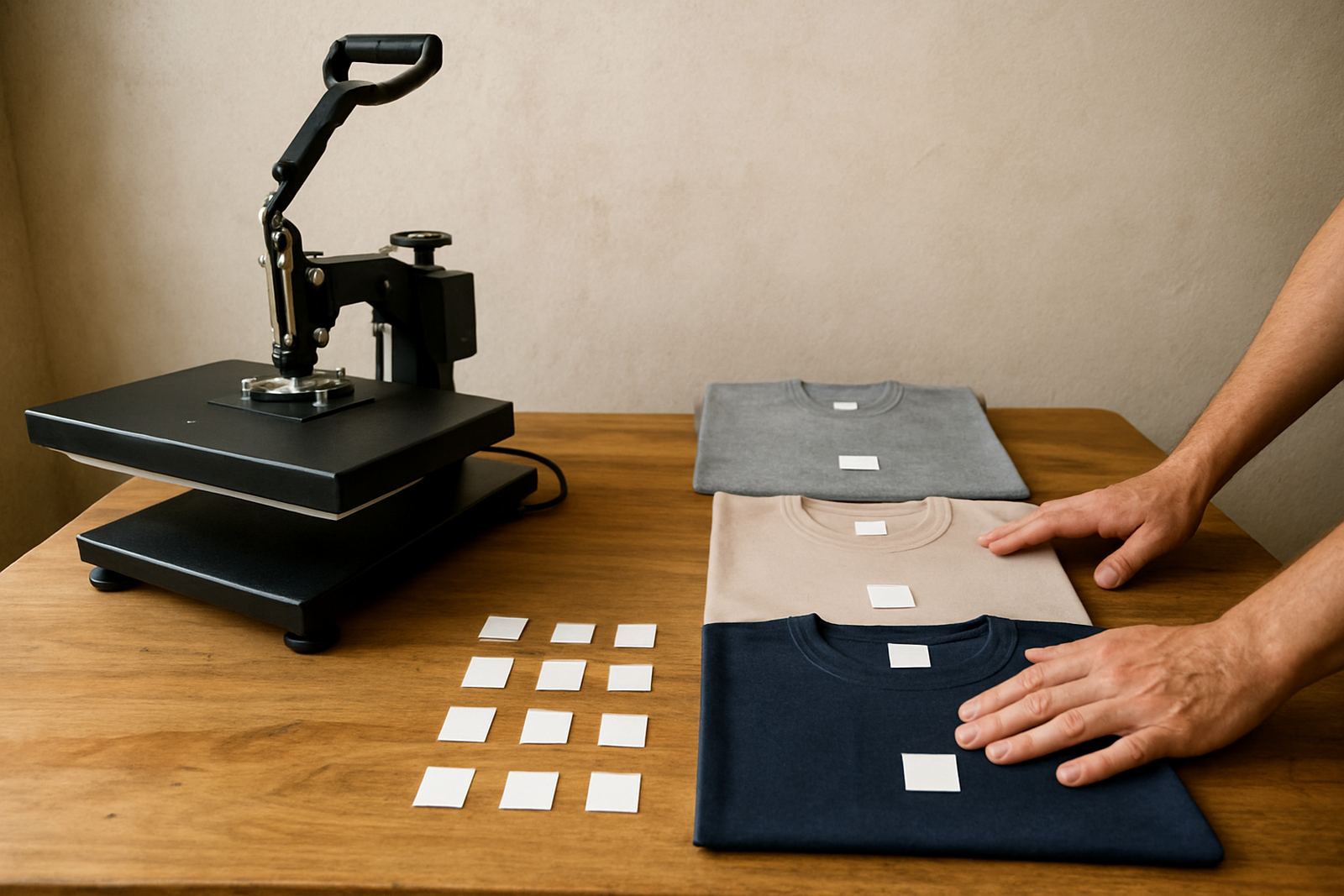
For practical training, write the most used settings next to the machine in clear language. Keep it simple and local. A new team member should be able to look at the sheet and know exactly what to do for a child-size cotton shirt, a polyester promotional tee or a thick hoodie panel.
- Confirm the temperature and let it settle before the first press of the day.
- Check the timer for accurate dwell time, not just a rough guess.
- Set the pressure for the garment thickness, especially on seams and zips.
- Test one sample item before moving into a full batch.
Show Them How to Read Fabric and Transfer Behaviour
New staff often focus only on the machine, but the garment is just as important. Cotton behaves differently from polycotton, and synthetic fabrics can react badly if the heat is too high. In coastal towns like Durban, humidity can also affect how some transfer materials sit on the garment before pressing, so the operator needs to recognise when storage conditions are part of the problem.
Training should include what to look for after the press opens. Is the transfer lifting at an edge? Did the print shift because the shirt was placed unevenly? Is the image too matte, too glossy or patchy in one area? These are all signs that something in the setup needs attention. The operator should not just re-press and hope for the best.
A good trainer teaches pattern recognition. Once a learner has seen a few good results and a few bad ones, they begin to spot trouble before it reaches the final garment.
- Check for scorch marks, shine changes and ghosting on the fabric.
- Watch for movement during closing, especially on light or slippery garments.
- Note whether the transfer has fully bonded at the edges.
- Compare the finish of the first piece with the sample standard on the wall or bench.
Build A Repeatable Daily Routine
Operators do better when the day starts the same way each time. A routine reduces errors, especially in smaller shops where one person may do loading, pressing and packing. The goal is not to turn the work into paperwork. It is to make sure the machine is ready and the settings are correct before the first customer order goes out.
A simple routine can cover cleaning the platen surface, checking the pad and covering, confirming that cables and plugs are secure, and making sure the machine closes evenly. If a press sits in a hot room or near an open roller door, dust and airborne dirt can collect faster than expected, so daily checks matter. A little attention now saves a callout later.
New operators should also know when to stop and call for help. If the display behaves oddly, the pressure feels uneven, or the press does not hold temperature properly, the best action is to pause the job and report it. In a busy workshop that can feel like a delay, but it is less costly than replacing a stack of spoiled garments.
- Clean the platen and working surface before production starts.
- Check for uneven pressure by pressing a test piece across the centre and edges.
- Inspect the cover and pad for wear, marks or flattening.
- Log anything unusual so the next shift is informed.
Use Short Demonstrations Then Let Them Repeat The Job
Training works best when it moves from watching to doing. A short demonstration is useful, but repetition is what builds confidence. Let the new operator complete the full cycle several times while someone experienced stands nearby and corrects hand position, loading angle and timing. By the third or fourth garment, they should already be moving more smoothly and asking better questions.
Use one standard job for training before introducing more difficult items. A plain cotton T-shirt with a single transfer is easier to learn on than a mixed batch with varying sizes and seams. Once the learner can repeat the simple job correctly, add a second scenario with a different fabric or a thicker garment. This step-by-step method keeps pressure low and improves consistency.
For shops in Johannesburg, East Rand or the West Rand, where orders may arrive in bursts from resellers, the operator also needs to learn pace without panic. A calm worker usually makes fewer mistakes than a rushed one.
When To Bring In Technical Support and Spares
Operator training should include the point where the shop hands over a problem instead of trying to force the machine through it. If the controller drifts, the element heats unevenly, or the pressure system does not respond properly, it is time for technical support and possibly a replacement part. New operators need to know that this is not a failure. It is part of keeping production moving.
For garment decorators in Gauteng and beyond, a support plan helps keep downtime under control. That can include phone guidance, preventive servicing, temperature checks, pressure adjustments, pad and covering replacement, or a loan unit where the job cannot wait. When a press is used daily, small faults become big ones if they are ignored. A trained operator who reports issues early is worth a lot in any print shop.
In practical terms, the best training outcome is not just a person who can press a shirt. It is someone who knows how to use the machine properly, recognise a fault early and keep the work moving without cutting corners. That is what protects your garments and your margins.
- Escalate electrical, heating or controller faults immediately.
- Replace worn pads and covers before they affect print quality.
- Book servicing before busy seasons, not after breakdowns.
- Keep spare parts and a support contact process ready for the team.
A Simple Example From A Busy Midrand Workshop
Imagine a small print shop in Midrand with one senior operator and two new staff members. They have a rush order for team T-shirts going out to Pretoria the next morning. Instead of letting the new staff jump in immediately, the senior operator spends twenty minutes on safety, ten minutes on setup, and then runs two sample presses while the learners watch. After that, each learner completes three garments with close supervision. One shirt shows a slight edge lift, so the pressure is adjusted before the rest of the batch is done.
That simple structure saves time later. There is less rework, fewer bad garments and no need to explain why half the order needs redoing. It also gives the new operators confidence because they have seen the right process from the start. For a small business, that confidence is as useful as any spare part. A little mistake here and there is normal, but the aim is to keep them small and infrequent.
With the right training routine, new staff can become dependable operators without turning the workshop into a trial run. The machine stays under control, the garments stay saleable, and the team knows exactly what to do when the pressure is on.