
Why schoolwear season catches shops out
Every year, the same pattern returns. Parents arrive with new school shirts, sports kit and clubwear in January, while schools and clubs send badge work, name labels and replacement items in short bursts. In Gauteng that rush often starts before the first school bell, then builds again after the first week when learners find missing items. By February, the printer who planned for a quiet month can already be behind.
The pressure is not only on the press itself. It hits artwork handover, garment sorting, heat settings, operator time and collection schedules. If one job takes three minutes longer than expected, a pile of thirty becomes a queue. That is why schoolwear season must be treated as a production period, not just a sales spike.
A clean plan saves more time than a second machine sitting idle. Keep stock in order, keep transfers grouped by size and school, and make sure the operator knows exactly which fabric needs which setting. Cotton, polycotton and synthetic sports fabric all behave differently, and guesswork leads to spoilage.
Build a simple production flow before the first orders land
Before the rush starts, map the full process from order intake to handover. The fastest shops are usually the ones with the least confusion in the middle. A clear flow makes it easier to train new staff and keep experienced staff moving without constant questions.
- Separate orders by school, sport and garment type.
- Mark urgent jobs in a visible queue, not on loose notes.
- Use one person to check names, sizes and placement before pressing.
- Keep transfers counted and packed with the matching order form.
- Stage finished goods for collection in a clean, dry area away from powder, lint and steam.
For shops in Midrand, Pretoria and Johannesburg, where courier pickups and walk-in collections often happen on the same day, this structure reduces mix-ups. It also keeps work moving when load-shedding cuts into the day. If the press is off, the paperwork and sorting still continue so the machine can start again without delay.
Set the press up for repeat work, not one-off jobs
Schoolwear printing often means the same artwork repeated across many garments, so consistency matters more than fancy settings. Check platen temperature, pressure and timer accuracy before the season begins. A small fault at the controller can turn into dozens of rejected shirts by lunchtime.
On high-volume days, watch for uneven pressure on the pad and covering. If the middle is hot but the edges are not closing properly, badges may lift and names may peel. Replace worn covering early, not after a customer complaint. Keep a spare element, basic electrical spares and a backup cover ready if the machine is earning its keep every day.
In humid coastal towns like Durban and around Cape Town, stored transfers and garment stock can pick up moisture. That affects adhesion and can cause a dull finish or lifting edges. In dry inland areas the issue is often static and dust. Either way, the answer is the same: keep consumables sealed, store garments properly and do a quick temperature check each morning.
Train for speed without cutting corners
Schoolwear rush seasons expose weak training fast. A new operator may know how to close the press, but still miss the differences between a school badge on a blazer and a name on a PE shirt. Training should cover the actual jobs that appear in season, not only the ideal case.
Good training also improves safety. Heat presses are used close to the hands and wrists for long periods, and tired operators make mistakes. Short refreshers before the peak period help everyone move with confidence, especially if part-time staff are brought in for the rush.
- Show correct garment placement for adult, youth and small child sizes.
- Demonstrate how much pressure is enough for each fabric type.
- Explain how to spot underheating before the job leaves the table.
- Teach cleaning routines for platens, pads and the surrounding work area.
- Cover what to do when the power trips or the controller behaves oddly.
A trained team works faster because they ask fewer questions and redo less work. That matters when a school wants 80 names ready by Friday, or a club drops off kit with a same week turnaround.
Back up the machine before the week gets busy
Nothing slows a rush like a press that is down for a simple part. Schoolwear work is repetitive, so the same parts see the same wear every day. A preventive service before peak season is cheaper than lost orders, overtime and a frustrated customer waiting at the gate.
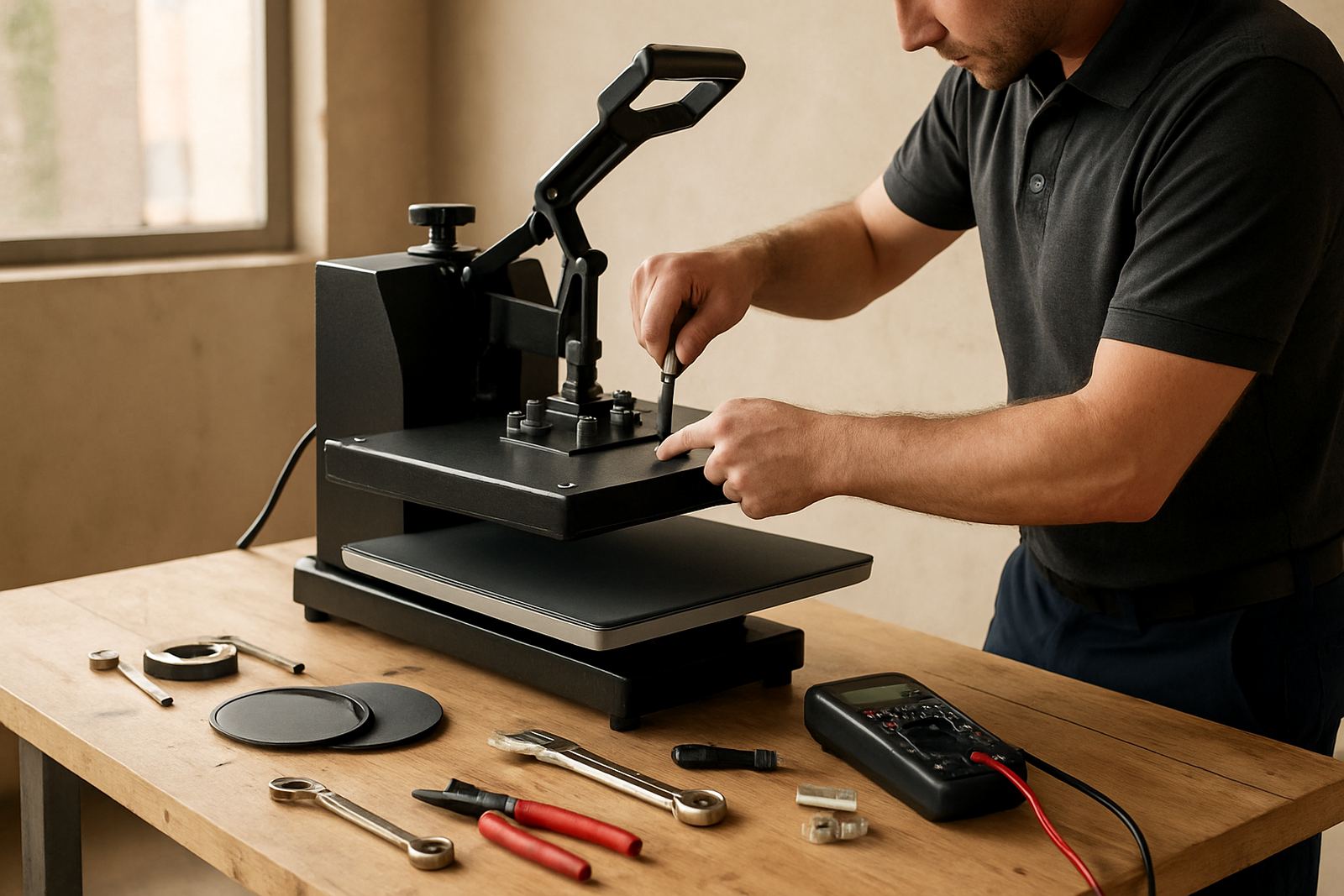
Check the controller, heater element, pressure alignment and pneumatic line service where fitted. Listen for unusual clicking, uneven closing or heat drift. Keep a record of any temperature checks and repairs so recurring faults are easy to spot. If a unit is already inconsistent, fix it before the first pile of uniform orders arrives.
Spare parts are not an afterthought in peak season. A spare pad and covering, controller replacement or loan unit support can keep work moving while the main machine is repaired. For shops in East Rand, West Rand and across the wider Gauteng area, that backup can mean the difference between finishing on time and pushing work into the weekend.
A local example from Midrand during January
A Midrand decorator handling school names for several primary schools was seeing the usual January squeeze: uniforms, sport shirts and class badges all arriving within the same week. The team had one main press and one older backup unit, but the backup had not been checked properly in months. The first signs of trouble were uneven pressure and a weak finish on small left-chest badges.
Instead of carrying on and hoping for the best, the shop paused for a proper check. The pressure was adjusted, the worn covering replaced and the operator given a quick refresher on fabric handling. The backup unit was serviced and kept ready for overflow jobs. That small reset meant the team could keep up with the school run without sending work out late.
The lesson is simple. Rush seasons reward the shops that prepare early, keep spares ready and do not ignore small faults. Around Johannesburg, Pretoria and the rest of the country, the same rule applies whether the order is ten shirts or two hundred.
A practical checklist for the next rush season
Use the quieter weeks to get ahead. A few hours of planning now can save days of chasing later.
- Book a pre-season inspection and temperature check.
- Confirm operator training for names, badges and sports kit.
- Stock the most used spares and a backup covering set.
- Test your delivery and collection process before orders pile up.
- Set up a clear system for urgent school orders and repeat names.
- Keep a simple log of faults, adjustments and repairs.
If your schoolwear work comes in fast, the goal is not to work harder every hour. It is to remove the delays that slow each hour down. That is what keeps the press productive when the queue starts to grow.