
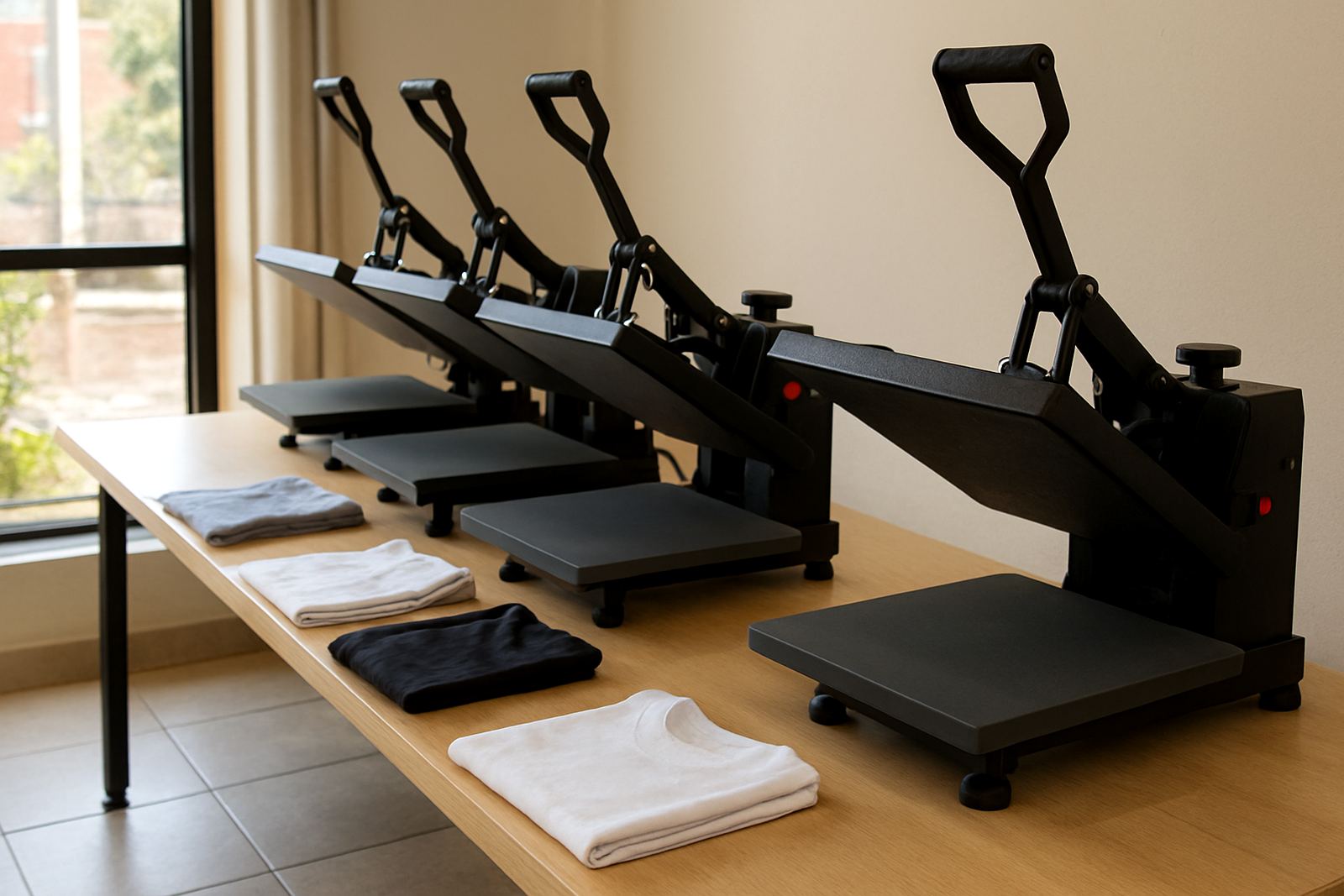
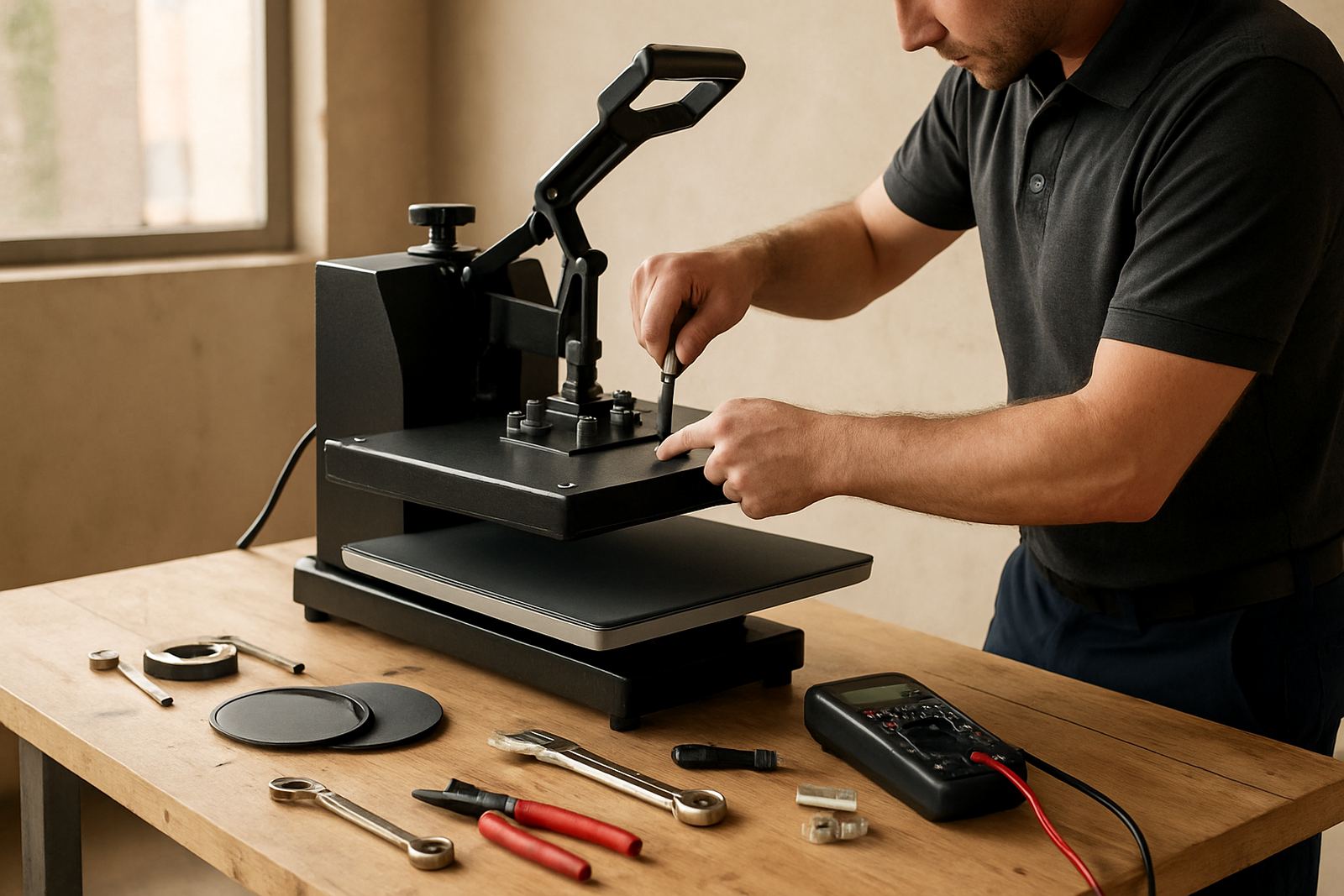
What Time And Dwell Really Do In The Press
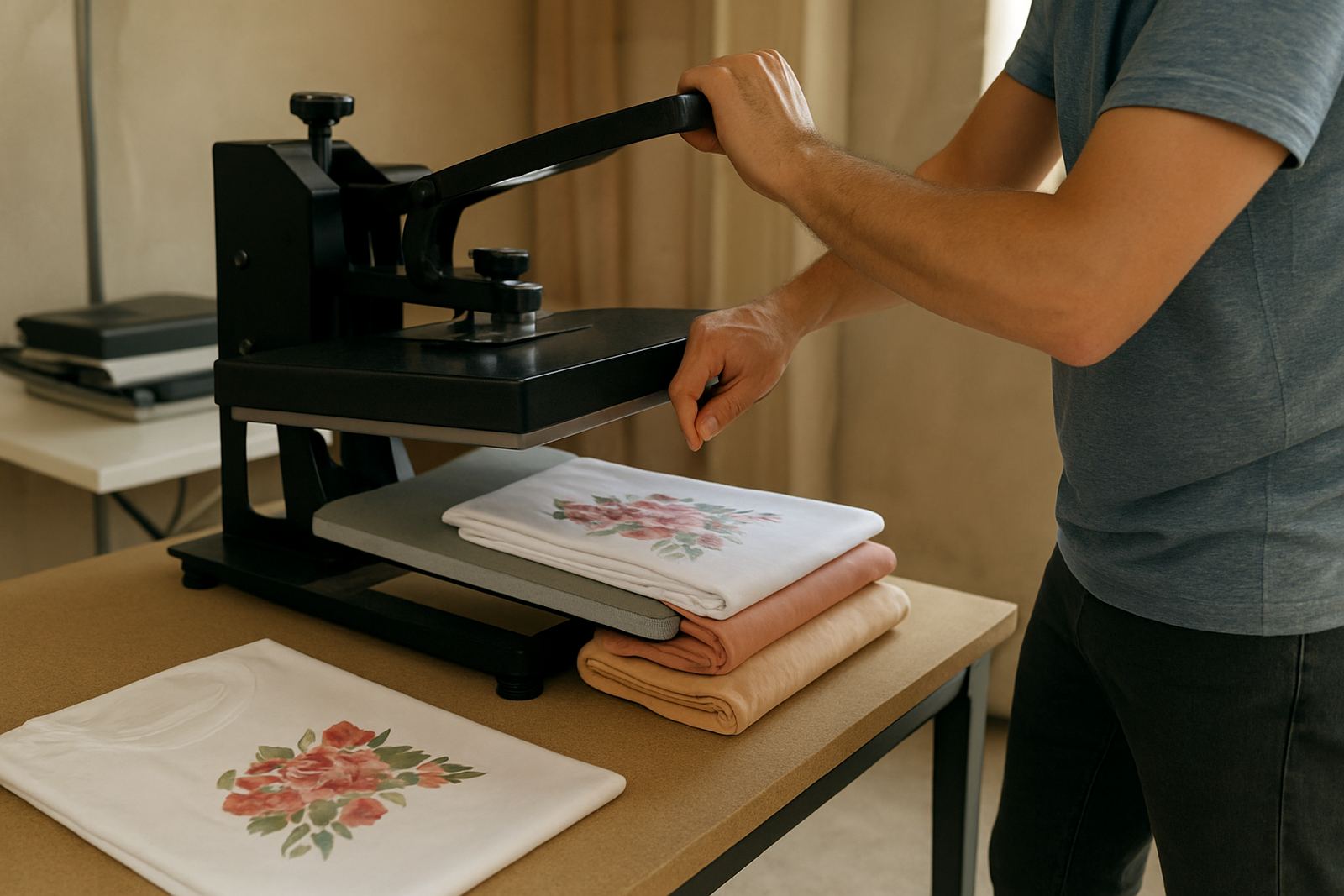
Time and dwell are often spoken about as if they mean the same thing, but in practice they describe how long the press stays closed while heat and pressure do their work. During that period the adhesive softens, flows into the fabric surface, and then cools back into place. If the cycle is too short, the adhesive may not fully bond. If it is too long, the garment can take too much heat and the transfer can overcook.
For small garment decorators in Midrand, Johannesburg and Pretoria, this matters because every fabric behaves a little differently. Cotton T-shirts, polycotton workwear and moisture management sports shirts do not absorb heat the same way. A transfer that looks perfect when it comes off the press can still fail after the first wash if the dwell was not right.
Think of the press as a controlled process, not a guess. The right time gives the adhesive enough contact with the fibres, while also protecting the print surface, the backing and the feel of the fabric.
Signs You Are Pressing Too Short Or Too Long
When the press is too short, the first sign is usually weak bonding. Corners lift, fine details crack or the transfer starts peeling at the edges. On some materials the print looks fine at delivery, but after the customer folds, washes or stretches the shirt, the problem shows up. That is when the call comes back.
Too much dwell can be just as costly. The shirt may come out shiny, with a hard patch around the print area. On dark garments the fabric can mark, while on lighter cotton the image can appear pressed flat into the fibres. In humid areas like Durban, operators sometimes try to compensate by adding more time when the issue is actually moisture in the garment or an uneven temperature reading.
- Short dwell: lifting edges, weak adhesion, poor wash resistance
- Long dwell: shine, fibre flattening, scorch marks, stiff hand feel
- Uneven dwell: one side bonds well and the other side peels later
If you see the same fault across a batch, check the full setup before changing the artwork or the material. Temperature, pressure, pre-pressing and the state of the heat pad all affect the result.
Fabric, Transfer Type And Garment Weight Change The Timing
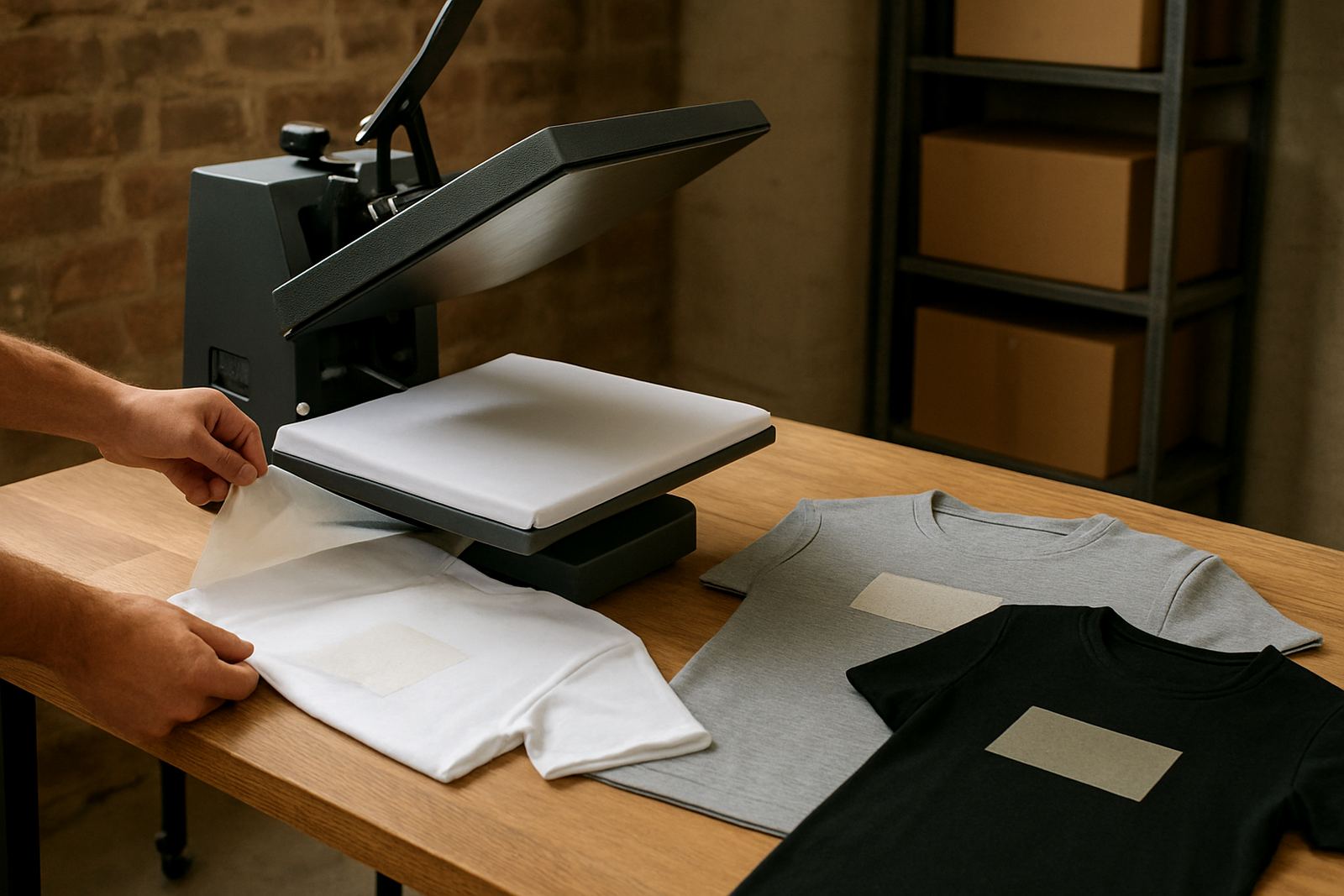
There is no single time that suits every job. A light promotional T-shirt may need a very different cycle from a heavy hoodie, apron or club garment. The same goes for transfer types. A vinyl application, a digital transfer and a screen printed transfer all respond differently to heat and pressure. That is why a setup done for one job should not be copied blindly to the next.
On thicker garments, heat needs more time to move through the top layer and into the adhesive zone. On thin polyester, too much dwell can mark the cloth or distort the fibres. For mixed fibres, especially polycotton, you often need to balance a lower temperature with a little more time, or a firmer press with a shorter cycle depending on the transfer system.
- Light cotton: fast heat response, but easy to scorch if overdone
- Polycotton: steadier handling needed, especially on pastel colours
- Polyester sportswear: use care with temperature and dwell to avoid shine
- Heavy fleece and hoodies: check that heat reaches the full print area
For print shops serving schools, corporates and local events, keeping a few test garments on hand is worth it. A one-minute test can save a full run of spoiled stock.
Pressure And Dwell Must Work Together
Time alone cannot fix a press that is set too light or too hard. Pressure changes how fast heat transfers and how firmly the adhesive makes contact with the fibres. If pressure is too low, even a long dwell may not give a proper bond. If pressure is too high, the garment can flatten, the print can distort and the backing may leave an outline that customers do not like.
Operators sometimes chase a poor result by adding more time, when the real problem is pressure. That can waste stock and make the fabric feel worse. A well set press gives even contact across the platen, which means the time setting works as intended. This is especially important on presses used daily in busy shops across Gauteng where the machine is opened and closed all day long.
Check the press with a simple routine: close it on a sample, inspect the edges, feel the tension on the handle or air system, and confirm that the heat is even across the bed. If the centre is correct but the corners are not, the dwell settings will never give consistent results.
A Midrand Example From A Busy Workroom
One of the most common calls we see from small decorators is from a shop that has moved from hobby work to regular orders. A team in Midrand was doing local run jobs for workwear and birthday shirts, but the transfers on heavier cotton were failing at the edges. They had already adjusted the temperature, but the issue kept returning.
After checking the press, the problem was a mix of uneven pressure and dwell that was too short for the heavier fabric. Once the pressure was corrected and the cycle adjusted, the same transfer held properly and the garment stayed comfortable. The customer had been expecting a quick fix, but what they needed was a proper setup and a repeatable process.
This is common with shops that take on orders from Sandton, Centurion and Pretoria East. The garment types change from one week to the next, and load-shedding interruptions can make operators restart a job halfway through. That is when notes matter. If you record the fabric, transfer type and dwell used, you can come back to a setting that works instead of guessing again.
Simple Checks That Keep Results Consistent
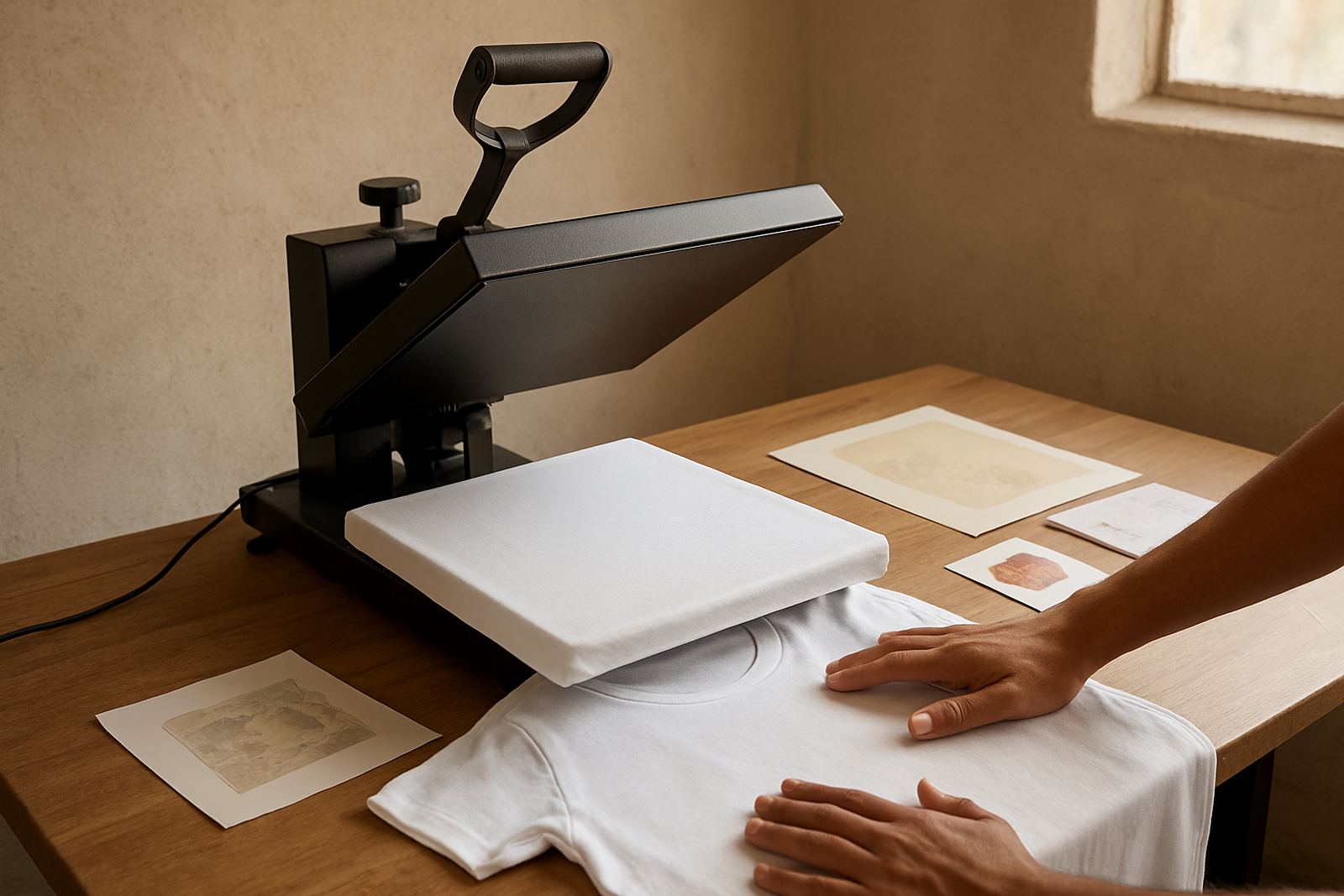
Good dwell control starts before the press closes. Make sure garments are dry, the platen is clean, and the silicone pad or cover is in good condition. A worn pad can change contact pressure and make the heat distribution less reliable. If the workshop is cool in winter or damp near the coast, give the press enough warm-up time before production begins.
It helps to build a basic process that every operator follows. That keeps results steady when staff rotate or when a shop is busy with school orders, promotional runs or contract work.
- Pre-press garments to remove moisture and wrinkles
- Confirm temperature with a test strip or thermometer check
- Use a timed press cycle rather than counting by eye
- Keep notes for each fabric and transfer type
- Inspect the first piece before running the full batch
These habits are small, but they reduce waste and improve wash durability. They also help when you need to explain to a customer why a certain fabric or transfer needs a different setting. Clear notes make that conversation easier.
Why Training Matters More Than Guesswork
The best dwell setting is not always the same from one job to the next, so training matters. An operator who understands why time changes the bond can make better calls under pressure, especially when handling urgent orders or a machine that has just had a temperature check or element replacement. That knowledge pays off in fewer reprints and less fabric damage.
For businesses serving Johannesburg, Durban, Cape Town and Bloemfontein, the value is practical. A trained operator can spot when the issue is the press, the garment or the transfer itself. They can also tell when the problem is simply too much dwell. The goal is not to press longer for safety, but to press long enough for the right bond and no longer.
If your setup is producing mixed results, review the basics first. Time and dwell may look simple on paper, but they sit at the centre of transfer quality. Get them right and the print feels better, lasts better and gives your customer a cleaner finish.