When hiring beats buying a second machine
If you only need a press for a weekend market, a school fundraiser, a trade show or a short production run, hiring is often the cleaner choice. You avoid tying up capital in equipment that may sit unused for most of the year. For small garment decorators in Midrand, Soweto, Centurion or Boksburg, that can mean keeping cash available for transfers, blanks and payroll instead of another machine.
Hiring can also suit businesses that are testing a new line of work. If you are moving from simple T-shirts into tote bags, caps or mixed transfer jobs, a short hire period gives you time to see how the workflow holds up. It helps you judge platen size, operator comfort and throughput before you commit to a purchase.
For some customers, the real value is not only the press itself but the breathing room. A hired unit can carry you through a busy month while your main machine is being serviced, so orders keep moving and customers do not wait longer than planned.
Situations where a hire makes practical sense
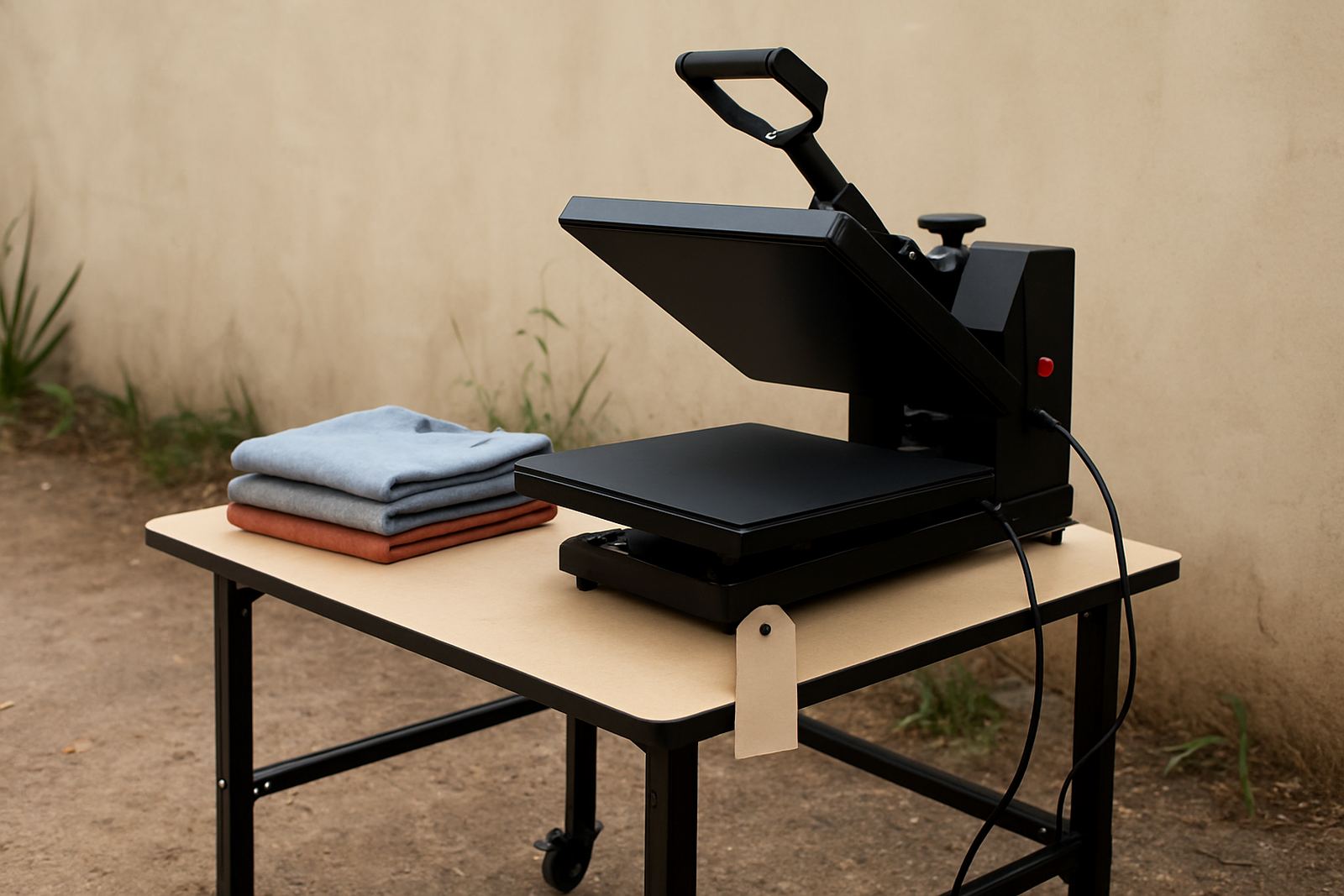
There are a few clear cases where hiring is usually worth considering. The first is event work. If you are printing live at a sports day, promotional activation or expo in Gauteng, you may need a machine that can be set up quickly and taken down again without drama. The second is temporary overflow. When a clothing order lands larger than expected, a short hire can add output without forcing a permanent upgrade.
A third case is repair downtime. If a controller fails, a heating element burns out or the pressure system needs attention, a loan unit or hire arrangement can keep the workshop running. That matters when you are serving schools, corporates or resellers who want delivery dates met. In a business with limited staff, one machine down can slow everything else.
- Short-term event printing for markets, expos and school events
- Extra capacity during seasonal peaks or bulk orders
- Cover while a press is being repaired or serviced
- Testing a new production method before buying
For coastal operators in Durban or Cape Town, hiring can also be a sensible way to manage equipment while you decide what specs are best for a humid workshop. It gives you time to check how the press behaves in your own space, not just on paper.
What to check before you agree to hire
Not every hire arrangement suits every job. Before you sign up, check the platen size, power requirements, temperature range and pressure control. If you work on a lot of chest logos, a smaller press may be fine. If you handle large transfer panels or oversized artwork, you need enough surface area to work properly without stitching jobs together in a rushed way.
It is also worth asking how the unit will be supplied and what support comes with it. Some operators only need a machine delivered to their premises. Others need setup, a quick run-through and guidance on using the right temperature and dwell time for different films and transfer papers. A bit of training at the start can save wasted stock later on, especially when new staff are still learning the process.
- Confirm platen size and the type of work you will be doing
- Check whether delivery, setup and collection are included
- Ask about operator training and basic fault support
- Make sure the electrical supply suits your site
If you are in an industrial unit with mixed loads or older wiring, it is wise to check the circuit before installation. A press that keeps tripping a breaker on a busy day is not doing your production any favours. Small checks up front save time and avoid frustration later on, simple as that.
How a hire can help during repairs or servicing
One of the strongest reasons to hire is continuity. A press that is overdue for preventive servicing may still be running, but if the pad has worn thin, the controller is drifting or the pressure is uneven, your finish quality starts to change. That is when jobs are wasted, transfers fail and rework eats into margin.
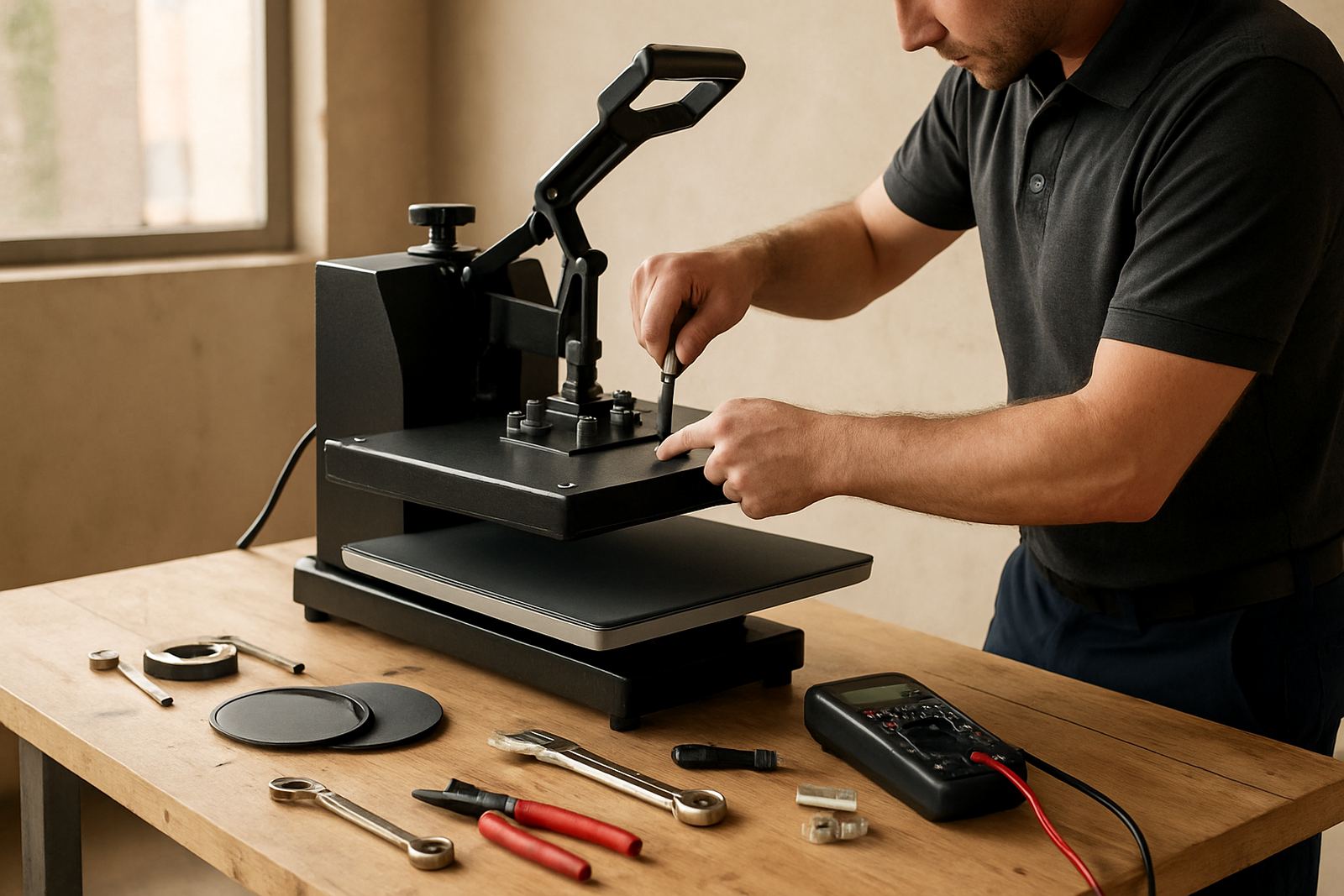
A temporary unit keeps the line moving while the main press is checked, adjusted or repaired. For workshops that rely on daily output, this can be the difference between meeting turnround times and apologising to customers. It also gives technicians the space to do proper work instead of rushing through a fix just to get the machine back into service.
In Midrand and across the East Rand, many small shops run with only one main flat press. If that machine stops on a Wednesday and a Friday order is due out, a short hire can bridge the gap. You keep printing while the workshop team handles temperature checks, pressure adjustments, element replacement or controller repair on the other unit.
A Gauteng press-room example from day-to-day production
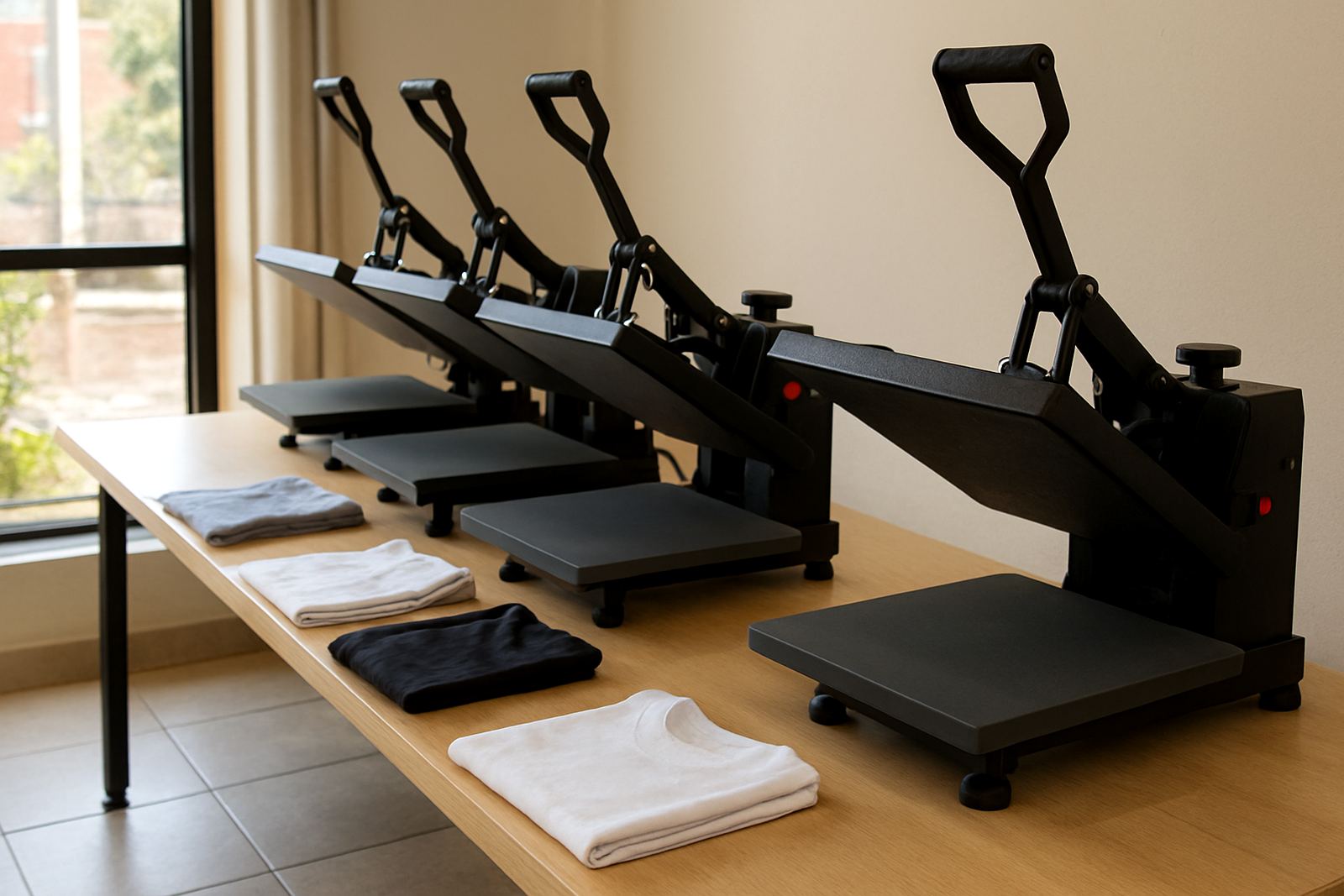
Take a print shop in Midrand that handles schoolwear, clubwear and quick-turn promotional orders. In August, they are often juggling winter stock, festival orders and year-end event garments at the same time. If their main press is tied up with a repair, the backlog builds fast. A hired flat press lets them keep pressing transfers while the workshop sorts the faulty machine.
That same shop may also need extra capacity when a corporate client places a once-off bulk order. Rather than turning work away, the owner can bring in a hired unit for a week or two and push the order through. The team gets the production done, the client gets their delivery on time and the business avoids the cost of a machine that might only be needed occasionally.
For a hobbyist working from home in Pretoria or Bloemfontein, the reason may be different but the outcome is the same. They can take on a one-off community project, then return the machine when the job is complete. No long-term storage, no maintenance burden, and no need to commit cash upfront.
When hiring is not the best answer
Hiring is useful, but it is not the right answer for every operation. If you press every day, have steady orders and need consistent throughput month after month, ownership usually makes more sense. The same applies if you need special platen sizes, permanent workshop integration or a machine that is always on hand for urgent work.
It is also worth thinking about your team. If different staff members use the press on different shifts, you may prefer to own a unit and train everyone to the same standard. Regular servicing, spare parts and predictable setup then become part of your normal operating routine rather than a short-term arrangement.
- Choose buying if you press daily and need permanent capacity
- Choose hiring if your need is temporary or irregular
- Choose a loan or hire unit if repairs would otherwise stop production
A good rule is this: if the machine is going to earn money often enough to justify the capital, buy it. If it is there mainly to solve a short-term gap, hiring is usually the smarter spend.
What FlatPress can help you with
FlatPress works with small garment decorators, hobbyists and professional print shops across Midrand, Johannesburg, Pretoria, Durban, Cape Town, Bloemfontein and beyond. We supply, set up and service flat heat presses, and we can assist with operator training, phone tech support, preventive servicing, spares supply and loan unit support where needed.
If you are unsure whether to hire or buy, we can talk through the type of work you do, the size of your press area, your daily output and any site issues such as power supply or space constraints. That practical conversation usually makes the decision much clearer. Some customers only need a short-term solution, while others realise they are ready for a machine of their own.
For businesses dealing with load-shedding, tight deadlines or seasonal spikes, the right answer is not always to purchase more equipment. Sometimes it is simply to get the right machine in place at the right time, then use it well. That is where a hire arrangement can pay off, especially when every day counts and the work cannot sit still.