

Why garment staging matters before the first press
Good heat press work starts before the transfer goes anywhere near the garment. If blanks are mixed in one pile, the operator spends time checking sizes, sorting colours and rechecking order notes. That slows the line down and increases the chance of a medium going out where a large was meant to go.
In a busy print shop, especially one handling school wear, event shirts and corporate runs at the same time, staged garments save real time. They also protect margins. One mixed-up batch can mean reprints, extra courier costs and a late handover that affects future work.
For small shops in Midrand or the East Rand, where one person may be checking stock, loading the press and packing completed orders, a simple staging system can be the difference between a calm day and a messy one.
Set up a receiving area that separates stock as it lands
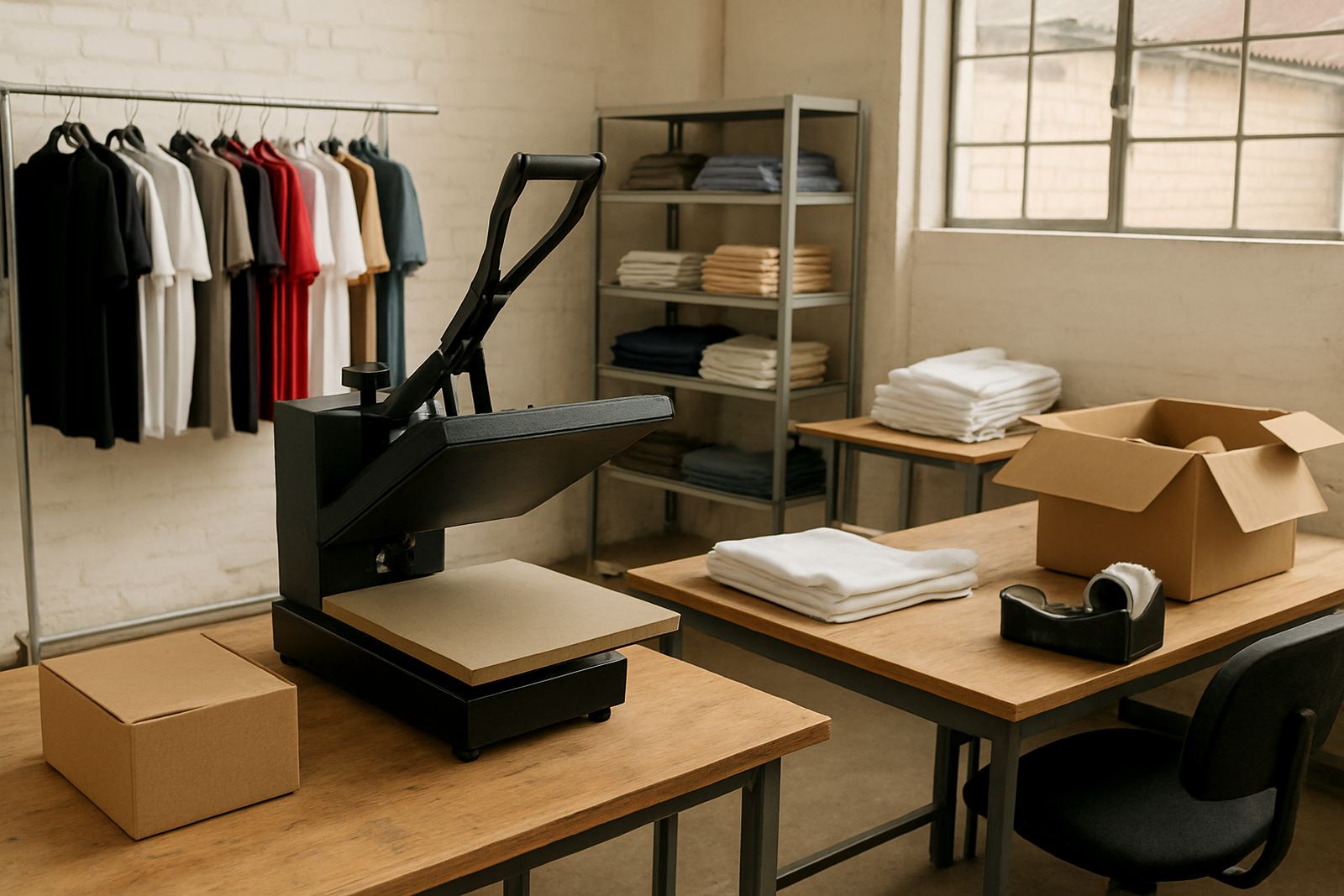
The best time to organise blanks is when the delivery arrives. Do not leave boxes unopened until the order is urgent. Open every carton, count the contents and split stock by style, colour and size right away. Keep polos separate from round neck tees, and keep youth sizes away from adult sizes.
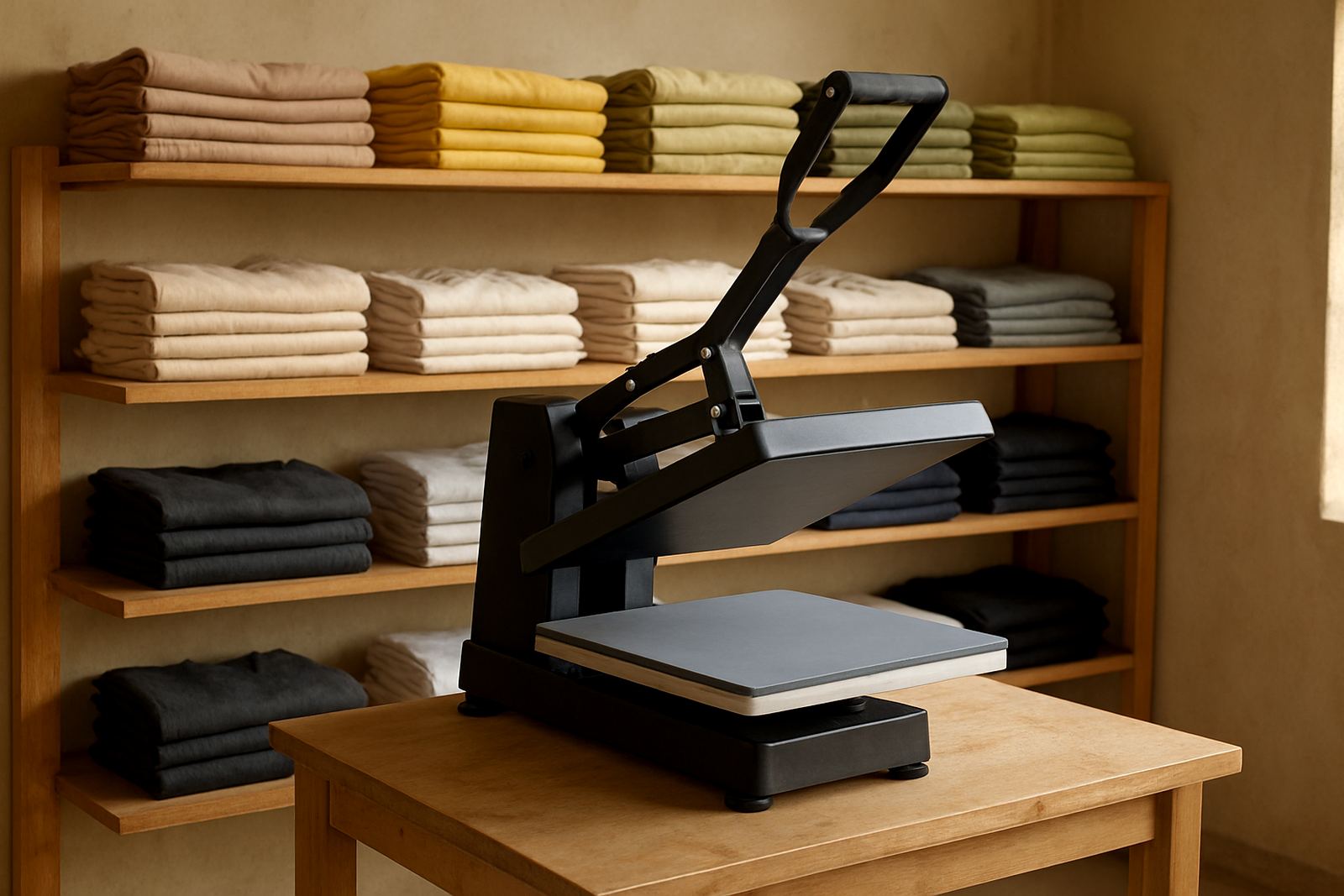
A receiving area does not need to be fancy. It just needs clear labels, enough shelf space and a fixed place for each order. Many South African print shops work in compact spaces, so the trick is to use vertical storage and shallow bins rather than deep piles that hide smaller sizes at the bottom.
- Mark each shelf or tub with size and colour
- Keep one order per crate or bag where possible
- Count shortages immediately before the goods are put away
- Separate white blanks from dark blanks to avoid confusion
If you use transfer paper or vinyl and have several jobs running at once, this simple receiving routine reduces the risk of a finished shirt being matched to the wrong transfer sheet.
Colour and size coding keeps the press line moving
Clear visual coding works well in garment rooms because it is quick to read at a glance. Labels, tape and marker systems can help operators spot the right stack without opening every packet. For example, one colour for small to medium, another for large to 2XL, and a separate marker for youth sizes.
Consistency matters more than the exact system. Once the team knows the code, they can stage work faster and avoid unnecessary handling. That matters on hot days in Durban, where humidity can make stacked garments cling together, and in colder inland months when busy teams may be working under load-shedding pressure and trying to finish before power cuts interrupt the schedule.
- Use the same colour code every week
- Write sizes in bold, simple lettering
- Keep one coding method for all staff, not separate personal systems
- Review the code with new operators during training
When the press operator reaches for the next blank, they should know exactly what it is without stopping the line.
Fold and stack blanks so they stay print-ready
How blanks are folded and stacked affects press preparation. Shirts packed too tightly can crease, trap moisture or pick up dust from the floor. That can lead to pre-press time being wasted on smoothing and checking each garment. In wetter coastal areas, especially where storage rooms are close to open loading bays, even sealed stock can absorb enough moisture to affect handling.
Keep blanks off the floor and away from direct sun. Sunlight can weaken packaging over time and heat can shift moisture unevenly through stacked garments. For cotton tees and blends, a clean dry shelf is better than a crowded corner near the workshop door.
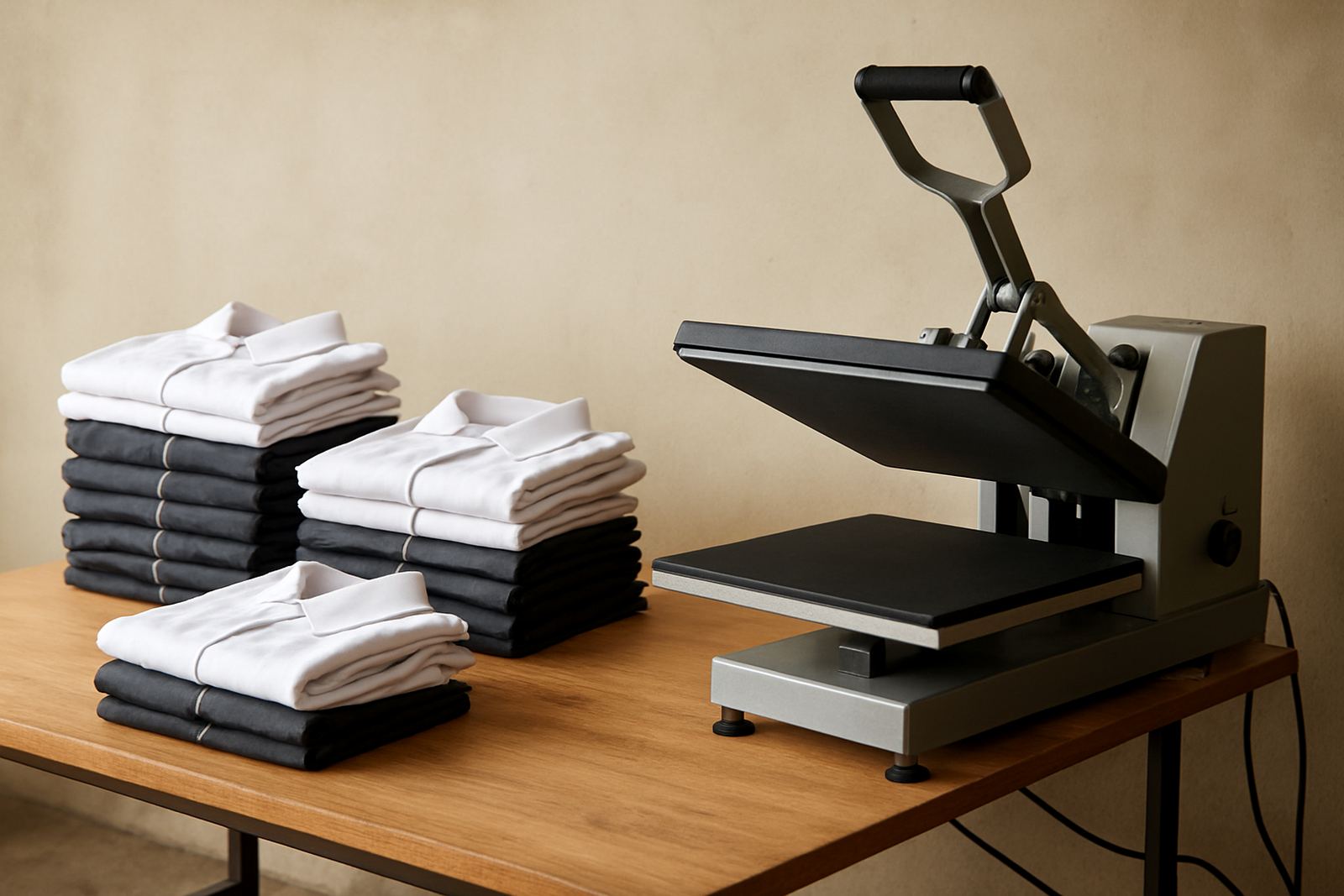
Before production starts, stage garments in the order they will be pressed. If the job is 25 medium black tees, 15 large white tees and 10 2XL navy tees, arrange them in that exact sequence. That small bit of discipline cuts down on mid-run sorting and keeps the print table clear.
In a Pretoria shop handling a school fundraiser order, for instance, the team can stage all junior sizes in one crate, adult sizes in another, and completed garments in a third. The operator then works straight through without cross-checking every garment from scratch.
Match garments to the right transfer and press settings
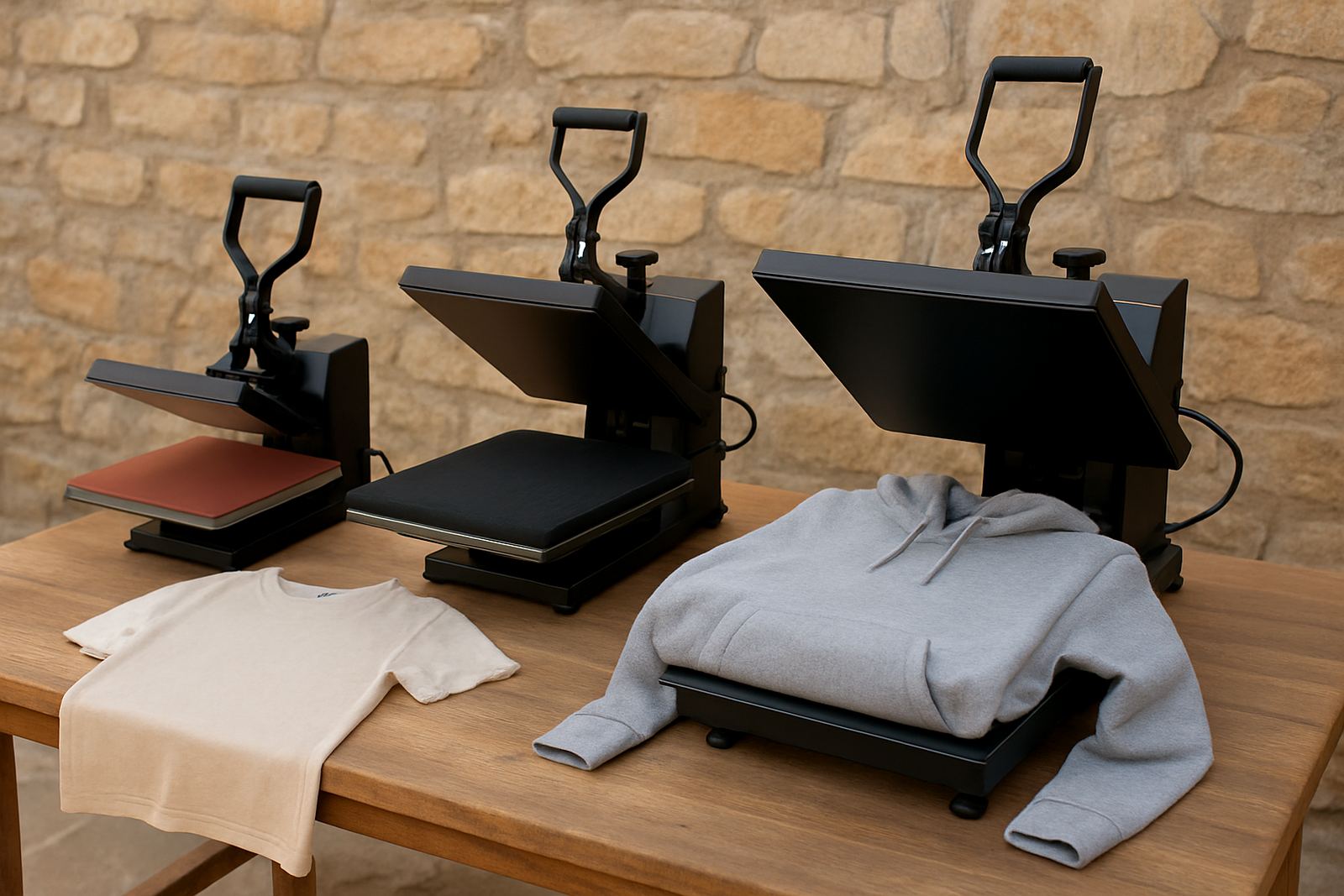
Organising blanks is not only about storage. It also helps with press settings, because different fabrics and garment weights need different temperature, pressure and dwell time. A light cotton tee for a summer promo job is not the same as a thicker hoodie panel or a sports garment with mixed fibres.
If the blanks are staged well, the operator can pair each batch with the correct instruction sheet, test piece and transfer type before the press heats up. That means fewer interruptions once production begins. It also gives the technical team a clearer view when checking temperature and pressure on the machine.
- Keep instruction notes with each garment stack
- Group by fabric type as well as by size
- Store test pieces with the job ticket
- Remove damaged or stained blanks before pressing starts
For shops that use multiple presses or hand off jobs between operators, this kind of matching system prevents guesswork and saves time on the floor.
Build a simple flow from stock room to press to packing
A clean workflow helps every stage stay organised. The stock room should feed the press area in batches, not in loose piles. Once garments are pressed, they should move immediately to a packing point where sizes are checked again and counted against the order form. That final count catches mistakes before they leave the shop.
Many businesses lose time because finished shirts are placed back into the same area as unpressed blanks. That creates confusion, especially when a team is busy or new staff are on shift. Separate spaces reduce that risk. One shelf for unpressed stock, one for work in progress and one for completed garments is usually enough.
In Johannesburg and surrounding industrial areas, where urgent collection requests are common, a good flow also helps with handover. The courier can collect from a tidy packing point, while the operator keeps working without stopping to search for the correct bundle.
Support routines that keep organisation in place
Even a good system slips if it is never checked. Set a weekly routine to review labels, count fast-moving sizes and replace worn shelf markers. If your team uses a heat press every day, also check that the surrounding area stays clean. Dust, lint and stray transfer backing can move into garment piles and cause handling problems.
Preventive servicing on the press itself supports the garment workflow too. A press that is running with uneven pressure or unstable temperature can slow the team down because operators start second-guessing results. When the machine is consistent, the garment staging system works better because the team can trust the process from first shirt to last.
FlatPress supplies, sets up and services flat heat presses for garment decorators across Gauteng and nationwide by courier. We also assist with operator training, pressure adjustments, controller repairs, element replacements and loan unit support when a workshop cannot afford downtime. If your blanks are organised but the press line still feels slow, the contact page enquiry form is the best place to request help.