
Why fatigue shows up sooner than people think
In a busy T-shirt or transfer shop, fatigue is not only about muscle ache. It shows up as slower placement, missed timing, poor pressure control and more mistakes at the press, which then leads to rework. In Gauteng workshops where a small team may be handling long runs and urgent same-day jobs, that extra strain builds up fast.
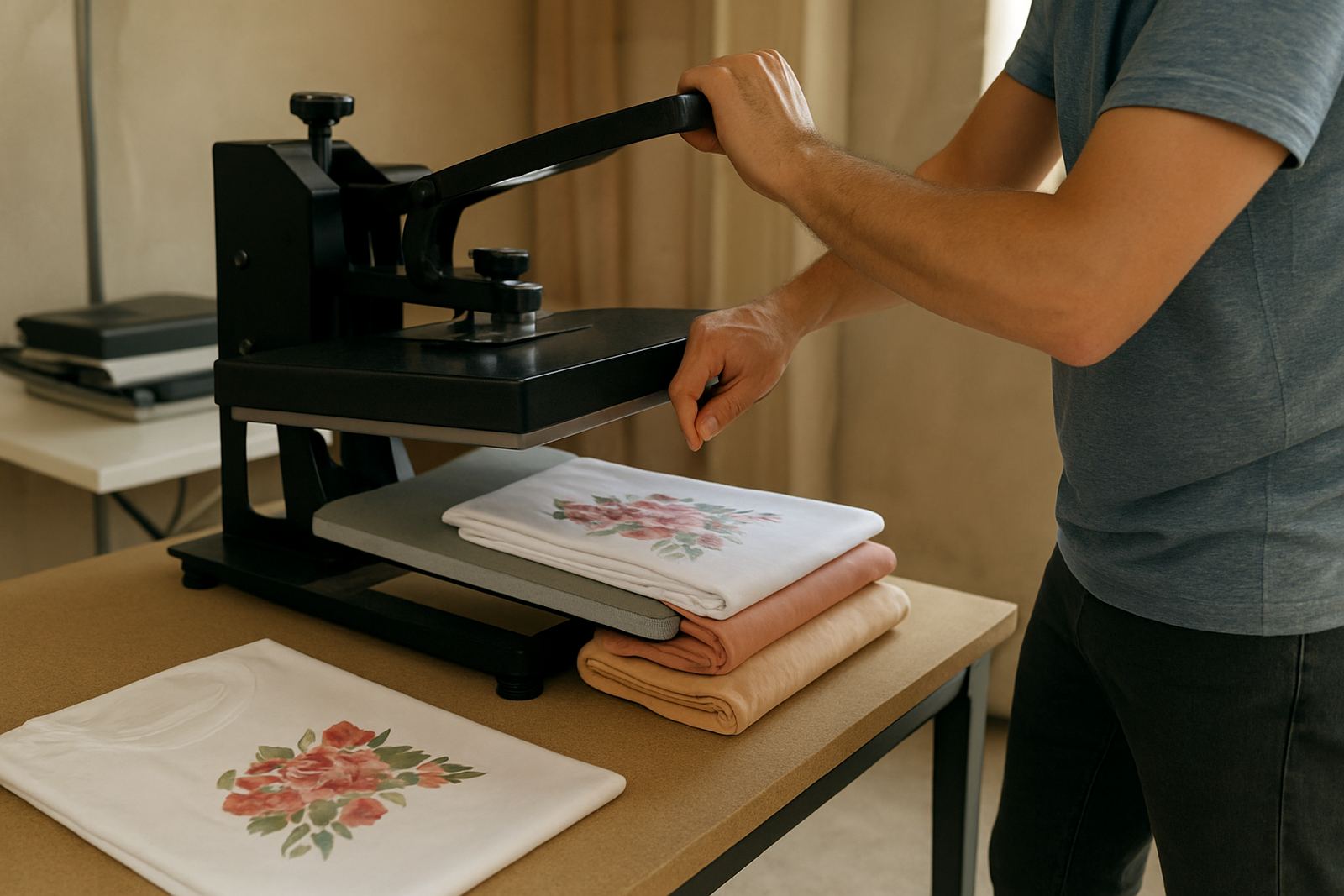
Heat pressing is repetitive work. The operator stands in one spot, reaches forward, lifts garments, lowers the handle or platen, waits, then repeats the same movement for hours. If the table height is wrong or the operator has to twist to stage garments, the shoulders, lower back and wrists take the load. We see this often in Midrand and the East Rand, especially where a compact workshop had to be squeezed into a small room and the machine was placed wherever there was space.
Fatigue also affects safety. When people tire, they are more likely to rush around hot surfaces, move too close to moving parts or place hands where they should not. A good setup should reduce effort before the first press of the day, not only after a problem starts.
Start with the work height and reach
The fastest way to reduce strain is to get the machine and surrounding surfaces to a sensible height. The operator should not be lifting shoulders to reach the handle, and should not be stooping to position garments. A proper working height keeps elbows close to the body and the spine in a neutral position. That alone can make a long day feel less punishing.
It helps to look at the whole route the garment takes, from stacking to pressing to cooling. If the operator has to take two steps between each stage, or turn sideways for every cycle, that is wasted movement. A simple straight-line flow often works better than a fancy layout. Even one metre of extra walking repeated hundreds of times becomes a real issue by lunch time.
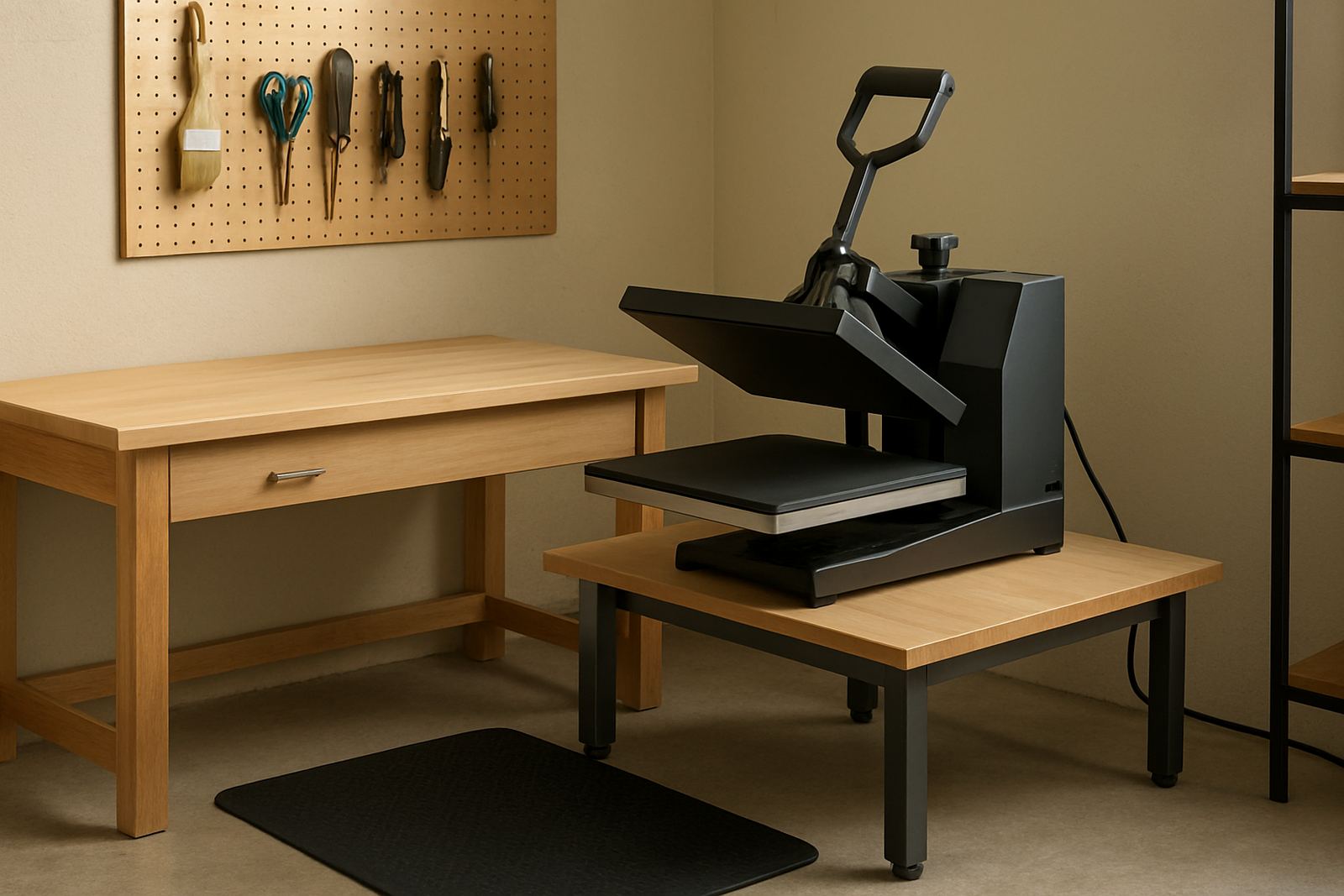
For smaller shops, a stable staging surface beside the press can cut fatigue immediately. Keep it at the same level as the press table where possible, and leave enough space for both left- and right-handed operators to work comfortably. In Durban, where humidity can make transfers cling and garments feel heavier, this kind of tidy flow is especially useful because operators do not need to fight the cloth as well as the machine.
Choose a layout that matches the job volume
A shop doing 20 pieces a day does not need the same arrangement as a print room pushing 200 pieces through a shift. The layout should match actual volume, not a wish list. For lower volumes, the priority is comfort and control. For higher volumes, the priority is reducing repetition and hand travel between steps.
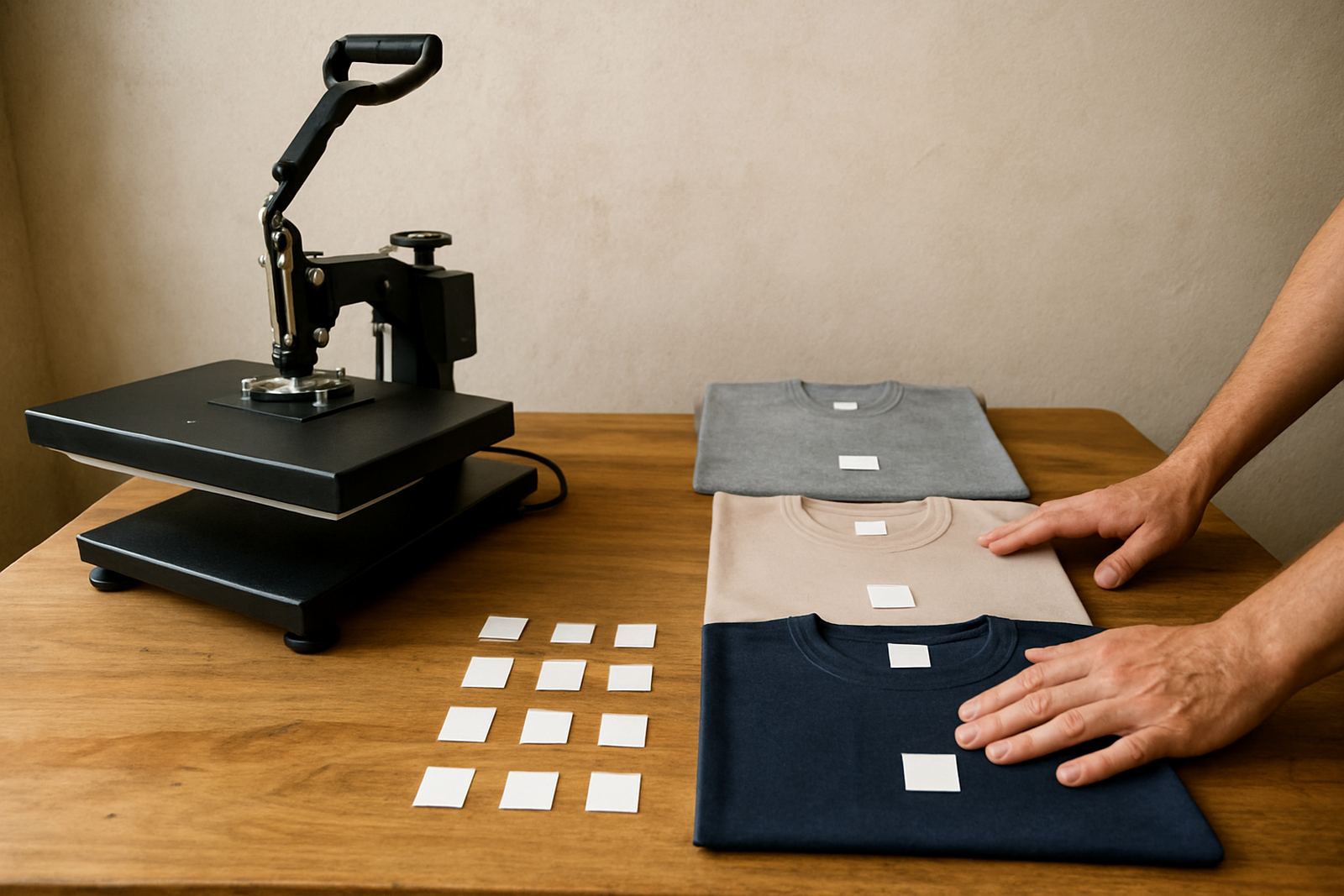
When the press is part of a longer production line, place the most common sizes closest to the operator and keep the less-used stock further away. Labels on storage tubs, racks or shelves save time and reduce unnecessary bending. If the shop handles mixed orders, group jobs by garment type or transfer type so the operator is not constantly swapping settings and losing rhythm.
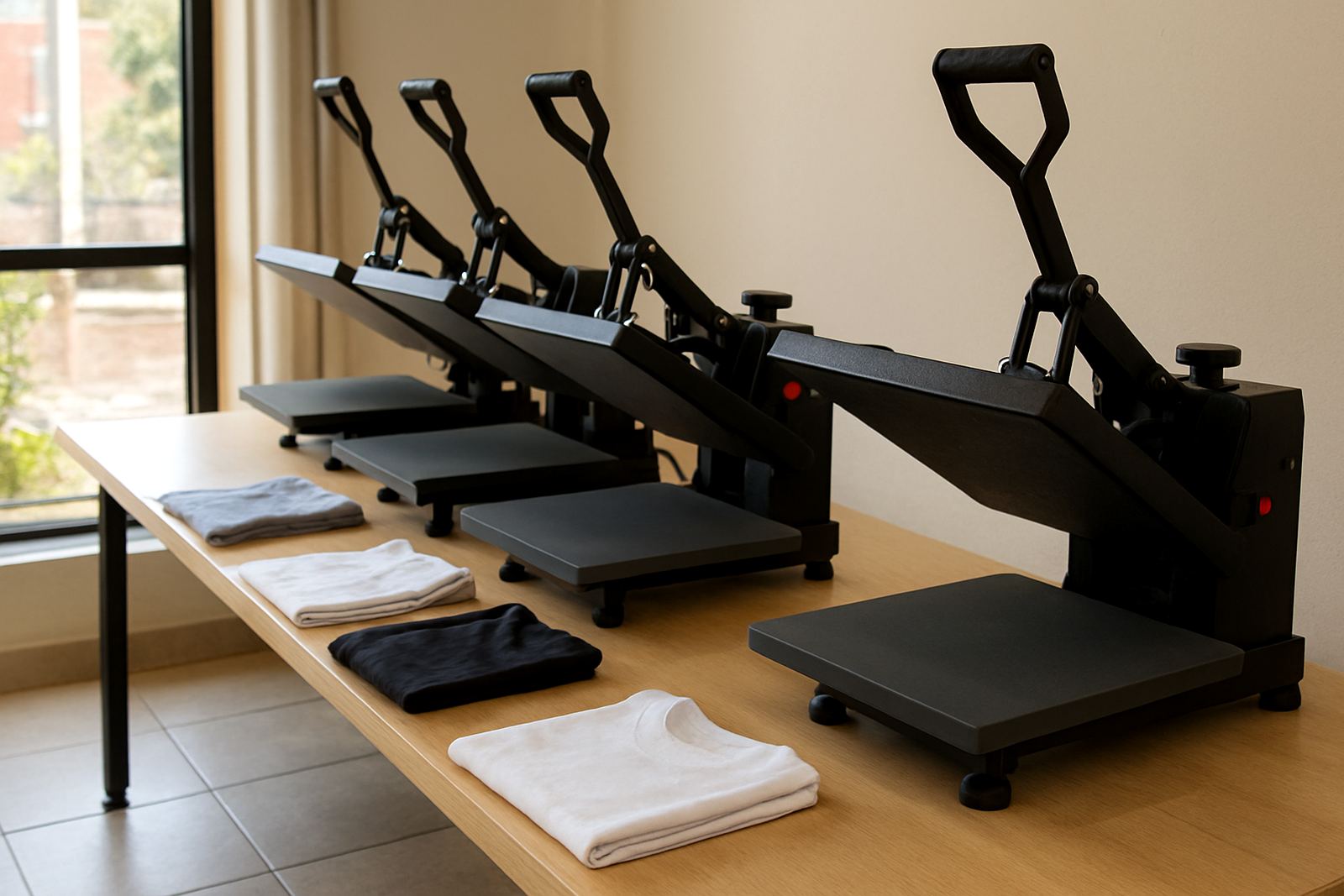
We often advise shops to think in zones: staging, pressing, cooling, packing. If the zones overlap too much, the operator ends up doing too many actions in one small area. Good zoning also helps in shared spaces where one person is printing while another is folding or dispatching orders. It sounds simple, but these small changes prevent a lot of strain over the course of a week.
Use support equipment to cut the effort per press
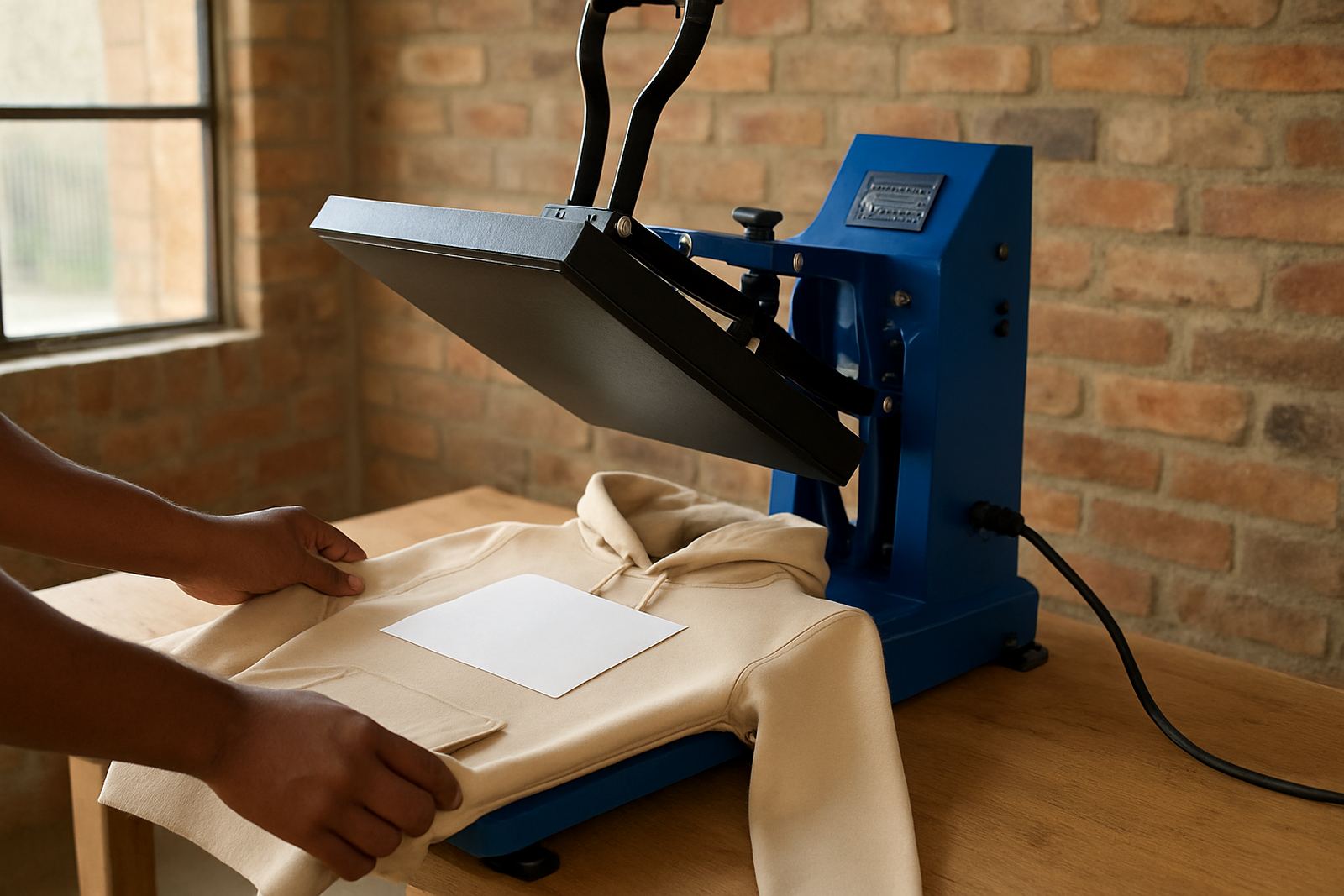
Support equipment does not need to be complicated to make a difference. A steady bench, a garment guide, a good pad covering and a clean, level surface can reduce the effort needed for each cycle. If the press is pneumatic, the operator should not be fighting the lever all day, and air lines should be checked for leaks that make the system work harder than necessary.
On manual machines, the handle feel matters more than many owners realise. If it is too stiff, too loose or requires too much force to close properly, the operator will tire quicker and may start compensating with poor body posture. A proper pressure adjustment can improve both the quality of the press and the comfort of the person running it.
It also pays to keep the press in good condition. Worn pads, damaged covers and inconsistent heat all make the operator do extra work, because the machine no longer behaves predictably. In Bloemfontein and Pretoria we often find that a small maintenance issue slowly turns into daily frustration. Fixing it early is usually cheaper than paying for lost speed and sore staff later.
Training makes the difference between coping and working well
Good training is not only about temperature and time. Operators also need to know how to stand, how to place garments, how to move without straining and how to recognise when a setting is making the job harder than it should be. A trained operator works more steadily and makes fewer rushed corrections.
Training should include the small things that are often skipped: how long to pause between batches, how to reset the work area, where to keep spare items and when to ask for help. Many new operators try to push through fatigue instead of adjusting the setup, which is how mistakes start. A short refresher session can do a lot for confidence and consistency.
In a Midrand workshop supporting both local jobs and couriered orders to Johannesburg, Cape Town or Durban, this matters because different people may use the same press during the week. If each operator uses the machine differently, fatigue and inconsistency follow. The aim is one standard way of working that everyone can follow, even when the shop is busy.
Watch for the warning signs before staff burn out
The first signs are usually small. Operators begin rubbing shoulders, stretching more often, or putting work off until later in the shift. You may also notice more misaligned prints, slower cycles or more complaints about heat around the machine. If this happens, do not assume the staff member is just having an off day. The setup may be the problem.
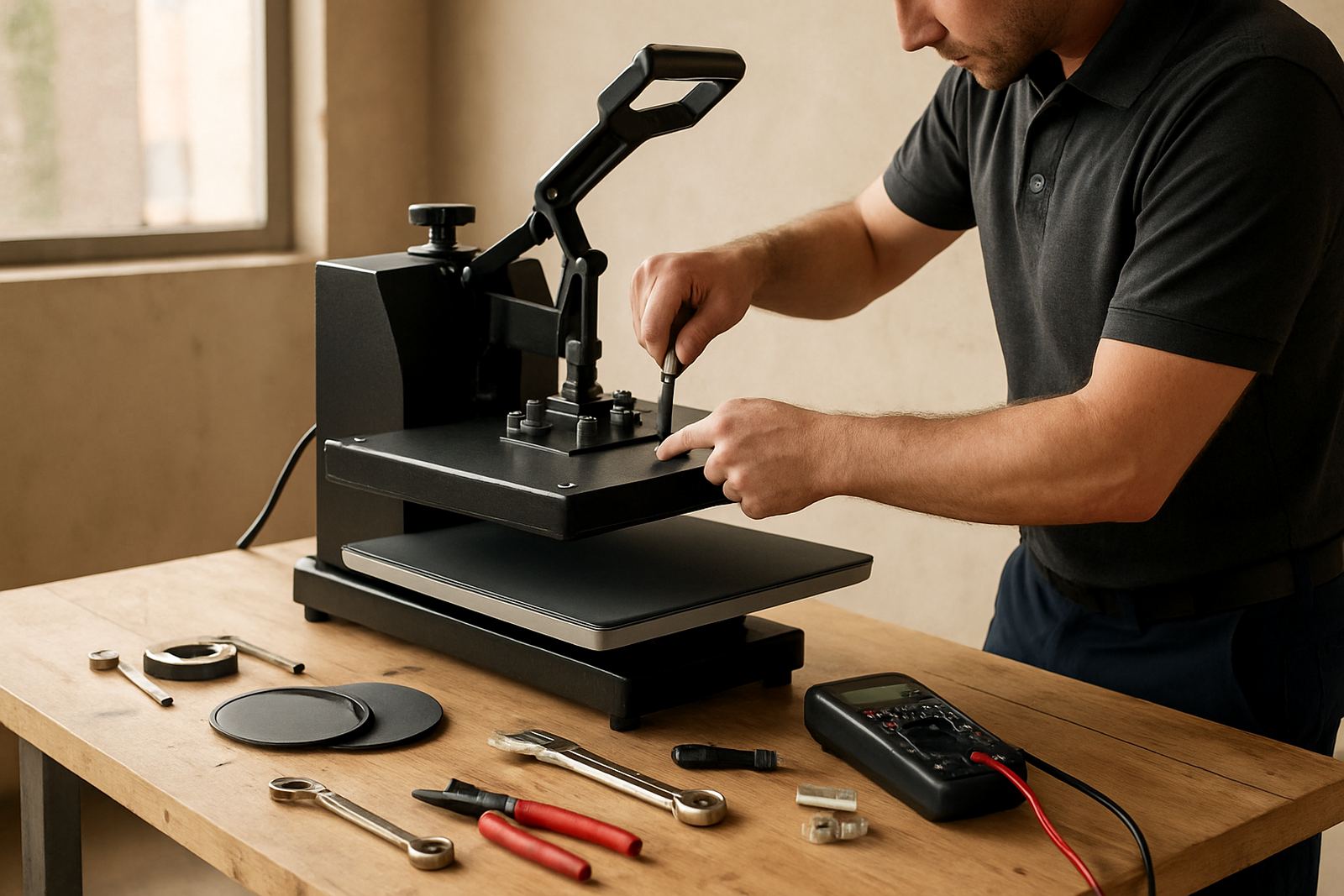
A preventive servicing plan helps here because it catches the hidden causes of fatigue. A machine with poor pressure adjustment, a drifting temperature reading or a tired surface pad forces the operator to compensate all day. That is where the strain comes from, not only from the labour itself. In shops across the West Rand and East Rand, these issues often show up after a busy season when the press has been running flat out with little downtime.
It is worth checking whether the press is still suitable for the work being done. If the business has grown from hobby runs into repeat wholesale orders, the old layout may no longer fit. Sometimes the answer is a servicing visit, sometimes a loan unit during repair, and sometimes a full setup review. Either way, the goal is the same: less strain on the operator and a steadier result for the customer.
A small Cape Town shop example
A small garment decorator in Cape Town was running a flat press next to a packing table, with stock stacked behind the operator. The machine itself was fine, but the operator had to turn, reach and step around boxes all day. After a few hours the prints were still good, but the staff member was exhausted and the line slowed right down.
The fix was simple. The staging table was moved to the side of the press, the stock was sorted into the most-used sizes, and the floor space was cleared so the operator could work in one direction. The press was checked, the pressure adjusted and the pad covering replaced because it had started to feel uneven. The result was not just better output. The operator could finish the day without feeling beaten up, which made the whole shop easier to run.
That kind of improvement is practical, not dramatic. It is about fewer awkward movements, less strain and a cleaner process. For small shops, that is often the difference between coping and growing properly.