
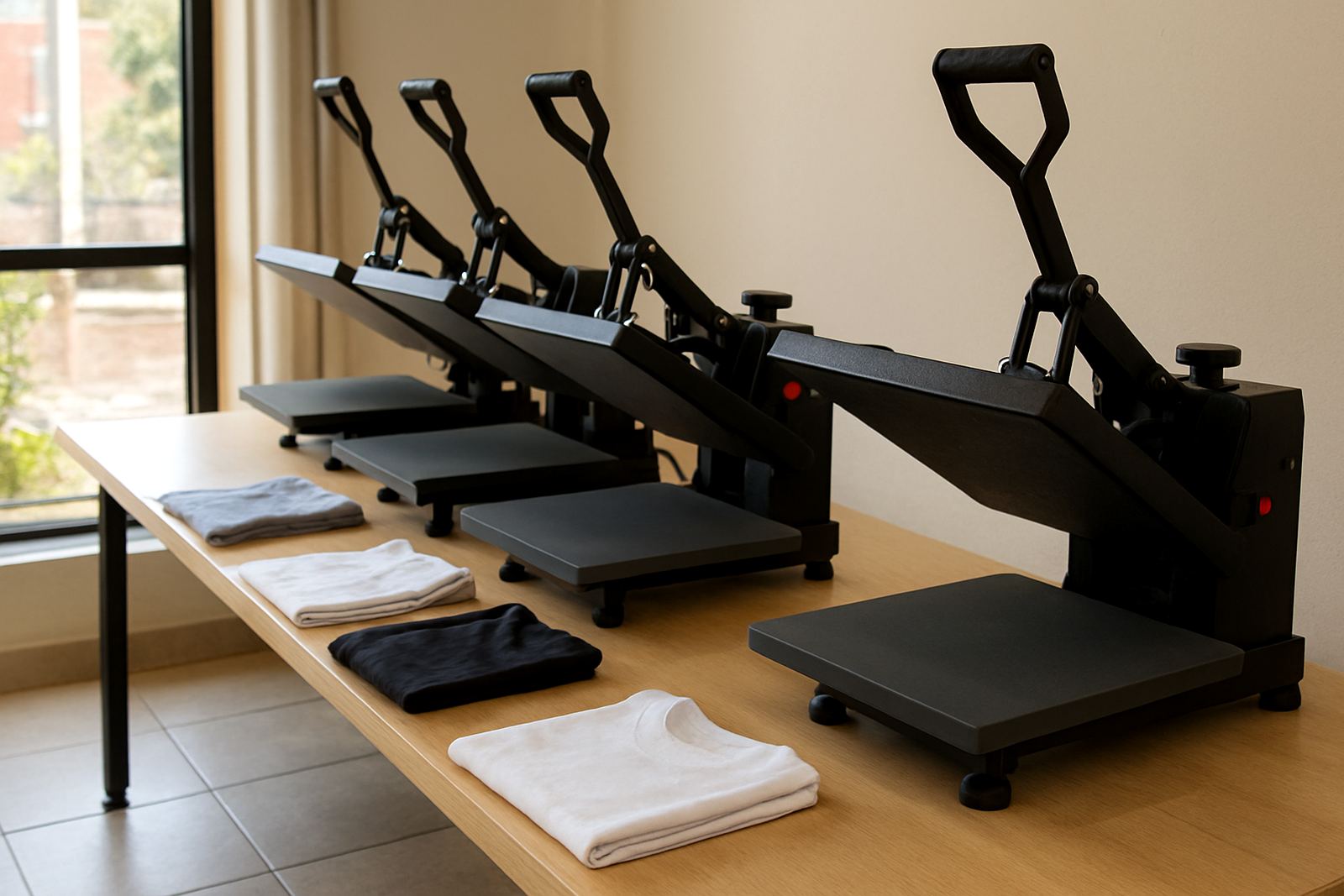
Why hoodies behave differently on a flat heat press
A hoodie is not just a thicker T-shirt. The kangaroo pocket, ribbed cuffs, side seams, hood drawcord area and sometimes a zip all create height changes that can affect contact on the platen. If the garment sits unevenly, the transfer may press well in the centre but fail at the edges, especially on heavier fleece and polycotton blends.
For shops in Johannesburg, Pretoria and Midrand, this becomes even more noticeable during winter when thicker hoodies come in fast for staffwear and school groups. One side of the garment may sit over a seam or pocket edge, so the top platen closes down unevenly and the pressure is not the same across the print area. That is why hoodie jobs need a more careful setup than standard flat work.
The aim is not only to apply heat, but to make the garment sit as flat as possible before the transfer touches it. A small adjustment at the start can save ruined stock, reprints and wasted time later on.
Laying out the garment so seams do not fight the press
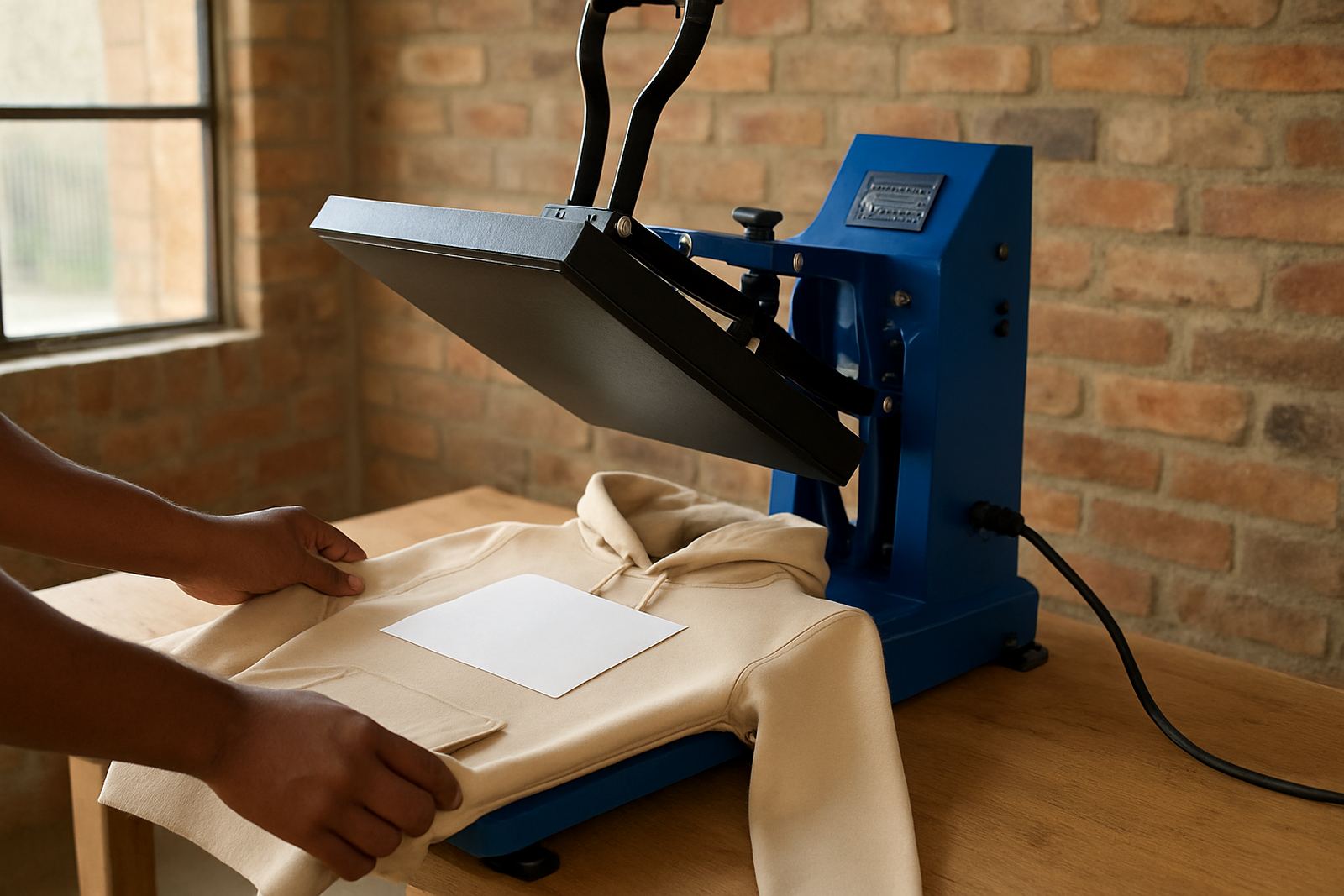
Before you bring in the transfer, check where the seams fall in relation to the print area. On a front chest logo, the hoodie pocket often sits close to the lower edge of the design. On a back print, the shoulder seams and hood bulk can affect how the top of the garment feeds into the press. If the hoodie has a drawstring, keep it clear of the platen face and away from the heat zone.
These small checks matter more on thicker garments because the press will always take the shortest path down. If one section is raised by even a few millimetres, the print can end up lighter on that side. A backing pad or a lower profile underlay can help, but only if it is matched to the garment weight and the print position.
- Remove or flatten anything that lifts the garment, including tags, cords and inner folds.
- Test the hoodie on the platen before the transfer is placed.
- Check that pockets, zips and side seams are outside the active print zone.
- Use a brief pre-press to remove moisture and settle the fibres.
Pressure, temperature and dwell time on thick fleece
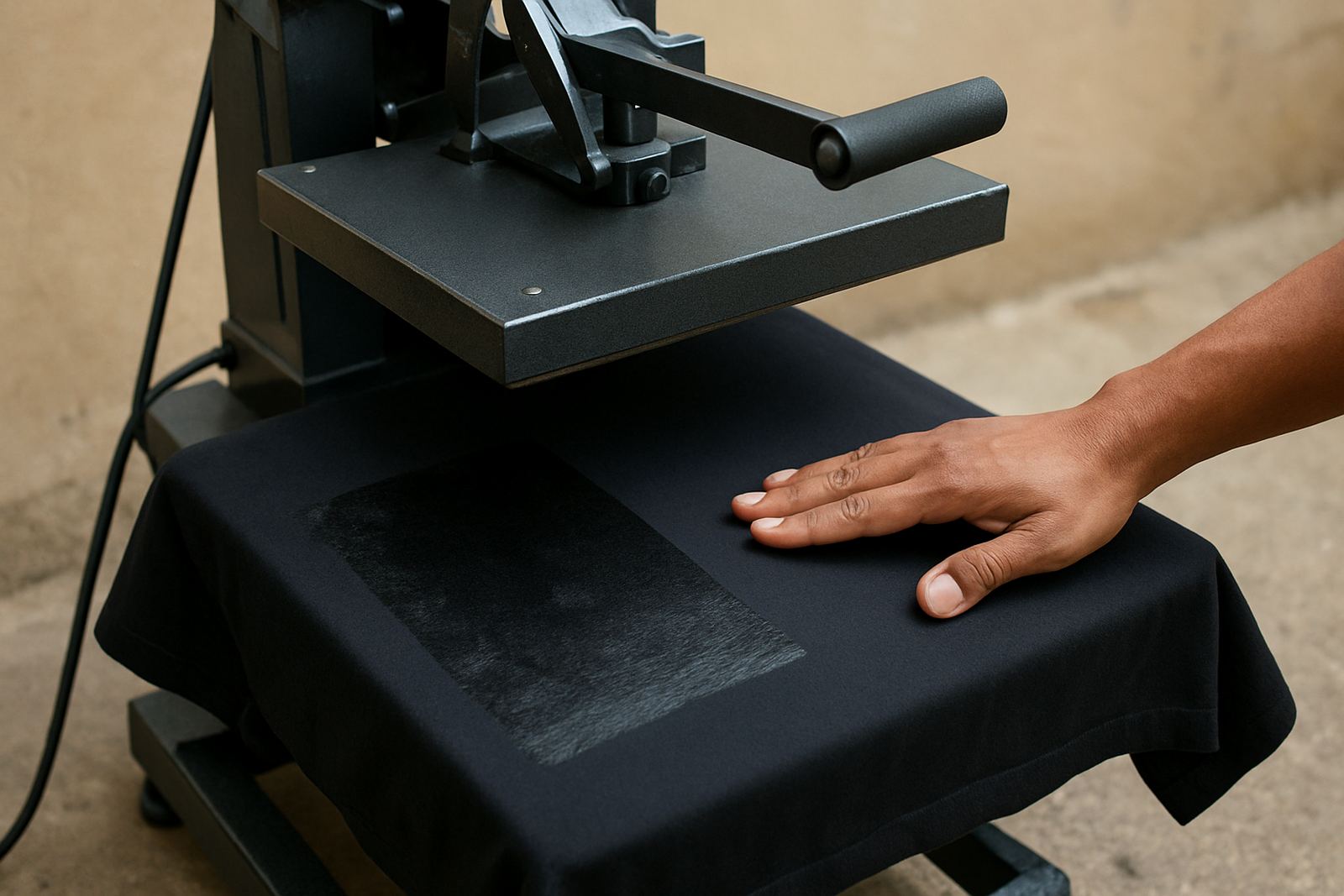
Many pressing problems on hoodies come from using the same settings as a light cotton tee. Thick fleece holds heat differently, and some transfer films need a stronger, longer press to bond properly. But pushing the temperature too high can leave shine marks, flatten the pile or cause the garment to glaze, especially on darker colours.
In practice, the best results usually come from controlled pressure and consistent contact rather than trying to force the press shut. If the hoodie is too bulky, check whether the platen height or pressure setting needs adjusting before increasing heat. A proper temperature check is worth doing, because controller drift and uneven element output can show up first on difficult jobs like hoodies. That is one reason preventive servicing matters for shops working every day.
For transfer printing, consistency beats guesswork. Keep a simple record of which hoodie types need extra dwell time, which ones need a protective sheet, and which fabrics release better after a short cooling stage. That record helps in a busy print room, especially when orders are coming in from East Rand customers needing quick turnaround before weekend sports events.
- Pre-press briefly to remove moisture and level the fabric.
- Use the pressure needed for full contact, not more than necessary.
- Watch for scorching on fleece, polyester blends and brushed interiors.
- Record settings for each hoodie type so the next job is repeatable.
Front prints over pockets and zipper areas
Front hoodie prints usually cause the most trouble because the pocket sits right where smaller logos often go. If the design sits too low, the platen can touch the pocket top or the curved edge of the pouch. That leaves a weak bond at the bottom of the image and can also distort the print shape. For zip-up hoodies, the centre front line makes alignment even harder because the garment is split down the middle.
The answer is to plan the artwork position before the garment reaches the press. A slightly higher placement often gives better clearance. If the order is for a left chest logo, make sure the print sits clear of the pocket curve and far enough from the seam that the platen can close flat. On zip fronts, many operators work with smaller artwork and careful alignment rather than trying to press across the zip line.
In Cape Town and Durban, coastal humidity can also affect how hoodies behave after storage. A garment that feels dry may still hold enough moisture to affect adhesion, so a short pre-press helps. It is a small step, but it often improves the finish more than increasing temperature does.
Back prints on hoodies need room to settle
Back prints seem easier because there is no pocket to dodge, but hoodies still present layout issues. The hood adds bulk at the top and the hem band can make the lower section rise unevenly. If the garment is not straight on the platen, the print can shift slightly to one side and the edges may not bond the same way across the whole design.
When the back artwork is large, avoid pushing it into the shoulder seam area. Keep enough clear space so the garment can lie naturally. If the press has a lower platen cover or a thicker pad, check that it is not creating extra bounce under the garment. Too much give under the hoodie can reduce contact and cause patchy transfer results.
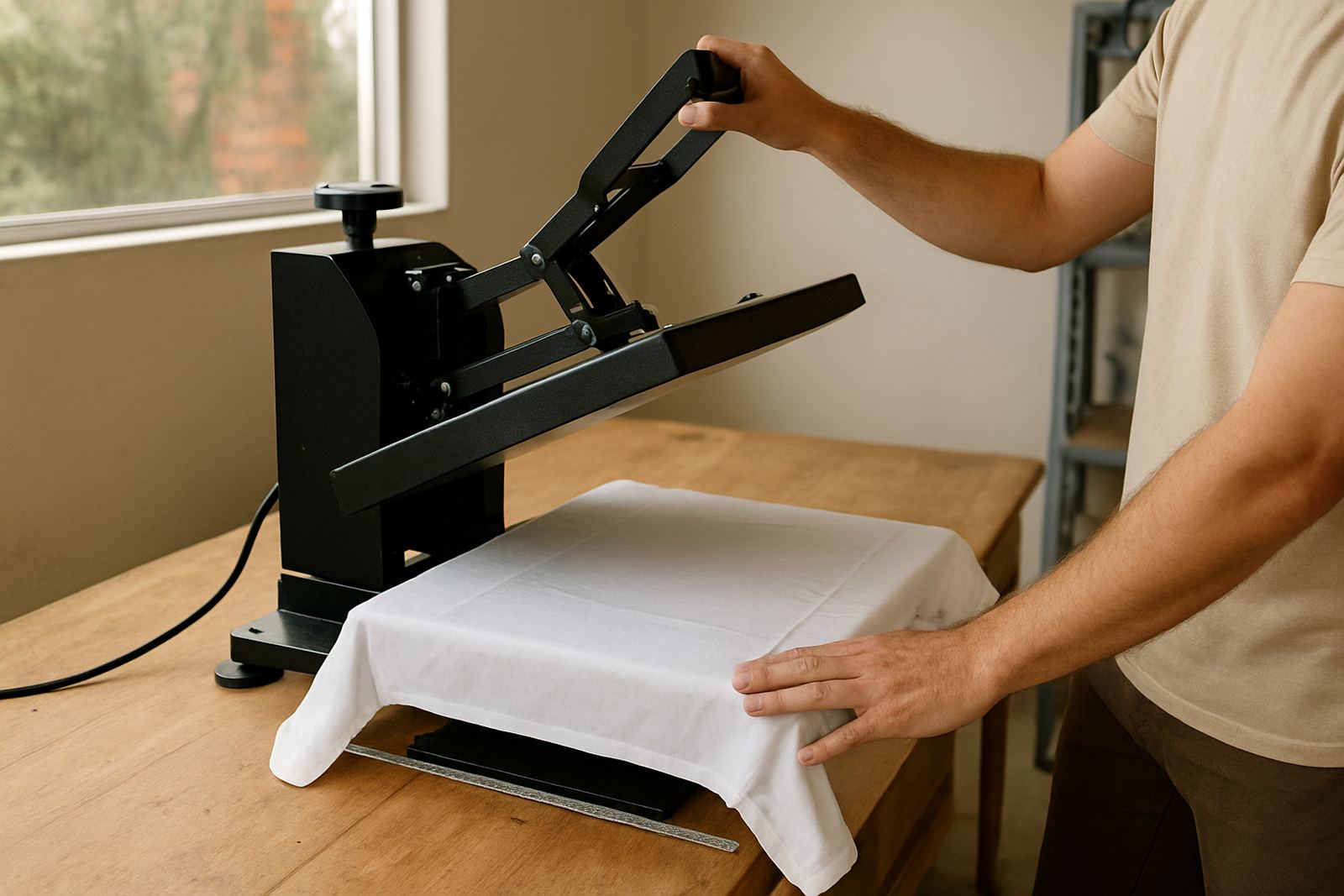
A practical routine is simple: smooth the hoodie, check the side seams, align the print zone, then close the press once before the transfer goes down. If you see movement or lifting at the hem, reset it. That extra 20 seconds is cheaper than a reprint.
Workshop habits that save time on repeat hoodie orders
Shops that handle schoolwear, corporates and event merchandise often repeat the same hoodie styles. That makes it worth setting a clear method for each style, from the first test print to the final pack-off. Keep notes on print position, platen choice, pressing time and whether a protective sheet was needed. If the garment is prone to shine or seam marks, write that down too.
Good habits also help when power interruptions or load-shedding affect the day. Once the press comes back on line, temperature recovery and pressure stability should be checked before the next batch starts. A unit that has been off for a while may need a quick verification before production continues. That avoids half-cured transfers and wasted garments.
- Keep a sample hoodie from each common brand or weight in the workshop.
- Label the settings that worked, including temperature, dwell and pressure.
- Check press alignment after any move, repair or long shutdown.
- Use training to keep new operators consistent on difficult garments.
Getting help with setup, servicing and operator training
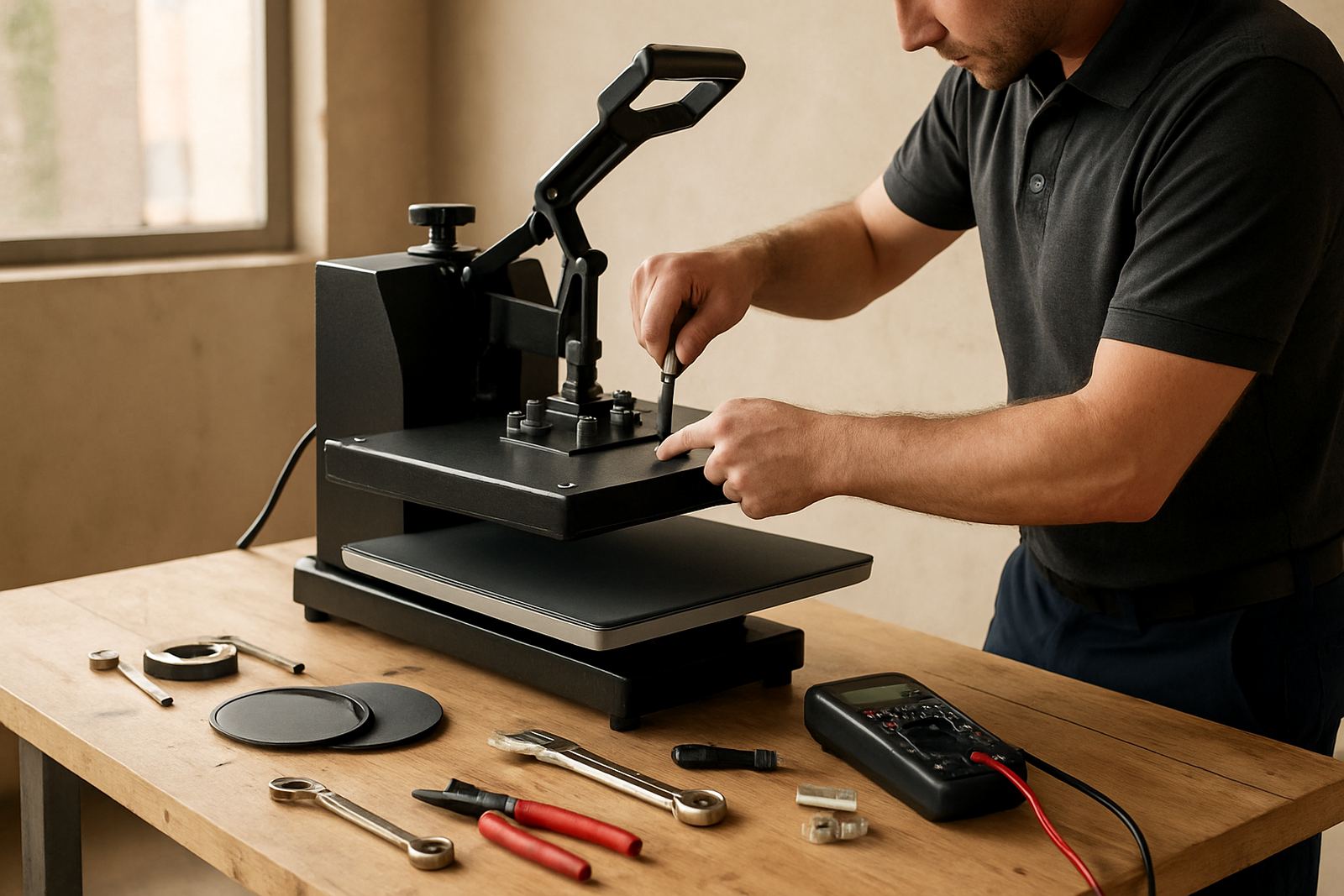
For small garment decorators and busy print shops, hoodie work is easier when the press is set up correctly from the start. If the platen is out, the controller is drifting or the pressure does not close evenly, seams and pockets become a bigger problem than they should be. That is where setup, temperature checks, pressure adjustments and element repairs make a real difference.
FlatPress works from Midrand and supports customers in Johannesburg, Pretoria, Durban, Cape Town, Bloemfontein and across South Africa by courier. The team handles new press setup, operator training, phone tech support, preventive servicing, spares supply and loan unit support when a machine needs workshop attention. For hoodie jobs, that support can save a production run when an order is due and there is no room for guesswork.
If your press is already in use and hoodies are giving you trouble, the quickest gain is usually a proper check of heat, pressure and platen condition. Once the machine is set right, the garment is much easier to manage, even with thick seams and front pockets getting in the way.