
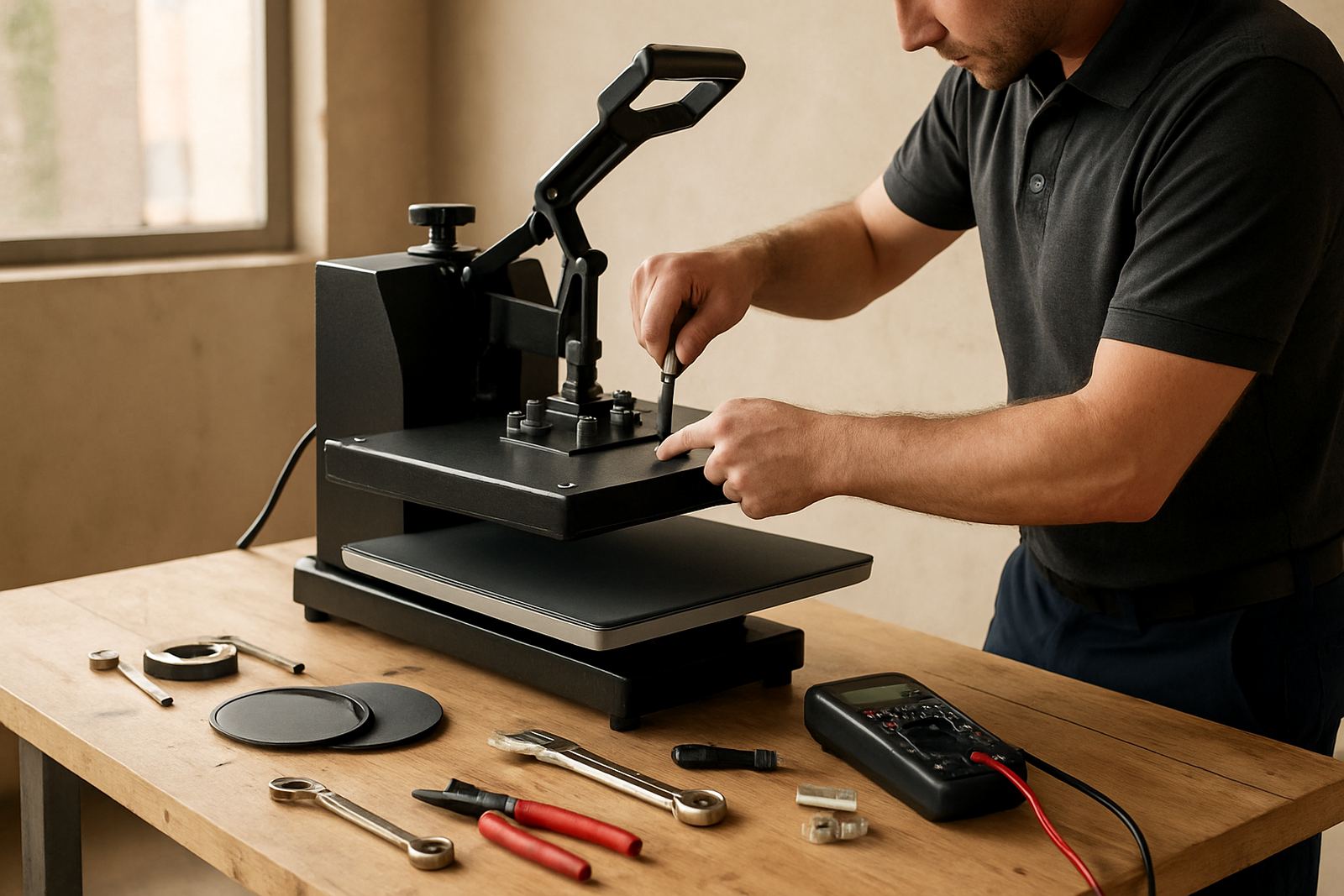
Start With The Supply In The Room
The first thing to confirm is what power is actually available where the press will stand. Many small print rooms in Midrand, Johannesburg and Pretoria have a mix of old wall points, extension leads and shared circuits, which can work for light use but cause trouble once the machine is running all day. A standard flat press draws a steady load while heating up, so the circuit must be able to handle that demand without tripping the breaker every time the compressor, kettle or dryer starts up on the same line.
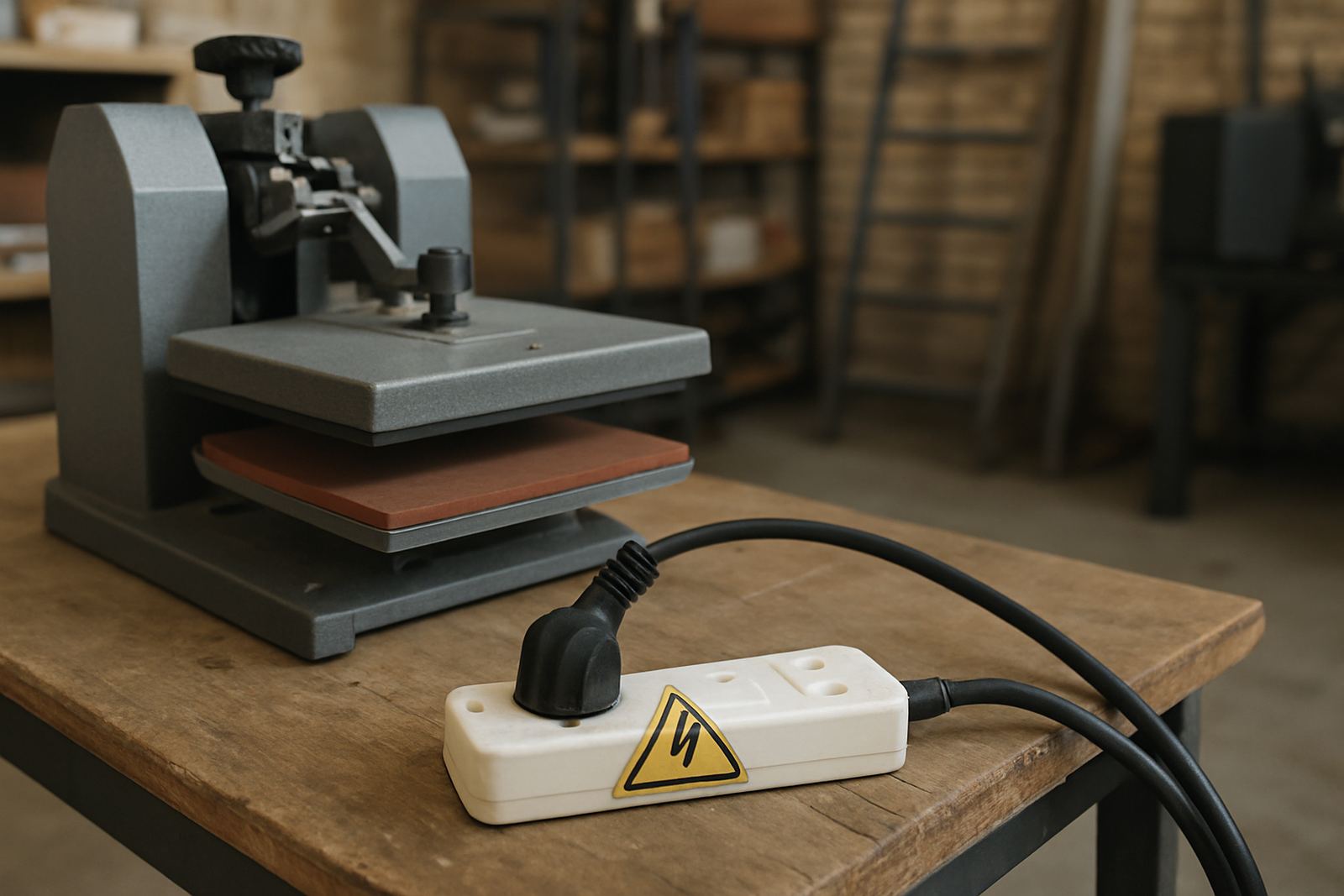
Before delivery day, check whether the room has a dedicated point close to the work area. If the cable needs to stretch across the floor, that is a sign the layout needs attention first. Heat presses should sit on a firm surface near a proper outlet, not on a run of adapters and loose plugs. In a shop in Centurion we recently found that the press was sharing power with two irons and a small cutter, and the unit kept losing temperature in the middle of a run. The fix was simple: give the press its own circuit and the problem stopped.
- Confirm the voltage and plug type at the premises.
- Check if the circuit is shared with other heat drawing equipment.
- Make sure the plug point is close enough to avoid long extension leads.
- Ask whether the breaker trips during busy trading hours.
Know The Amps Before You Commit
Buyers often ask about platen size first, but the amperage matters just as much. Different presses and heater sizes draw different loads, and once you add a controller, lighting and other workshop equipment, the total demand climbs quickly. If the supply is too light, the machine may still switch on yet struggle to recover heat between jobs, which affects press quality and slows production.
A proper check should cover the rating of the wall point, the breaker size and the condition of the wiring in the building. Older properties in parts of the East Rand and West Rand can have wiring that is still serviceable but not suited to constant workshop use. If you are renting the space, get permission before any electrical changes are made. Municipal rules and landlord agreements can be strict, and it is better to sort that out early than to move in and discover the power point is not approved for heavy use.
- Ask for the circuit rating before the press is dispatched.
- Confirm whether the unit is intended for 15A or a standard household point, where applicable.
- Check if other equipment shares the same breaker.
- Plan for future growth if you expect to add more machines later.
Load-Shedding Protection Should Be Part Of The Plan
In South Africa, power interruptions are part of daily business planning, not an exception. Load-shedding can interrupt a pressing session, leave garments half processed and cause temperature recovery issues once power returns. That is why many print shops now plan for backup power, voltage protection or a controlled shutdown routine. The press itself is not the only concern, because sudden drops can affect the controller and heating element over time.
If you work from home in Durban or Cape Town, where coastal humidity can also be an issue, moisture and unstable power are a poor combination. Keep power equipment off damp floors and avoid placing the press near open doors where sea air moves straight through the room. If you use backup power, test the full setup before you depend on it. A backup system that runs a laptop may not handle a heat press for long enough to finish a job, so check the working time and not just the idea on paper.
- Use surge protection suited to workshop equipment.
- Test backup power under real working conditions.
- Keep the press and controller out of damp or dusty corners.
- Have a restart routine for when power comes back on.
Think About Cable Runs, Heat And Safety
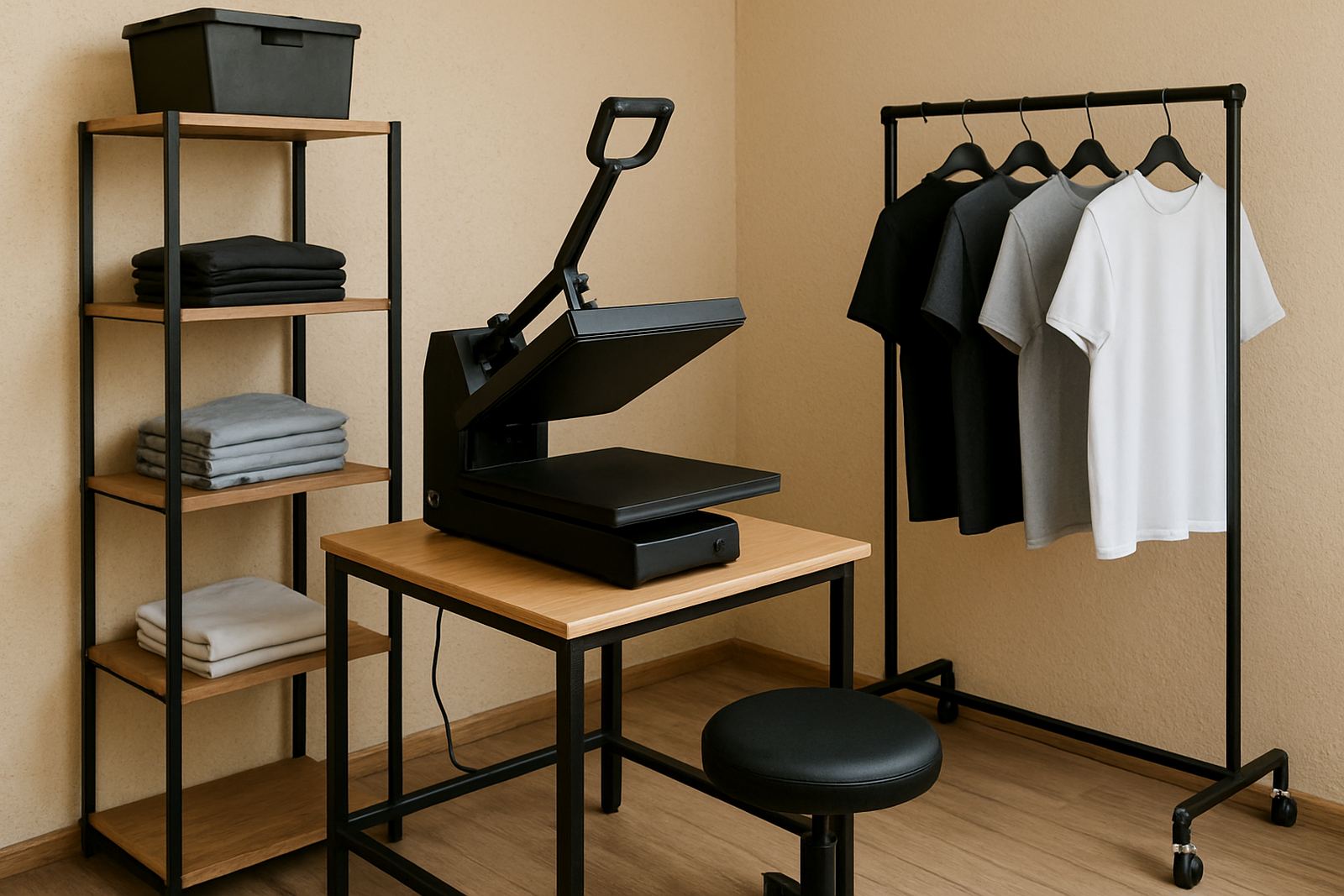
A press room should be arranged so operators can move around it safely, with no cable crossing a walkway or snagging on boxes, stools or garment rails. Heat presses get hot around the platen and the surrounding area needs some breathing room. That includes the cable path from the wall to the machine and any nearby extension points. Good cable management is not only about tidy work, it helps prevent accidental unplugging and worn connectors.
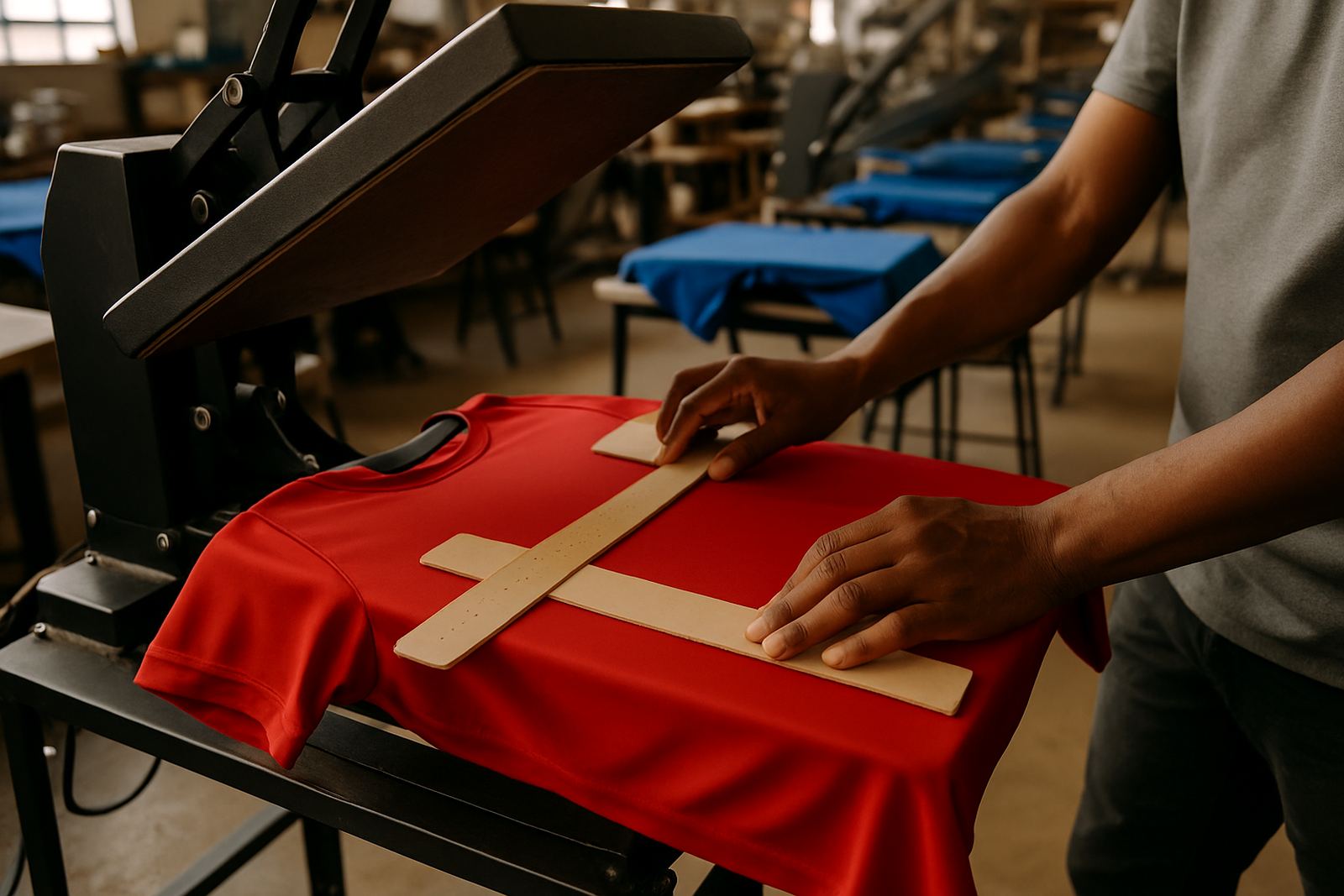
When setting up in a small workshop, leave space for the operator to stand comfortably, open the press fully and load garments without twisting around the cable. If the room is tight, a simple shift of one table can make the whole station safer. In Bloemfontein, where many smaller print rooms also double as cut and sew spaces, layout matters because the same floor may be used for pressing, packing and finishing. A cramped setup leads to more mistakes and more heat exposure for the operator, and that gets tiring quickly.
Before the first order goes through, walk the room and check for the basics:
- No frayed cords or exposed joins.
- No loose adapters stacked one on another.
- No cable running under a mat or through standing water.
- Enough ventilation around the press for long sessions.
Voltage Checks Help Protect The Controller
The controller is the part that keeps temperature and timing on track, so it needs stable power. If the incoming supply is too inconsistent, the display may behave oddly, the heat cycle may drift and the operator may start guessing instead of trusting the numbers. That is bad for transfers, especially when you are handling mixed jobs with different fabrics and release times.
A quick temperature check on arrival is a practical habit. It tells you whether the machine is heating as expected and whether the settings are holding under use. If the press is being installed in a busy Johannesburg shop, or in a Durban studio with high daily output, the difference between a stable supply and an unstable one becomes obvious very fast. The job may still finish, but quality and repeatability start to slip if the electrical base is weak.
It is worth asking for support with temperature checks after setup, especially if the unit will be used for school wear, corporate orders or club shirts where consistency matters. The point is not to overcomplicate things. It is to make sure the press arrives ready for work, not for troubleshooting.
Match The Setup To Your Actual Production
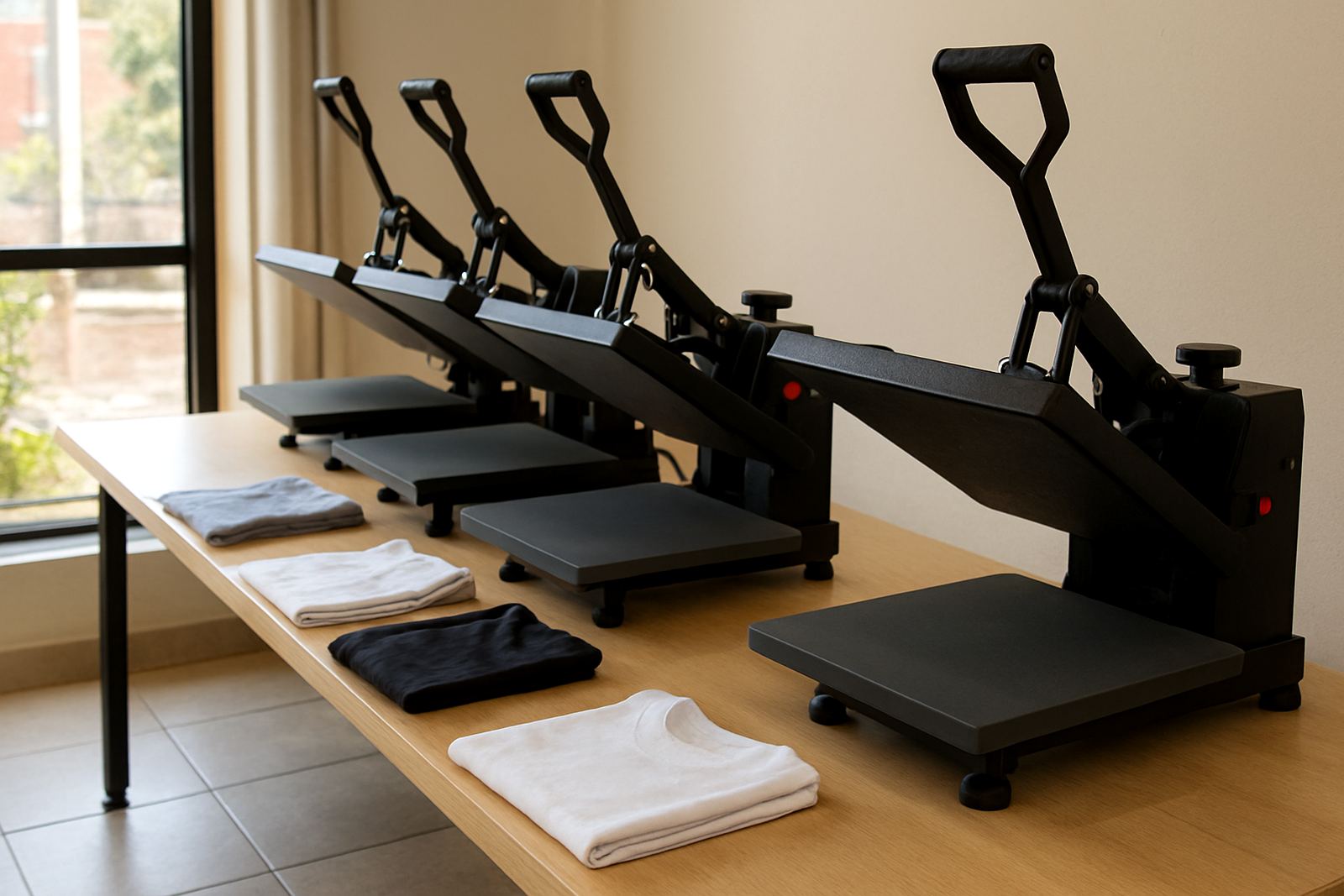
A hobby user pressing a few shirts on weekends does not need the same power plan as a busy shop running batches every day. The mistake many first-time buyers make is planning only for the machine they want now, without considering the pressure of a fuller production day later on. If you expect to grow from small runs to regular orders, tell that to your supplier before the unit is delivered, because the setup can be matched to real use from the start.
For shops in Midrand, Pretoria, Durban, Cape Town and beyond, the smart electrical plan is the one that allows for growth, safe operation and fast recovery after interruptions. It should also make servicing easier. A press that can be isolated quickly, checked properly and returned to production without confusion will save more time than a fancy machine sitting on a weak supply. If you are unsure, ask for practical guidance before the delivery is booked, not after the first breakdown.
- Tell the supplier how many hours a day the press will run.
- Say whether you are using the press for occasional jobs or daily production.
- Confirm if the room may need a new power point or a cleaner cable route.
- Plan for support, spares and training around the same setup.
A Simple Pre-Delivery Checklist Saves Trouble
The best time to sort out power is before the machine arrives at the door. Once the press is on site, people want to start printing immediately, and that often means the electrical basics get rushed. A quick checklist avoids that pressure. It also helps the operator understand what to watch for in the first week, when small issues are easiest to catch and correct.
Use this final check before installation day:
- Power point tested and suitable for the machine.
- Breaker size and circuit condition confirmed.
- Space around the press cleared for safe access.
- Backup plan in place for load-shedding or outages.
- Operator shown how to switch off and restart safely.
When the electrical side is sorted properly, a heat press can do what it should do every day: heat evenly, recover quickly and stay reliable through real work. That is the goal, and it starts with the socket on the wall, not the first shirt on the platen.