
Why the last five minutes matter most
Once the transfer has bonded and the shirt comes off the press, the job is not finished yet. The next few minutes decide whether the print reaches the customer looking crisp, or picks up lint, fingerprints and fold marks before it even leaves your workshop.
This is especially important for small garment decorators in Johannesburg, Pretoria and Midrand who process mixed orders all day. A single stained shirt in a batch of twenty can turn into a complaint, a reprint and an avoidable courier delay. The cost is not only the garment, but the time spent fixing a problem that should never have happened.
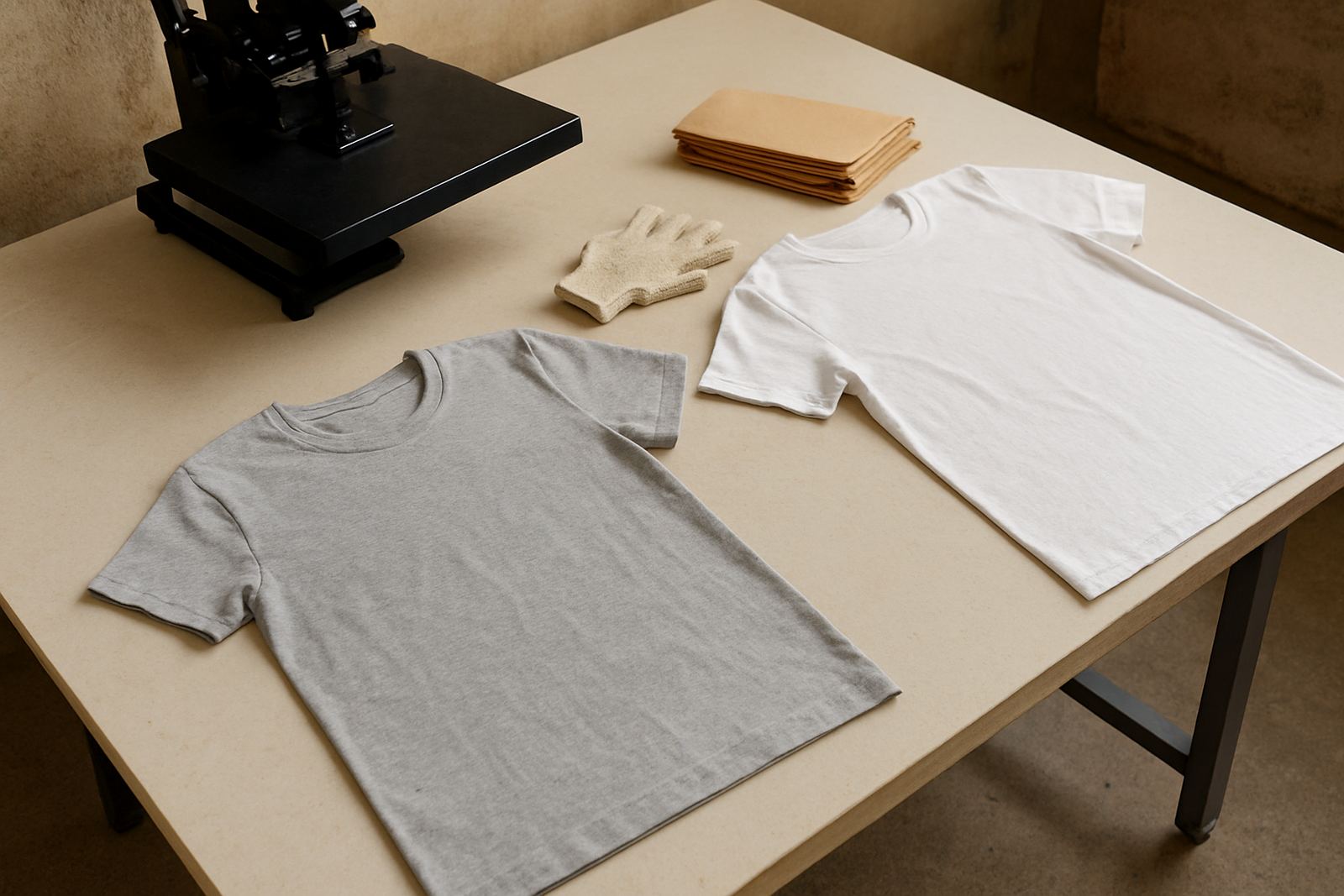
Clean handling starts with a simple rule: anything that touches the shirt after pressing must be clean, dry and kept apart from dust. That includes the table, your hands, folding boards, packing tissue and even the shelf where finished stock waits for collection.
Set up a clean landing zone beside the press
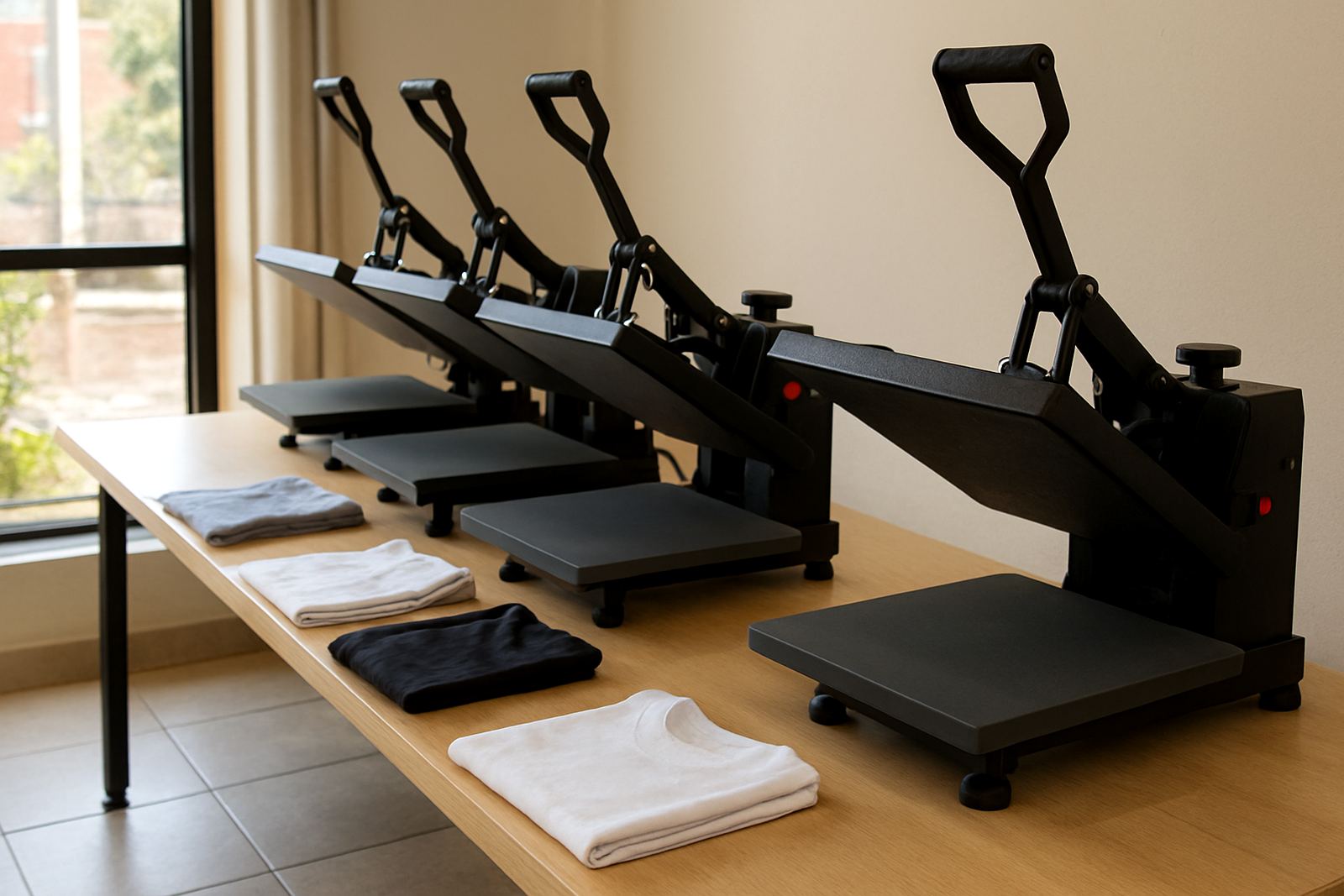
Most contamination happens because finished shirts are dropped onto whatever surface is closest. A packing area only needs a little space, but it must be kept separate from the press table where powder, trimmings and offcuts collect through the day.
In a busy shop, mark one surface as the clean zone and do not use it for cutting vinyl, checking samples or placing courier bags. If the room is small, even a dedicated trolley with a wipeable top can make a difference. In Durban, where humidity can make dust cling to surfaces, a quick wipe before each run helps keep garments cleaner. In Cape Town, where coastal air can bring fine grit indoors, covered storage is worth the extra effort.
- Wipe the table with a clean lint free cloth before each batch.
- Keep scissors, trimmers and tools in a separate tray.
- Store packing tissue and poly bags in a closed box.
- Do not place finished shirts near open bins, drinks or cleaning chemicals.
Cool the garment before folding or bagging
Heat makes fabric more vulnerable to marks. If a shirt is folded while still warm, the transfer can pick up a faint shiny line or collect dust from the air. Some fabrics also hold moisture for longer than expected, especially heavier cotton blends used for promo wear and staff uniforms.
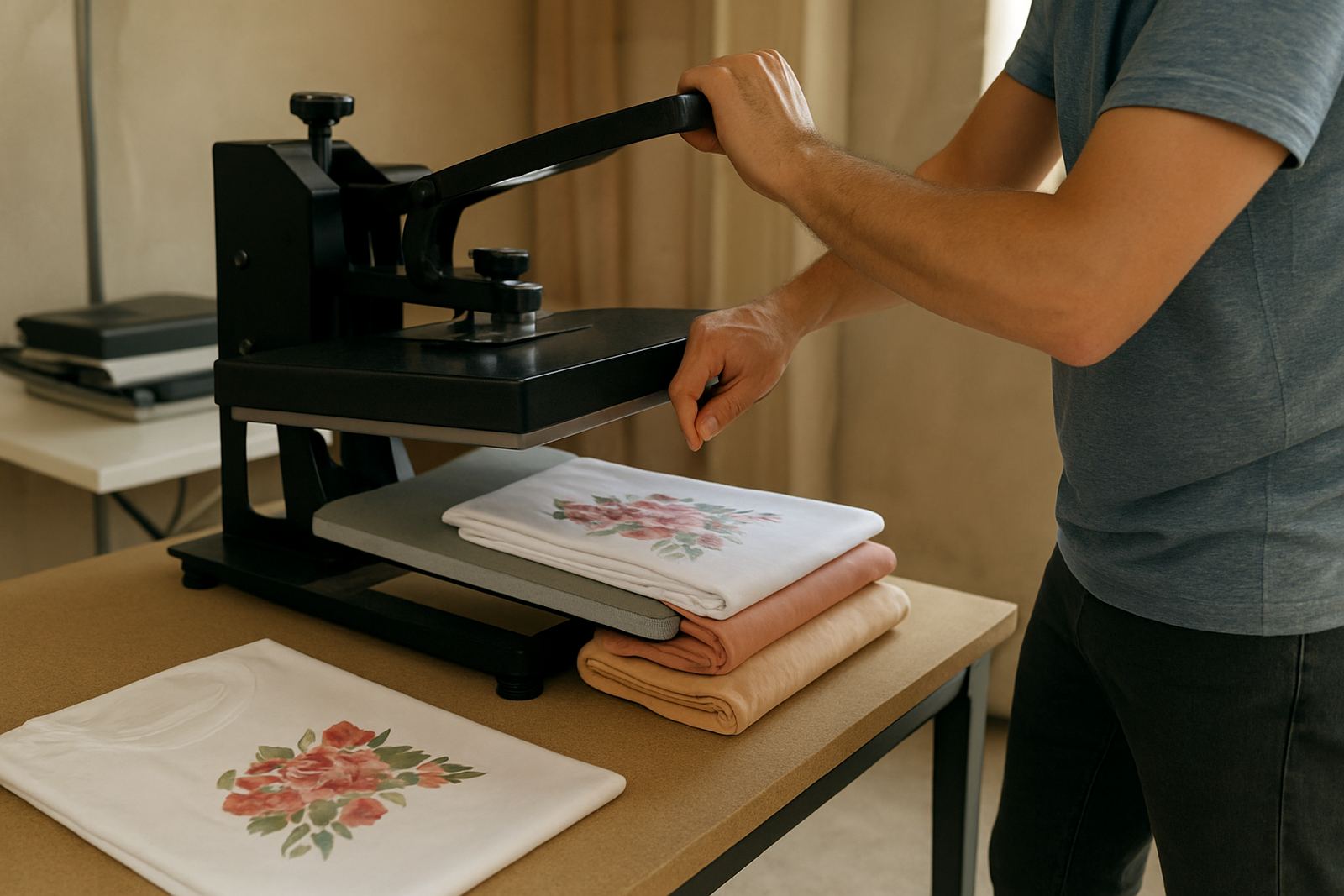
Allow the shirt to cool flat for a short time before stacking. The exact time depends on the fabric and the print type, but the aim is simple: the garment must feel fully set, not warm at the print area. If you are working through a courier order and pressure is on, build that cooling time into your workflow instead of rushing it at the end.
For larger shops in the East Rand or West Rand, a metal rack with enough airflow can keep batches moving. For home operators, a clean drying line or wide table is better than piling shirts one on top of another while they are still warm.
Hands, gloves and fold marks
Finger oils show up fast on dark cotton and synthetic fabrics. They may not be visible from the front straight away, but once the shirt is packed and handled a few times the marks can become obvious. That is why clean hands matter just as much as clean surfaces.
Some operators prefer powder free gloves for final handling, while others simply wash and dry their hands well before packing. Either way, do not touch the print area more than necessary. Handle garments from the shoulders or side seams where possible and fold from the edges, not over the design.
- Avoid lotion or greasy hand cleaners before packing.
- Check for loose threads or lint before folding.
- Use smooth, clean folders or templates for repeat sizes.
- Do not over press the folded shirt with your palms.
If a garment has been touched by mistake, inspect it in good light before it goes into the bag. A small mark caught early is easier to clean or replace than one discovered after delivery.
Packing for courier without picking up dirt
Courier orders need a little extra care because parcels are often stacked, scanned and moved several times before they reach the client. A clean shirt can still come out looking tired if it is packed into a dusty box or a bag with bits of tape, paper scraps and grit inside.
For single shirts, use a clear bag or neat inner wrap that fits the size of the garment. For bulk orders, separate sizes clearly and keep the packing list outside the shirt bundle so there is no need to reopen the parcel. If you ship from Midrand to Pretoria, Bloemfontein or further afield, make sure every package is closed properly but not over stuffed, because a tight parcel can crease the print.
Practical packing checks:
- Use clean bags and boxes only once the shirts are fully cool.
- Keep spare labels, tape and markers away from the clean table.
- Seal parcels on a separate surface from the shirts.
- Store ready parcels off the floor, especially in wet weather.
How small faults in the press show up after delivery
Sometimes what looks like a cleanliness problem is actually a press setting issue. Too much pressure can leave a frame mark that catches dust. A temperature that is too high can leave sheen on the fabric, which makes any fingerprint or packing mark stand out more. Uneven platen heat can also cause one part of the design to bond better than the rest, so the shirt starts to lift, scuff or attract dirt on the edges.
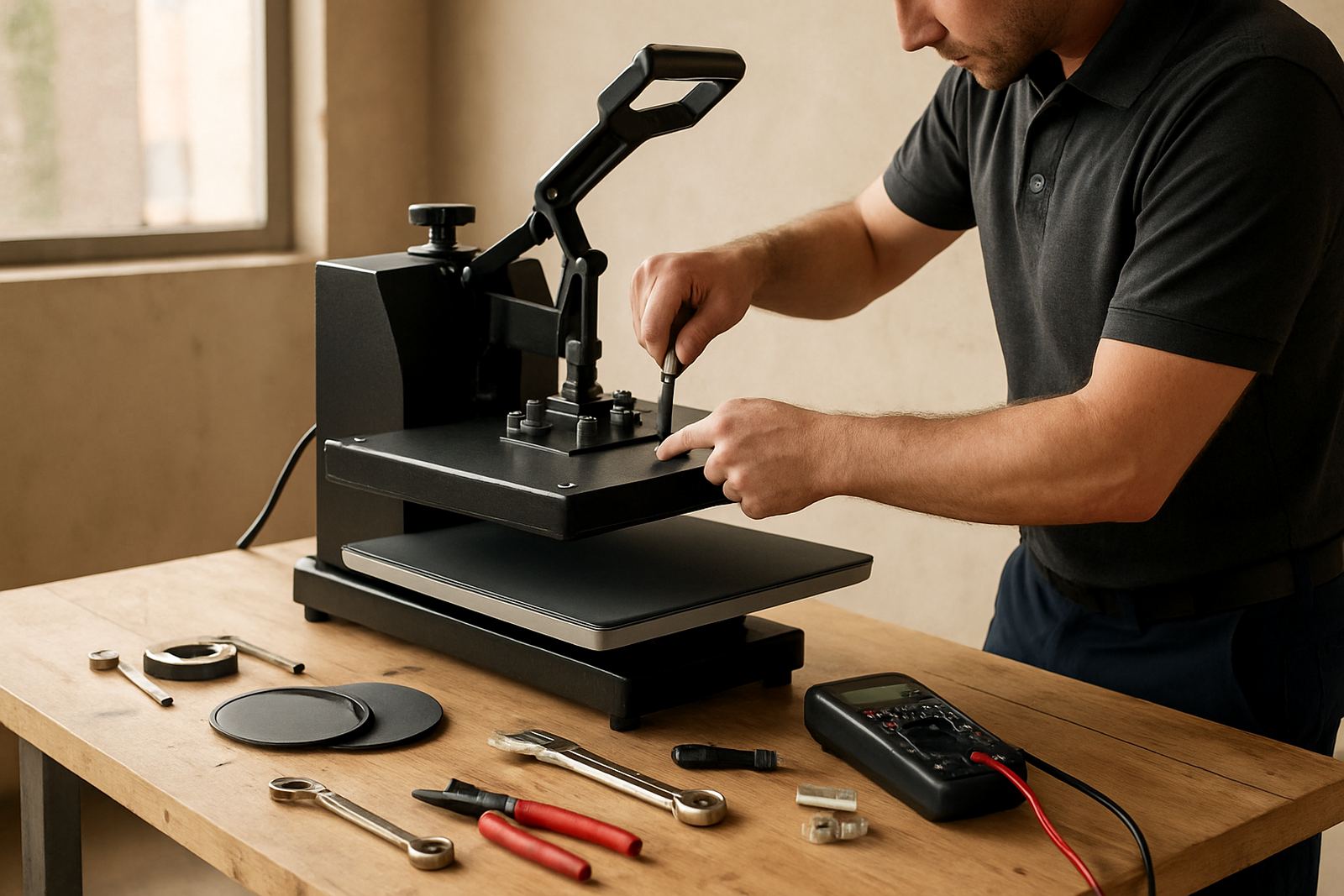
That is why post press handling and machine condition go together. If your press pad is worn, your cover is dirty or the controller is drifting, finished shirts will be harder to keep clean and presentable. Shops in humid areas such as Durban often notice this first, while inland operators can see the same problem during dry windy spells when dust builds up quicker than expected.
Regular checks on temperature, pressure and pad condition save time later. A clean shirt is easier to protect when the press itself is producing even results every run.
A simple handover routine that keeps quality visible
The best systems are usually the ones the whole team can follow without thinking twice. If you make the same checks on every order, the finished garments stay cleaner and the process becomes easier to train to new staff or casual helpers.
A practical handover routine might look like this: press, cool, inspect, fold, pack, seal and store. Keep that sequence the same for small runs and larger batches alike. In a busy print shop in Johannesburg or a home workshop in Bloemfontein, a routine like this reduces arguments, missed marks and late night rework.
- Inspect under good light before packing.
- Separate clean stock from unpressed stock.
- Label customer orders clearly to avoid mix ups.
- Keep finished garments away from workshop dust and open doors.
When the shirt leaves your hands, it should already look like a product worth paying for. Clean handling after pressing is not extra effort, it is part of the job.