

Start with the work you actually do every day
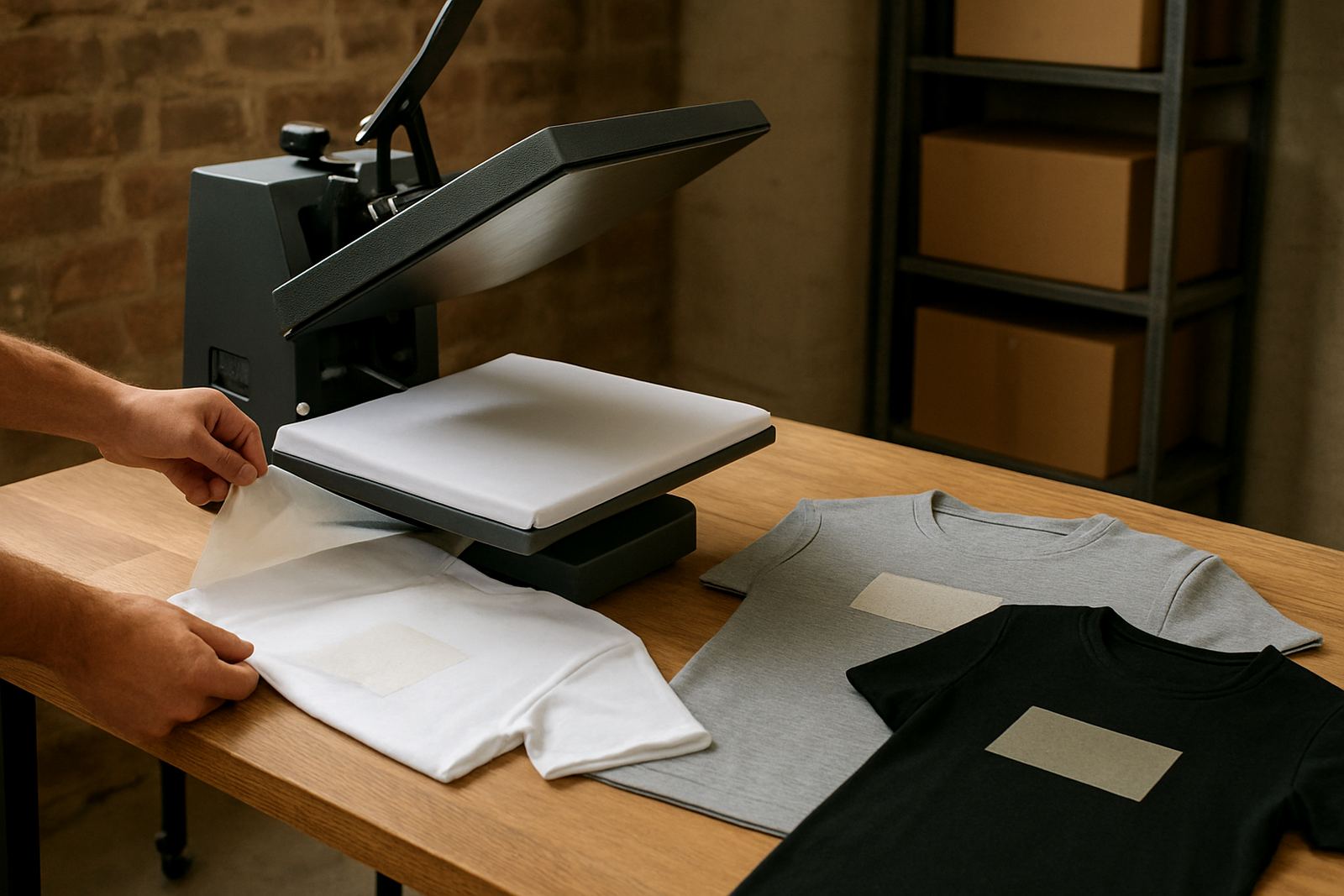
If most of your jobs are one-off T-shirts, short runs for schools, clubs or local businesses, a manual flat press can make perfect sense. You get lower entry cost, simple operation and less to maintain. For a small shop in Midrand or a home setup in Pretoria North, that can be the difference between getting started now or waiting months to build budget.
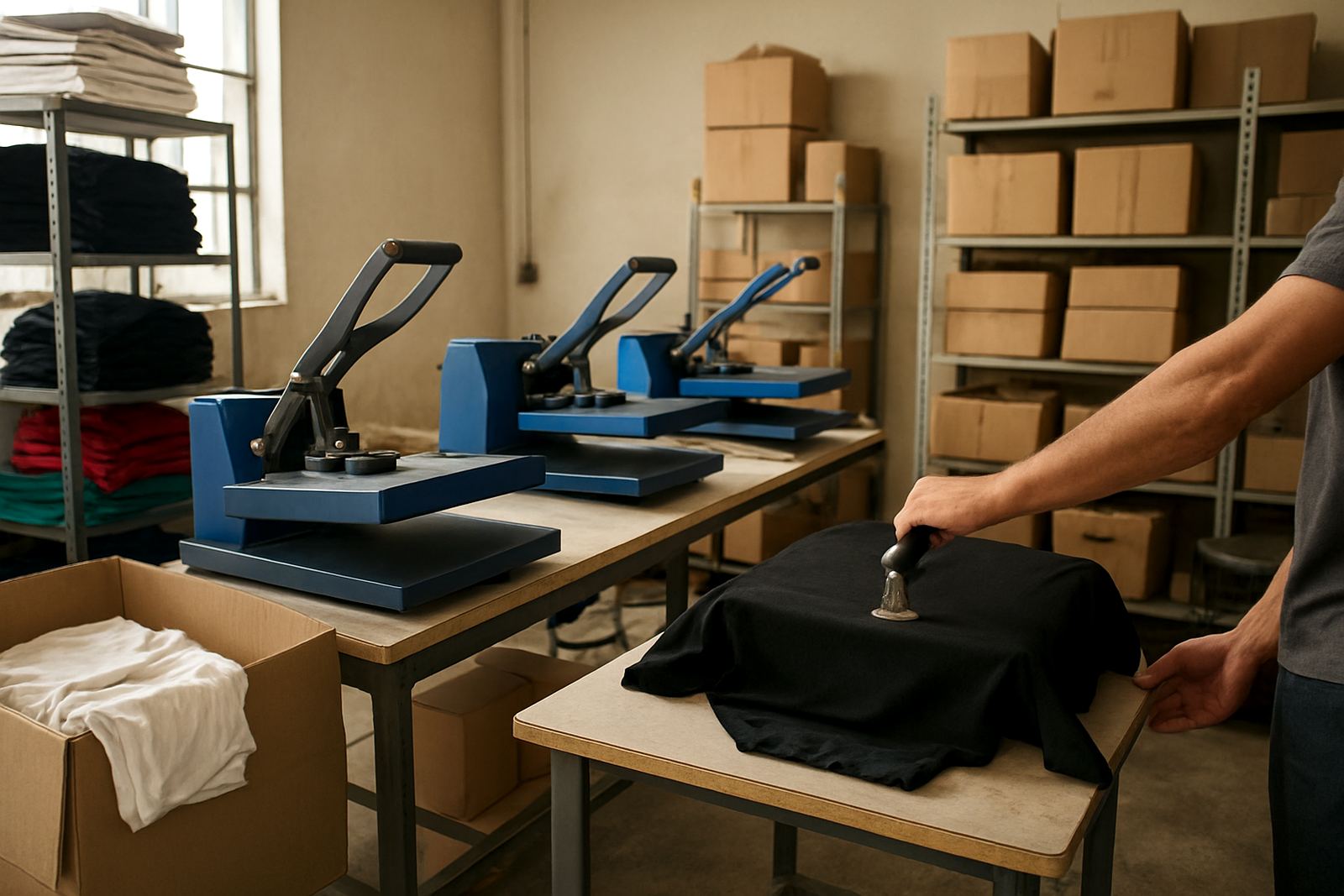
Pneumatic operation becomes more attractive when the same motion is repeated all day. Think bigger print shops in Johannesburg, a Durban clothing studio doing contract work, or a Cape Town decorator handling regular transfer runs. The machine does the pressing force for you, so the operator spends less energy on every cycle and can keep output more consistent through a full shift.
A useful question is not whether air-assisted operation is better in theory, but whether your current work mix justifies it. If you are pressing 20 to 40 garments a day, manual may be enough. If you are regularly above that, or you have staff who are tired by midday, pneumatic can pay off in real terms.
Where pneumatic presses earn their keep
Air-assisted presses are strongest where speed, repeat pressure and operator comfort matter. Instead of relying on arm strength, the press uses compressed air to bring the top platen down with steady force. That helps with transfers, heat-applied graphics and longer production sessions where pressure consistency matters from the first shirt to the last one.
For shops that run through busy seasons, the practical benefits show up in less fatigue and fewer bad presses. A tired operator is more likely to under-press, over-press or rush the release. With pneumatic operation, the pressure setting stays closer to the same point, which can reduce rework and wastage. It is not magic, but it does make life easier on a hot day when the workshop is full and the power has tripped twice already.
- Better for higher daily volume and repeated cycles
- Less physical effort for the operator
- More even pressure across long runs
- Helpful when several people share one machine
- Good fit for busy shops that need predictable output
When manual still makes better business sense
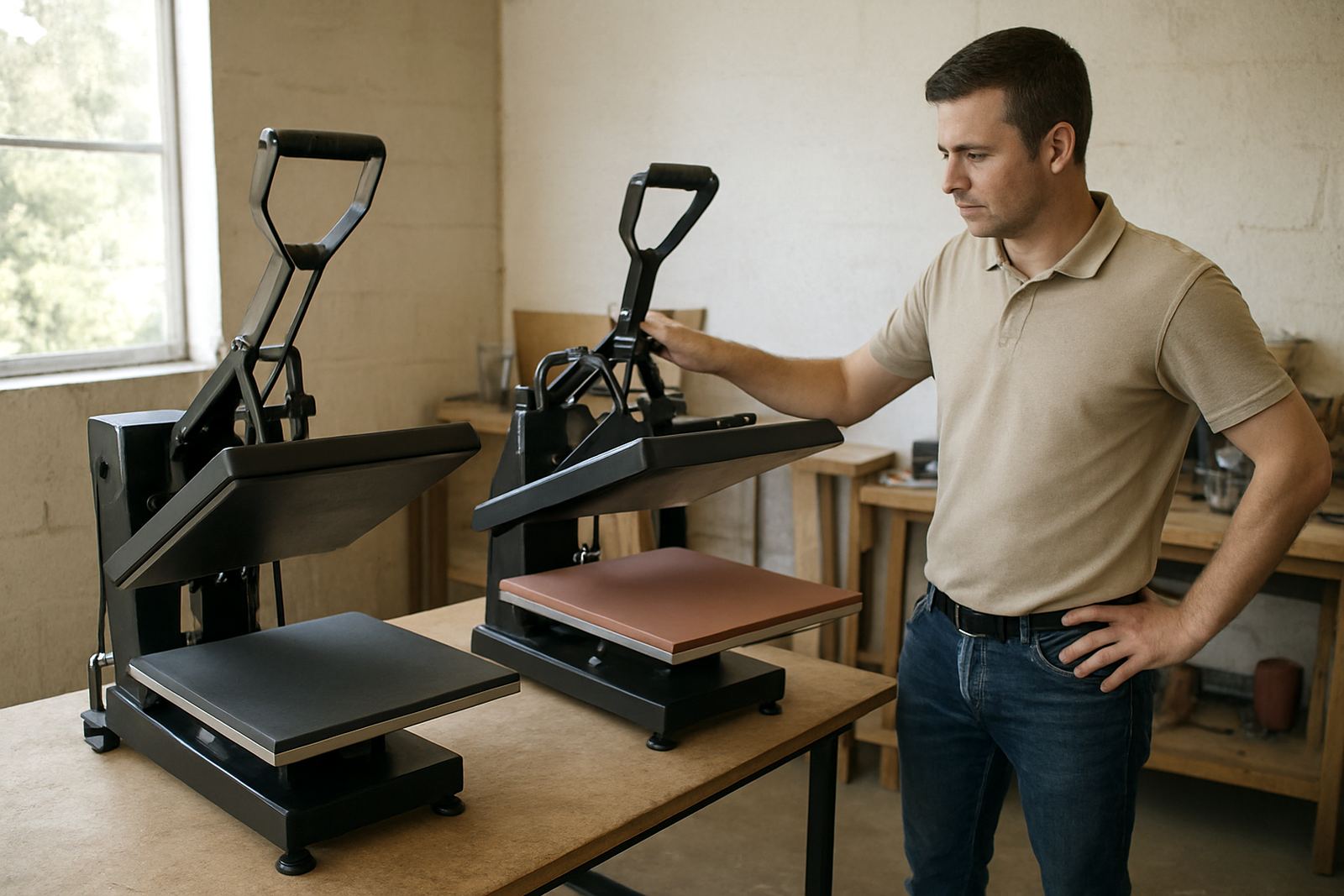
Manual presses remain the practical option for many South African decorators. If your space is tight, your electricity supply is unreliable or you work mostly by appointment, a manual machine can be simpler to live with. There is no pneumatic line to plan, no compressor to service and less that can stop the job from going ahead.
Manual units also suit businesses that need flexibility. A hobby printer in Bloemfontein may only use the press at weekends. A small garment shop in the East Rand may prefer to spend money on vinyl, blanks and marketing rather than air equipment. In those cases, a good manual machine gives you control without extra running costs.
There is also a learning point here. If your team is new to heat pressing, manual operation is often the easiest way to learn pressure, time and temperature settings. Once the process is understood, you can decide whether a pneumatic upgrade will genuinely help, instead of buying air-assisted simply because it sounds more advanced.
- Lower upfront cost
- Fewer moving parts and simpler servicing
- No compressor required
- Good for low to medium volume
- Easier for new operators to understand
Think beyond the machine and look at the whole setup
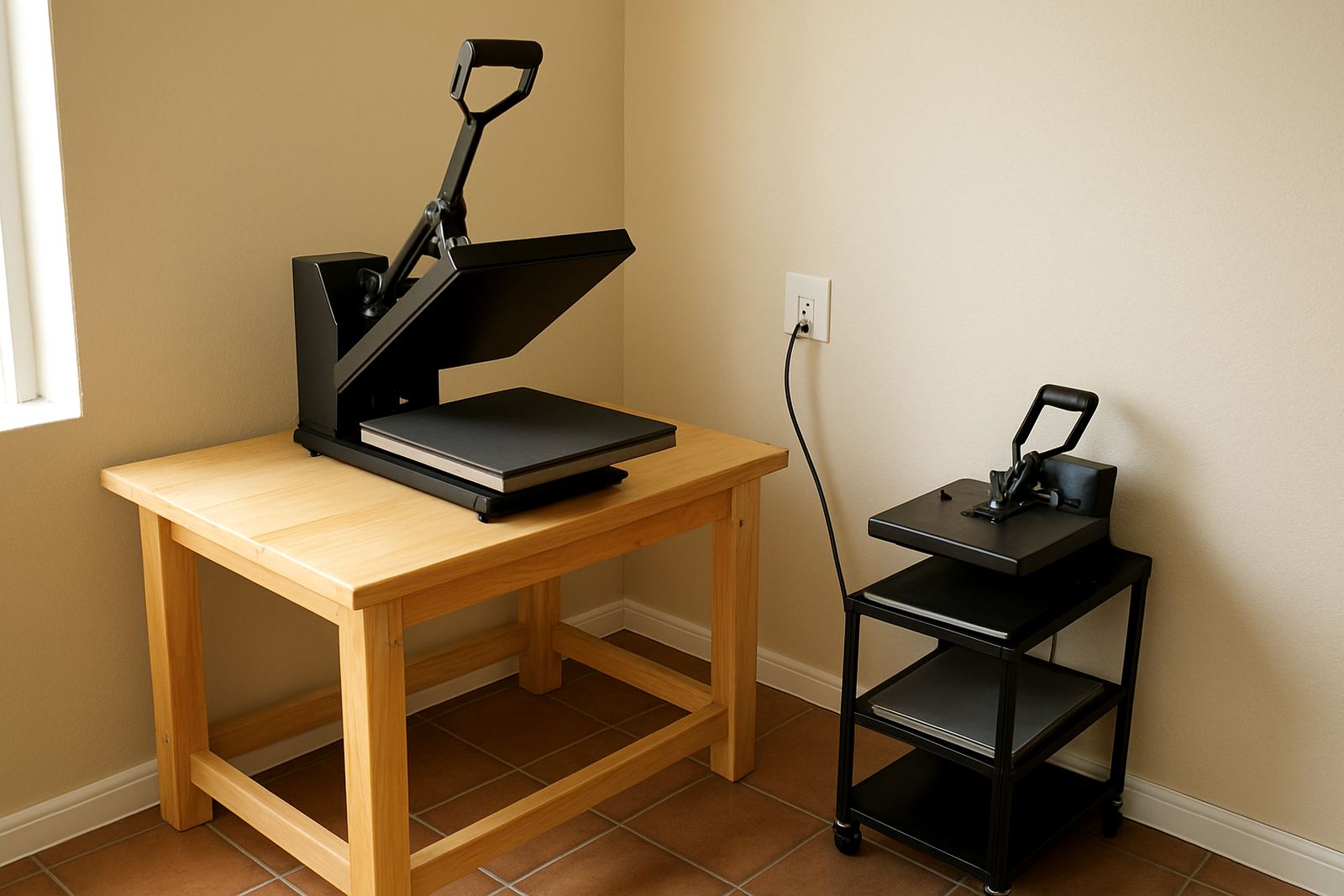
The press itself is only part of the decision. If you choose pneumatic, you also need to think about the compressor, air line quality, moisture control and workshop layout. In humid coastal areas such as Durban, air systems need proper attention so moisture does not cause trouble over time. In hotter inland areas, dust and heat can also affect the life of the components if the setup is neglected.
It is worth checking whether your electrical supply can handle the full setup, especially in workshops that already run heaters, vinyl cutters, computers and extraction equipment. Load-shedding means many businesses are also trying to fit generators, inverters or backup plans around production. A pneumatic press can still be a good choice, but only if the support equipment is planned properly.
For some shops, the hidden cost is not the press price, but the time spent on upkeep. A compressor that is undersized or poorly maintained will cause pressure issues and inconsistent results. That can be more frustrating than working a manual lever or handle, especially when your customer wants 50 shirts by Friday afternoon.
A Midrand example: small shop, growing workload
Take a small decorator in Midrand who started with school event shirts and a few transfer jobs for local businesses. At first, the manual press worked fine. Orders came in at a manageable pace and one person could handle setup, pressing and packing without much trouble.
After a few good months, the business began taking on repeat work from sports clubs and a corporate client in Sandton. The owner noticed two things: the operator was getting slower by the end of the day, and the results varied slightly when pressure was rushed. At that point, an air-assisted machine started to make more sense because the work was no longer occasional. It had become a daily production task.
The lesson is simple. Do not buy pneumatic just because you can. Buy it when the workload, not the brochure, says it is time. If your output is still small and irregular, manual remains the sensible choice. If your team is growing and your press is working hard every day, air-assisted operation can support that growth without adding strain.
What support matters after the purchase
Whether you choose manual or pneumatic, the real value comes from getting the machine set up correctly and keeping it in good condition. A new press should be checked for temperature accuracy, pressure balance and even heat across the platen. If the settings are wrong on day one, the operator will spend weeks fighting the machine instead of using it properly.
Ongoing support matters just as much. Flat presses need practical help with element replacements, controller repairs, pad and covering work, temperature checks and pressure adjustments. Pneumatic models also benefit from line service and preventive servicing so the machine keeps performing as expected. When a job is urgent, loan unit support can also help keep production moving while repairs are handled.
- New press setup and operator training
- Temperature checks and pressure adjustments
- Element replacements and controller repairs
- Pad and covering service
- Pneumatic line service and preventive servicing
If you are based in Gauteng or sending work anywhere in South Africa, the right choice is the one that suits your real workload, your team and your workshop conditions. That is how you avoid paying for features you do not need or outgrowing a machine too soon.