

Why a Good Transfer Can Still Fail
When a transfer lifts at the edge or starts cracking after the first wash, the fault is not always the film or paper. In many cases the real issue is the way the press was set up, how the garment was loaded, or whether the operator treated every substrate the same. Cotton, polycotton and coated fabrics all respond differently to heat and pressure.
In Midrand, Johannesburg and Pretoria we still see the same pattern: a printer changes artwork, but keeps the same setting for every shirt. That leads to poor adhesion on one run and scorching on the next. Even a small shift in temperature or dwell time can change the result, especially on light polyester, stretch fabrics or dark garments with a sensitive coating.
It helps to think of transfer work as a process with several steps. If one step is rushed, the whole job can suffer. Pressure, temperature, time and pre-press preparation all have to work together.
The Most Common Pressing Errors We See
The same faults come up again and again on calls from garment decorators, schoolwear printers and promo shops. Some are simple, some take a technician to put right. The good news is that most are avoidable with a proper routine.
- Pressing at the wrong temperature for the transfer type.
- Using too little pressure, which leaves weak bonding at the edges.
- Overheating the garment and causing scorch marks or shine.
- Skipping pre-pressing, so moisture traps under the transfer.
- Loading the garment unevenly, which leads to shifting.
- Using a worn pad or damaged covering that creates hot spots.
- Not checking the controller, so the display and actual heat do not match.
A common mistake is to assume the controller reading is always accurate. On older machines especially, the set temperature and actual platen heat can drift apart. If a press is running 10 to 15 degrees off, the operator may keep adjusting time and still get poor results.
Lifting, Peeling and Edge Failures
When a transfer peels from the corner or starts bubbling after washing, the bond was never fully formed. This usually points to low heat, too little pressure, or a surface that had lint, moisture or silicone residue on it before pressing. In humid coastal areas like Durban and Cape Town, garments can hold moisture longer than expected, so a quick pre-press matters more than many operators realise.
Transfer lifting can also happen when the operator peels too early. Some products need a hot peel, others must cool down fully before the carrier sheet is removed. If the wrong peel method is used, the transfer can stretch or lift while the adhesive is still soft.
Another issue is inconsistent pressure across the platen. If one side of the press closes tighter than the other, the transfer may bond on one edge and fail on the opposite side. That is why a proper pressure check is worth doing before a production run, not after a customer complaint.
Scorching, Shine and Heat Damage
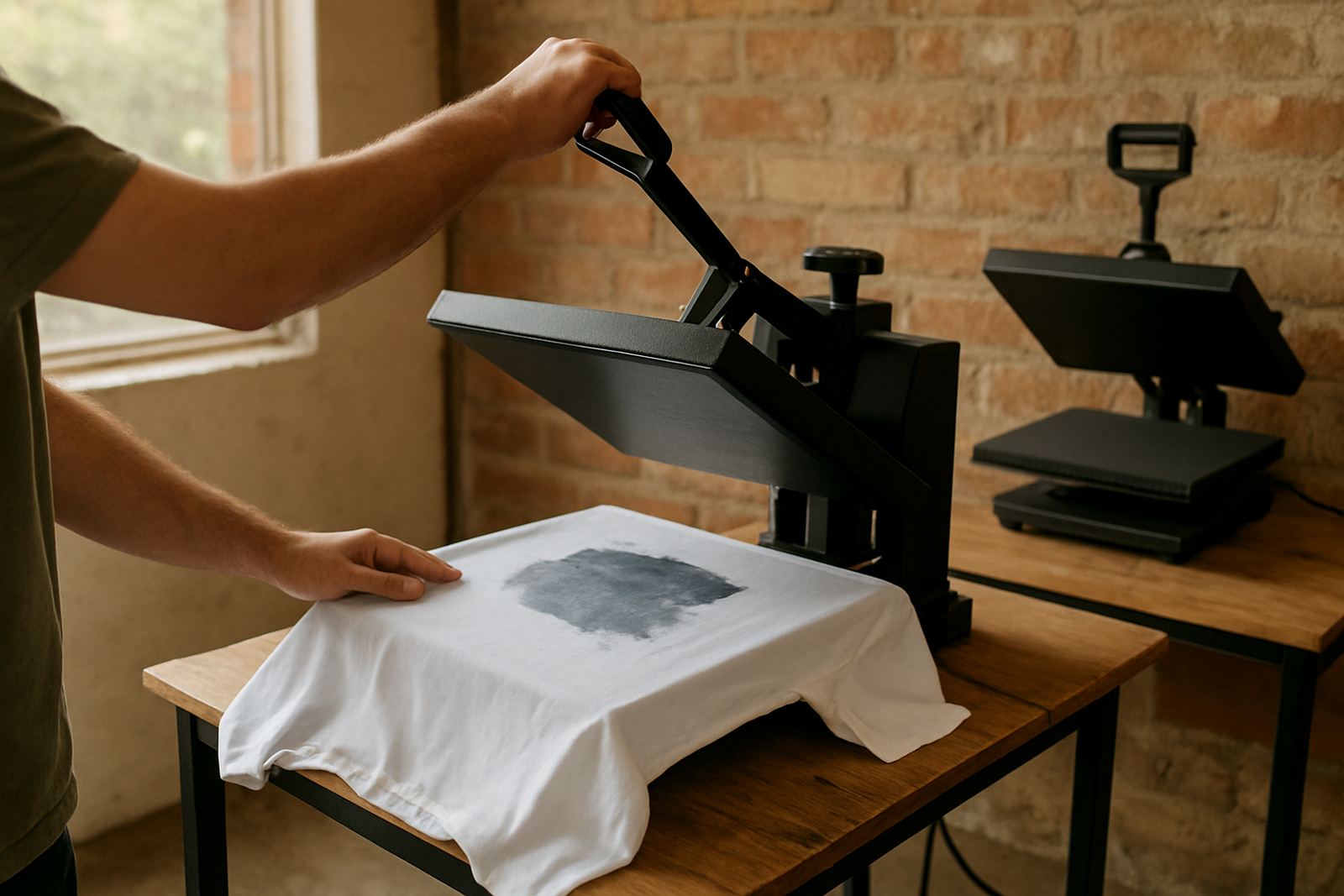
Scorching is usually a sign of too much heat, too long a dwell time, or a platen that runs hotter than the display says. You may see yellowing on light cotton, gloss marks on dark fabric, or a hard shiny patch where the garment has been overpressed. Once that mark is there, you cannot hide it without replacing the shirt.
Overheating is especially risky on synthetic blends and soft-feel prints. The fabric can shrink slightly, the transfer can lose its finish, and the press pad may leave impressions from seams, zips or pockets. Operators often try to fix this by reducing pressure, but if the heat setting is still too high the damage continues.
- Test every new transfer type on a spare garment first.
- Check actual platen temperature with a separate gauge from time to time.
- Keep the working surface clean so residue does not bake into the fabric.
- Use the right cover on the lower pad to avoid extra shine.
If your shop works through load-shedding, let the press fully stabilise again after power returns. A machine that has just restarted can behave differently for the first few cycles, and that can throw off a full production batch.
Shifting Artwork and Misaligned Prints
Shifting is one of the most frustrating mistakes because the transfer may look fine at a glance, then reveal a crooked logo or double image once the carrier is removed. It usually happens when the garment moves under pressure, or when the operator closes the press before the transfer has been fixed in place.
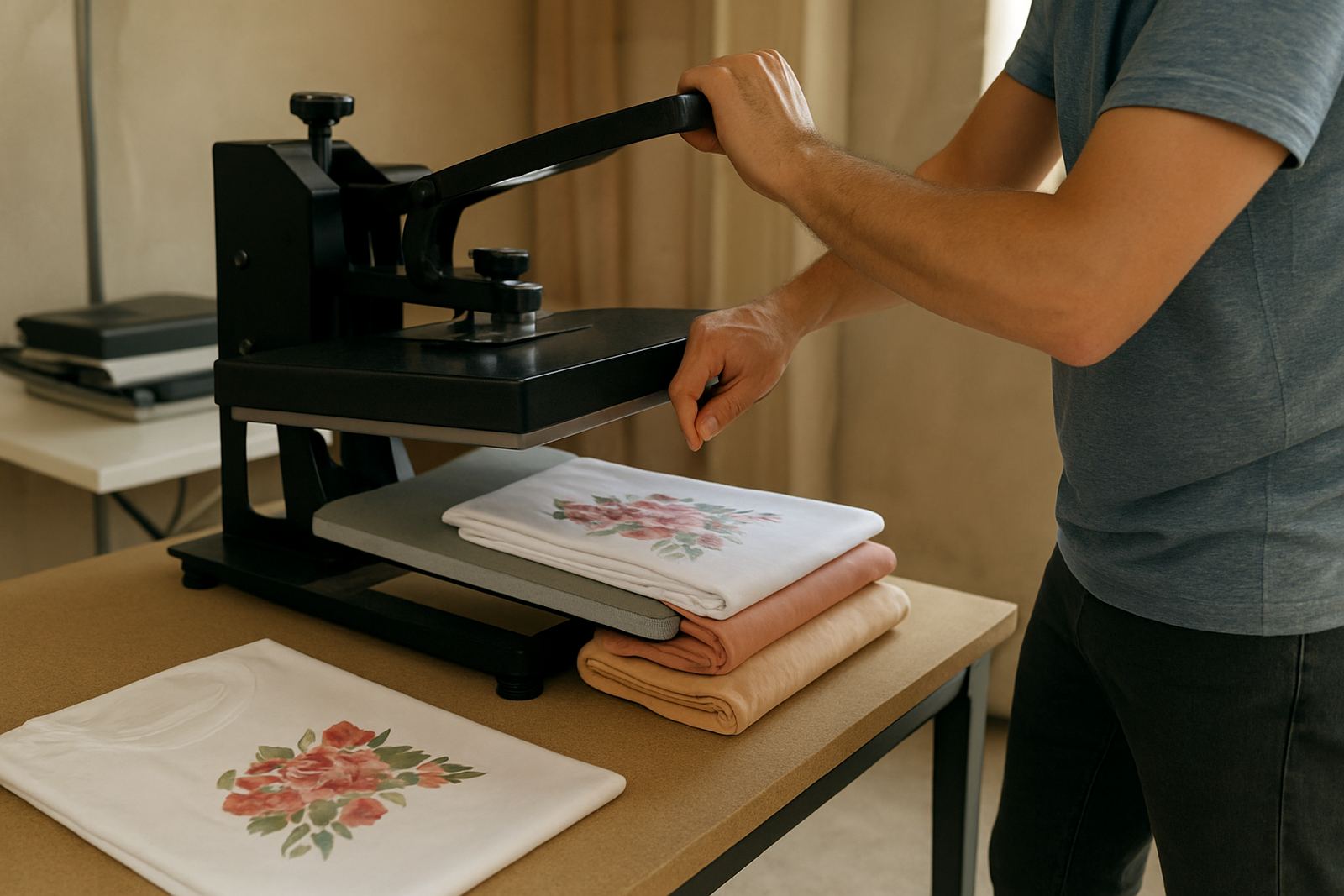
A proper loading routine makes a big difference. The shirt should be straight on the platen, seams should be kept clear of the pressing area, and the design must be positioned before the lid comes down. On larger runs, a small shift repeated over 200 shirts becomes a major loss.
We often see this in small shops around the East Rand and West Rand where one operator is handling cutting, pressing and packing at the same time. A simple guide mark, a clean lower pad and a fixed workflow can save a lot of rework. If the press has a pneumatic setup, line pressure should be checked as well, because uneven closing force can let the garment slide at the last second.
Getting Better Results Through Routine Checks
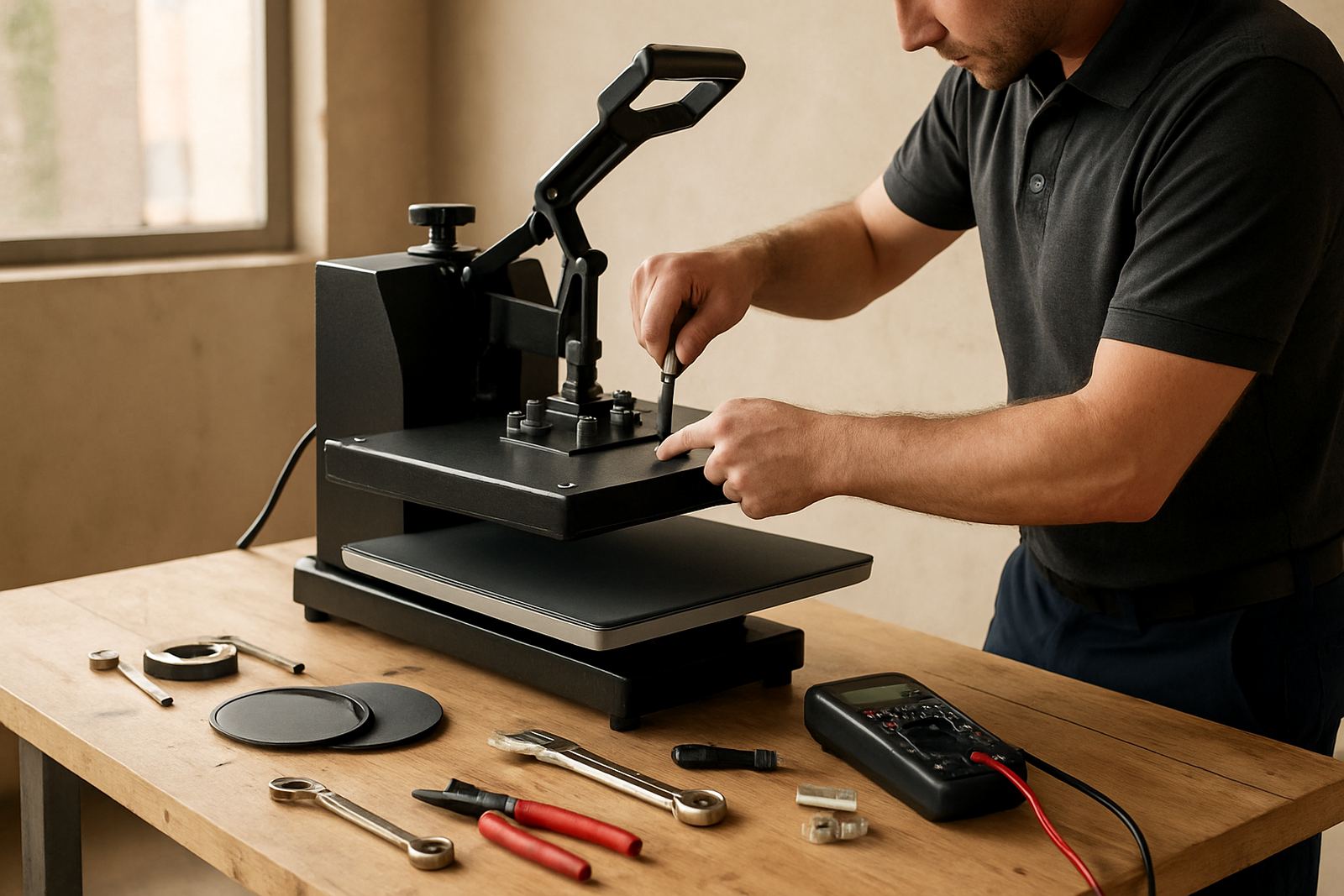
The best way to cut waste is to treat the press like production equipment, not just a hot plate with a handle. Regular checks keep results consistent and reduce the chance of surprise failures when a customer order is due. Small issues such as a worn element, loose wiring or tired padding can slowly change how the press behaves.
A practical routine can include the following:
- Daily visual check of the platen, pad and cover.
- Weekly test press on a sample garment.
- Monthly temperature and pressure check.
- Regular cleaning of adhesive residue and lint.
- Service attention when the controller drifts or the heat is uneven.
For print shops in Bloemfontein, Cape Town or Durban, it also helps to keep a few spares on hand. A replacement cover, controller or heating element can prevent a full stop while you wait for courier delivery. For newer operators, one training session on setup and pressure can prevent months of avoidable waste, its a small step but it pays off quickly.
A Local Example: One Small Setting, Many Wasted Shirts
A Midrand decorator recently called after losing a batch of school shirts. The transfers looked fine on the first five pieces, then began to lift at the edges and leave a slight gloss on the fabric. The machine was not broken. The main problem was that the temperature had drifted, the pressure was too light and the garments were not being pre-pressed long enough to clear moisture.
Once the press was checked and the operator adjusted the routine, the results improved straight away. The fix was not dramatic, just correct settings and a steadier process. That is the point most shops miss: common transfer mistakes rarely come from one big failure. They come from a few small errors stacked together.
If your shop is producing transfers in Gauteng or sending work nationwide by courier, it pays to catch those errors early. A good press should give repeatable results from the first shirt to the last, without lifting, scorching or shifting.