Built For Steady Daily Garment Work
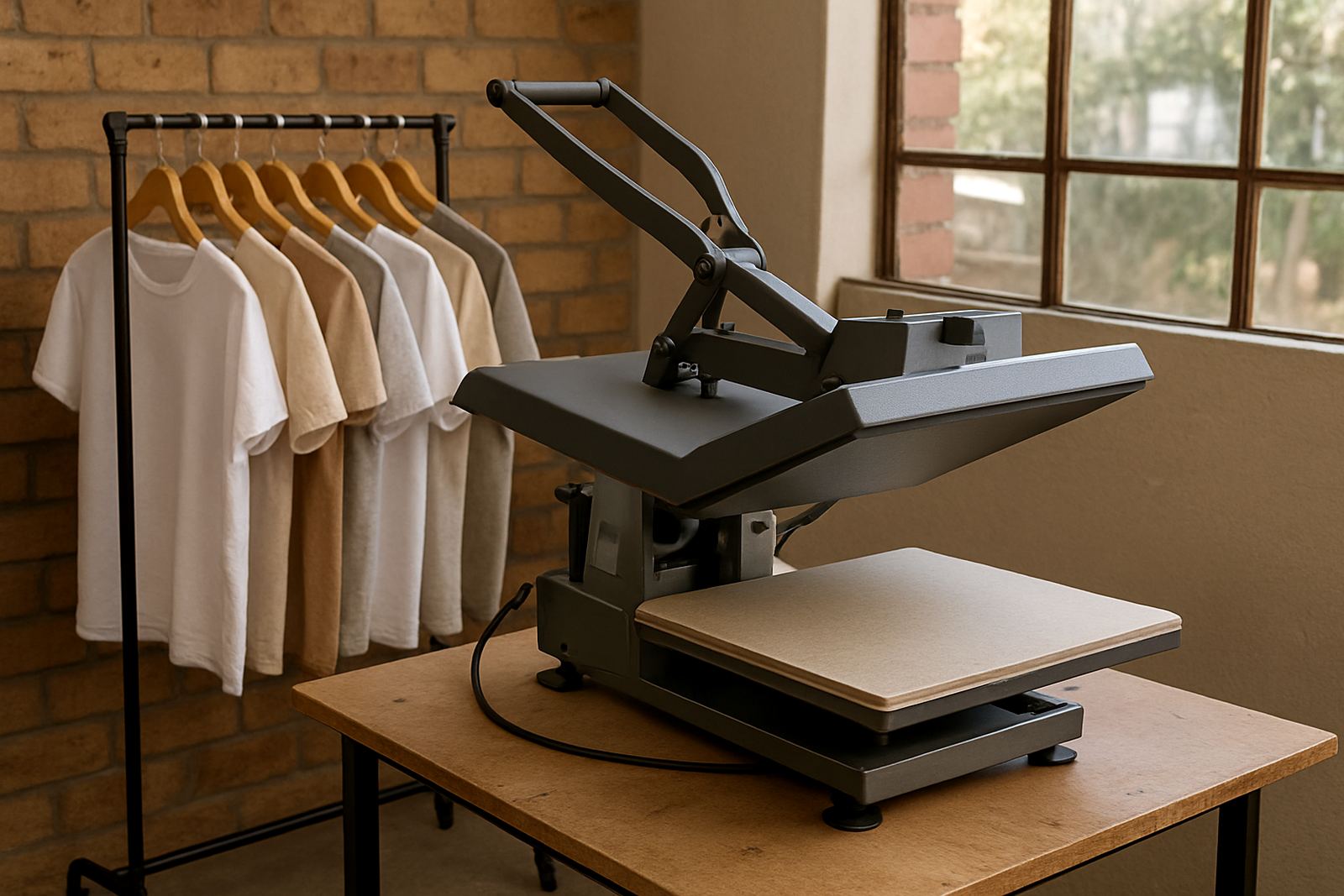
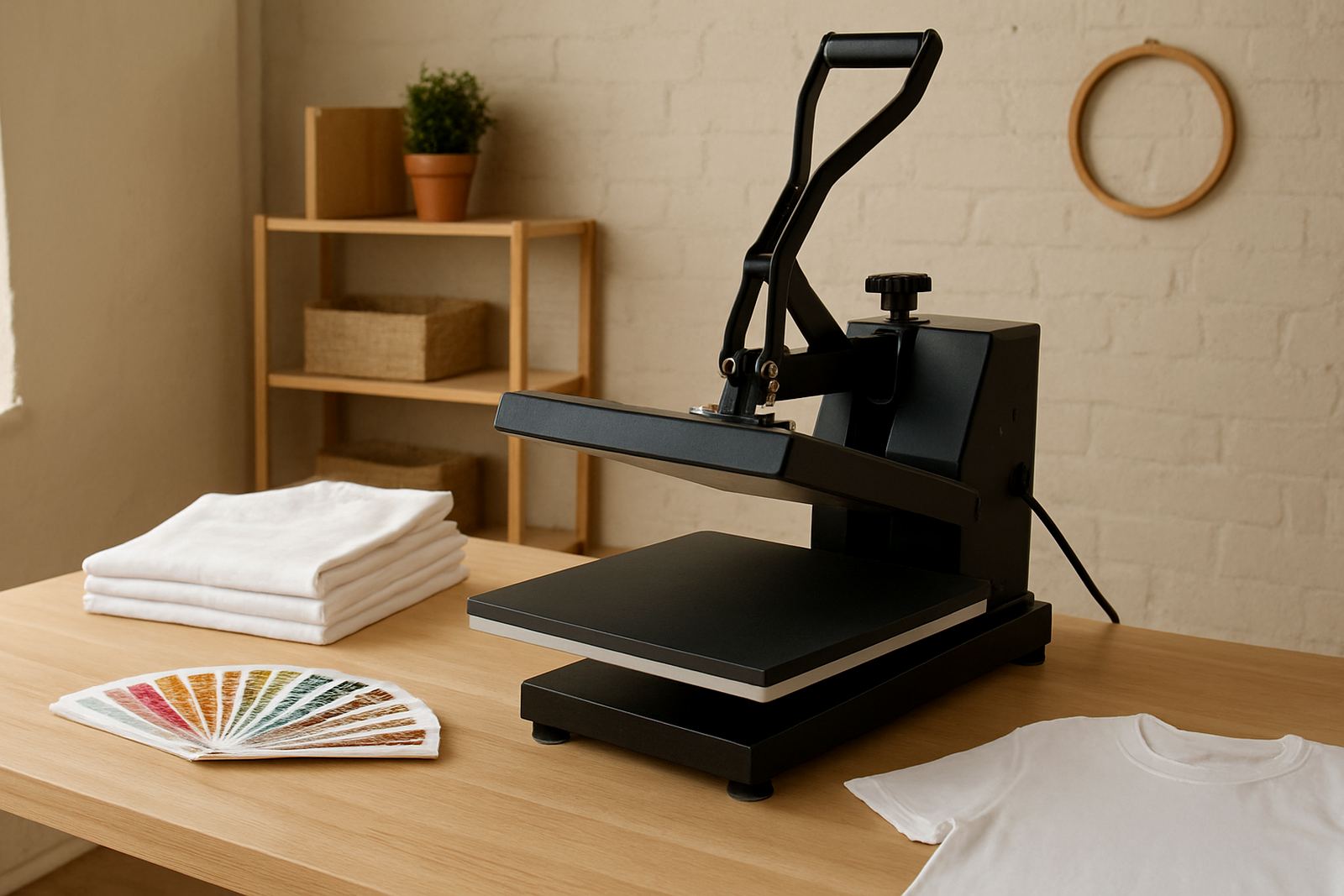
The Studio Manual Press is made for regular production, not occasional ironing. It gives you a stable top platen, a solid lower bed and manual closing pressure that is easy to control once the operator is trained. For small garment decorators in Gauteng or a shop sending orders nationwide, it is a practical machine for heat transfer vinyl, DTF transfers, sublimation on suitable blanks and general custom apparel finishing.
Because it is manual, there are no air lines to install and no compressor to service. That keeps the setup simple for a new studio, a market seller growing into a proper workroom, or a print shop wanting an extra press for busy periods. It also means less to go wrong during load-shedding, which matters when you need to finish an urgent batch before courier cut-off.
- Even heat across the platen for repeatable output
- Manual pressure control for different garment thicknesses
- Suitable for cotton, polycotton and many transfer applications
- Good for small to medium batch production
Sizes And Working Options That Suit Your Jobs
The Studio Manual Press is typically available in the most common flat pressing formats used by South African garment decorators. That usually means a standard T-shirt size for everyday work, plus a larger format for oversized graphics, panels and mixed-format jobs. The right size depends on the kind of orders you take, the amount of table space you have, and whether you mostly press adult shirts, kidswear or larger promotional items.
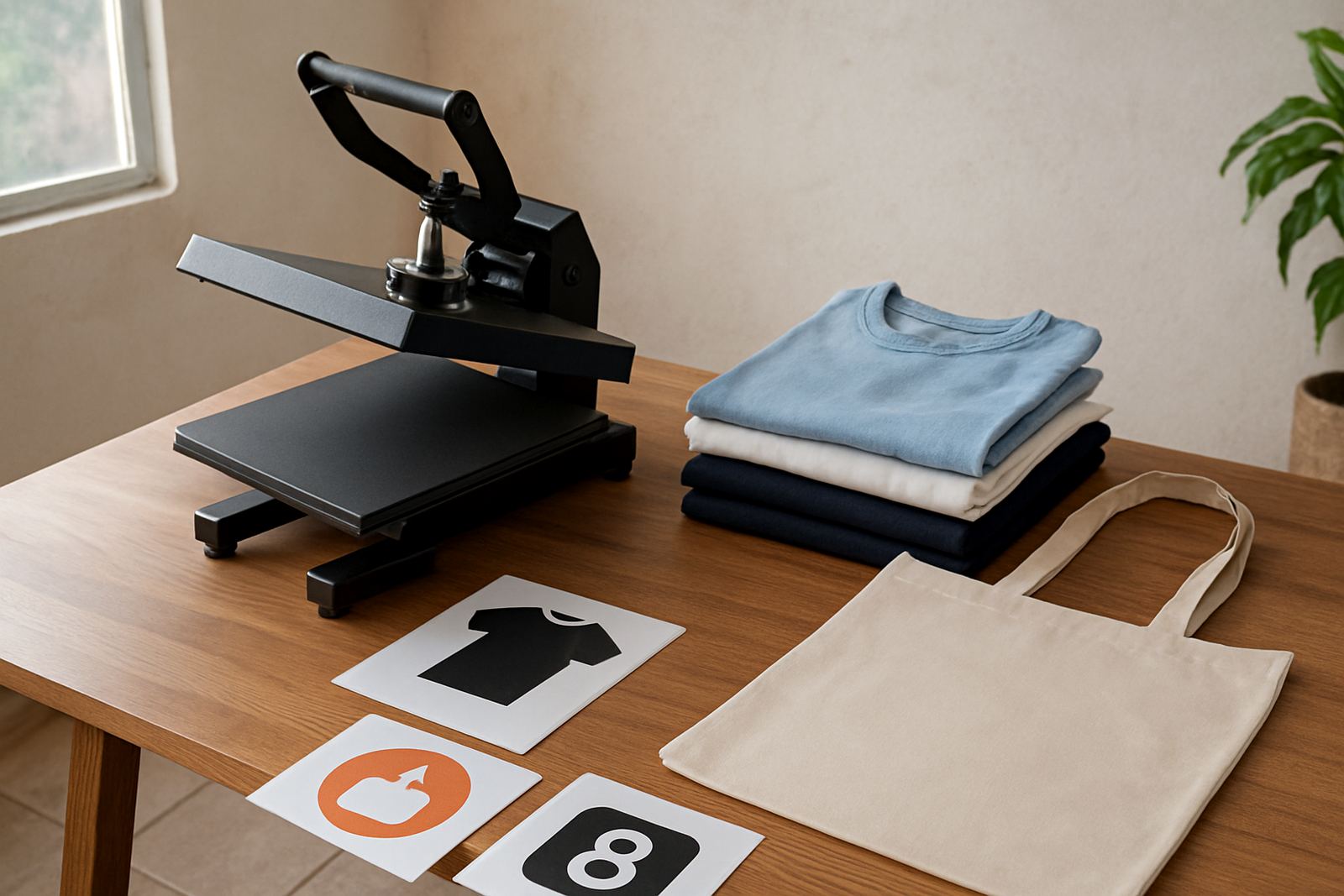
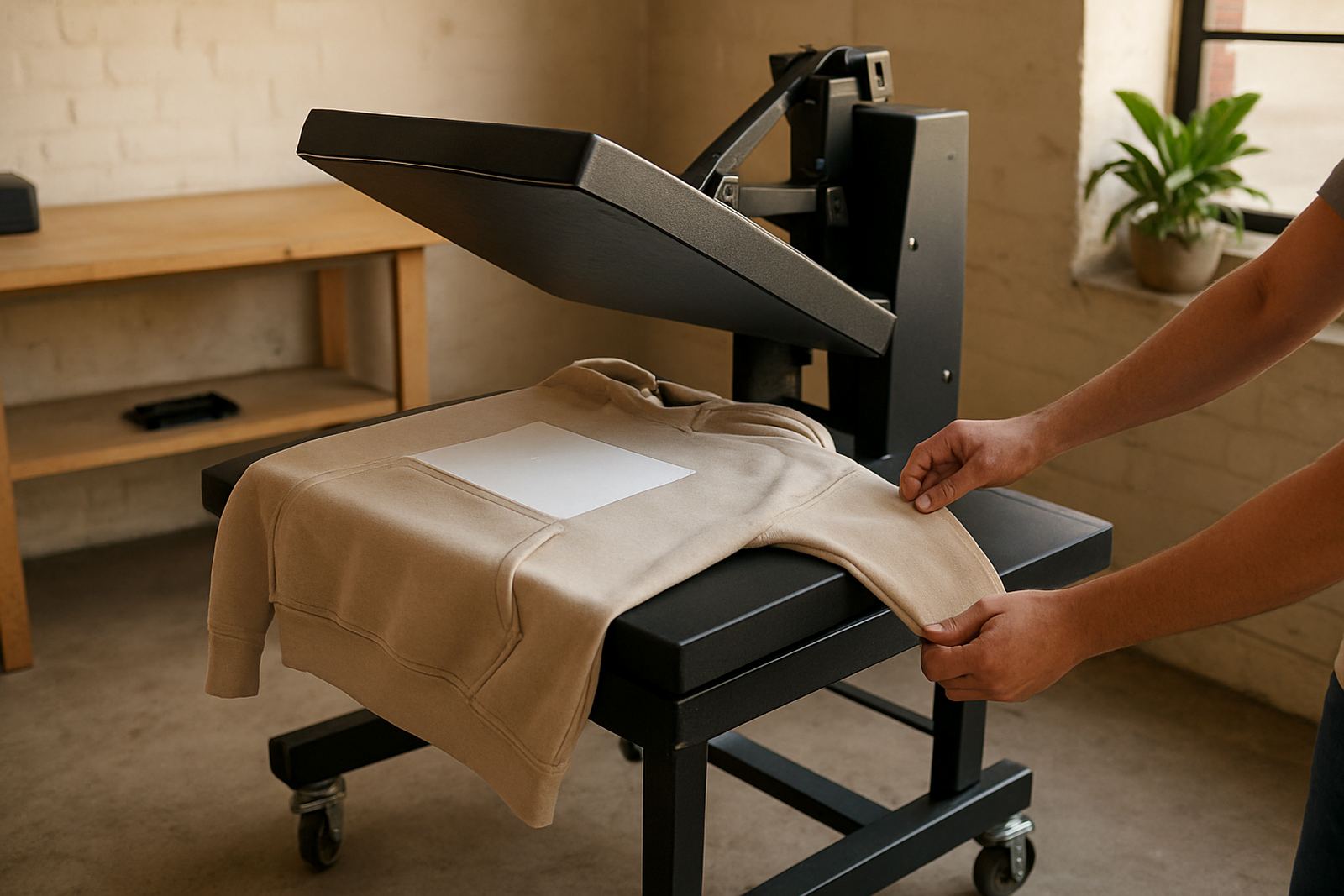
If you are mostly doing left-chest marks, baby grows and small transfers, a compact platen is often enough. If you print full front artwork, hoodies, tote bags or sportswear panels, a bigger bed gives you more room and less repositioning. Our team will usually ask what you press most often before recommending the best layout, because the wrong size can slow your workflow down quite a bit.
- Standard apparel format for general T-shirt work
- Larger platen option for oversized designs and mixed jobs
- Flat lower bed for easy positioning of garments and transfers
- Manual swing or lift action depending on the configuration supplied
Where The Studio Manual Press Fits Best
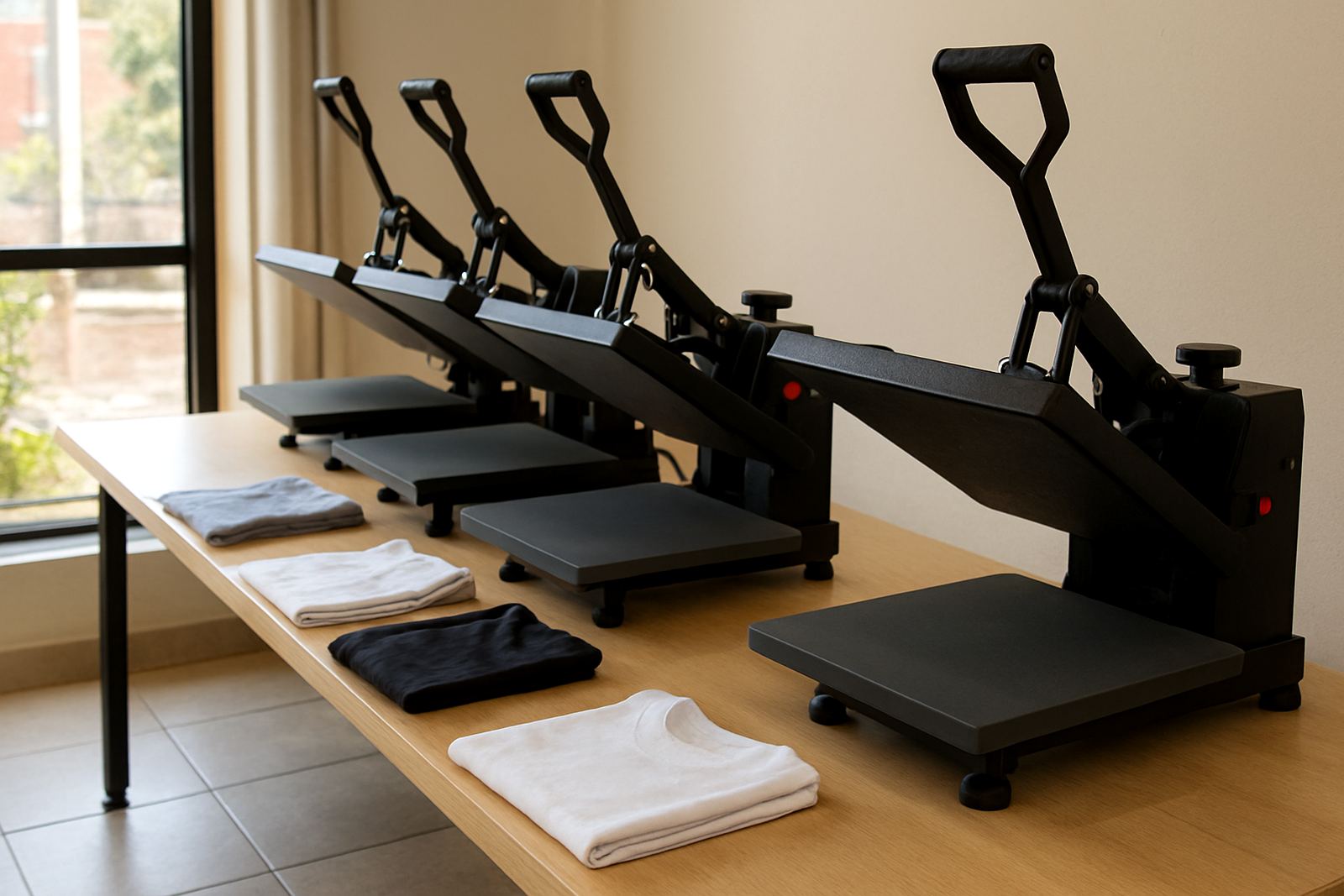
This press is a good fit for entry-level decorators, established print shops, school uniform suppliers, branded clothing businesses and hobbyists who want cleaner, more consistent pressing than a household unit can deliver. It suits those who produce regular custom apparel batches and need a machine that can keep up without taking too much floor space.
In a Durban workshop, for example, the operator may need to work around coastal humidity and keep transfer stock dry. In Pretoria or Midrand, the need may be speed and repeatability for rush jobs. In Bloemfontein or the East Rand, the value is often in having a dependable unit that can handle seasonal spikes, such as school events, church functions and sports campaigns.
It is not the right machine for someone wanting fully automatic operation or high-volume factory output. For that, a pneumatic setup may be more suitable. But for many businesses, the Studio Manual Press is the sweet spot between cost, control and output, especially when you are still building your client base.
Installation, Power Needs And Working Space
Installation is straightforward. The press needs a level, strong work surface or stand, enough clearance to open and operate safely, and a nearby power point that matches the unit rating. Most flat presses in this class run on standard single-phase electricity, which is helpful for small workshops and home studios. Exact voltage and plug requirements should always be checked before dispatch so there are no delays once the unit arrives.
You do not need gas supply for this machine, and you do not need compressed air. That keeps the install simple, especially in areas where workshop infrastructure is limited. What matters more is safe cable routing, enough space to handle garments without dragging them across the platen, and protection from dust or damp if you are working near an open roller door or in a coastal area.
- Single-phase power in most configurations
- No gas line required
- No compressor required
- Needs a stable surface and safe working clearance
Keeping Temperature And Pressure Consistent
Good pressing comes down to two things: correct temperature and even pressure. Once the machine is installed, the operator should check the controller reading against a separate thermometer when required, especially after transport or after a long downtime. Pressure should be set for the specific transfer and garment type, because a light polyester shirt and a thick hoodie do not press the same way.
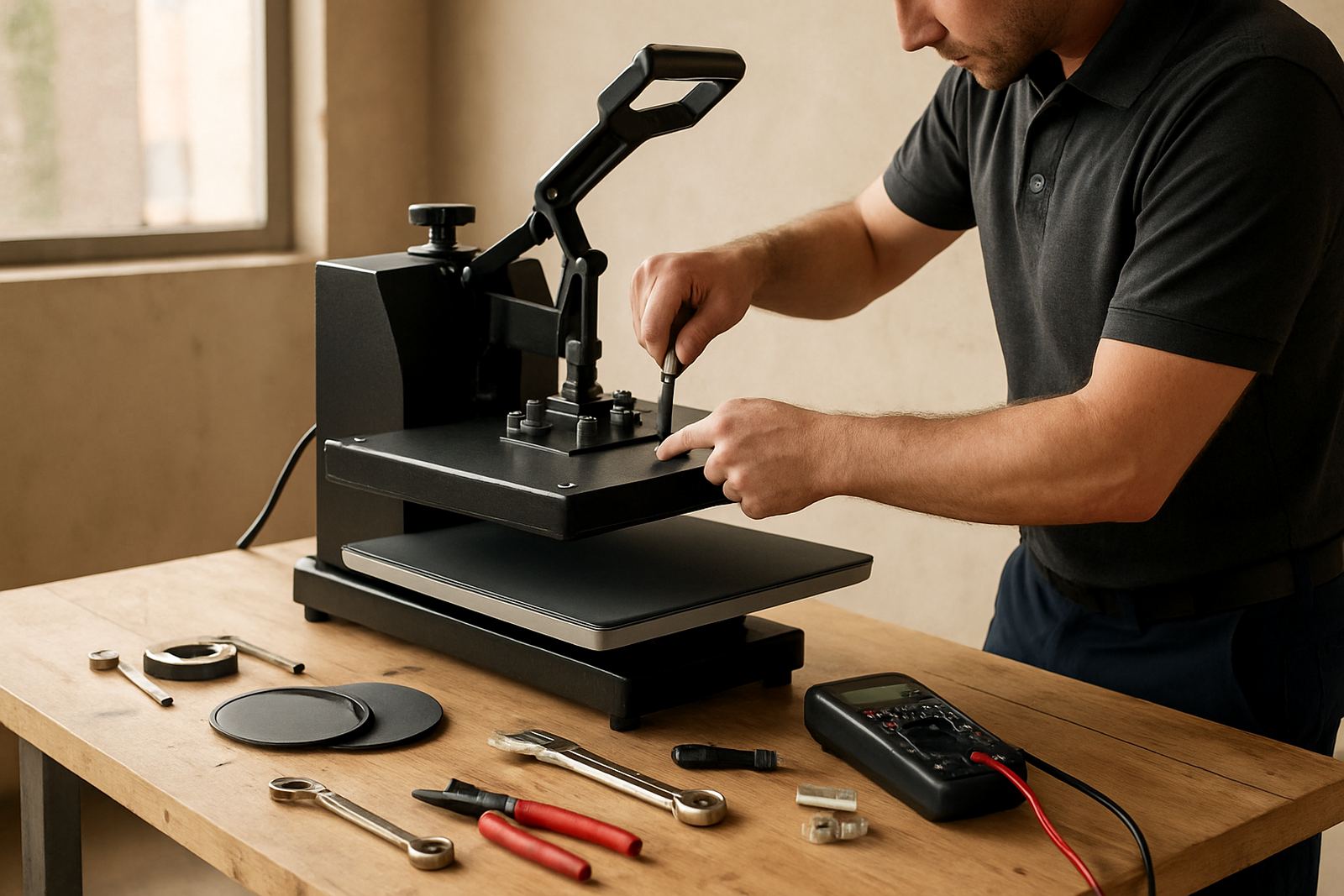
Regular care keeps the machine accurate. Wipe the platen surface when cool, inspect the pad and covering for wear, and look out for hot spots, uneven closing pressure or drifting temperature. If the unit is used daily, a preventive service every few months can save time and spoilage later. In our workshop we also see issues caused by loose fittings, tired elements and worn controller parts, so catching those early is worth it.
- Check temperature accuracy regularly
- Inspect the silicone pad and cover for compression marks
- Keep the platen clean and free from adhesive build-up
- Book servicing if closing pressure changes or heat becomes uneven
What To Confirm Before You Order
Before placing an order, check the platen size you need, the type of garments you press most, and whether you want a standard manual action or a specific configuration for your workflow. It helps to know your power supply, available space and whether the unit will sit on a bench or a dedicated stand. If you are replacing an older machine, note the footprint of the old press so the new one fits without crowding the room.
Also think about spares and support. A business doing regular orders should keep an extra pad cover and basic consumables on hand, and it helps to know where to go for element replacements, controller repairs or pressure adjustments later on. We assist with setup, training and after-sales support from our Midrand base, and we supply nationwide by courier for shops in Johannesburg, Pretoria, Durban, Cape Town, Bloemfontein and surrounding areas.
- Platen size and the kind of jobs you produce most often
- Available power supply and work area dimensions
- Need for setup, operator training or ongoing support
- Access to spares, servicing and loan unit help if needed
Key facts
| Machine type | Manual flat heat press |
|---|---|
| Best use | T-shirts, transfers and light production batches |
| Power requirement | Single-phase electricity, exact rating to be confirmed |
| Air or gas needed | No |
| Typical users | Hobbyists, small decorators and print shops |
| Support available | Setup, training, spares, repairs and servicing |