
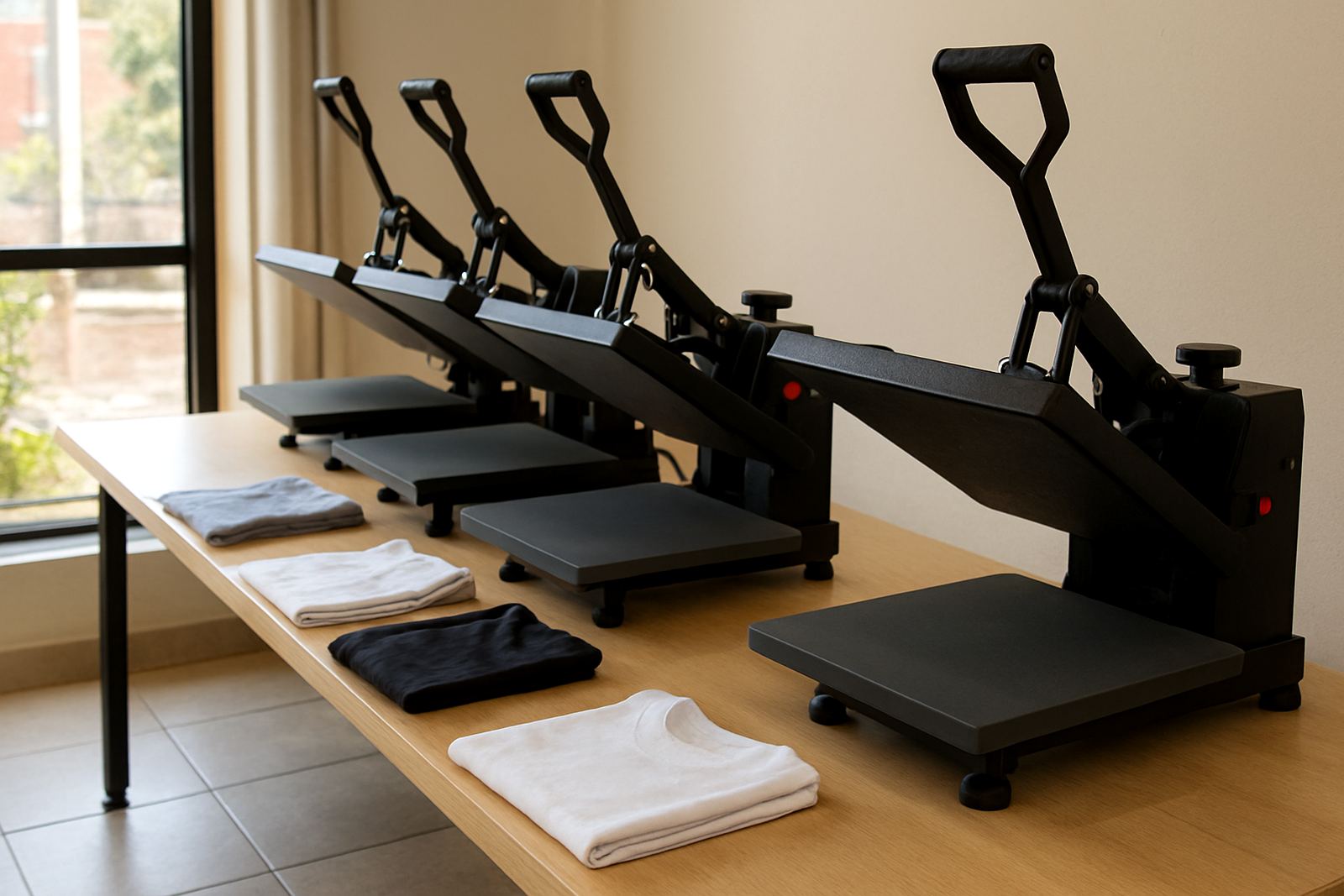
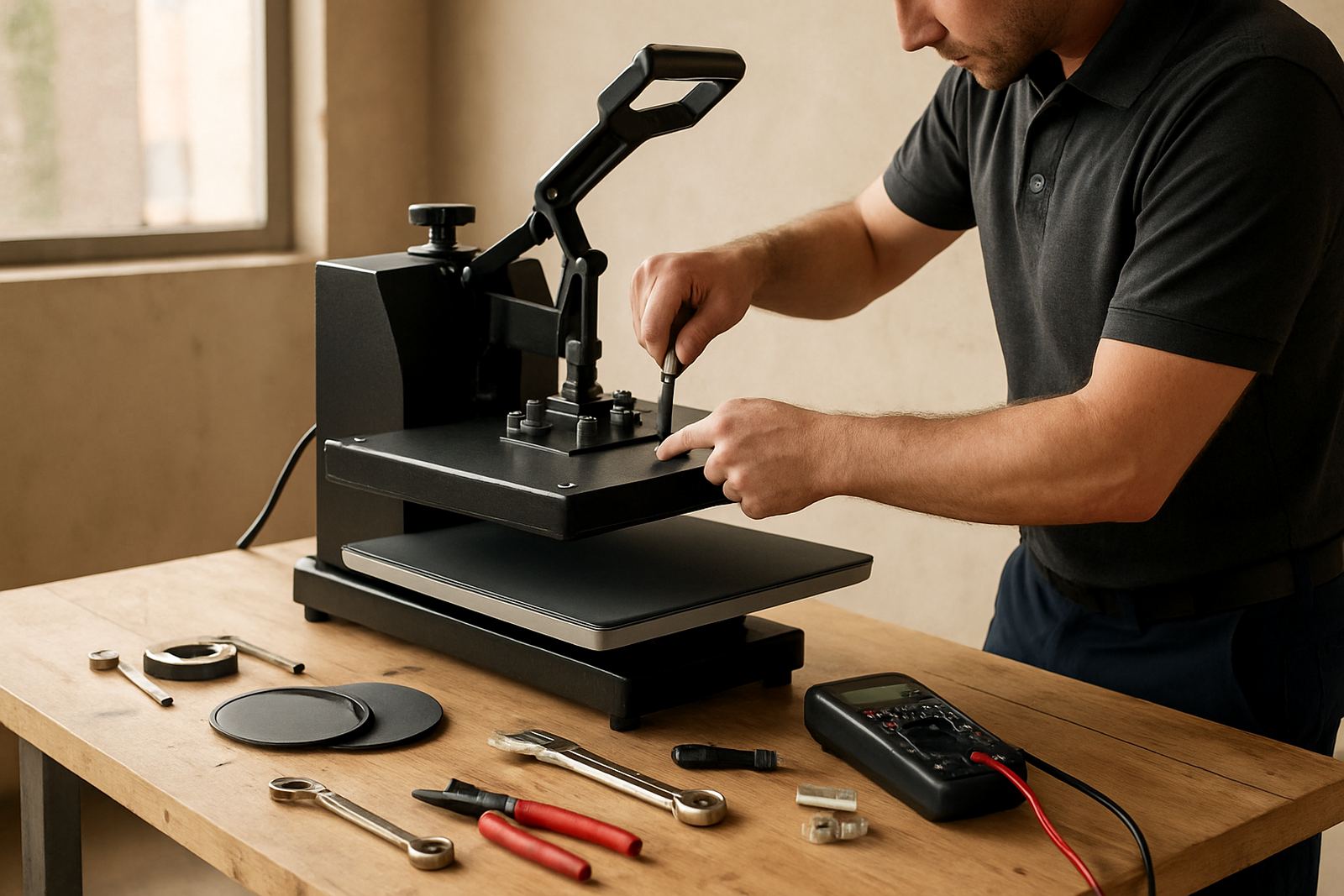
Start With Safety And Machine Checks
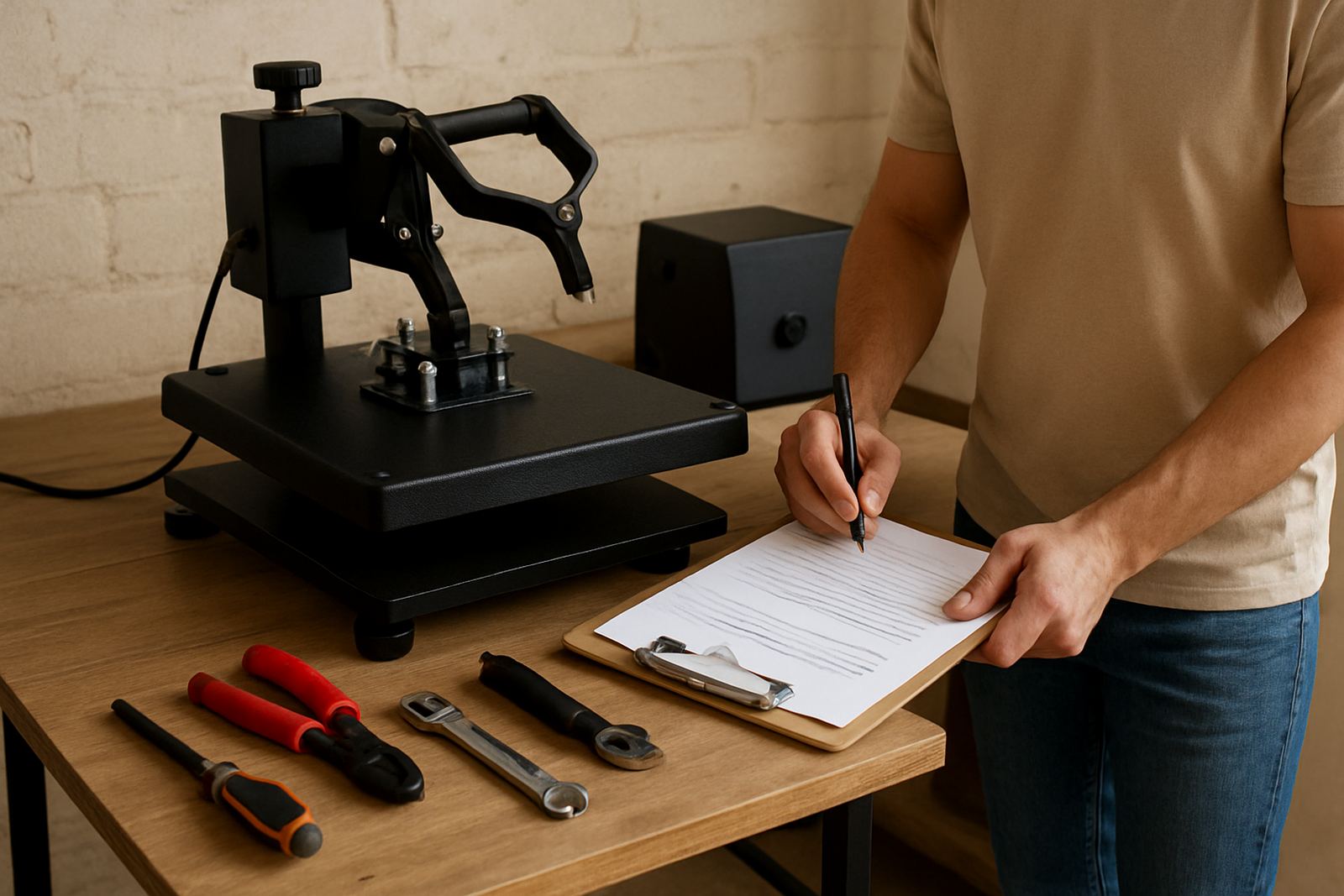
Before anyone switches on a flat heat press, they need to know the parts, the hot zones and the moving parts that can catch fingers or clothing. In a busy shop, a rushed start is where most avoidable mistakes happen. Teach staff to treat every machine as hot until they have confirmed otherwise, and to keep the platen area clear of scraps, plastic sleeves and loose tools.
For first-time operators, the main goal is not speed. It is control. They should know how to check the power lead, confirm the machine is sitting level, and make sure the table or stand is stable. In Gauteng workshops where power interruptions are common, staff must also understand how to switch off properly after load shedding and wait for the press to cool before checking the setting again.
- Check the power cord, plug and switch before every shift
- Keep hands clear of the heated upper platen
- Make sure the work surface is steady and dry
- Wear closed shoes and keep loose sleeves away from moving parts
Learn The Core Settings Before Production
A press operator needs three numbers first: temperature, time and pressure. If those are not set correctly, prints can peel, scorch or leave uneven edges. For cotton T shirts and basic transfers, staff must learn how your own machine behaves at the temperatures you use most often. Every press feels a little different, so training must include hands-on checks, not just notes on paper.
Show the team how to read the controller, how long it takes the platen to reach target heat, and how to confirm the setting with a separate temperature check when needed. A small drift of a few degrees can matter on sensitive vinyl and transfer papers. It is also worth teaching them to wait for the press to recover after several cycles, especially during a rush order. That little pause helps keep results more even.
- Set the temperature and allow the press to stabilise
- Test the closing pressure on a sample garment first
- Set the timer only after the garment is aligned
- Use the same settings for repeat jobs unless the transfer supplier says otherwise
Prepare Garments And Transfers The Right Way
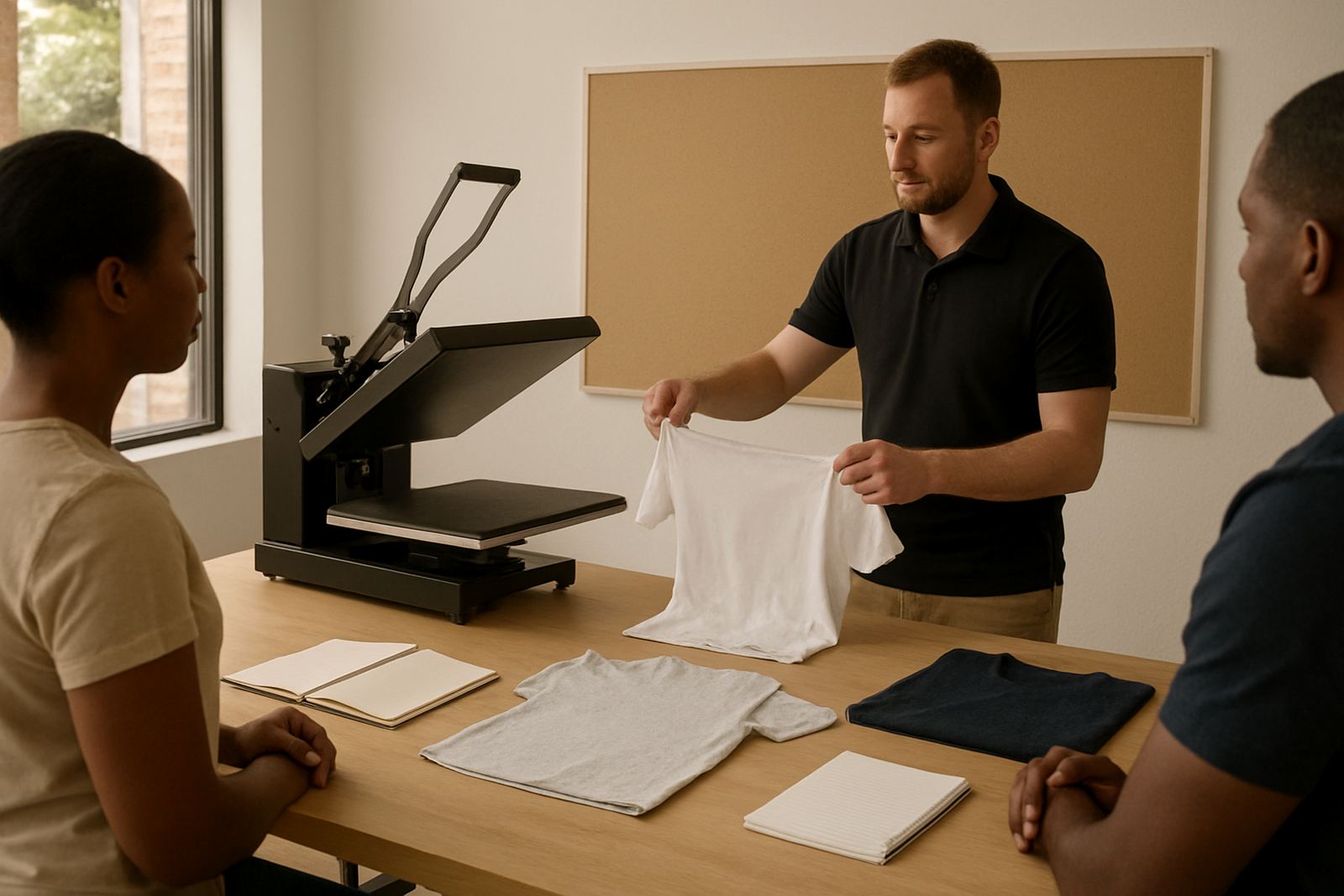
Most failed jobs start before the press closes. Staff should learn how to sort garments by fabric type, remove lint and check for moisture. A damp shirt can create steam marks or weaken adhesion, while dust and threads leave bumps under the transfer. This matters even more in Durban and other coastal areas where humidity can affect storage and pressing conditions.
Teach workers to position the artwork correctly, measure from the collar or centre line, and use a quick visual check before pressing. They should know how to handle different garment sizes, from small youth shirts to 5XL, because misalignment on larger items is easy to miss. If your shop handles short runs, the team must also learn to keep each job labelled so samples, spoilt items and finished pieces do not get mixed up.
- Pre-press the garment if the fabric holds moisture
- Remove lint and loose threads before placing the transfer
- Use rulers or guides for repeat placement
- Keep completed work separate from unpressed stock
Use Pressure And Dwell Time With Confidence
Pressure is one of the most misunderstood parts of heat pressing. Too little pressure and the transfer may lift at the edges. Too much pressure and the garment can flatten, mark or distort. Operators must learn how to close the press smoothly and notice the feel of correct resistance on the handle or pneumatic control. On some jobs, a small adjustment makes a big difference.
Dwell time must match the transfer type and garment fabric. Staff should not guess. They need to follow the tested settings for each material and know when a second press is required. A quick release on some jobs is important, while others need cooling before peeling. That is why each team member should keep a simple job note for repeat orders, even if they are only pressing one box of shirts.
- Check whether the transfer needs hot peel, warm peel or cold peel
- Watch for even pressure across the full platen
- Do not lift early if the transfer still needs bonding time
- Record the working settings for repeat use later
Handle Faults Without Losing A Full Day
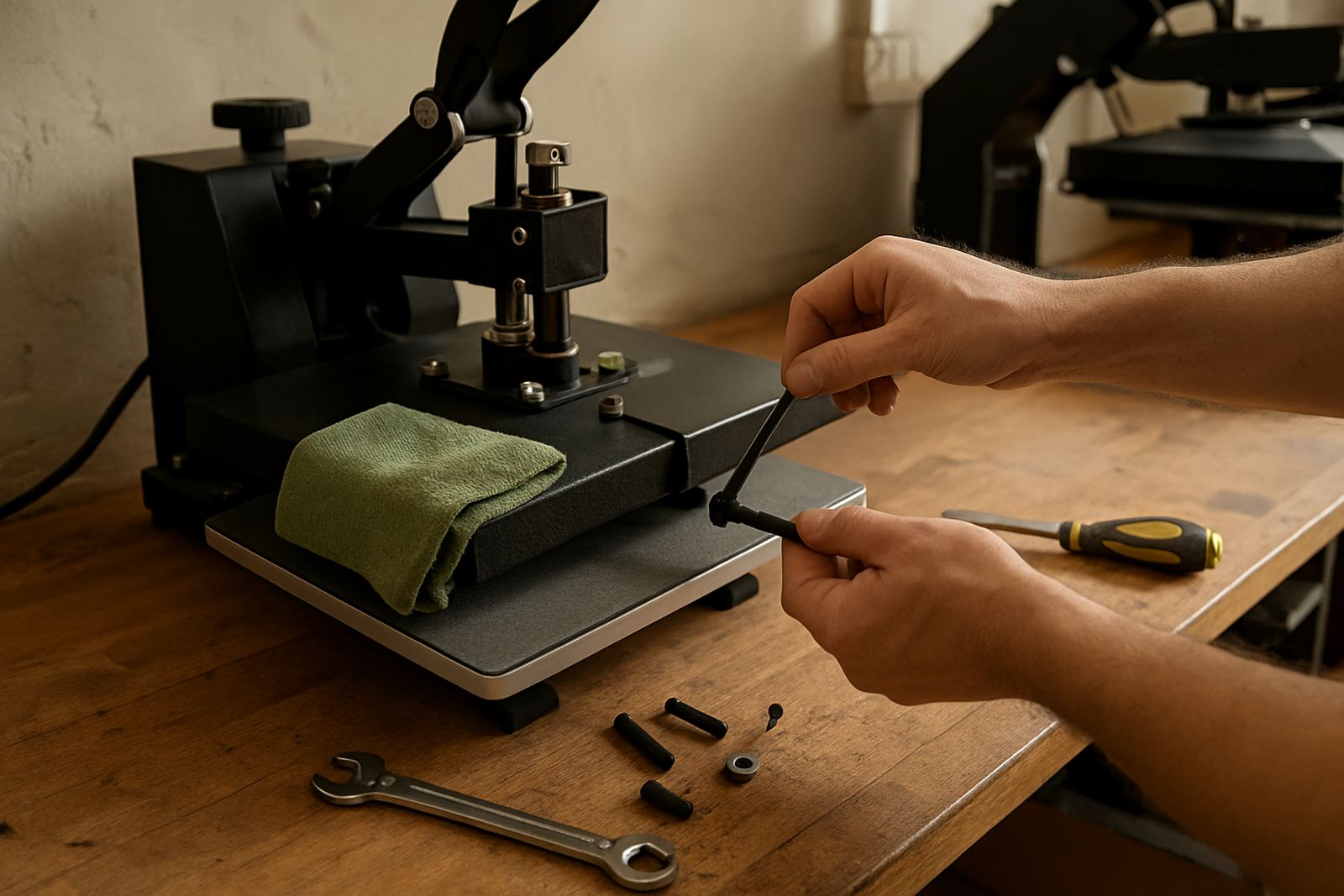
Training should include basic fault finding so a small issue does not stop production. Operators need to recognise signs of a loose heater wire, uneven heat, a controller problem, damaged covering or a worn pad. They do not need to repair everything themselves, but they should know when to stop, report and isolate the machine. That prevents more damage and protects the job queue.
If a press starts giving uneven results, staff should first check the settings, the platen surface and the pressure balance before blaming the transfer. In many cases the problem is simple and can be corrected quickly. For more serious faults, the team should know how to log the issue clearly so technical support can help without wasting time. Clear notes save hours later.
- Stop using the press if heat, pressure or timing looks wrong
- Inspect the pad, cover and platen surface for wear
- Check whether the controller is showing a fault or drifting reading
- Record what happened, when it started and which job was affected
Build A Daily Routine For Consistent Output
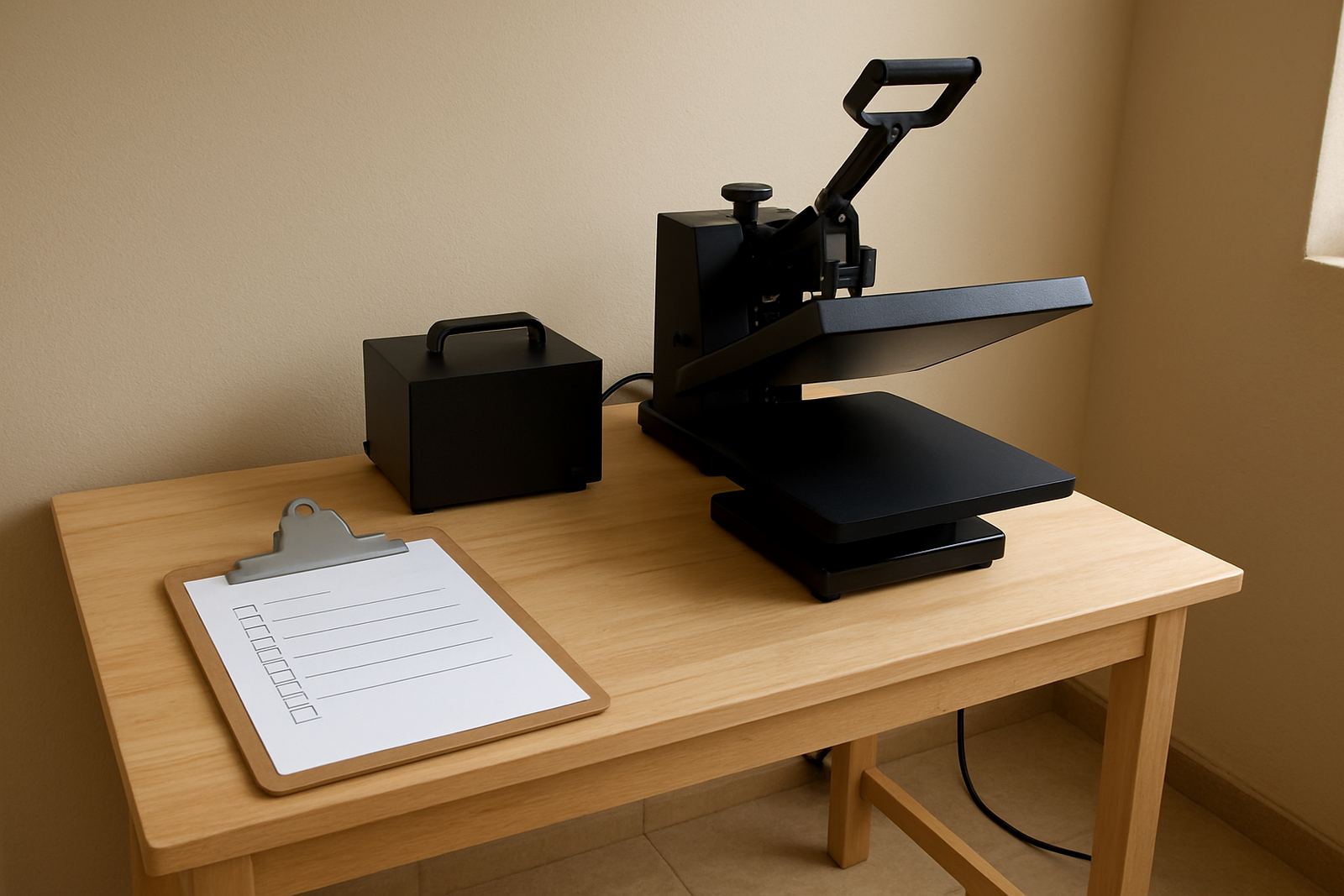
A good training guide should turn into a daily habit, not a once-off talk. The team must know what to check at the start of a shift, what to clean during the day and what to switch off at closing time. In a shop that prints every day, these small steps keep quality steady and reduce call outs for avoidable problems.
Use a simple checklist that every operator follows. When staff members work the same way, the prints become more consistent and the machine lasts longer. It also helps new workers get up to speed faster, which matters when you are covering leave, busy seasons or last minute orders. A bit of discipline now saves a lot of stress later.
- Start of day: power check, heat check, platen surface check
- During the day: keep the area clean and watch for uneven results
- End of day: switch off, unplug if required and allow cooling
- Weekly: inspect covering, pressure points and general wear
When To Ask For Hands-On Help
Some issues need direct support from someone who knows the machine inside and out. If the press will not reach temperature, the pressure is drifting, or the controller is inconsistent, training should include the next step, which is to call for assistance before the problem becomes costly. That is especially important for new shops in Midrand, Johannesburg, Pretoria and beyond that rely on one main press for daily work.
Our approach is practical: set the machine up correctly, show the team how to use it and support them when they need repairs, spares or a loan unit. Good training is not only about pressing shirts. It is about keeping work moving, protecting stock and helping staff build confidence at the machine.
When the team understands the basics, the whole production floor runs better and the finished work looks far more even, even on busy weeks.