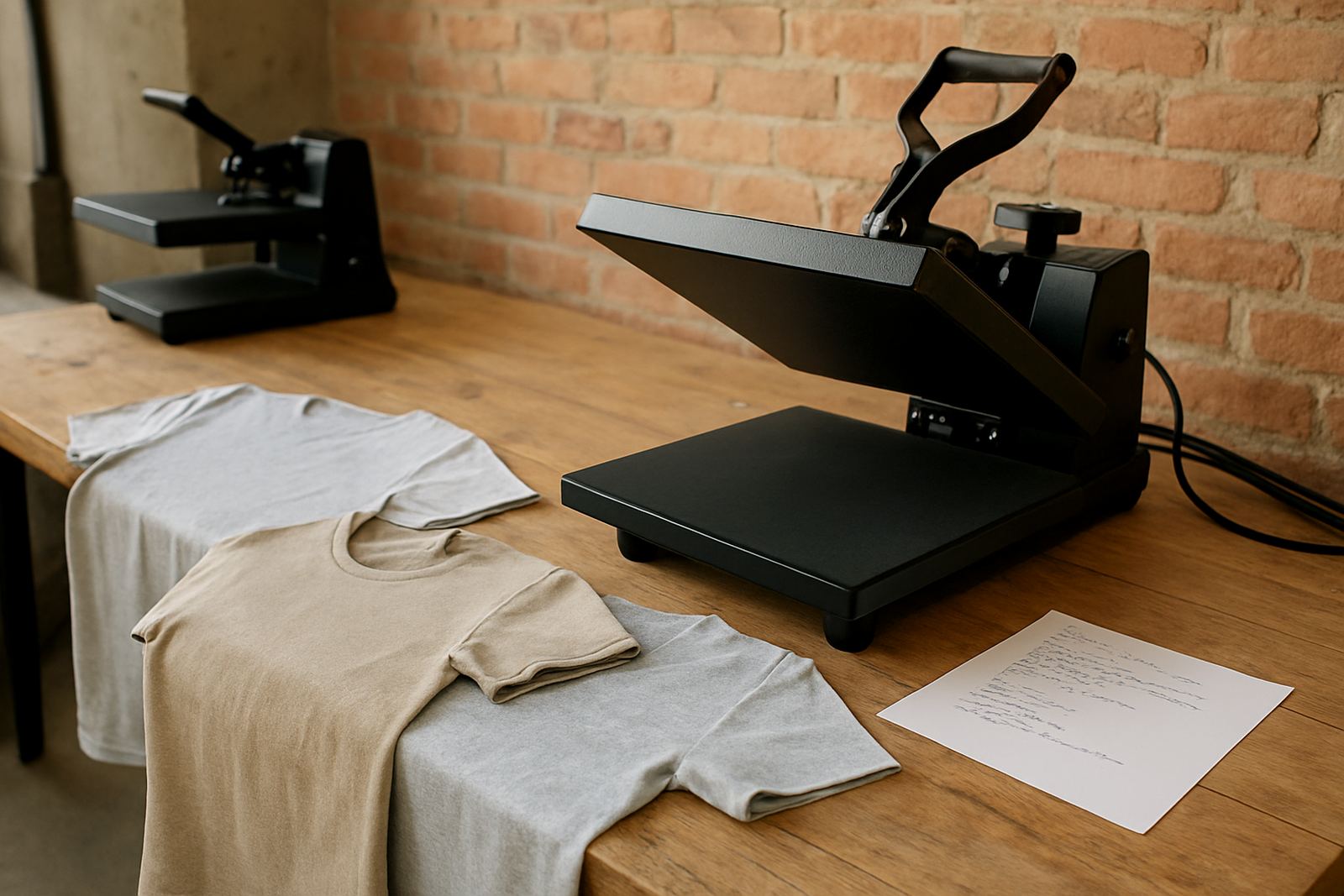

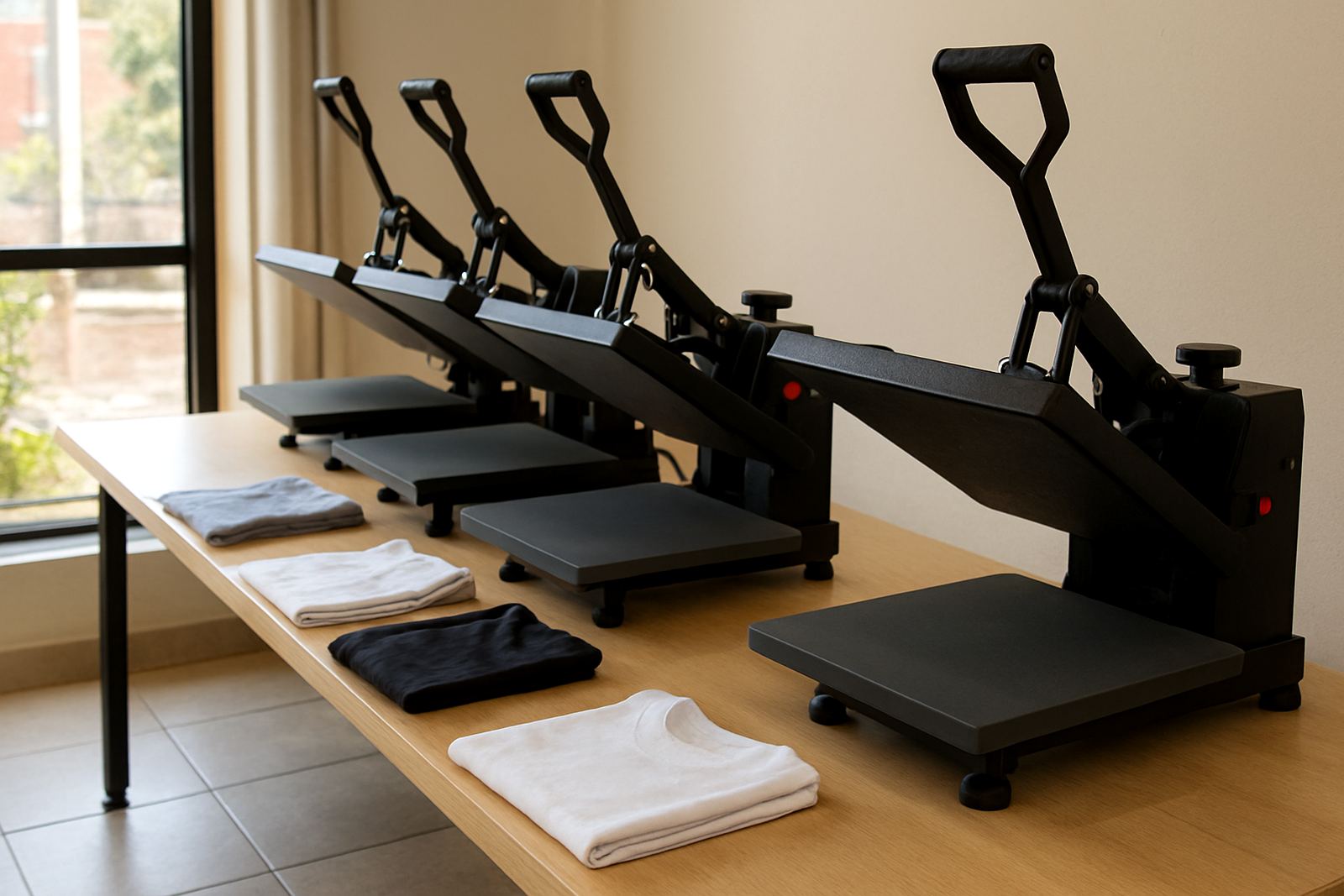
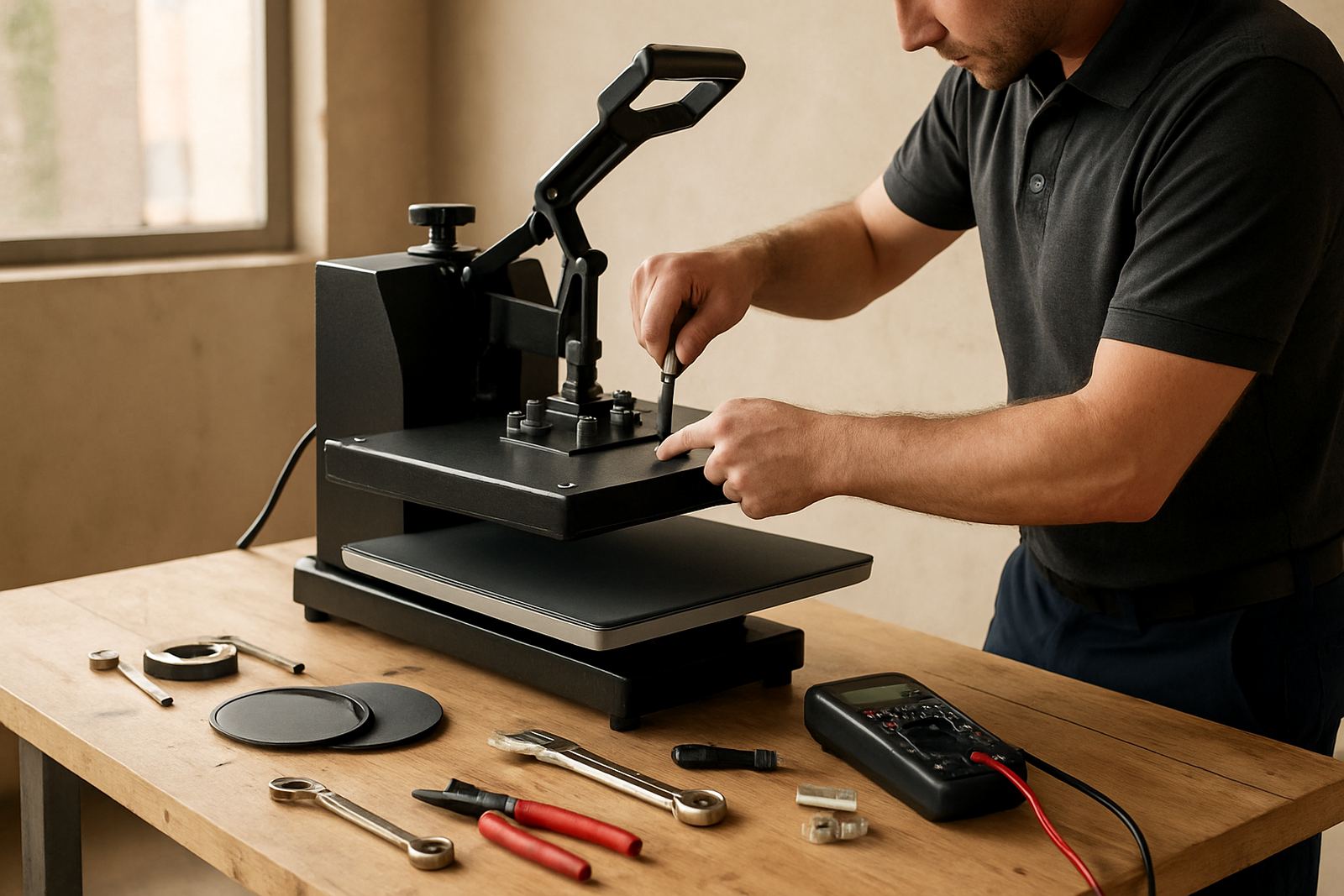
Start with the jobs you want to take on next
The right upgrade starts with the work on your floor, not with the biggest machine on the quote. If you are doing short runs of T-shirts, transfers, names, numbers and light promotional work, your first question is whether the current press can keep up for longer periods without drifting on heat or pressure. A press that was fine for weekend work can become the bottleneck once orders start coming in through the week.
Look at what slows you down now. It may be opening and closing by hand, uneven pressure across the platen, slow recovery after each press, or a controller that is no longer holding temperature properly. In Midrand, Johannesburg and Pretoria we often see shops trying to solve a throughput issue with more labour when the real fix is better equipment and proper setup.
- Count how many garments you press in a normal day and during your busiest week.
- Check whether the current press gives even results from edge to edge.
- Note how long it takes to recover between presses.
- Work out whether your staff need faster changeovers or less physical effort.
- Consider whether you need support for thicker garments, transfer paper or mixed job sizes.
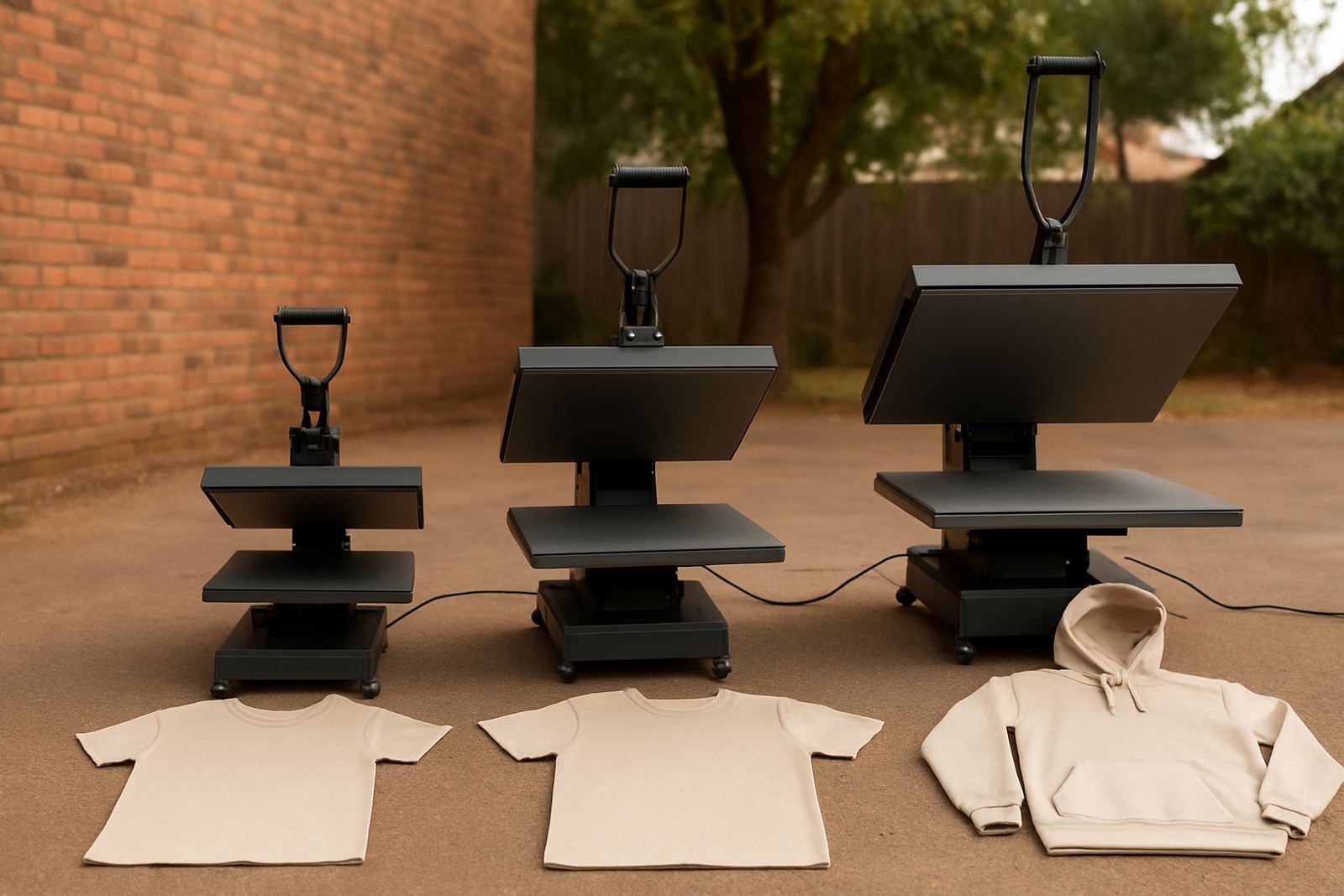
Choose the press size and action that suits your work
Flat presses come in a few common platen sizes and operating styles. The best choice depends on your garments, your work space and the volume you want to handle. A smaller press can suit a hobbyist or a low-volume studio, while a larger platen can help a print shop move faster on adult shirts, hoodies and larger transfer areas. If you are working from a home garage, a compact footprint matters just as much as output.
For many South African shops, the next step is not just a larger plate. It is better pressure control, a more stable frame and a controller that stays accurate through load-shedding and long shifts. If your setup uses extension leads or shared circuits, check the electrical load before you add a second unit. A press that trips the supply in the middle of a run is not productive, no matter the price.
- Match platen size to your most common garment sizes.
- Allow space for loading, stacking and finished goods around the press.
- Check whether you need manual, semi-auto or pneumatic operation.
- Confirm the electrical supply and plug arrangement before delivery.
- Think about heat-up time and recovery time during longer runs.
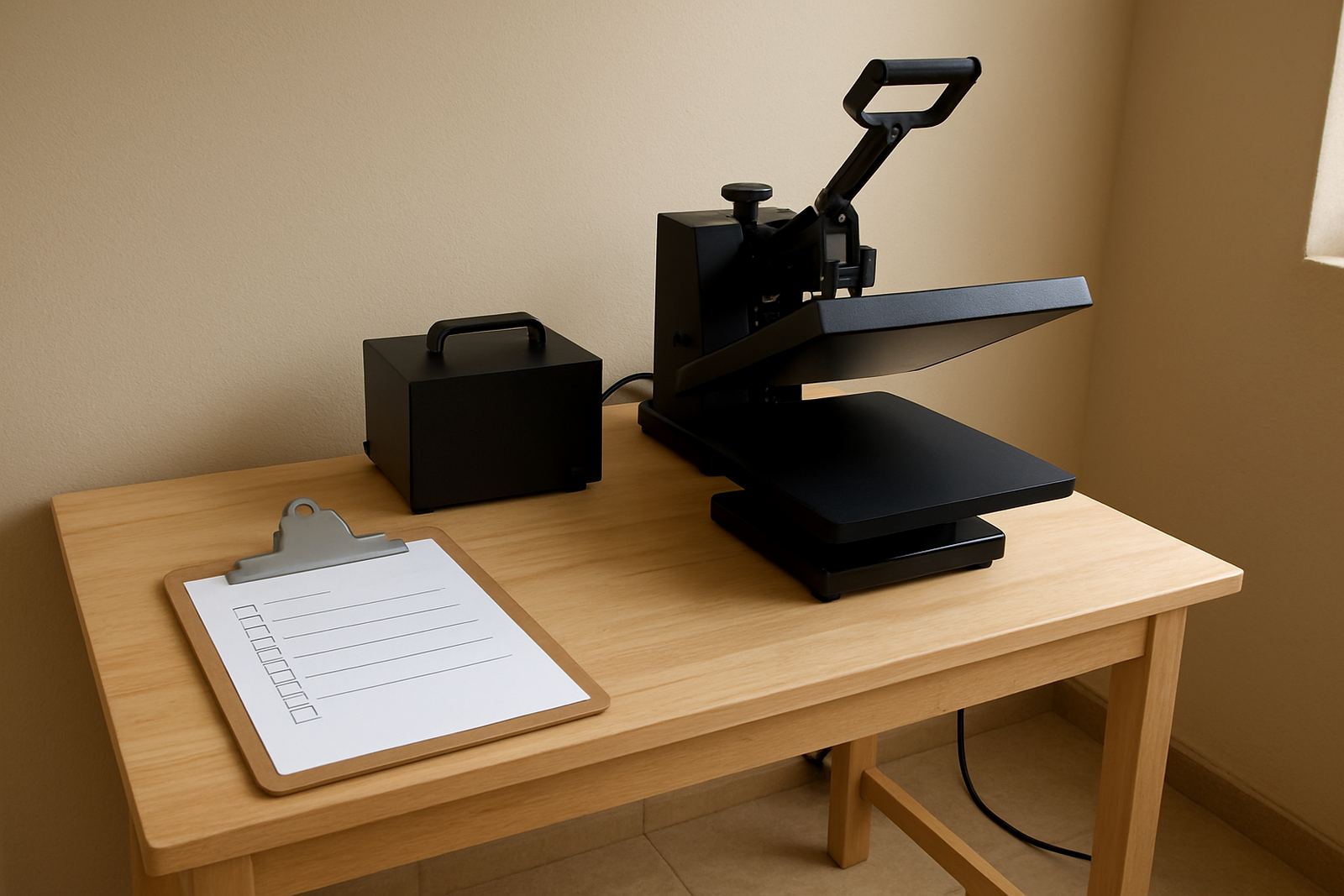
Plan the site before the new press arrives
Many upgrade problems start on installation day, not on the first print. A good setup needs a stable bench or stand, enough room for the swing or pull of the upper platen, safe cable routing and a clean surface for transfers, blanks and finished garments. In coastal areas like Durban and Cape Town, also think about humidity and storage for consumables so your transfers and covers stay in proper condition.
We also recommend checking the room for practical issues such as power points, ventilation and the route in through doors, stairs or tight passages. If the unit must move between rooms or sites, make sure the weight and size are manageable. In warehouses and back rooms across the East Rand and West Rand, a well planned layout saves time every single day. It also reduces strain on staff who are lifting, loading and sorting all shift long.
- Clear a working zone around the press for safe handling and airflow.
- Confirm the floor can take the weight without wobble.
- Keep a spare surface nearby for pre-pressing and stacking.
- Store transfers and garments away from dust and damp.
- Check your power backup or generator plan for load-shedding days.
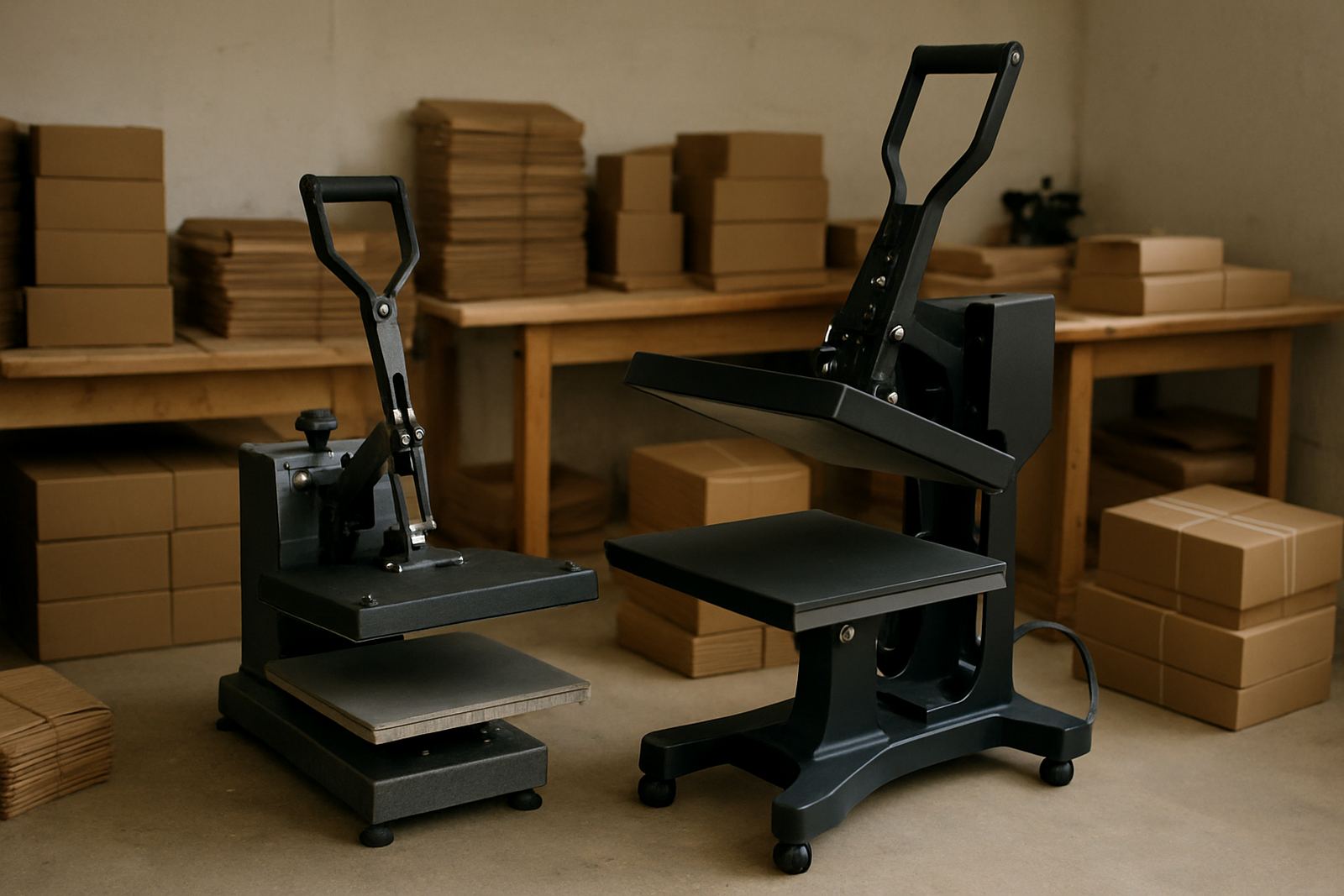
Budget for the full upgrade, not just the machine
A press is only part of the spend. When shops upgrade, they often focus on the purchase price and forget the costs that keep the job moving: setup, training, servicing, spare parts and a fallback plan if something goes wrong. A lower quote can become expensive if the press arrives untested or if the operators are unsure on temperature, timing and pressure.
It helps to treat the upgrade as a working system. That means the press, controller, element, pad covering, cables, spare fuses where relevant and a plan for after-sales support. If you are growing from a small hobby setup to steady commercial work, factor in the cost of downtime too. One lost day during a busy season can cost more than a proper service visit and a correct setup from the start.
- Ask for the full supply list, including any fitting parts and consumables.
- Allow for training so your staff do not waste material during the first week.
- Keep a small spares budget for controllers, elements and coverings.
- Set aside money for preventive servicing rather than waiting for a failure.
Set your team up for consistent results
Even a good press will underperform if the team is guessing. Training should cover pre-press time, transfer positioning, pressure settings, dwell time and how to spot a bad result before a full run goes off track. In our work across Johannesburg, Pretoria and Midrand, the biggest gains often come from simple operator habits, not from chasing a new machine straight away.
Consistent results need a standard process. Write down your settings for each common fabric or transfer type and keep those notes near the machine. If you have more than one operator, make sure they all use the same method. A shop that records its working settings will waste less material and avoid the back-and-forth of guesswork. If you do school orders, teamwear or quick event work, that consistency matters even more.
- Record temperature, time and pressure for each common job type.
- Train all operators on safe loading and unloading.
- Show the team how to recognise uneven heating or weak pressure.
- Keep notes on which jobs need extra cooling or a second press.
Keep the press productive after the upgrade
Once the new setup is in place, the real goal is to keep it earning. That means regular temperature checks, pressure adjustments, cleaning, pad and covering checks, and prompt attention to worn parts. A press that is serviced before it fails stays more predictable, and predictability matters when you are supplying shops, events or repeat customers nationwide by courier.
If you are based in Bloemfontein, Durban, Cape Town or anywhere else in South Africa, build a simple maintenance routine around your order cycle. Check the machine before busy periods, not after a fault appears. Keep basic spares on hand and use phone support when a setting is off or a controller starts acting strangely. It is better to spend a few minutes on prevention than to lose a full day waiting on a breakdown repair.
- Inspect the heating element and controller on a set schedule.
- Check the pad and covering for wear, dents or uneven spots.
- Watch for pressure loss on the sides or centre of the platen.
- Arrange preventive servicing before peak trading periods.
- Keep a loan unit plan in mind for critical work.
When to upgrade from starter to shop floor
If you are saying yes to larger orders, working longer hours or replacing the same worn part again and again, the press has probably outgrown its original role. That does not always mean buying the biggest unit available. It means choosing a setup that fits your output, your team and your space in a way that can carry the next stage of growth.
For garment decorators in Midrand, Gauteng and across South Africa, a good upgrade is one that gives cleaner results, faster handling and fewer interruptions. If you are not sure whether to repair, replace or add a second unit, compare the current downtime with the cost of a proper upgrade. The answer is usually clearer than people expect once the numbers are on paper. One or two small changes can make the whole shop easier to run, even when the power goes off mid-afternoon.
FlatPress helps with new press setup, operator training, spare parts, phone support and workshop repairs, so your move to a more productive setup stays practical from day one.