

A Roodepoort Brief Built Around Volunteers
The client was a church group in Roodepoort making shirts for outreach days, youth events and special services. The work was seasonal but important, with different volunteers stepping in from week to week. They needed a flat heat press setup that was easy to learn, consistent across batches and safe for people with little or no print room experience.
The brief was clear: get a practical shirt pressing workflow in place for cotton T-shirts and transfer work, keep the setup simple, and make sure it could handle small batch production without wasting garments or transfer paper. They also needed support that did not depend on one trained person being on site every time. That is common with church groups and community projects, so the setup had to be repeatable.
- Location: Roodepoort, Gauteng
- Use case: church shirts for events, volunteers and ministry teams
- Batch size: small runs, often 10 to 50 shirts at a time
- User group: mixed skill levels, including first-time operators
What We Supplied And Set Up
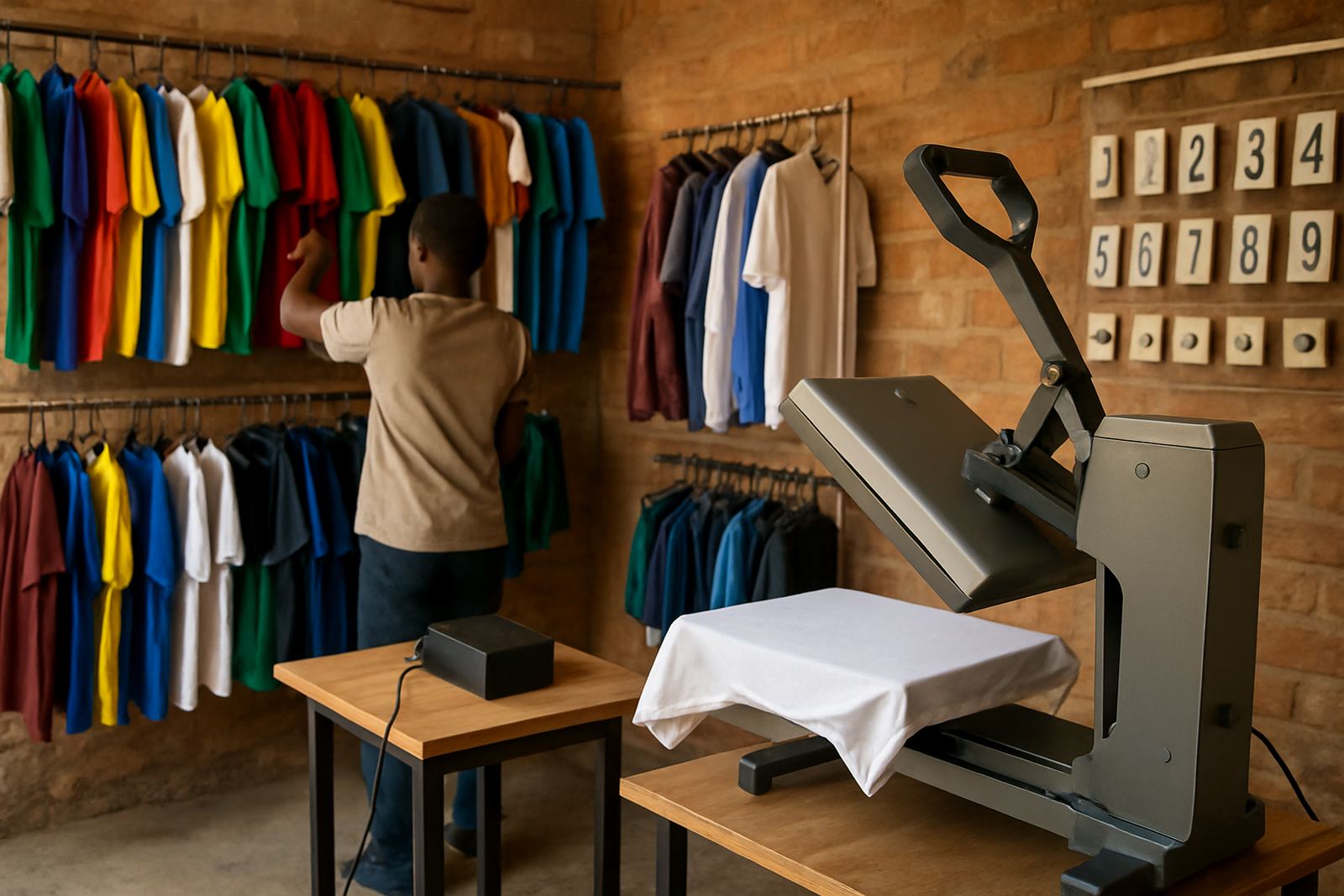
We supplied a flat heat press suited to entry-level and regular transfer work, along with the working extras needed for clean results. The install included a proper check of power supply, workspace layout and heat-up habits, because church rooms and storage areas are not always built like print shops. There were plug points nearby, but the team still needed guidance on where to place the press, how to clear airflow around it and how to manage the table height for safer handling.
We also supplied the practical consumables and support items that make the difference on a day-to-day basis, including spare covers, pressing pads and basic backup parts. For a volunteer environment, downtime can happen because someone sets pressure too low or leaves the machine switched off for a meeting, so we made sure the team knew how to recover quickly without guesswork.
- Flat heat press for T-shirt and transfer work
- Initial setup and machine placement guidance
- Operator walk-through for start-up, pressing and cooldown
- Spare cover and pressing pad support
- Basic spares kept on hand for quicker turnaround
Training That Worked For Changing Teams
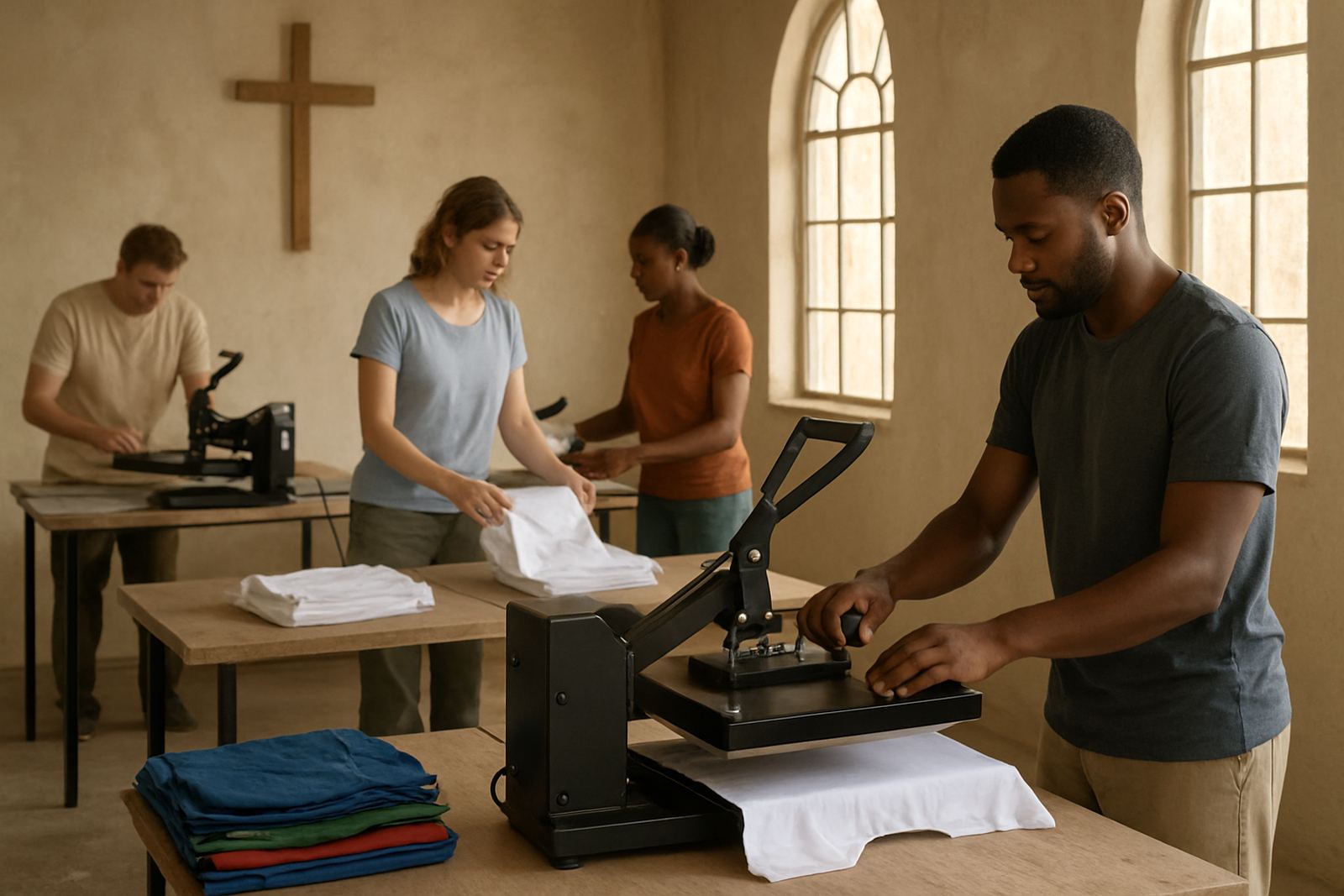
The main part of this project was training. The church wanted a process that volunteers could follow even if the person who learned it first was away. We built the training around short repeatable steps: power on, temperature check, pressure setting, test press, production press and final check. That kept the learning curve manageable and reduced waste on the first batch.
Training was done on site over two sessions in the first week, then we followed up again in week two after the team had tried a few shirts on their own. That second touchpoint mattered because the group quickly spotted where the pressure needed fine tuning and where the placement guides needed tightening. In a volunteer setting, the first session teaches the method and the second session locks in the habit.
- Week 1: on-site setup and operator training
- Week 2: follow-up and pressure adjustment support
- Training focus: temperature, dwell time, pressure and alignment
- Outcome: multiple volunteers able to run the press safely
Working Through Heat, Load-Shedding And Storage Limits
Roodepoort is not a coastal area, but the team still had to deal with normal Gauteng dust, warm afternoons and occasional power interruptions. The church also had limited storage space, so we kept the setup compact and easy to cover between uses. The machine had to come on fast, hold temperature properly and not drift too much after a power cut or a long idle period.
We checked the press temperature with our own reference method and set a practical working range for the garments they were using. That mattered because event shirts are often a mix of different sizes and colours, and a press that runs too hot can mark fabric or affect transfers. The team also needed to know how to respond if the power dropped mid-run. We explained the safe reset sequence, the recheck routine and how to test the first garment before carrying on with the batch.
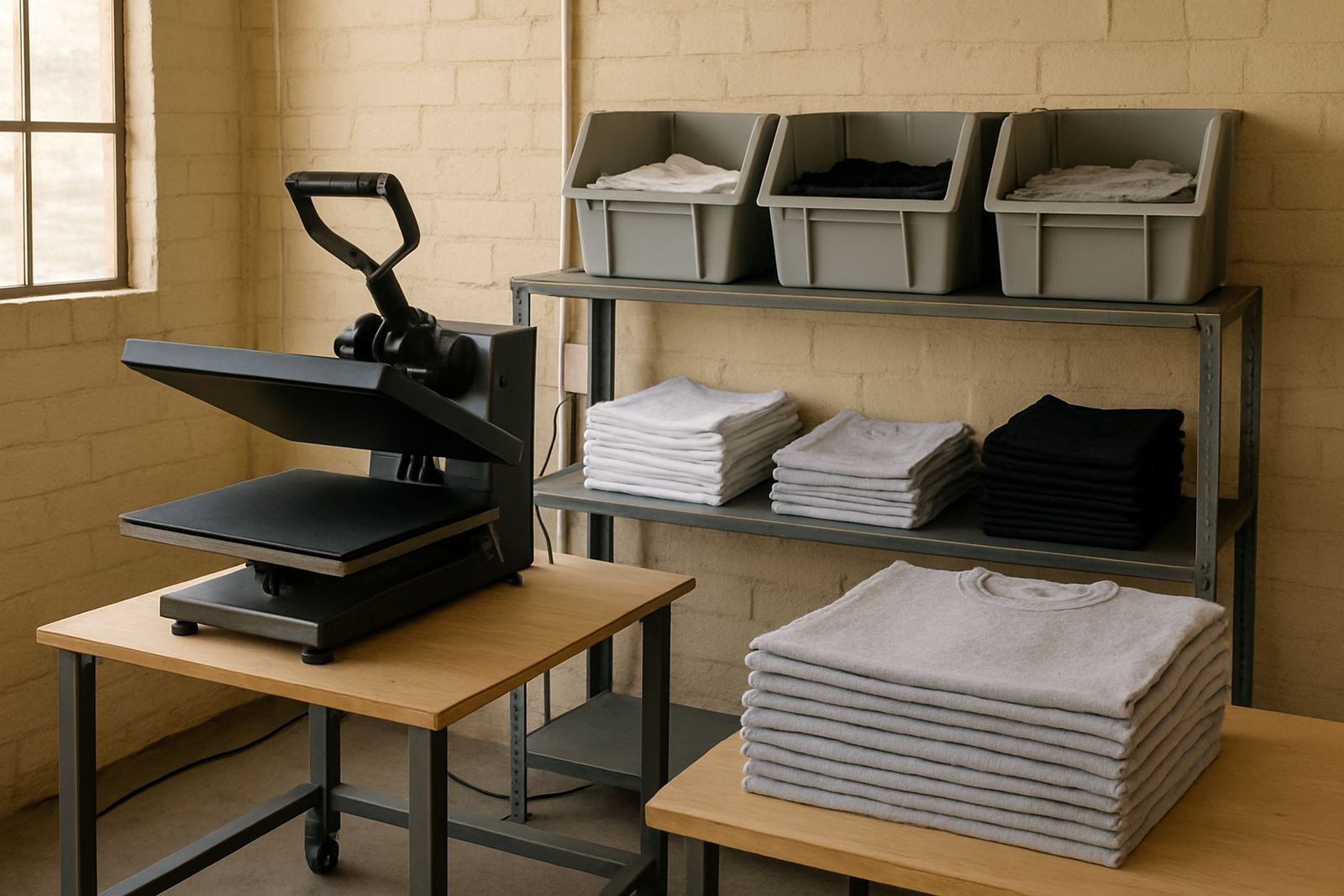
The room itself needed a few small adjustments too. We recommended a clear bench area, a fixed cooling space for finished shirts and a covered storage spot for transfers and spare covers. That kept dust away from the work and reduced handling mistakes, which can be a problem when people are working around meetings and rehearsals.
The First Production Run And The Results
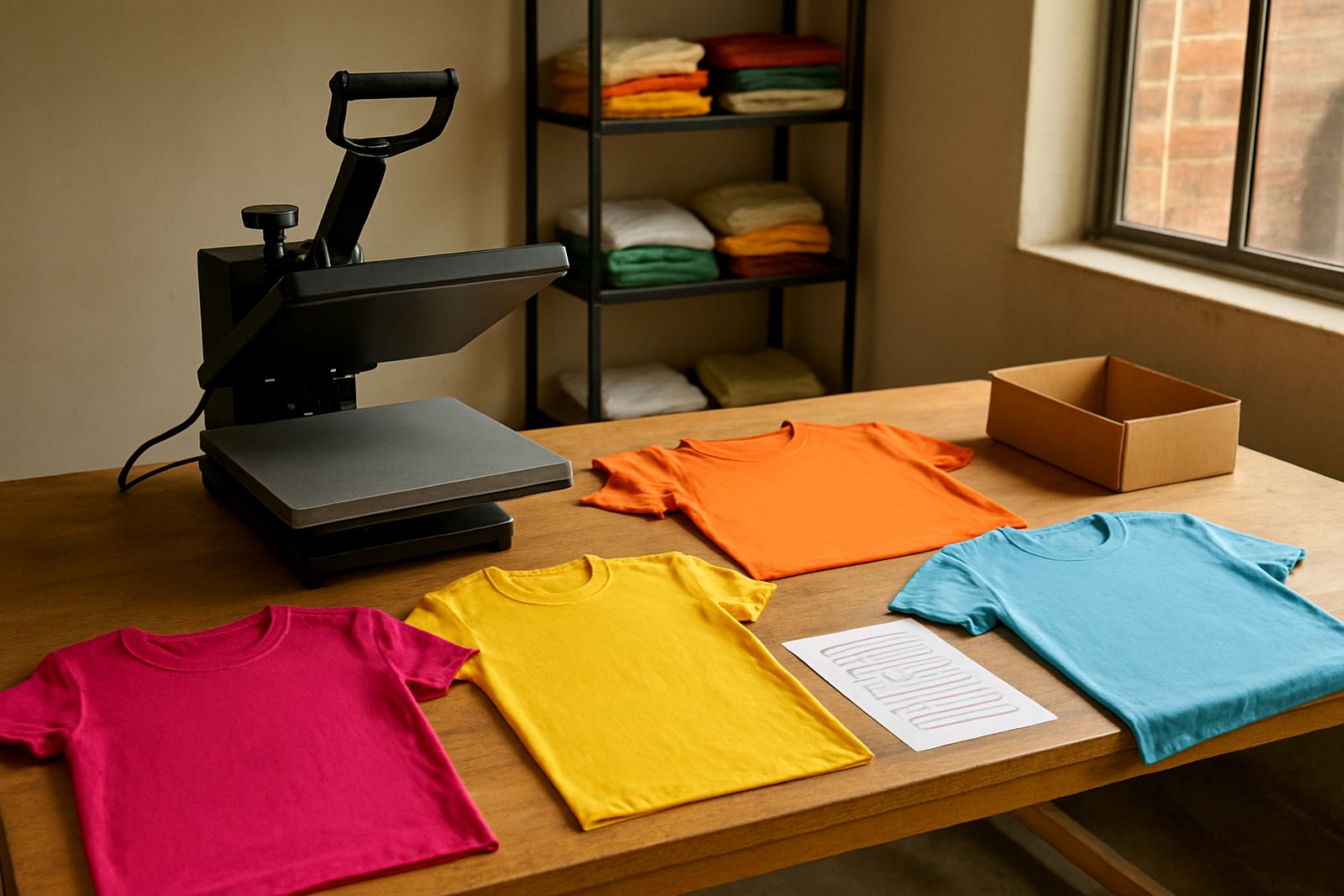
By the end of the second week the church team was pressing shirts for their next event in a steady rhythm. The main result was consistency. The first shirts in the batch looked like the last shirts in the batch, and the volunteers could repeat the same pressing routine without needing constant supervision. That saved time and cut down on spoiled garments, which matters when each shirt is budgeted carefully.
The team also gained confidence handling a few common issues on their own. They could spot a transfer that had shifted slightly, check whether the pressure had eased off, and decide if a garment needed a re-press or a clean restart. That is the kind of basic control a small group needs when they are not running a full-time print room.
- Cleaner alignment on repeated shirts
- Less wasted transfer stock during setup
- Volunteers able to press without waiting for one expert person
- Faster turnaround for event batches
What We Would Do Again For A Similar Church Project
If we were doing the same job again for another church in Roodepoort, or anywhere in Gauteng, we would follow the same practical approach. Start with the room and the people, not just the machine. Set the press up where it can be used safely, train two or three people instead of one, and build in a follow-up visit after the first live batch. That is the best way to get reliable results from a team that changes from service to service.
We would also keep a small support pack with spare covers, basic elements and controller check points ready from day one. In a small garment group, one worn cover or one loose setting can slow the whole run. A short support plan keeps the project moving and makes it easier for the team to keep producing shirts for future events.
For community and church work, the real value is not only the press. It is the confidence to use it well, even when the room is busy and the load-shedding schedule changes at the last minute. That is where a proper setup and patient training pay off.
Key facts
| Project location | Roodepoort, Gauteng |
|---|---|
| Client type | Church group producing event shirts |
| Press type | Flat heat press for T-shirts and transfer work |
| Training window | 2 weeks from setup to follow-up |
| Typical batch size | 10 to 50 shirts per run |
| Support included | Setup, operator training, pressure checks and spare support |