

Schoolwear Brief From Pretoria
The client was a schoolwear decorator in Pretoria handling names, crests, sports numbers and small transfer runs for a mix of schools in the city and surrounding suburbs. Their work changed quickly between single garment orders and batch jobs, so the press station had to be simple enough for new operators yet stable enough for daily production.
The brief was to tighten the workflow around a flat heat press, reduce handling time, and improve repeatability on cotton, polycotton and branded school items. They also wanted a cleaner setup for after-school rushes, because the same machine had to cope with varsity hoodies, staffwear and seasonal camp clothing. The owner asked for practical guidance rather than a fancy layout, and that suited the job very well.
- Client type: schoolwear decorator and transfer printer
- Town: Pretoria
- Use case: names, badges, crests and short-run branding
- Fabric mix: cotton, polycotton, fleece and blended school items
Space Limits And Operating Constraints
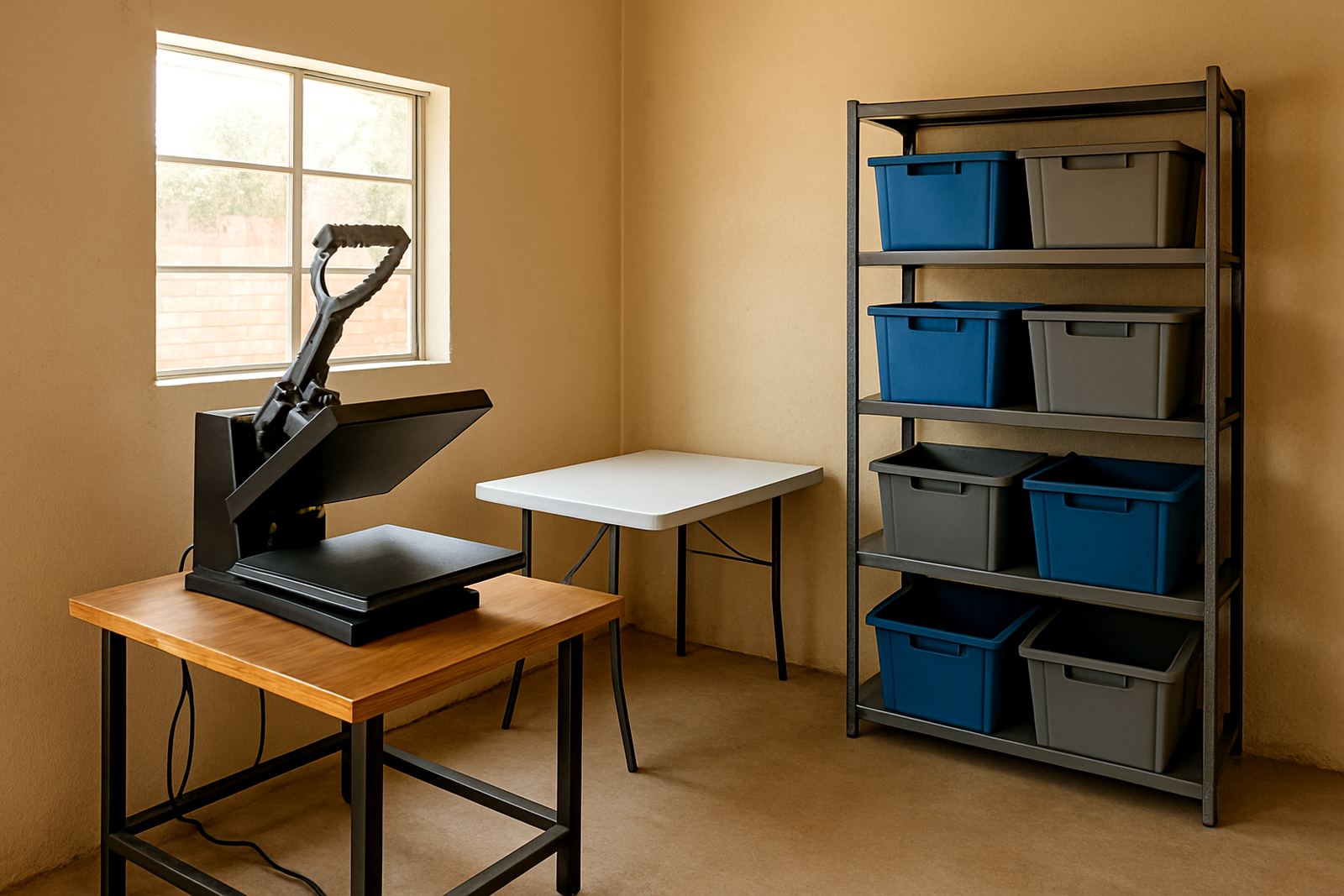
The workshop had a compact footprint and only one dedicated press bay, with storage for transfers, backing sheets and finished garments close by. Power interruptions were part of the daily reality, so the equipment needed to recover cleanly after load-shedding and still hold temperature properly once power came back. The team also needed a setup that would not overheat the room or slow them down during afternoon peak periods.
Humidity was another factor because Pretoria weather changes through the year, and the client did not want adhesive issues or curled transfers. We factored in the local working conditions, the operator mix, and the fact that school orders often come in with little notice. A school banner can wait, but a pupil's name label usually cannot.
- Limited floor space around the press table
- Intermittent power supply and recovery after outages
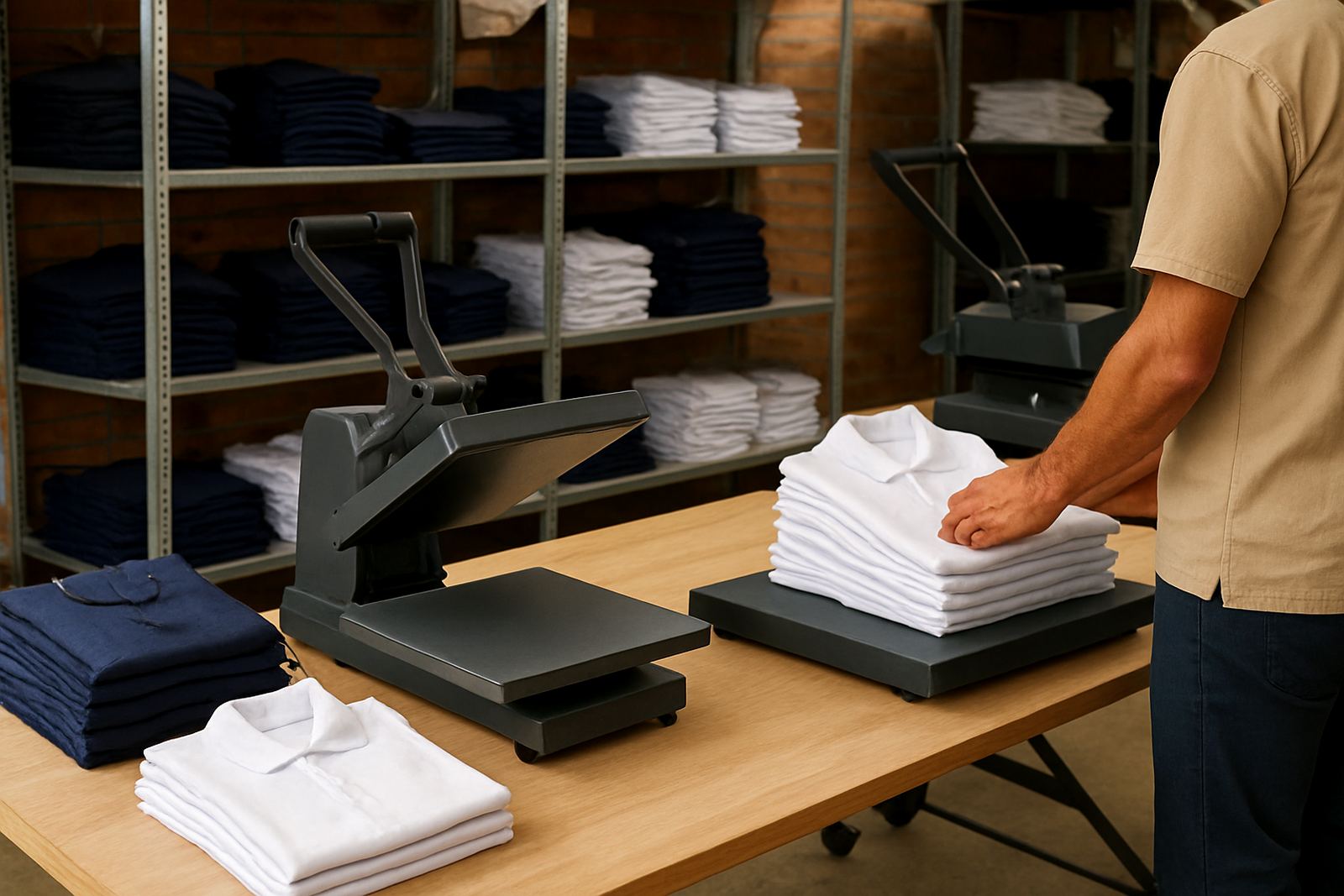
- Mixed garment types arriving in the same queue
- Need for quick changeovers between small and medium runs
What We Supplied And Set Up
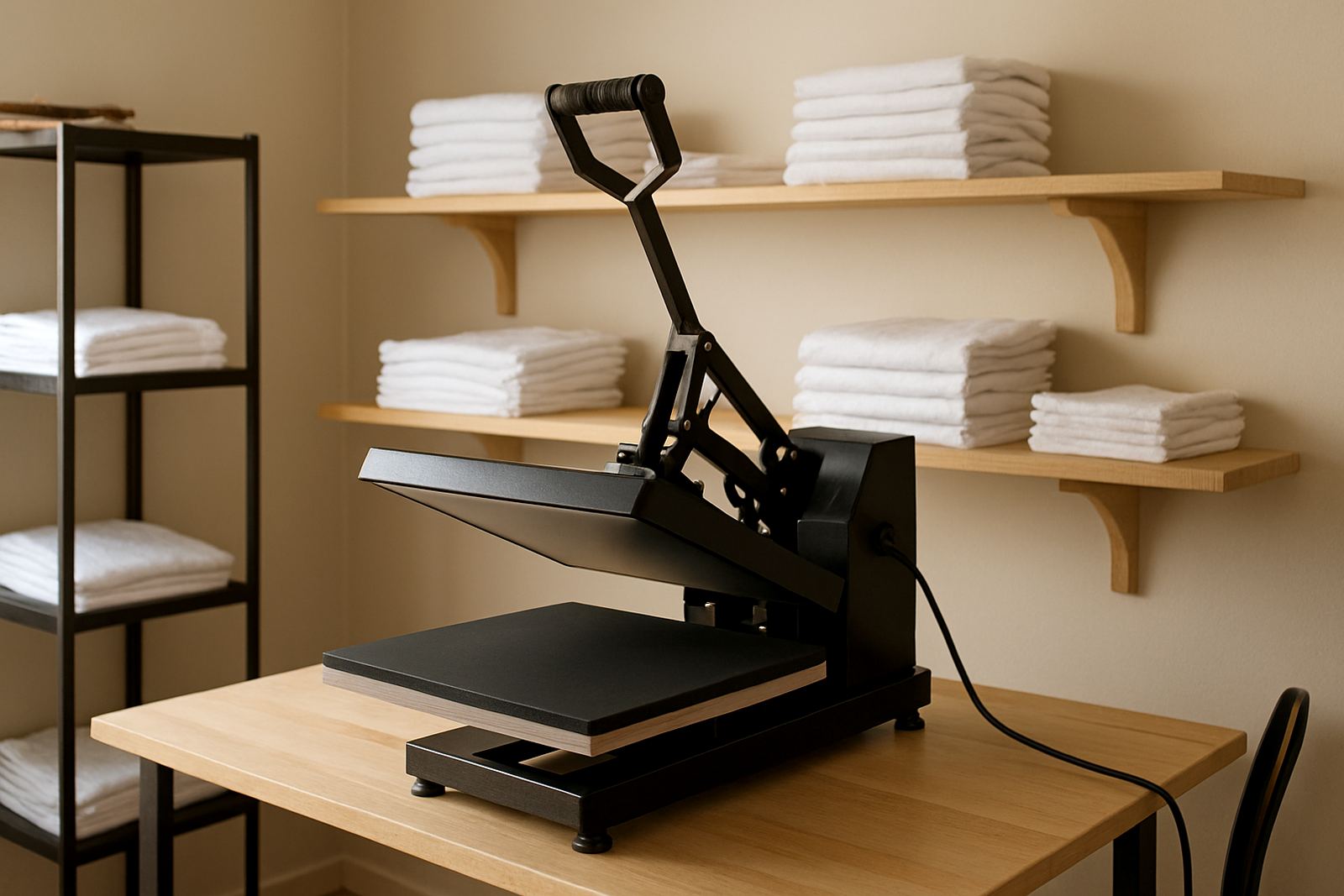
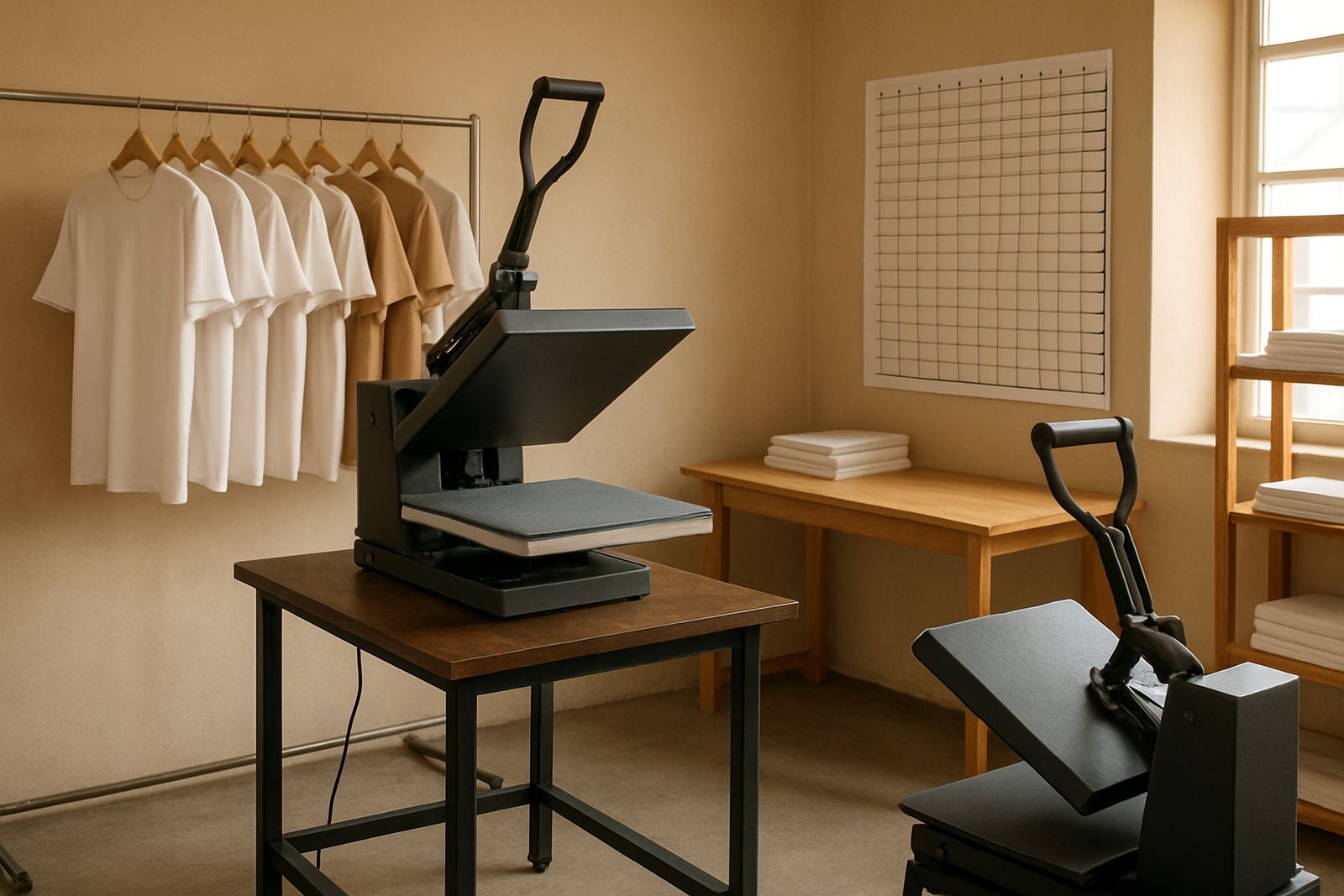
We supplied a flat heat press suited to garment branding work, then positioned it for efficient right-hand loading, with enough clear space for pre-press checks and finished stock. The press was fitted into a workflow that allowed a garment to move from sorting to pressing to cooling without backtracking across the room. We also checked the platen response, pressure range and controller behaviour before handover.
The setup included temperature verification, pressure calibration and a practical test on schoolwear items with different fabric blends. We adjusted the press pad covering for consistent contact on badges and transfer prints, and we showed the team how to keep the surface clean between job changes. Riaan and Ridwaan handled the technical side, while Kelebogile worked through the operator routine with the staff.
- Flat heat press supplied and commissioned
- Temperature checks and controller testing
- Pressure adjustment for mixed garment thicknesses
- Pad and covering fitment for even contact
- Job-flow placement for sorting, pressing and cooling
Training For Fast Schoolwear Turns
Training focused on repeatable results, because schoolwear jobs can be small but unforgiving. We covered dwell times, transfer placement, garment preparation and how to spot when a press needs a second look before the next run. The team also learned how to handle different transfer stock without wasting garments during the first few test pieces. A small error on one blazer patch is enough to cost time and fabric, so the routine matters.
We kept the training hands-on and local to the actual work the client does every week. That meant name labels, chest badges, fleece logos and number prints on the exact type of garments they sell. The operators were shown how to set a simple check list for startup, mid-shift and end-of-day cleaning. That cut down on guesswork and made the changeovers smoother.
- Operator training for one person and the backup crew
- Practical placement guidance for names and badges
- Basic fault spotting for heat and pressure issues
- Daily startup and shutdown checks
Timeline From Assessment To Handover
The full project ran over three weeks. In week one we assessed the layout, the garment mix and the likely order pattern during school season. In week two we supplied and installed the press, then checked the temperature stability and pressure response across a few test loads. In week three we completed training, reviewed the workflow and left the client with a simple support route for future servicing and spares.
The handover was done with the practical stuff first: where to keep transfer stock, how to stage garments, what to watch for after a power interruption, and when to call for support. We also gave them a clear plan for preventive servicing so the machine would not drift out of spec during the busy term periods.
- Week 1: site review and workflow planning
- Week 2: setup, calibration and test pressing
- Week 3: training, handover and support planning
Results On The Workshop Floor
After the setup, the client had a cleaner press bay and a more predictable turnaround on schoolwear jobs. The team moved from one garment type to the next with less handling, and the press held its settings well enough for back-to-back runs. That mattered most for name applications and small badge batches, where consistency is better than speed alone.
The owner reported fewer rejected pieces, less rework and better confidence from the staff when a rush order came in. The press station also became easier to manage during power interruptions because the team knew exactly how to restart, recheck and resume work. For a Pretoria schoolwear operation, that sort of control is worth a lot more than looks.
- Less rework on mixed fabric items
- Better batch consistency on names and crests
- Faster changeovers between small orders
- Clearer recovery process after load-shedding
What We Would Repeat For Similar Jobs
If we were doing the same project again, we would keep the approach exactly the same: assess the actual garment mix, build the workflow around the busiest order type, and train the operators on the real jobs they handle every week. Schoolwear is seasonal, but the pressure on the press does not let up, so the setup must be practical from day one.
We would also repeat the early temperature and pressure checks, especially where a workshop sees different fabrics in one shift. That small step catches avoidable issues before they become costly. For Pretoria and nearby areas, we would keep planning around local power conditions and leave the client with a support route for spares, servicing and loan unit backup if needed.
- Match the press layout to the busiest job type
- Train on real schoolwear items, not just sample pieces
- Build in checks for power interruptions
- Keep a simple service plan in place from the start