
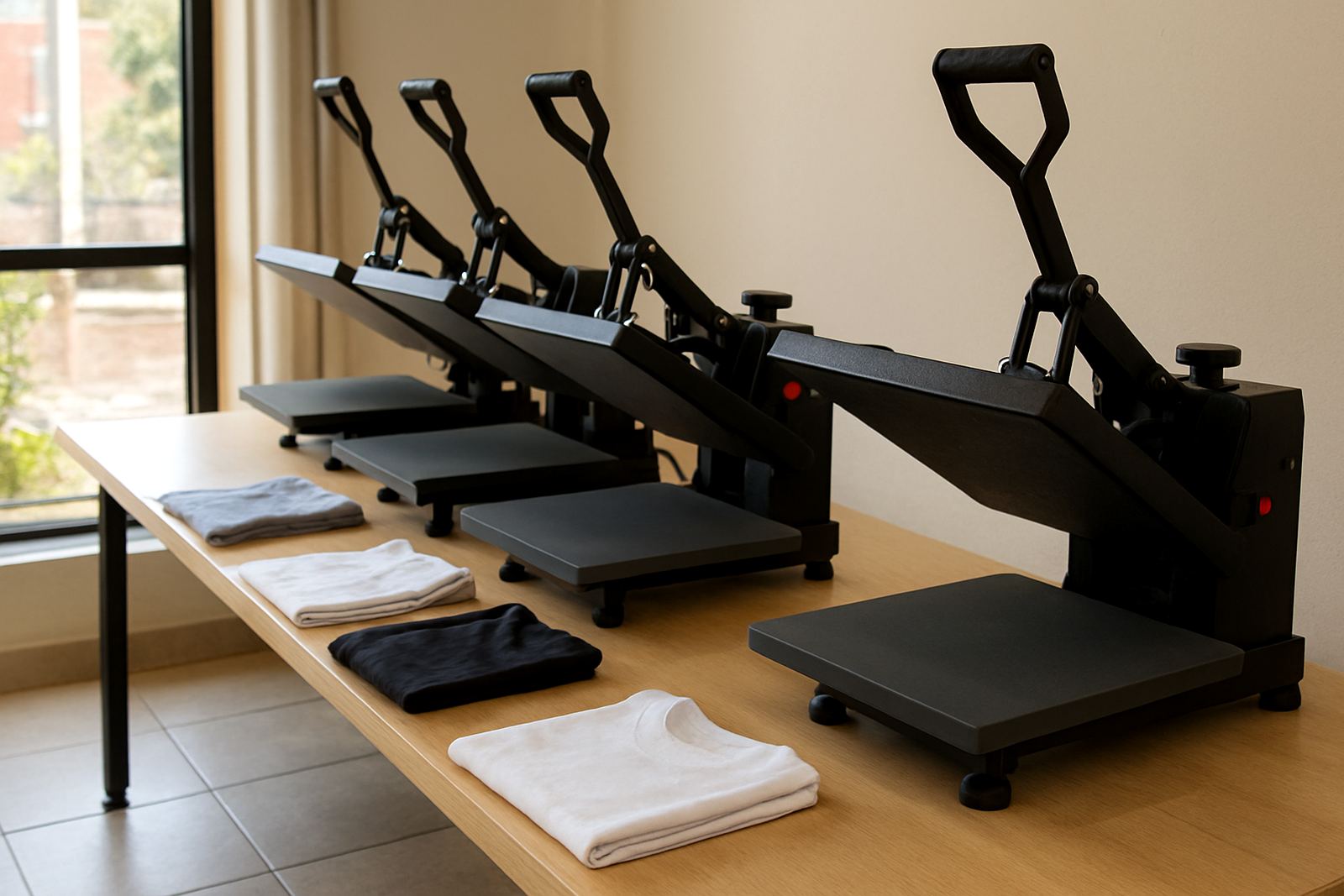
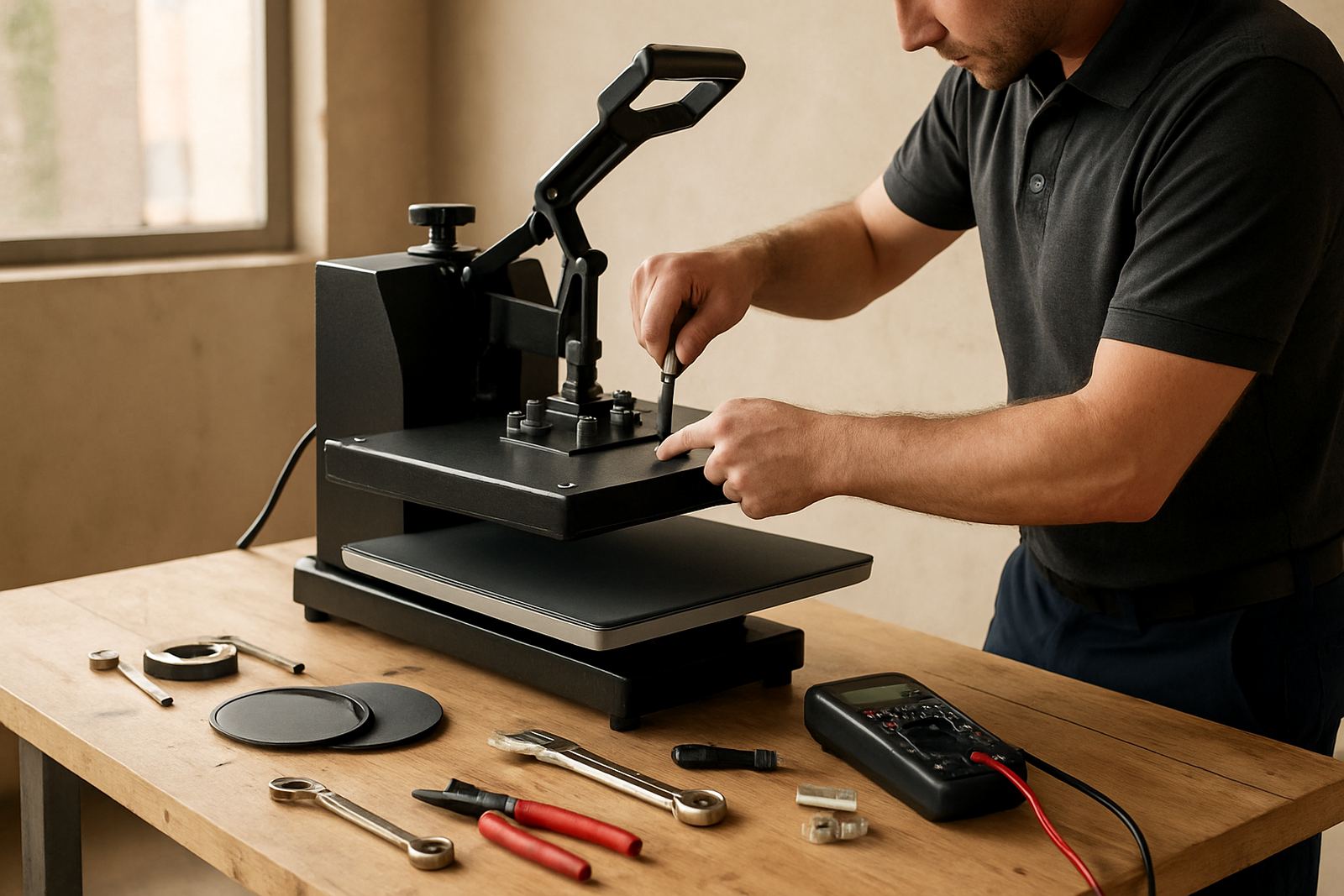
A Spare Room With Real Production Limits
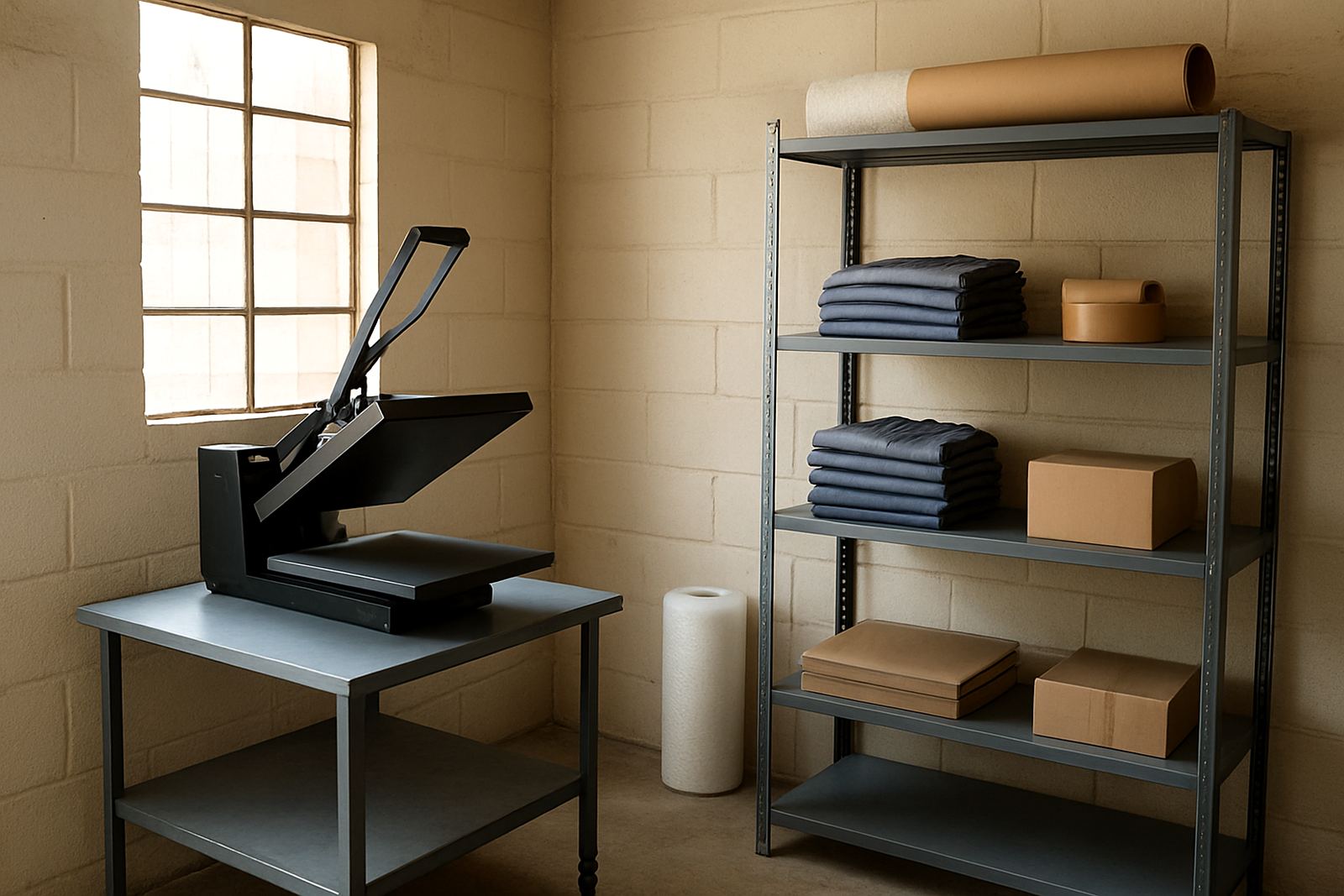
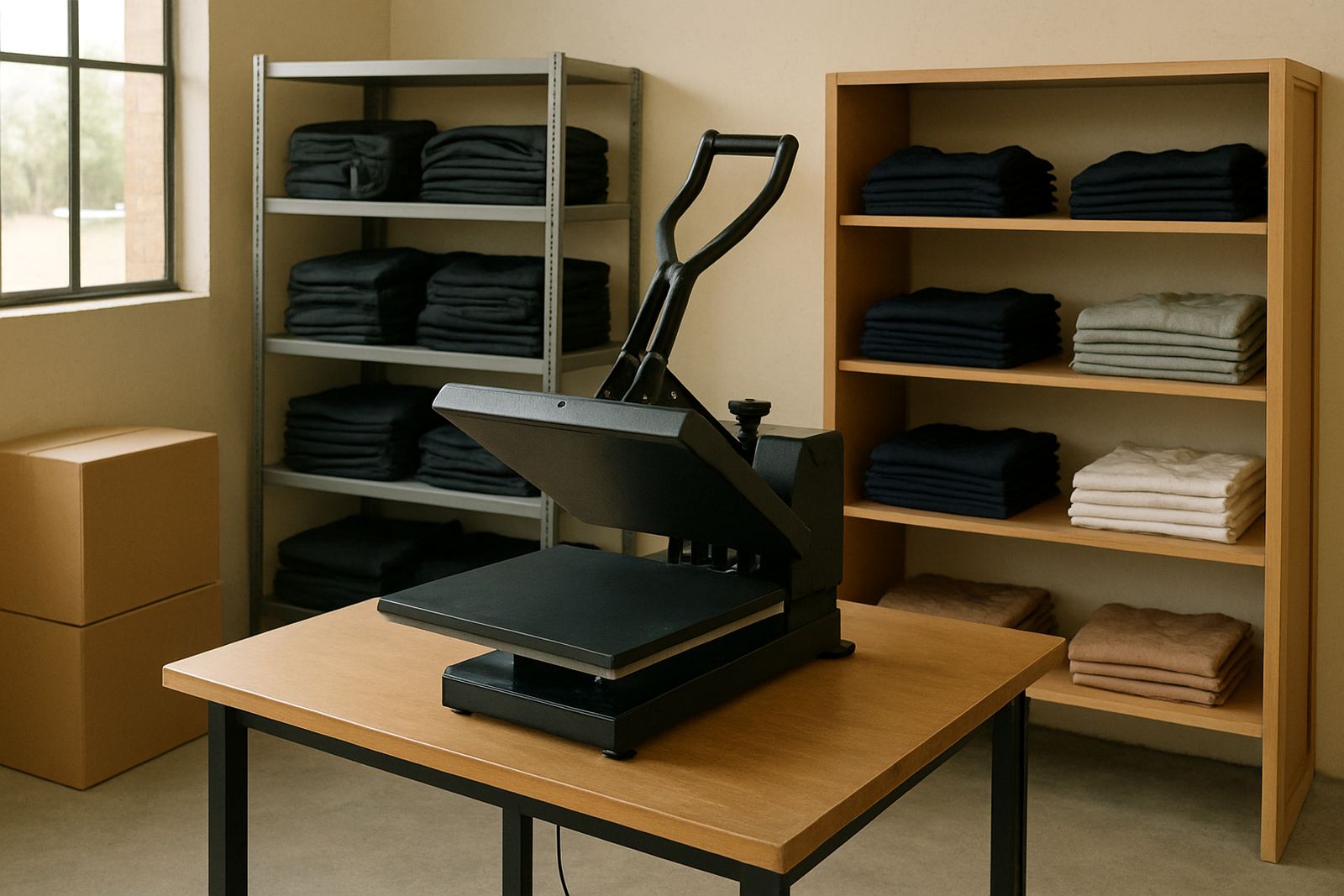
The client was a solo garment decorator working from a home in Midrand, taking small transfer and T-shirt orders for schools, teams, birthdays and local business run-ons. The brief was simple enough to say, but not simple to solve: fit a proper flat press into a spare room, keep the footprint small, and make sure the setup could handle steady weekend work without rattling the whole house.
The room had a standard domestic supply, a tiled floor, one small window and only a single practical wall for the machine. There was no room for a big table or loose cable runs, and the client needed to keep noise down for family use in the rest of the house. We also had to factor in Gauteng load-shedding, because missed jobs and half-heated transfers are costly when customers are waiting. The result had to be tidy, safe and easy to repeat every day.
What We Supplied For The Midrand Setup
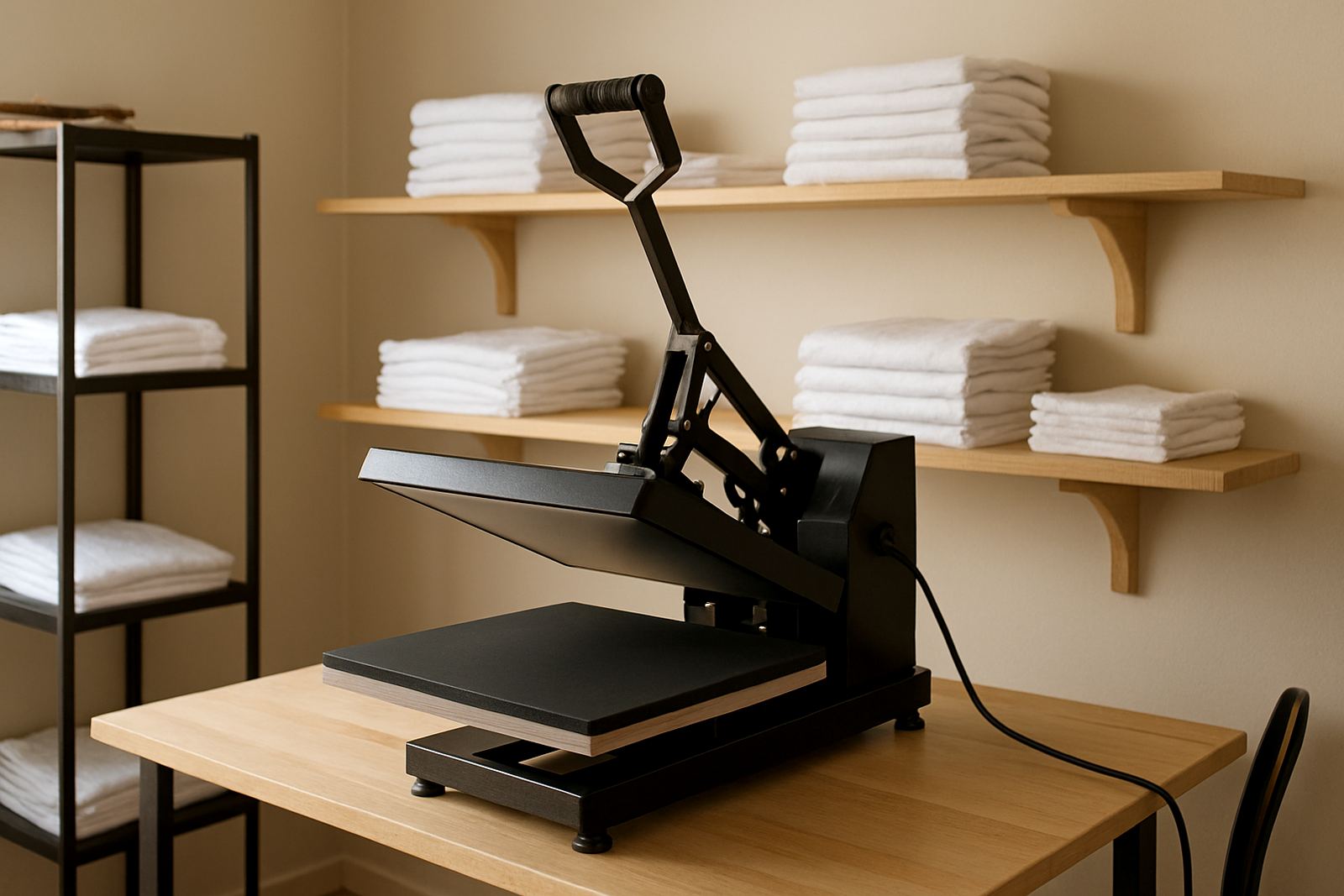
We matched the job to a compact flat heat press suited to small batch work, plus the basic support items needed to start properly. The aim was not to overload the room with extras. It was to supply a unit that holds temperature well, gives even pressure, and can be serviced later without drama.
- Compact flat heat press with 38 x 38 cm platen size for standard T-shirts and transfer work
- Digital time and temperature controller for repeatable settings
- Adjustable pressure system for cotton, polycotton and transfer films
- Heat-resistant pressing pad and replacement covering for cleaner contact
- Starter spares pack for day-to-day wear items
- Setup guide and operator handover for first-week use
We also checked the room layout against practical working space. For a home operation, you need enough standing room to load garments without knocking sleeves or scratching prints, and you need a safe landing area for finished items. A small machine can still become awkward if the surrounding space is not planned properly.
Installation, Checks And First Presses
Our logistics and technical teams handled delivery into Midrand and carried out the install on site. The machine was positioned to allow front loading and comfortable operator access, with enough clearance around the sides for cooling and maintenance. We checked the socket position, confirmed the unit was on a stable surface, and tested the controller response before pressing any stock.
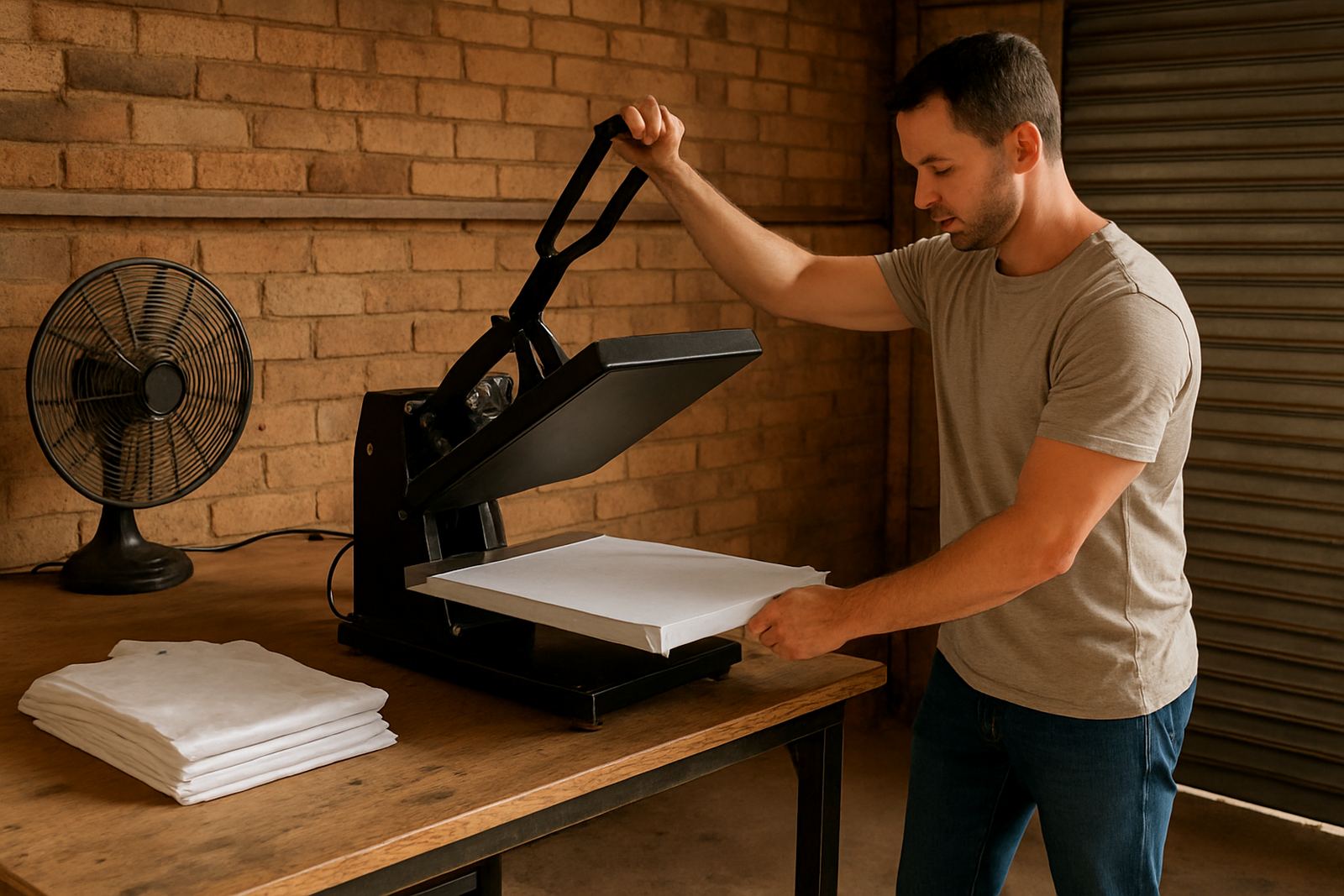
We then ran temperature checks and pressure adjustments on sample garments. That included checking recovery between press cycles and confirming that the platen heated evenly from edge to edge. The client had already had trouble with inconsistent transfers on a previous, smaller unit, so we spent time on real settings for their most common materials. For a home setup, that early calibration saves a lot of wasted blanks later.
- Install and live test completed in one visit
- Temperature verified across the platen surface
- Pressure set for common transfer thicknesses
- Basic maintenance points explained before handover
Training For A One-Person Workflow
The client did not need a classroom style session. They needed practical training that could be followed while working alone, often after hours. Our training coordinator covered startup checks, how to handle different garment weights, and how to avoid ghosting and uneven edges on transfers. We also showed the operator how to pace production for small runs so the machine does not overheat or sit idle too long.
Because this was a spare-room operation, we kept the guidance practical. We discussed where to keep blank garments, how to stage prints, and how to make sure the room stays clear when family members walk through. We also covered simple care points like cleaning the platen after adhesive build-up and checking the cover for wear. The client wanted something they could manage without calling out a technician for every small issue, and that was exactly the right approach.
- Startup and shutdown routine
- Common temperature settings for different transfer types
- Pressure checks for cotton and blended fabrics
- Daily cleaning and storage tips for a home room
Support After The Handover
Once the machine was in use, we stayed available through phone technical support and follow-up advice. In the first few weeks, the client asked about pressing times for a thicker hoodie transfer and a light polycotton school shirt. We talked through the settings and helped them avoid overpressing, which can dull prints or leave marks. That kind of support matters most in the early weeks, when a new operator is still building confidence.
We also advised on future servicing intervals and when to replace the pad covering. Home studios often run irregular hours, so wear is easy to miss until the finish starts changing. A heat press can keep going for years if pressure, temperature and coverings are kept in check, but a neglected unit loses consistency fast. In this case, the client now has a clear routine for checks every few weeks, and a simple path back to us for spares or repairs.
Timeline, Results And What We Would Repeat
The full project took two weeks from first enquiry to completed handover. Week one covered the brief, room assessment and machine selection. Week two covered delivery, installation, training and live testing. That schedule suited the client because it gave enough time to prepare the room without putting the side-hustle on hold for too long.
The main result was a compact production corner that works for a one-person business without eating into the rest of the home. The client can now handle short-run T-shirt orders, transfer jobs and rush requests with much better consistency. The setup is neat, easy to learn and suitable for a growing home-based decorator who may later move into a larger room or workshop. If we were doing this again, we would take the same route: compact machine, careful pressure setting, practical training and a spare parts plan from day one.
- Project duration: 2 weeks
- Space used: spare room at a Midrand home
- Work type: T-shirts, transfers and small custom runs
- Support plan: phone support, servicing and spares supply
Key facts
| Client type | Home-based garment decorator |
|---|---|
| Town | Midrand |
| Press size | 38 x 38 cm flat press |
| Project timeline | 2 weeks |
| Main constraint | Compact spare room with domestic power and limited space |
| Support provided | Setup, training, temperature checks, pressure adjustments and after-sales support |