

Why the Polokwane workshop needed a better pressing room
The client was a small garment decorator in Polokwane handling club shirts, warm-up tops, supporter tees and transfer orders for schools and local sports clubs. Most jobs were short runs, often under 50 garments, so the team could not afford long setup times or a machine that was fussy about temperature and pressure. They needed a compact pressing area that could cope with daily use, handle different fabric types and keep quality consistent from the first shirt to the last.
The brief was straightforward: create a sportswear pressing room that would work in a busy local setting, with enough control for heat-sensitive polyester and enough pressure for vinyl and transfer work. They also wanted better workflow around sorting sizes, staging garments and keeping completed orders separate from new stock. Because the business serves clubs that collect at short notice, the layout had to support speed without causing mistakes.
Polokwane brought its own practical demands. The room gets warm in summer, dust can build up quickly and power interruptions are a regular consideration. That meant the equipment choice and the working method both had to be simple and reliable, not over-complicated. The team needed a setup that would still behave well during load shedding and not drift badly on temperature after a few press cycles.
The space, the limits and the press room plan
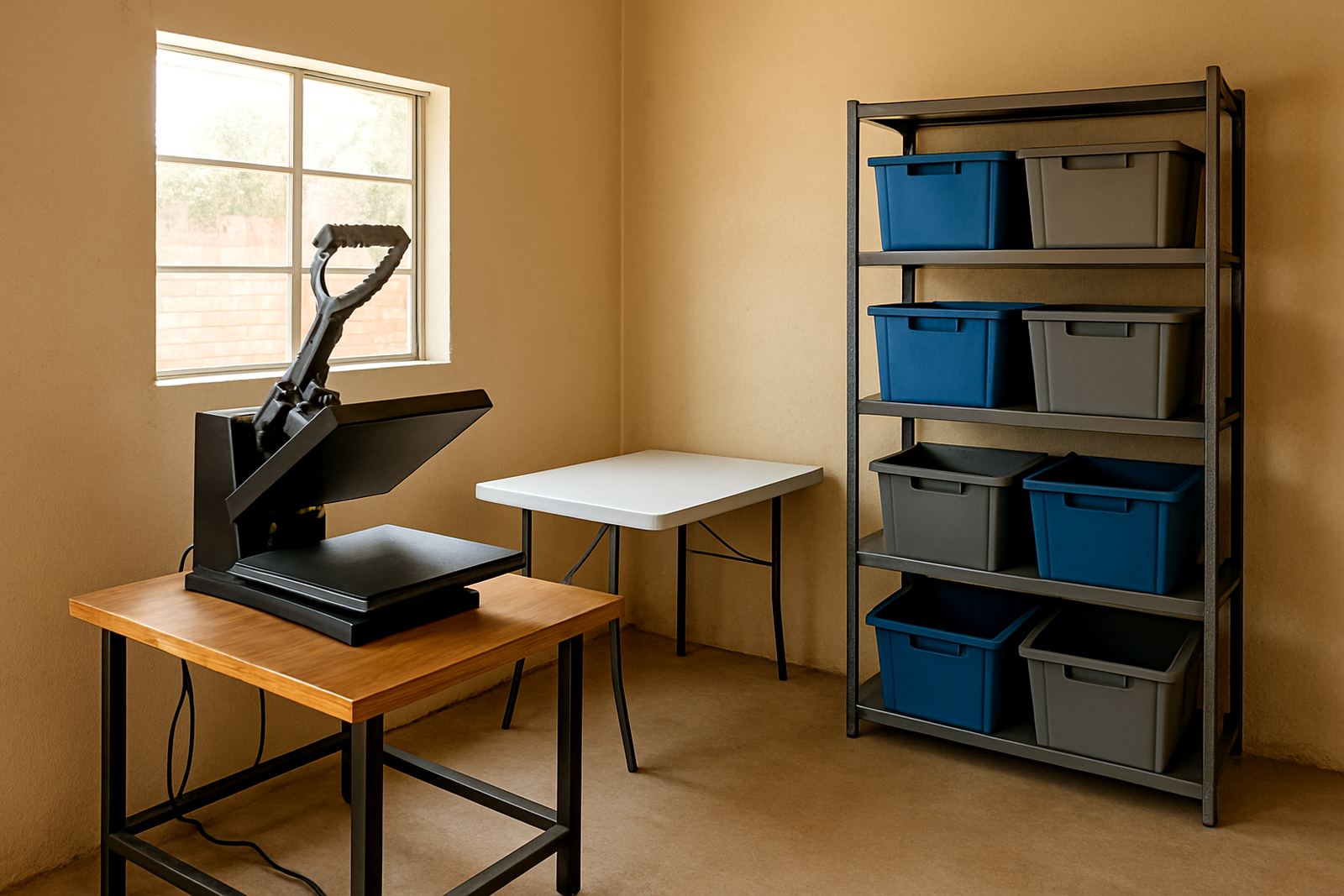
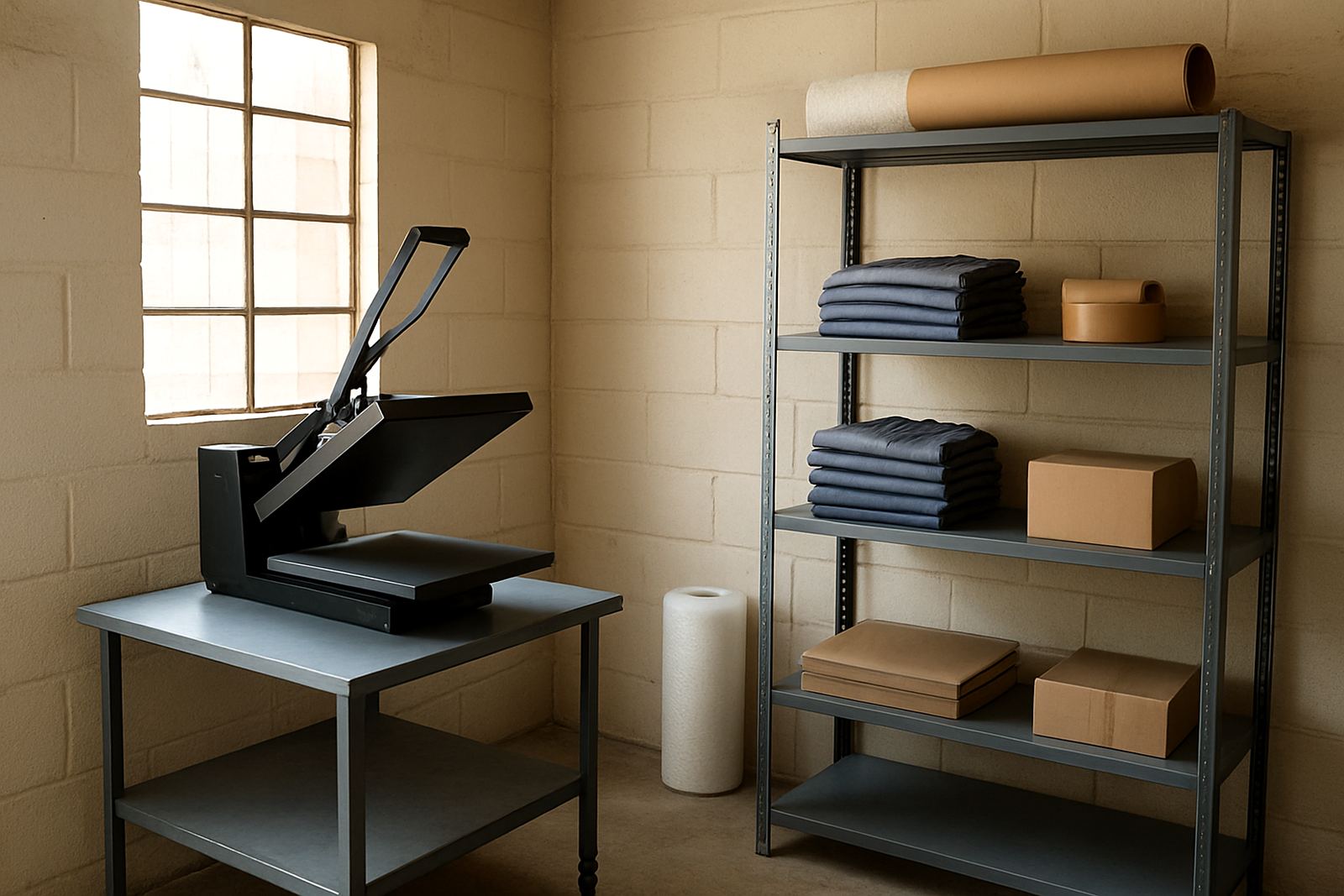
The available room was small and shared with packing shelves, sample garments and a cutting table. There was enough wall space for one main press station and a prep zone, but not much more. The floor plan had to keep walking paths clear, allow safe movement around a hot platen and still leave space for finished garments to cool before bagging.
We worked around three constraints in particular:
- Limited floor space, so the press station had to sit against the wall with clear access on two sides.
- Mixed garment types, including polyester sports tops, cotton tees and transfer jobs on darker fabric.
- Power stability, so the operating routine needed to suit interrupted electricity and quick recovery after start up.
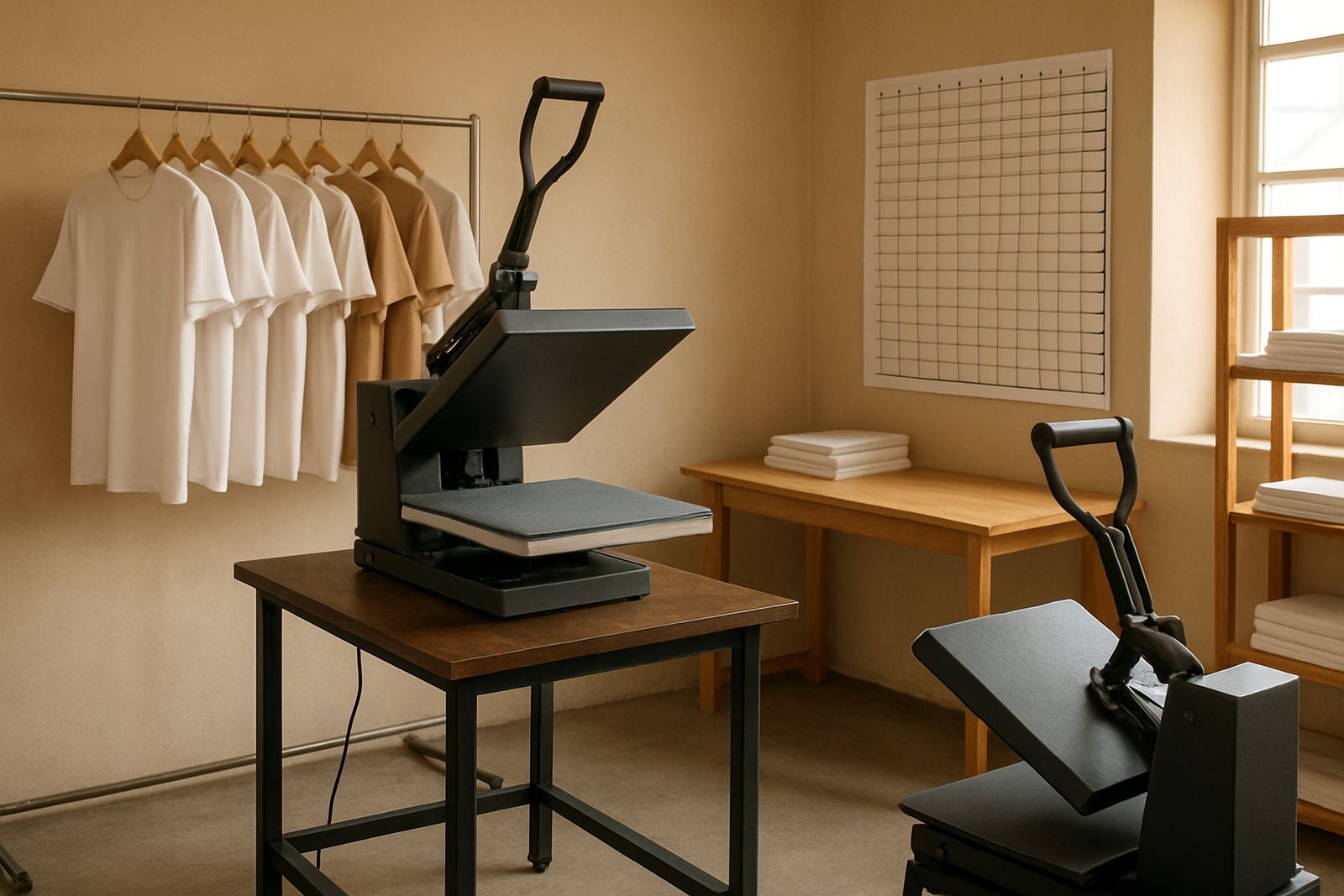
The result was a compact pressing room layout built around a flat heat press, a prep surface for alignment and a cooling and packing zone beside it. We also marked out a simple order flow so unpressed garments, pressed garments and finished packs never mixed. That small change made a noticeable difference to accuracy, and it reduced rework straight away.
Equipment supplied and workshop setup
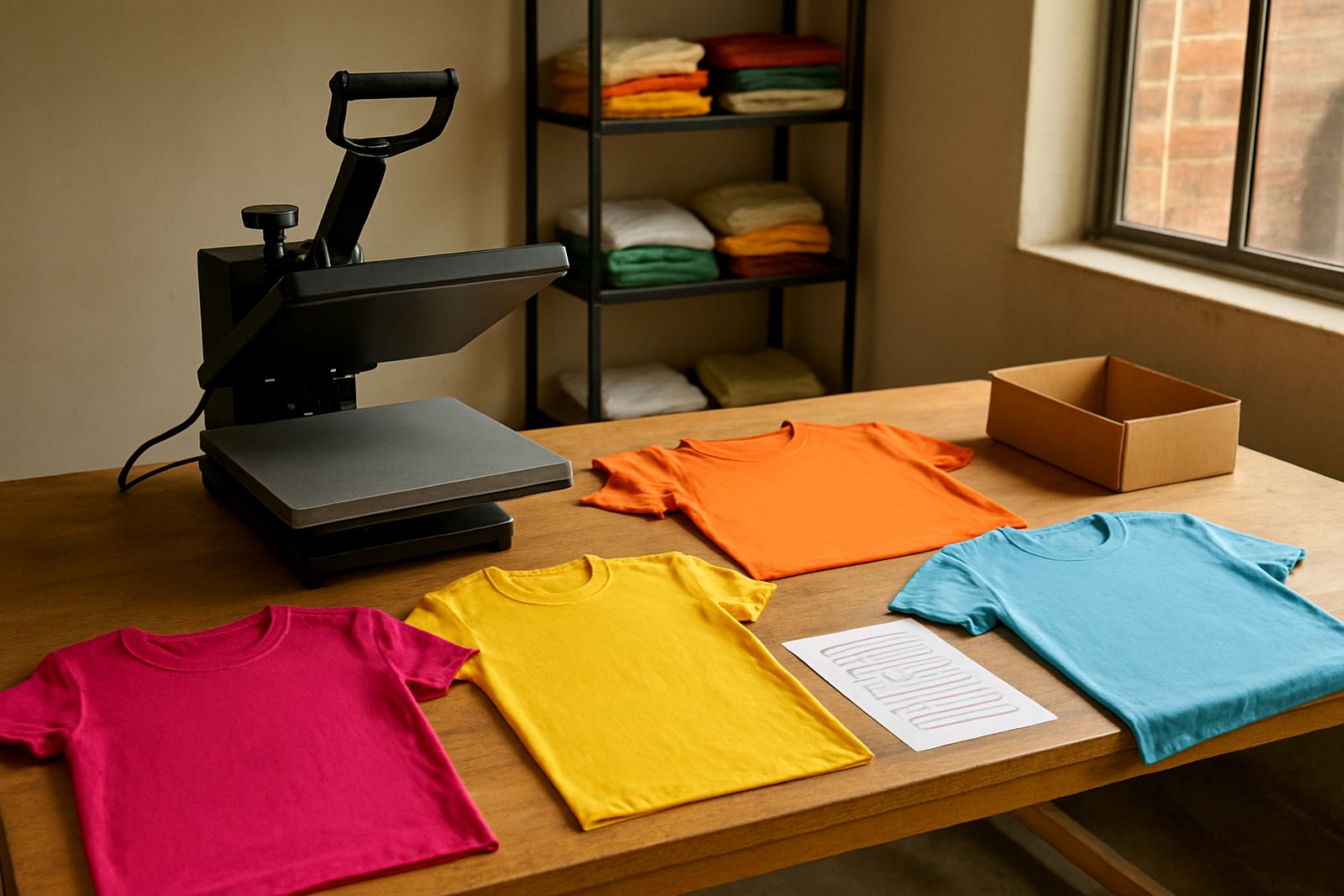
We supplied and installed a flat heat press sized for small-batch clubwear work, with a dependable heating platen, even pressure across the bed and a controller suitable for repeat jobs. The machine was set up for daily production rather than occasional hobby use, with attention given to temperature recovery, pressure adjustment and operator comfort. For the client, that mattered more than bells and whistles.
Along with the press, we supplied the practical extras needed to run the room properly: a replacement cover for the lower pad, alignment aids, basic spares, cleaning materials and a small set of workshop consumables. We also checked the press platen for even contact, confirmed the temperature control and set the pressure for the fabrics they actually use in Polokwane, not just the samples on the day.
- Flat heat press for T-shirts and transfers
- Prepping and cooling surface for small order flow
- Lower pad covering suited to repeated garment contact
- Basic spares pack for routine wear items
- Alignment method for repeat club numbers and logos
The installation was completed by Willem from logistics and installations with support from Riaan in technical setup. The room was tested with sample garments before handover, including a few awkward poly blends and transfer pieces that usually show up problems fast. We wanted the client to see how the press behaved on real work, not just under ideal conditions.
Training the operators for clubwear work
Kelebogile ran the training session with the production team, focusing on how to press consistently when orders are mixed and time is tight. That included starting temperatures, dwell times, pressure checks and how to avoid shine or ghosting on sportswear fabric. For a clubwear room, the biggest risk is usually not the machine itself, but small operator mistakes repeated through a batch.
The team was shown how to separate garments by fabric type, how to test a transfer on a first piece and how to keep the press area organised during a rush. We also covered what to do when the room gets busy and there are two or three different club orders on the go at once. A simple board system was introduced for job status, so the operators could see what was waiting, what was under the press and what was ready for packing.
Training also included practical care for the machine. The operators learned how to check the pad cover, what signs suggest uneven pressure and how to spot a controller reading that needs attention. That kind of routine stops small faults becoming expensive interruptions later on, especially when a local club wants collection before the weekend.
Timeline from first visit to handover
The full project ran over three weeks from assessment to handover. In week one, we reviewed the room, the product mix and the order volumes. In week two, we delivered and installed the press, set the working area and completed the first round of test pressing. In week three, the team went through training, retested the machine under short production runs and locked in the final operating settings.
That pace suited the client because they could keep taking orders while we worked around their schedule. It also gave us time to adjust the setup after the first tests. For example, the first pressure setting was slightly too light for one of the thicker transfer jobs, so we fine tuned it before handover. That saved them from finding the issue later during a paid order, which would have been a waste of time and stock.
- Week 1: site review and workflow planning
- Week 2: delivery, installation and machine testing
- Week 3: operator training and final adjustments
The handover finished with a short support plan for the first few operating days. Nandi handled follow up queries and Riaan remained available for technical checks if the room needed a temperature or pressure review after the first production week.
Results for small-batch club orders
The main result was a more predictable pressing room. The client could now move through small batches faster, with less double handling and fewer reject pieces. Club logos sat cleaner on the garments, and the operators had a repeatable method for short runs rather than improvising each time a new order came in. For a local sportswear business, that is the difference between finishing a job on time and chasing it the next day.
They also gained better control over heat-sensitive garments. Polyester tops that had previously been risky to press now went through with less marking and more consistent finish. Because the area was laid out properly, there was less clutter around the press and fewer chances of mixing sizes or orders. The whole room now feels like a working production space rather than a corner with a machine in it.
We would do the same thing again for another clubwear client: keep the setup simple, train the operators properly and design the room around actual order flow. That approach works well for small shops that need decent output without overcomplicating the process. If needed, we can also support the client later with phone guidance, spares, temperature checks and routine servicing as the machine beds in.
What we'd carry forward to the next setup
There are a few parts of this project that we would repeat without changing much. First, we would always start with the real garment mix, because sportswear rooms behave differently from normal T-shirt setups. Second, we would build in time for operator practice, not just a quick demonstration. Third, we would leave the client with a simple routine for daily checks so they can pick up small issues before they affect production.
If we were setting up another room for clubwear in Polokwane or elsewhere in Limpopo, we would again keep the workflow tight, the machine settings clearly written down and the spare parts easy to reach. It is the practical details that save time in the long run, especially when there is a collection deadline and the phone is ringing every few minutes.
- Start with the actual garment mix, not a generic sample set
- Train the operators on real jobs and real timings
- Set up a clear flow for unpressed, pressed and packed garments
- Keep basic spares and support close at hand
For this Polokwane room, that practical approach worked well. The team now has a cleaner process, better consistency and a press room that can handle small-batch clubwear work without fuss.
Key facts
| Project town | Polokwane |
|---|---|
| Client type | Small garment decorator handling clubwear and sportswear |
| Workspace size | Compact room with one main press station and prep area |
| Press type | Flat heat press for T-shirts, transfers and polyester sportswear |
| Timeline | 3 weeks from site review to handover |
| Support included | Setup, operator training, test pressing and follow up support |