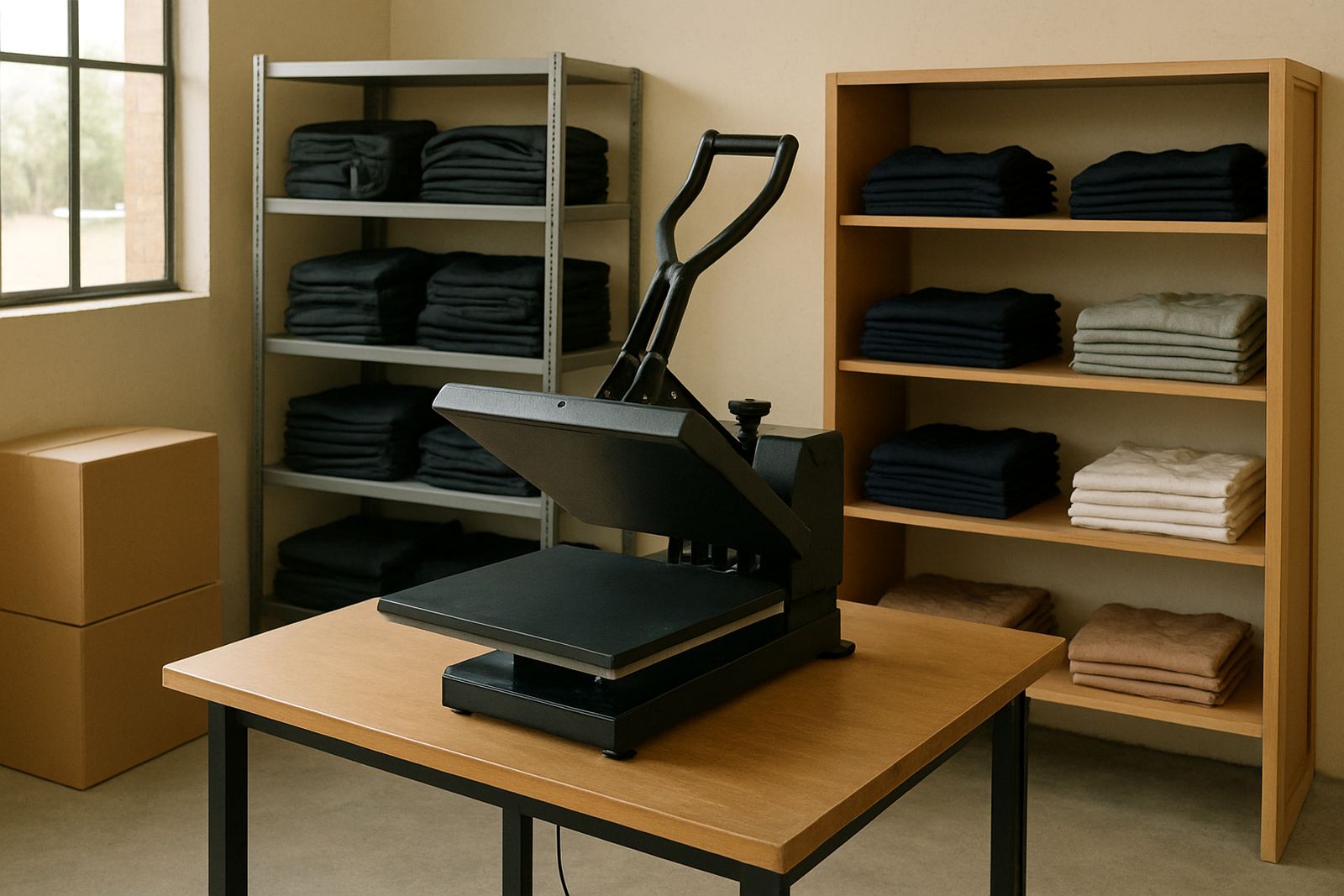
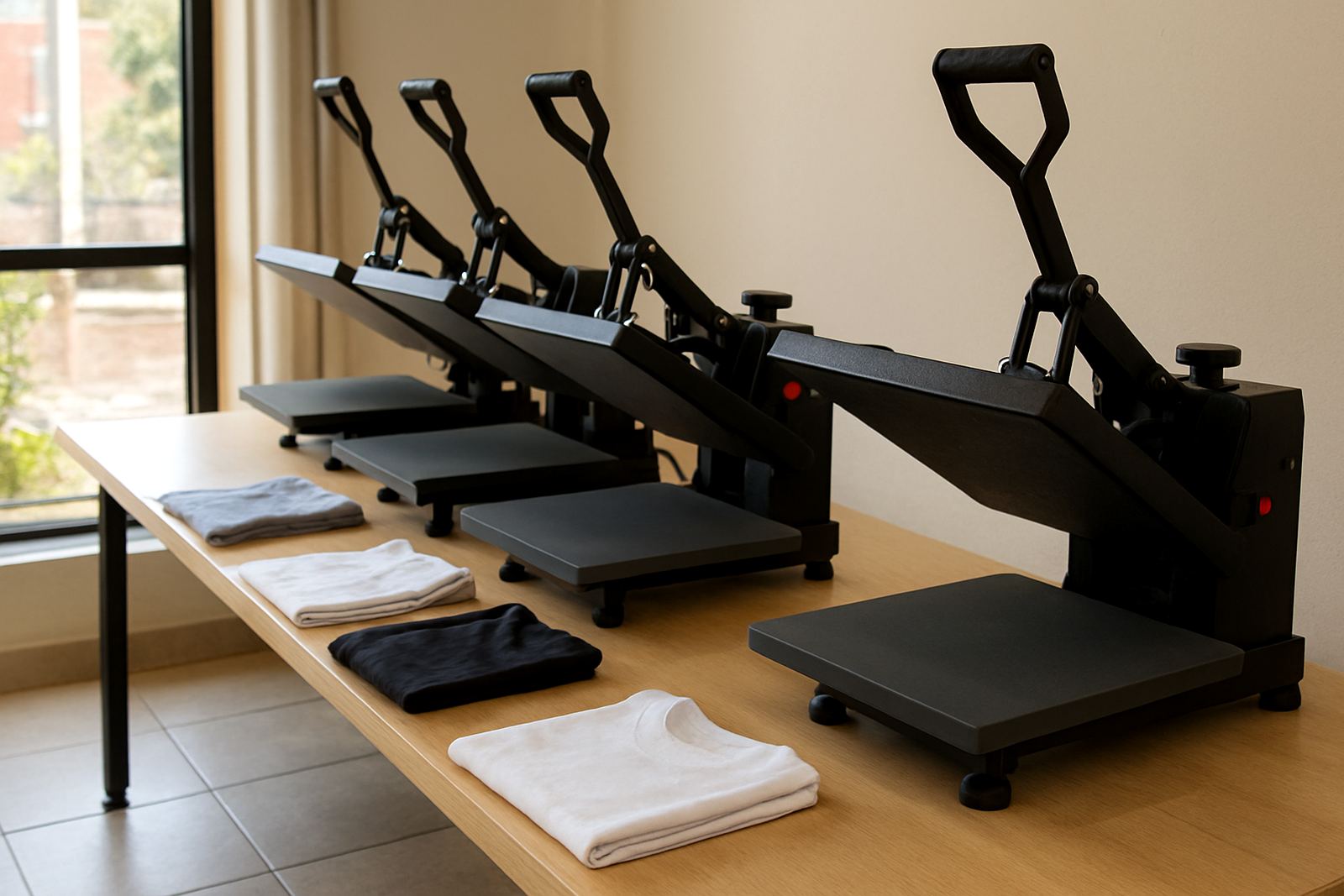
Benoni packing line with a press added in
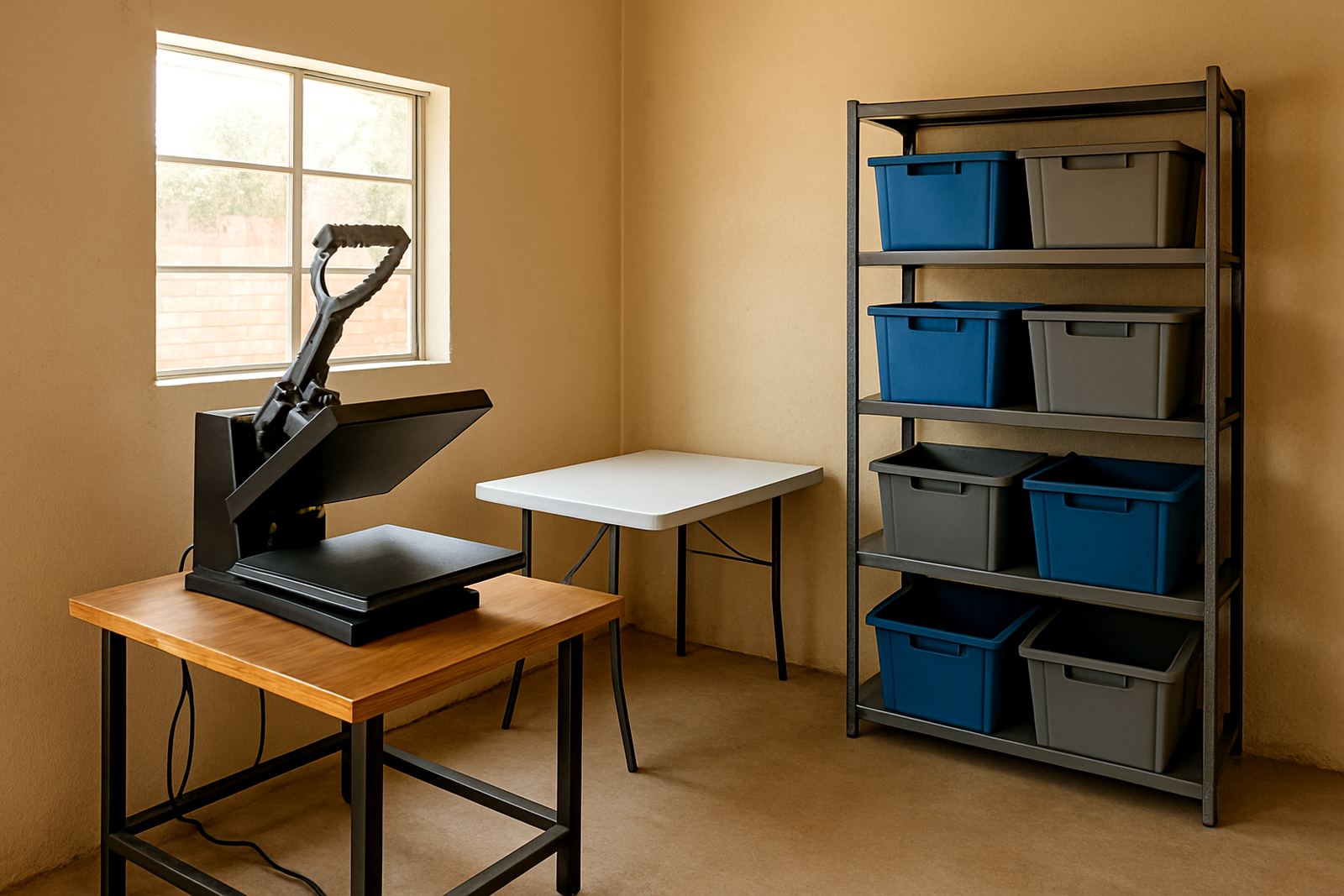
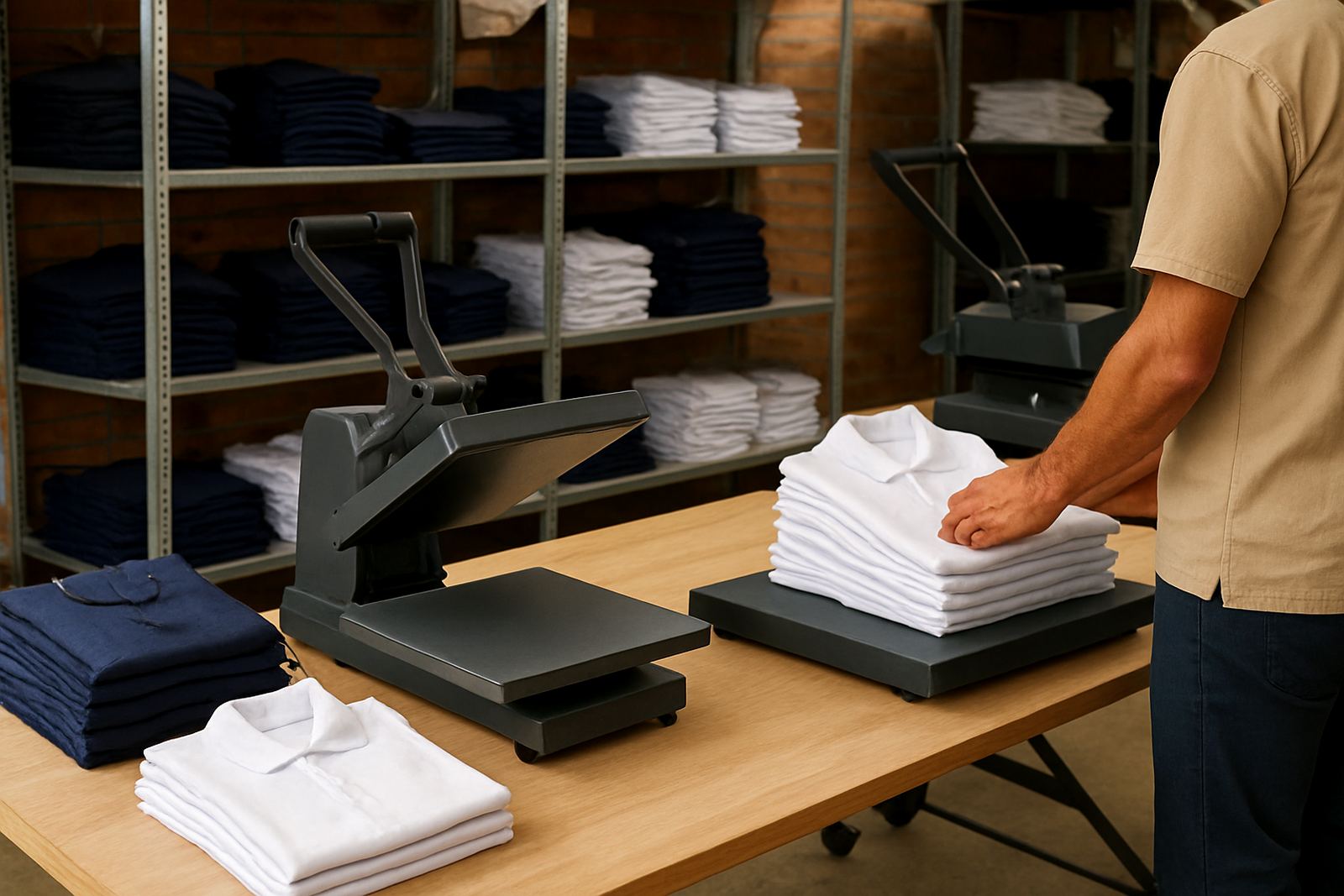
This project started with a small online seller in Benoni that was moving from third-party finishing to doing the heat press step in-house. The team was already packing parcels, printing waybills and dispatching orders daily, so the new press had to fit into a tight floor plan and keep up with same-day order flow.
The brief was clear: add a flat press that could handle T-shirt transfers, use standard single phase power, and not create a bottleneck at pack-out. The owner also wanted a setup that would be easy for staff to learn quickly, with dependable temperature control and steady pressure for repeat jobs. In short, the machine needed to work in a real fulfilment space, not a showroom.
Benoni brought a few practical constraints. Space was limited, the loading area was already busy, and the team could not spare a full day of downtime. Because the business handles customer orders at pace, we planned the installation around their dispatch window and kept the work organised in stages so the line could keep moving.
What we supplied for the job
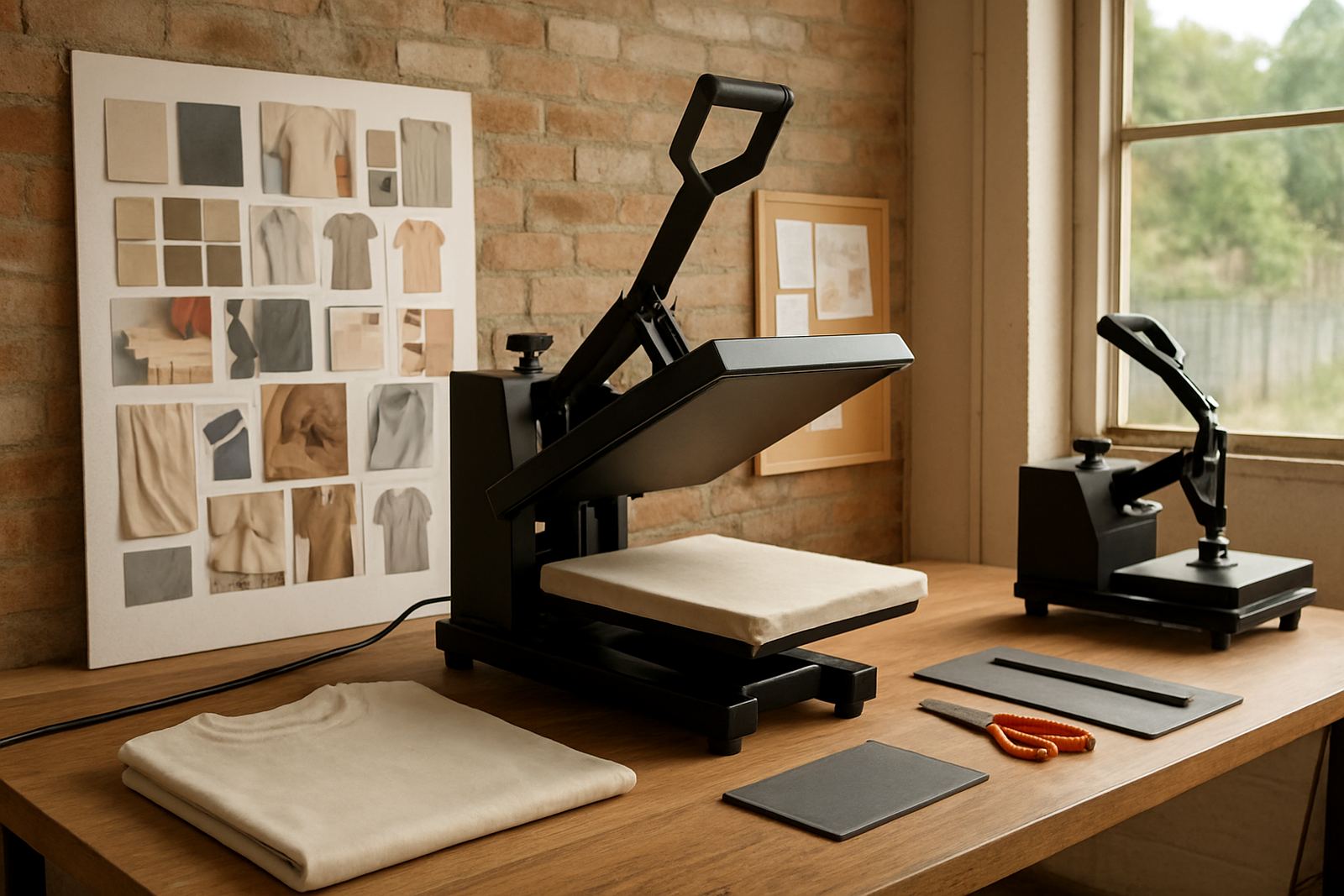
We supplied a flat heat press suited to transfer work on cotton T-shirts and similar garments, together with the setup items needed to get it running properly from day one. The unit was specified for workshop use, with a stable platen, accurate heat control and pressure adjustment that the operators could repeat from job to job. The customer wanted a practical machine that could sit beside packing tables and be used by different staff members without guesswork.
- Flat heat press for transfer application
- Heat and timer controller with clear digital readings
- Adjustable pressure system for different garment thicknesses
- Heat resistant base setup for safe placement in a packing area
- Operator guidance sheets for daily use and shut-down checks
- Basic spares kit for early wear items and planned servicing
We also checked the working area for cable routing, bench height and safe access around the press. In a fulfilment room, little things matter: where the operator stands, where finished garments are stacked, and how close the press sits to folded stock. A press can only help the process if it is easy to reach and simple to keep organised.
Installation and setup in two stages
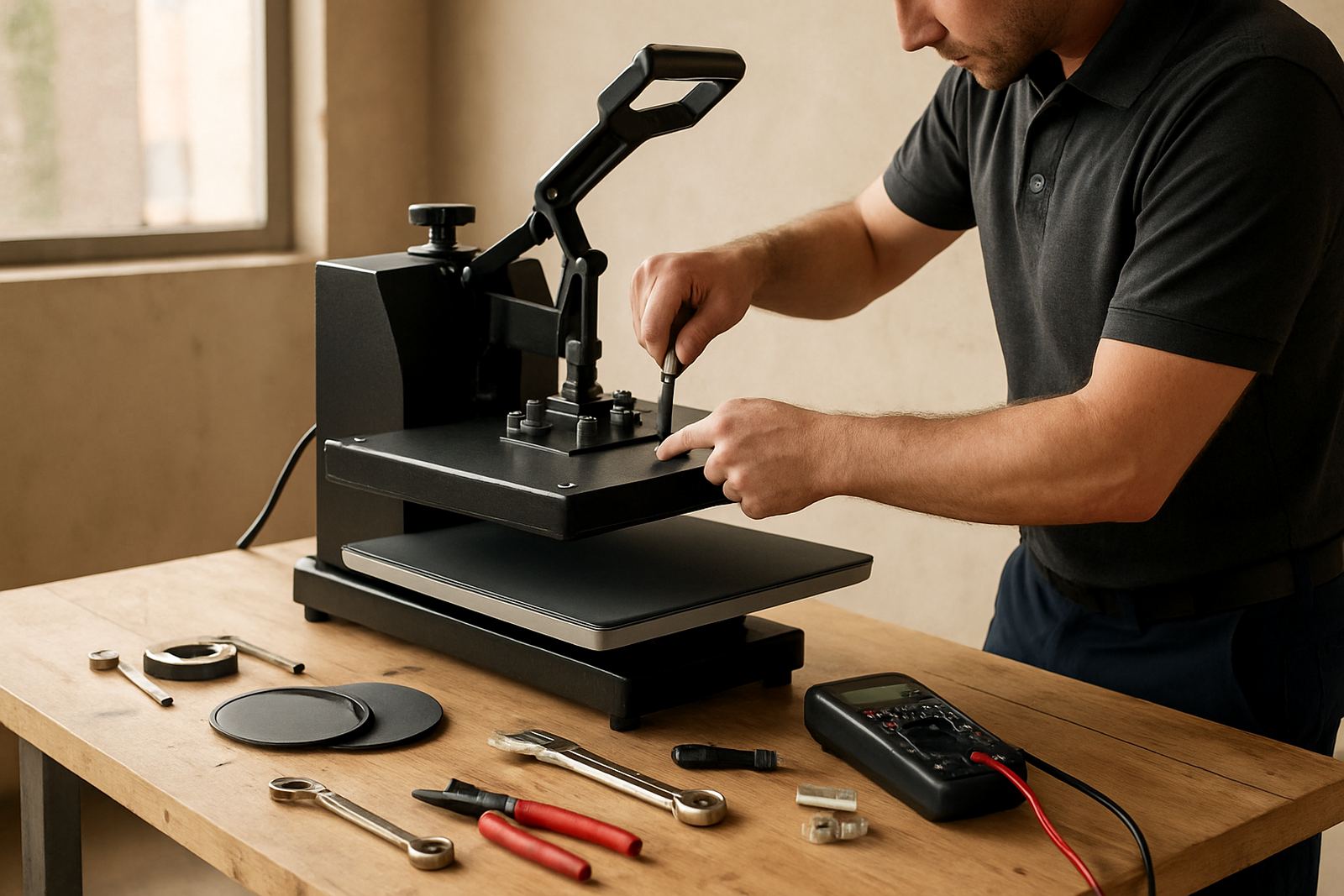
The installation was carried out over two weeks. In week one we delivered the unit, positioned it and did the mechanical setup. That included levelling, pressure calibration, controller checks and test heats to make sure the platen was reaching and holding the right working temperature. We also checked the machine under load so the team could see how it behaved during actual pressing cycles.
In week two we returned for workflow tuning and operator training. The client had already built a packing routine, so we worked around that routine instead of replacing it. We showed the team where the press should sit in relation to print labels, garment folding and final carton sealing. That small layout change made a real difference because it reduced back-and-forth movement.
The installation went smoothly, but the team also wanted contingency planning. For that reason we set them up with a basic phone support route and explained what to do if the controller, element or cover needed attention later on. Nobody wants a delayed dispatch because a heat press starts acting up on a Friday afternoon, especially during month-end.
Training for staff who pack and press
The client needed more than a machine drop-off. Their operators were experienced at packing parcels, but not all of them had worked on a heat press before. Kelebogile ran the training session with a focus on everyday use, safety, and consistency. The aim was to make the machine usable by the whole team, not only by one person who knew the settings by heart.
Training covered correct warm-up, transfer placement, press timing, pressure setting and safe handling of garments after pressing. We also went through what causes bad results in a fast-moving fulfilment line, like uneven pressure, rushed loading, or starting the next job before the platen has stabilised. That practical guidance helped the team avoid rework from the start.
- How to set temperature for transfer jobs
- How to adjust pressure for different garment weights
- How to keep artwork placement consistent
- How to spot signs of a worn cover or uneven heat
- How to shut down the machine correctly at the end of shift
Because the business works at pace, we kept the training short enough to be useful and long enough to stick. The staff left with notes they could follow during busy periods, and by the end of the session they were running standard jobs on their own with only light supervision.
Results in the first month
Once the press was in daily use, the business gained a much cleaner handover between packing and finishing. Orders no longer had to wait for outside turnaround, which meant garments could be pressed, checked and packed in the same workflow. That tightened the dispatch process and helped the team get control over peak-day volumes.
They also saw better consistency. The settings were repeatable, the pressure stayed stable, and the finished garments looked more uniform across batches. For an online seller, that matters because customer returns often come from small defects, uneven application or labels that were rushed. A steady press process reduces those risks.
From an operations point of view, the biggest gain was certainty. The team knew what the machine was set to do, how long each cycle took, and where to call if something started drifting out of spec. That made planning easier and reduced the stop-start pressure that often builds up in a small dispatch room.
What we would repeat on the next fit-out
If we were doing the same type of fulfilment setup again, we would keep the same sequence: assess the workflow first, place the press in relation to packing tables, then train the operators after the machine has been tested under load. That order works because the press is not being installed in isolation. It is being fitted into a working business with time pressure and limited space.
We would also keep the early focus on service access. A press that can be reached easily, checked quickly and maintained without moving half the room is worth more over time. In Benoni, the client was already thinking ahead about spares and preventive servicing, which is exactly the right habit for a press that will be used day after day.
For similar online sellers in Gauteng, this is the setup we recommend most often: straightforward equipment, proper training, and a support plan that covers temperature checks, pressure adjustments and element replacement before a small fault becomes a full stoppage. It is a practical way to keep packing and finishing under one roof, and it works well for businesses that need to ship orders without delay.
Key facts
| Project town | Benoni, Gauteng |
|---|---|
| Client type | Online seller with packing and dispatch workflow |
| Machine type | Flat heat press for transfer application |
| Supply scope | New press setup, training, support and spares guidance |
| Installation timeline | 2 weeks from delivery to operator handover |
| Use case | T-shirt transfer finishing inside a fulfilment area |