
The brief from a small Centurion print room
The client was a husband and wife team in Centurion working from a converted garage, with a growing stream of school, church and small business orders. Their main need was a flat heat press that could handle vinyl transfers, DTF style transfers and general garment pressing, while staying simple enough for one person to run without a steep learning curve.
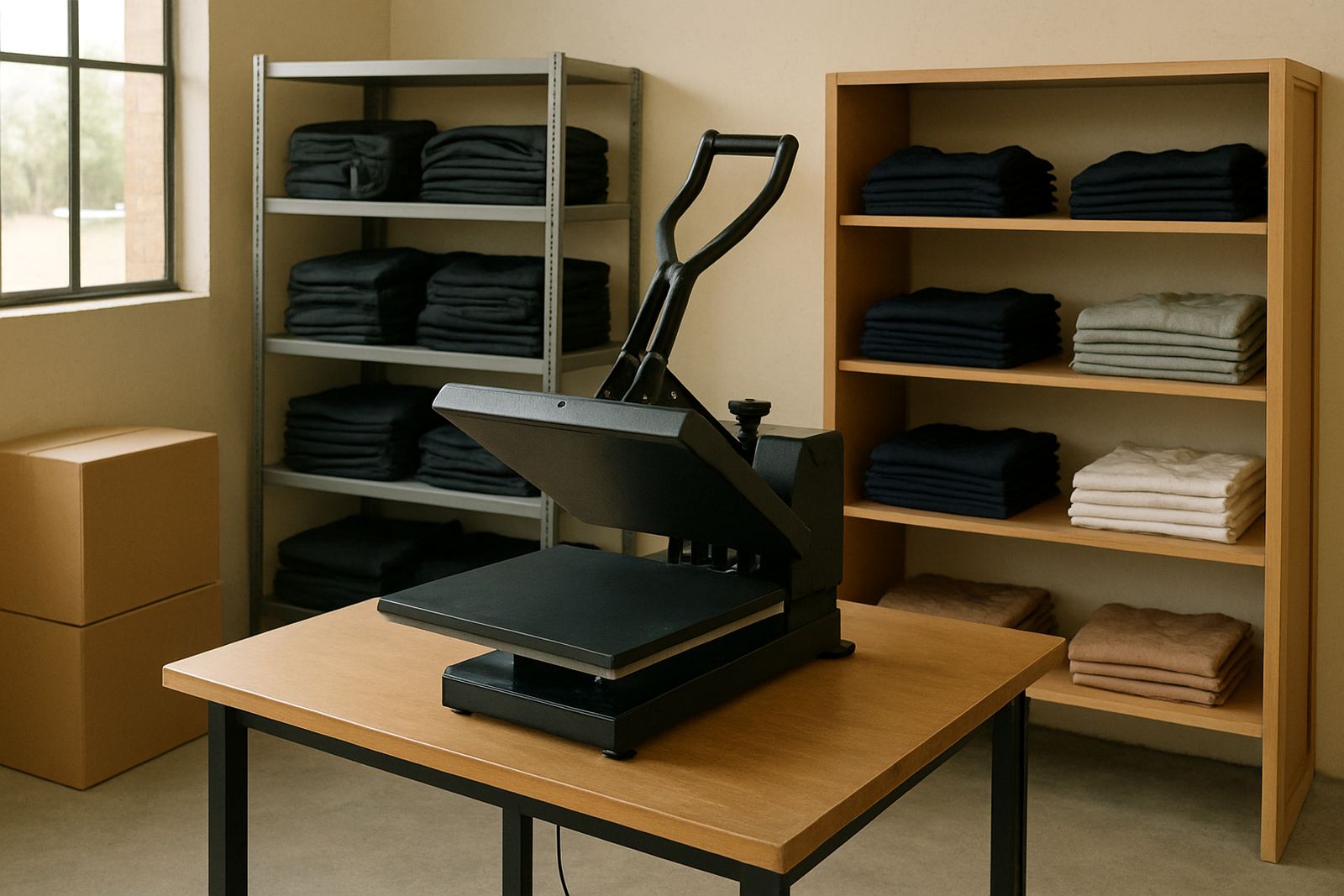
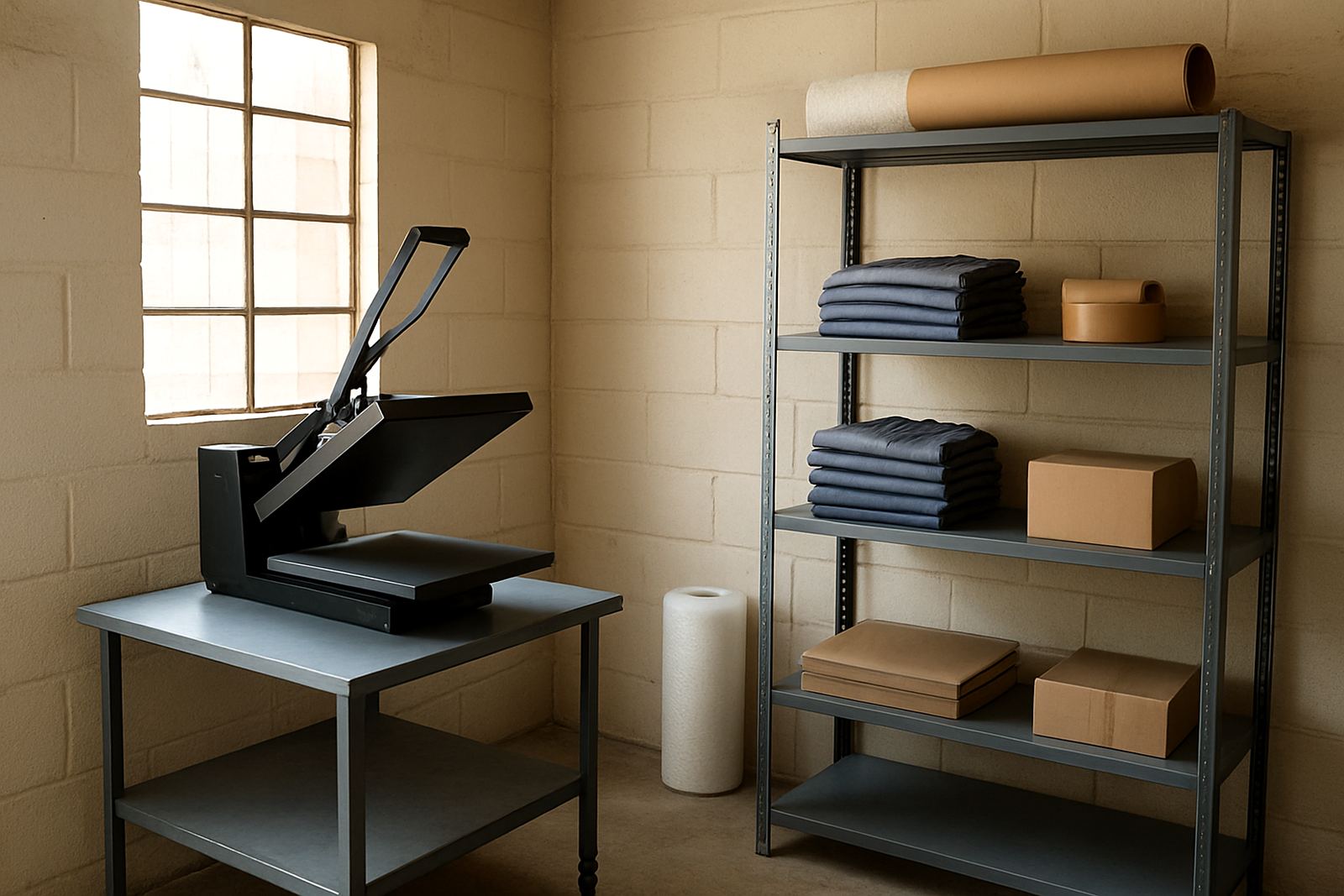
They were starting with limited floor space, a single domestic power point in the room and neighbours close by, so noise, heat build up and clean working habits all mattered. The room had basic shelving, a cutter, a small packing table and no dedicated workshop area, so the press had to fit into a compact layout and still leave room to move around safely. The budget was tight but the machine had to be proper, not a stop gap.
We spoke through the kinds of shirts they wanted to press, the daily volume they expected and the fact that load-shedding in Gauteng still means a shop must think about start up recovery and power stability. The brief was simple: a starter machine, clear training, and enough backup support to keep the first few weeks moving.
What we supplied for the startup
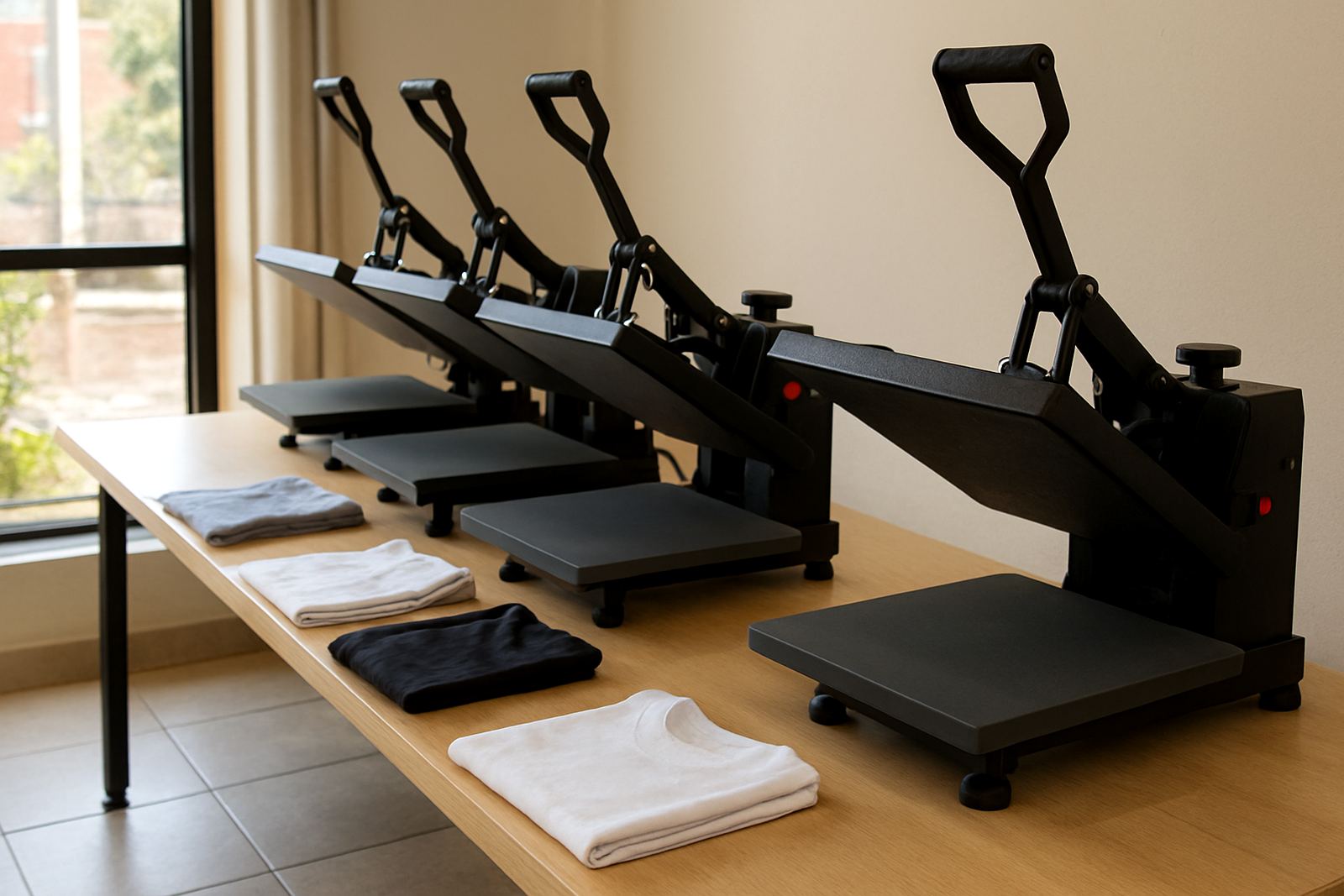
We supplied a flat heat press suited to T-shirt and transfer work, with a working platen size of 38 x 38 cm. That size gave the client enough room for most front and back prints while still keeping the footprint manageable in a garage setting. The unit was set up for reliable temperature control, consistent pressure across the platen and repeatable results on cotton, polycotton and general garment substrates.
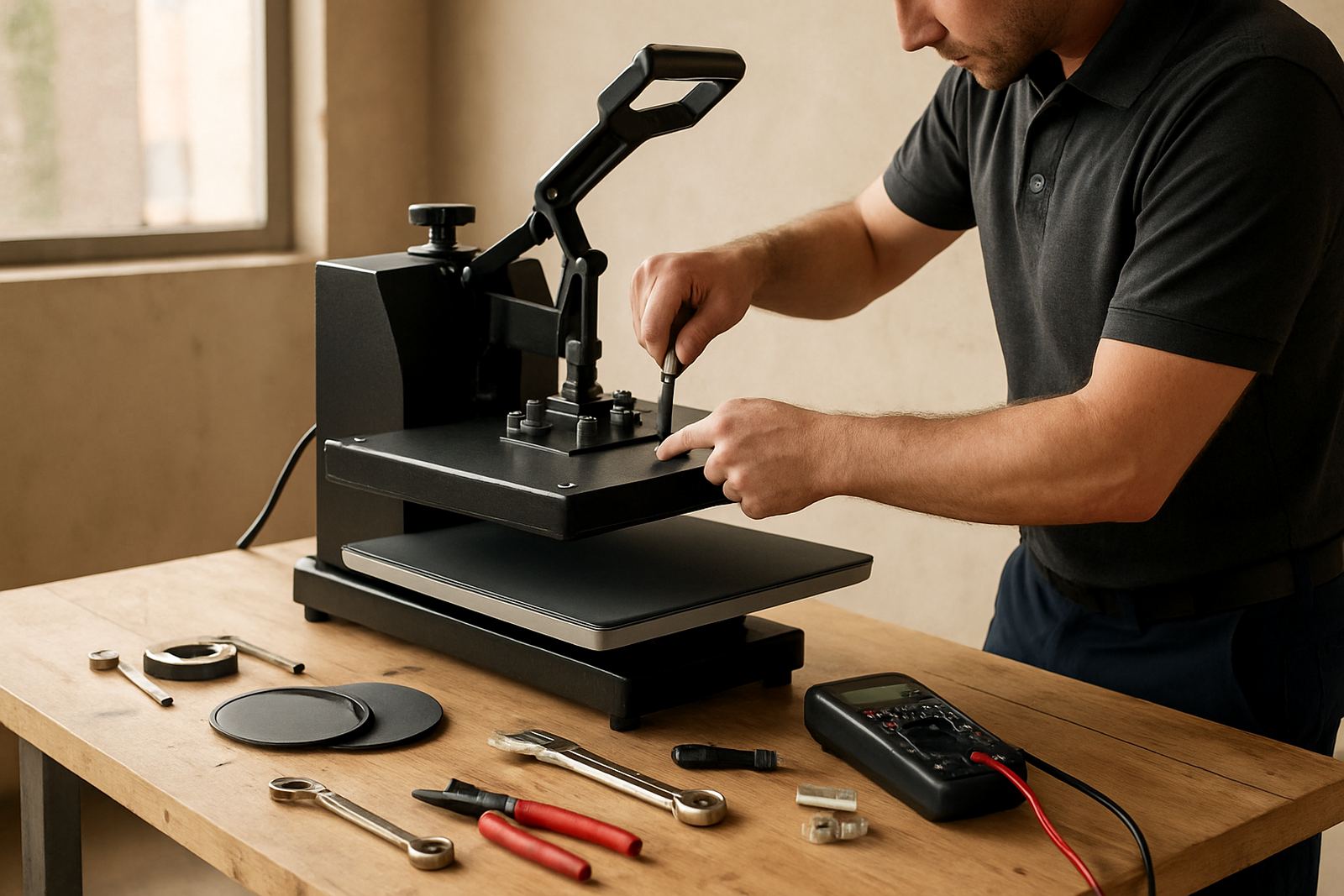
The installation package included commissioning, first use checks and a full handover on the machine controls. We also supplied the basic spare items that matter early on, plus guidance on cleaning, cover care and when to replace consumables before they start affecting print quality. For a new operator, those details save time and reduce spoilage fast.
- Flat heat press commissioned and tested on site
- Temperature check and pressure adjustment carried out
- Operator training on timing, pre press and safe handling
- Starter spares and wear items supplied with guidance on use
- After setup phone support arranged for the first production week
Garage constraints and how we worked around them
The room had the usual garage issues: uneven airflow, limited sockets, a roller door that let in dust, and not much tolerance for clutter. We arranged the machine position so the operator could feed garments from one side and pack from the other without crossing the hot zone. That sounds simple, but in a small room it makes a big difference to speed and safety.
Because the client was working in a residential area, we kept the setup practical and tidy. Cable routing was kept short, the press was positioned clear of stored stock and the working surface was checked for stability. We also advised on a basic power routine for load-shedding periods, including waiting for stable supply before switching on and checking temperatures after restoration. A garage print room can work well if the operator keeps to a routine and does not rush the heat cycle.
Humidity in Gauteng is not as severe as the coast, but winter mornings and summer damp still affect some transfer materials. We covered that in training and explained how to store transfers flat and dry, and how to spot handling issues before they turn into waste.
Commissioning and hands-on training in week one
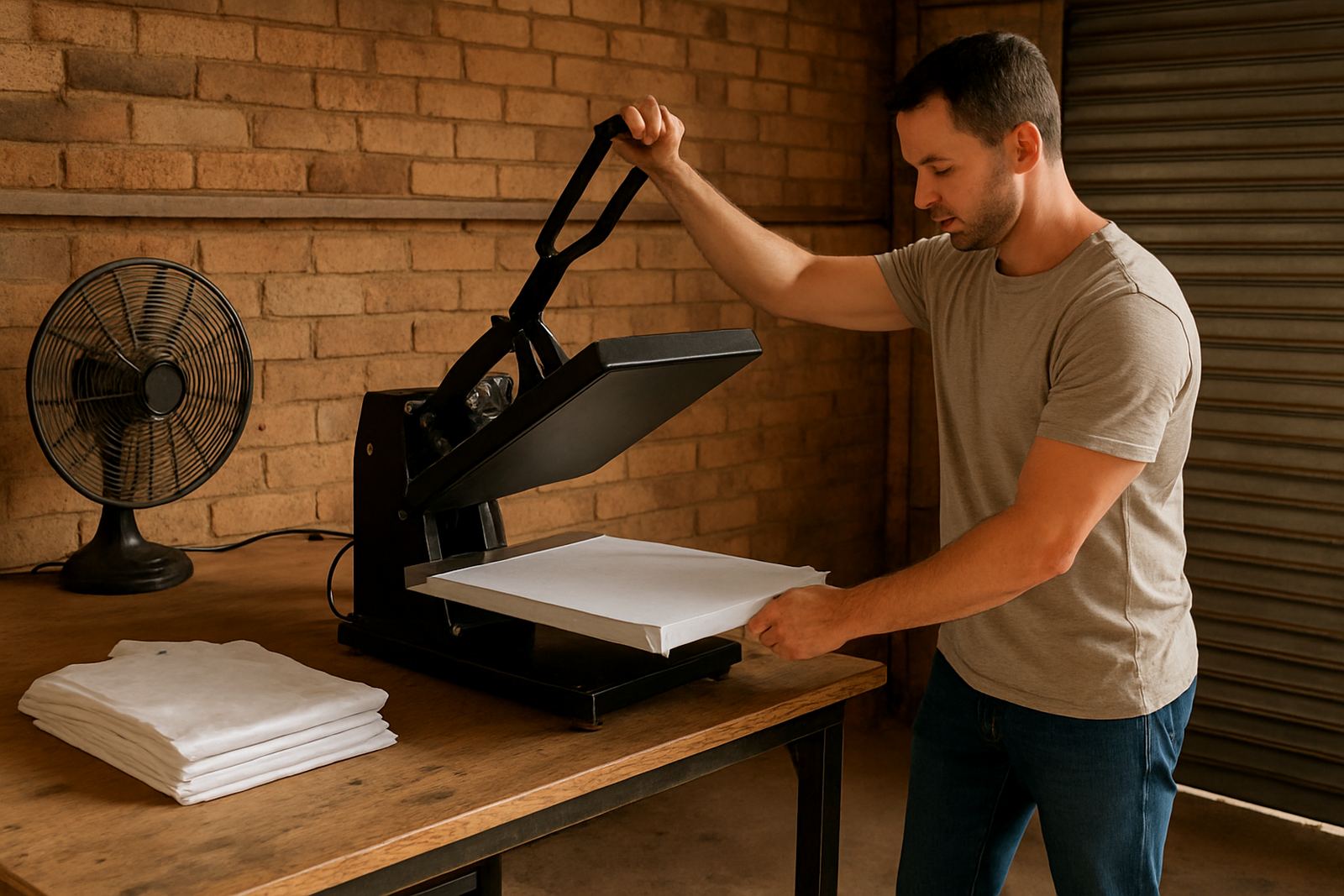
The startup was completed over two weeks. In week one we did the initial delivery, machine placement, temperature verification and pressure setup. We then ran live test pressing on sample shirts so the client could see how the machine behaved with different fabrics and transfer types. Week two focused on operator confidence, repeat work and fault prevention.
Training was kept practical. The client learned how to pre press garments, test temperature with a simple routine, adjust pressure for thicker items and recognise when a transfer needs a different dwell time. We also went through common mistakes like over pressing, under pressing and uneven garment placement. Small errors on day one can turn into reprints later, so we dealt with those early. There was also a quick session on cleaning the pad surface and checking the controller display before each run.
- Week 1: delivery, positioning, testing and calibration
- Week 2: operator training, repeat pressing and fault prevention
- Follow up: phone support for settings, tempertaure questions and first job issues
Early results after the first batch of orders
By the end of the second week the client was producing clean front chest prints and larger back prints for local orders without help from outside. The machine held temperature consistently and the pressure adjustments gave them better finish on thicker shirts and hoodies. More importantly, the team could now turn around short run work from home instead of sending it out.
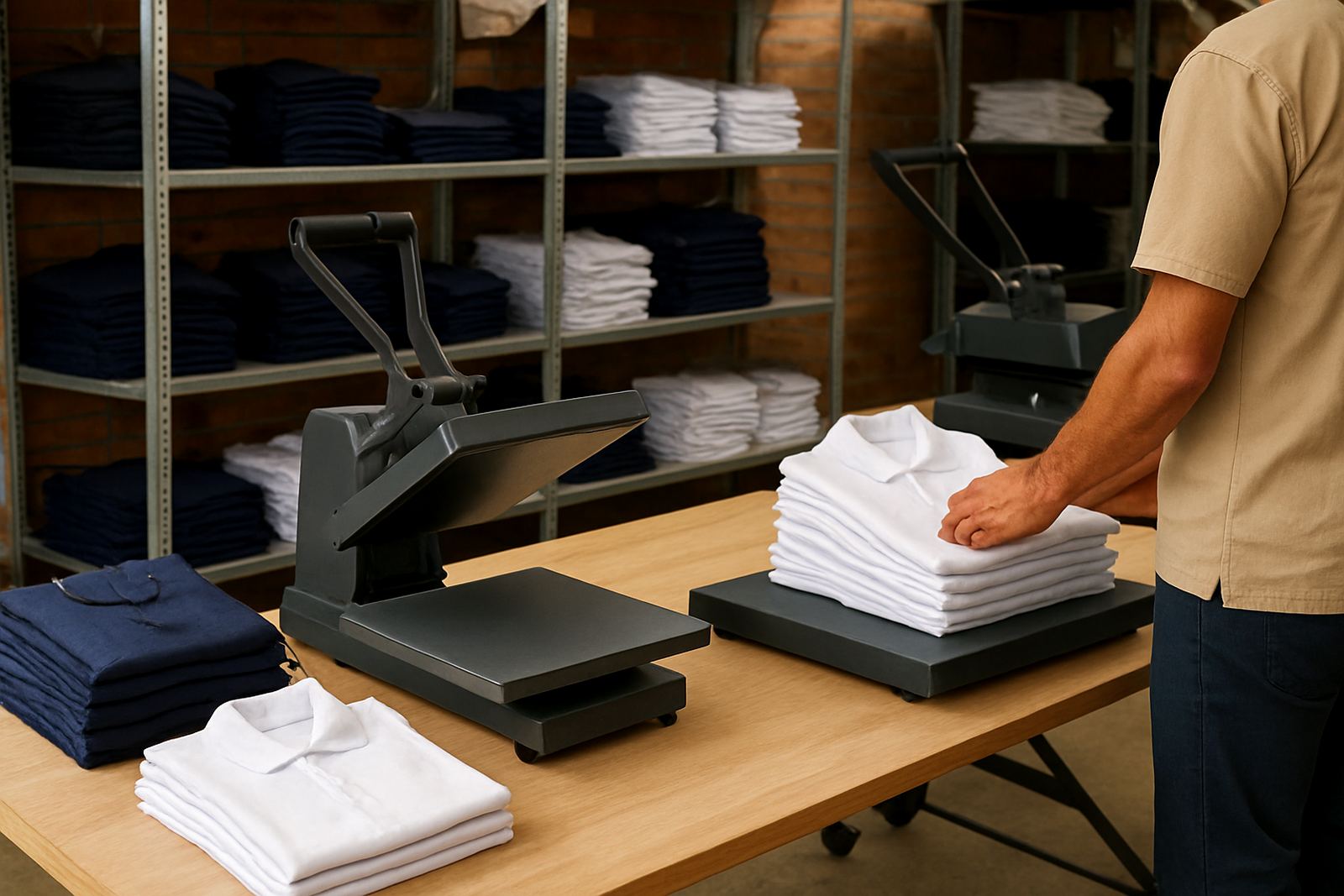
The client reported fewer spoiled garments and less time spent redoing transfers. They also found that the new workflow made stock control easier because finished garments could be pressed, packed and stored in one small area. In a garage business, every minute saved matters because the same room is often used for storage, packing and admin. The press gave them a stable starting point for growth without forcing them into a bigger premises too soon.
We checked in after the first production runs and confirmed that the controller settings remained stable and the cover was bedding in properly. The owner also liked that a spares path was already in place, so if a heating element or controller issue comes up later, they know what to do and who to call.
What we would repeat on the next garage setup
If we did this project again, we would keep the same formula: match the machine to the room first, then build the workflow around the operator. Small spaces need discipline, not complicated equipment. A press that is easy to control, simple to service and quick to learn will always beat a machine that looks impressive but is awkward to use every day.
We would also keep the same emphasis on training in the first fortnight. That is when habits are formed, and it is when the operator learns how to read pressure, fabric behaviour and transfer response. A starter customer needs support that is practical and direct, not a pile of theory. For a garage startup in Centurion, the right support made the difference between a machine on a stand and a proper working setup.
The outcome was straightforward: a small business in a residential area now has a clean, usable heat press station that can handle steady transfer work, with room to grow into more volume later if needed.
Key facts
| Project location | Centurion, Gauteng |
|---|---|
| Client type | Home based garment decorator |
| Machine type | Flat heat press for T-shirts and transfers |
| Platen size | 38 x 38 cm |
| Setup timeline | 2 weeks |
| Services included | New Press Setup, Operator Training, Temperature Checks, Pressure Adjustments, Phone Tech Support |