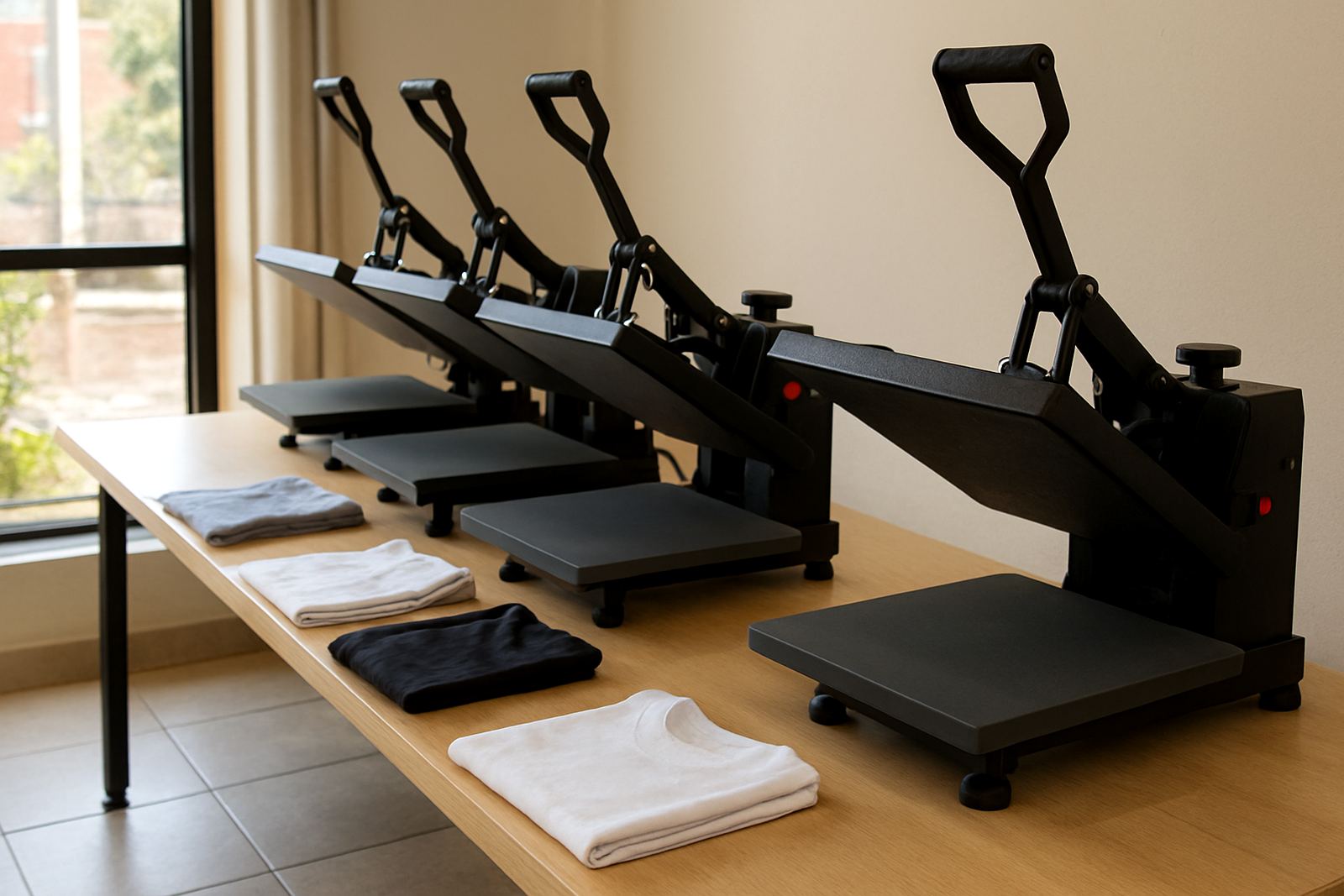
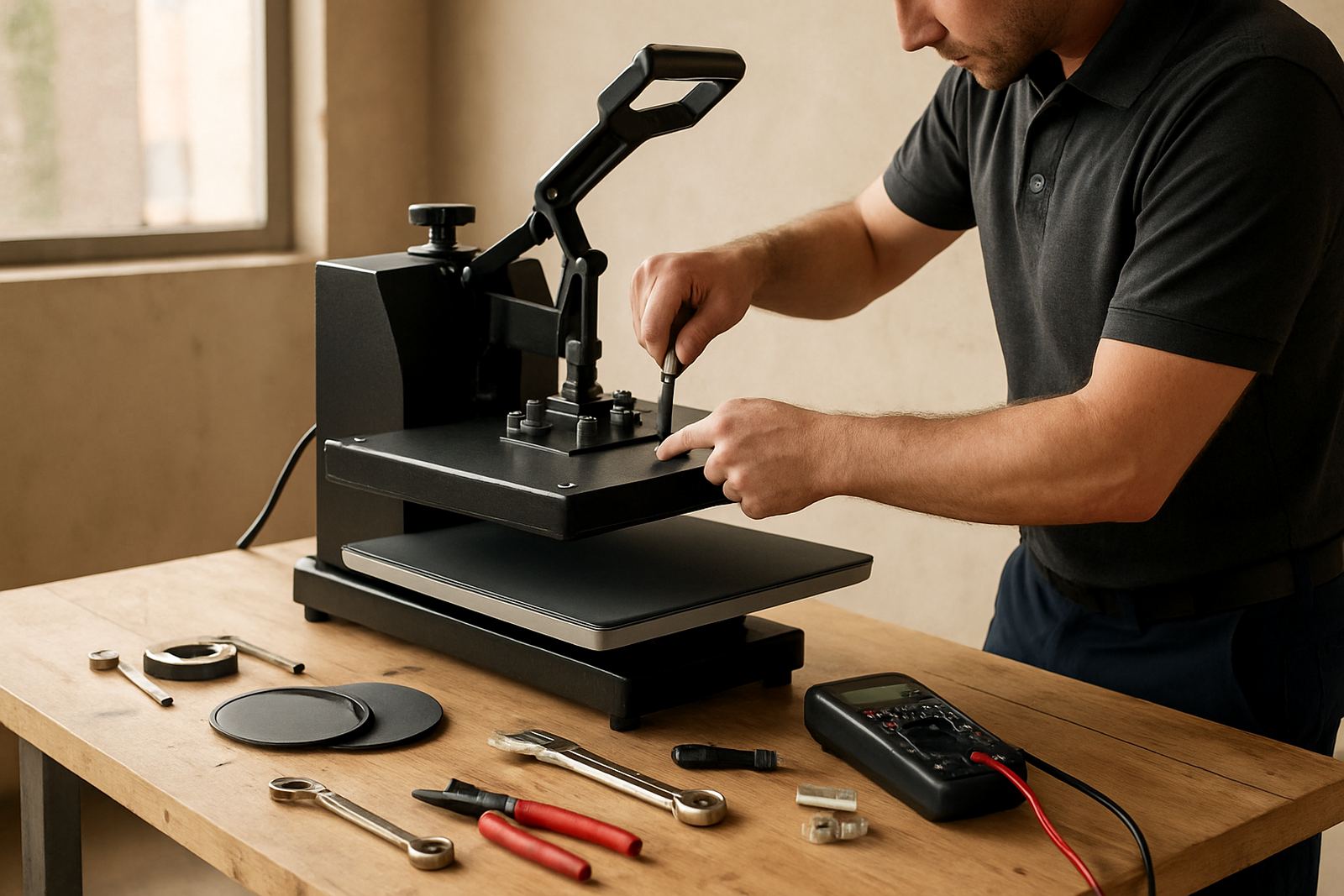
What our pneumatic line service covers
Air-operated presses rely on clean, steady pressure to close evenly and open safely. When a line leaks, a fitting works loose, or an actuator starts to slow down, the press can lose consistency fast. Our pneumatic line service focuses on the full air path from the supply point to the moving parts on the press, so operators get even pressure across the platen and fewer interruptions during a run.
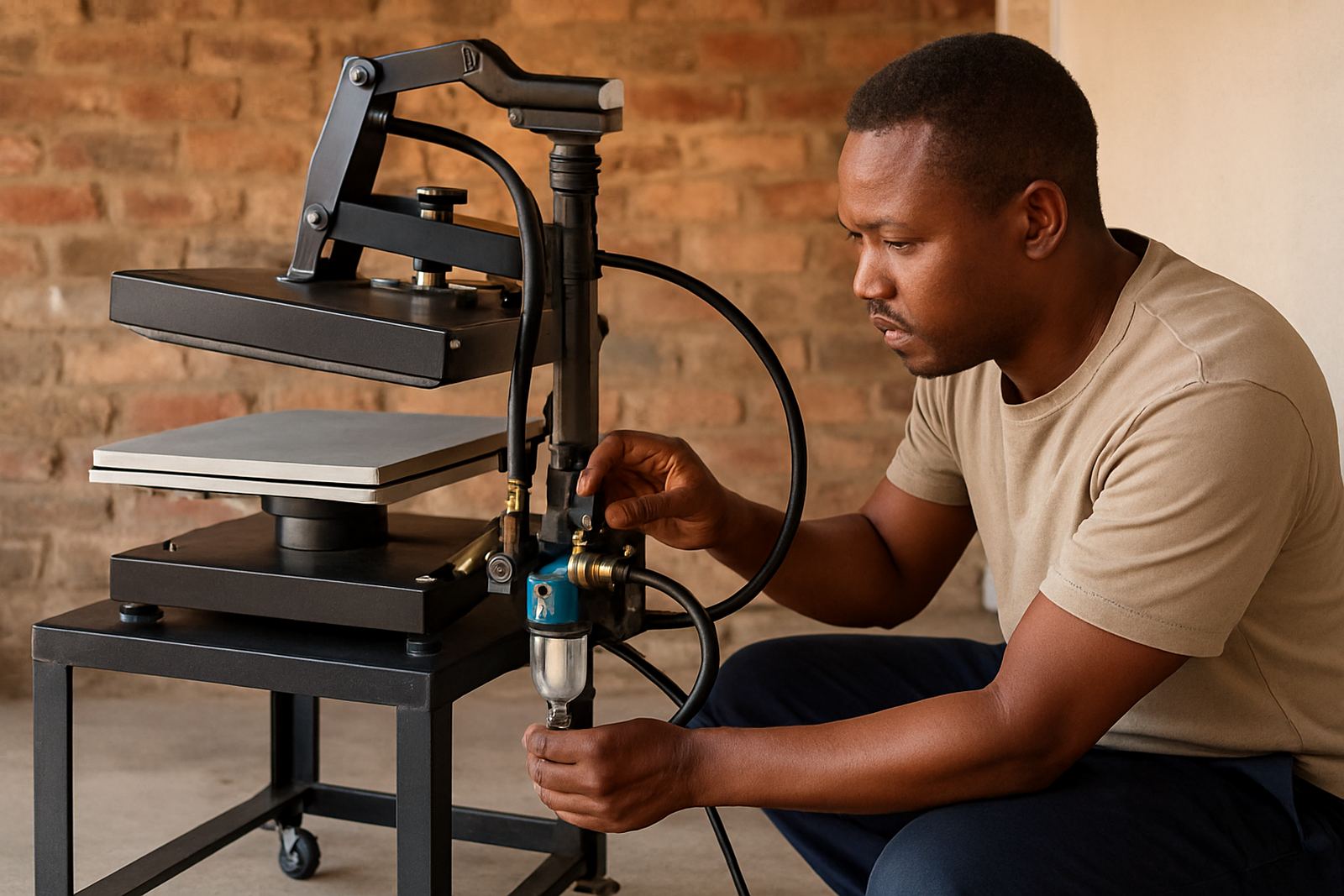
We inspect the hose run, push-in fittings, solenoids where fitted, actuators, regulators and quick-connect couplers. We also look for worn seals, kinks, water in the line and signs of oil contamination. On-site or in workshop, the aim is to catch the small faults before they become a bigger shut down. That matters in hot production rooms, and also in coastal areas where humidity can affect fittings and filters quicker than expected.
- Air line inspection and leak tracing
- Fitting replacement and reseating
- Actuator stroke checks and movement tests
- Regulator, gauge and pressure setting checks
- Moisture, condensation and contamination checks
- Safety and return-to-open function testing
How we handle a pneumatic service call
We start with the fault report and the model details, then decide whether the work can be done on site or should come into workshop for a full strip and test. For a shop in Midrand, Johannesburg or Pretoria, we often arrange a same-week callout where access is clear. For Durban, Cape Town, Bloemfontein and outlying areas, we can guide the first checks over the phone and then arrange courier or an installation visit when needed.
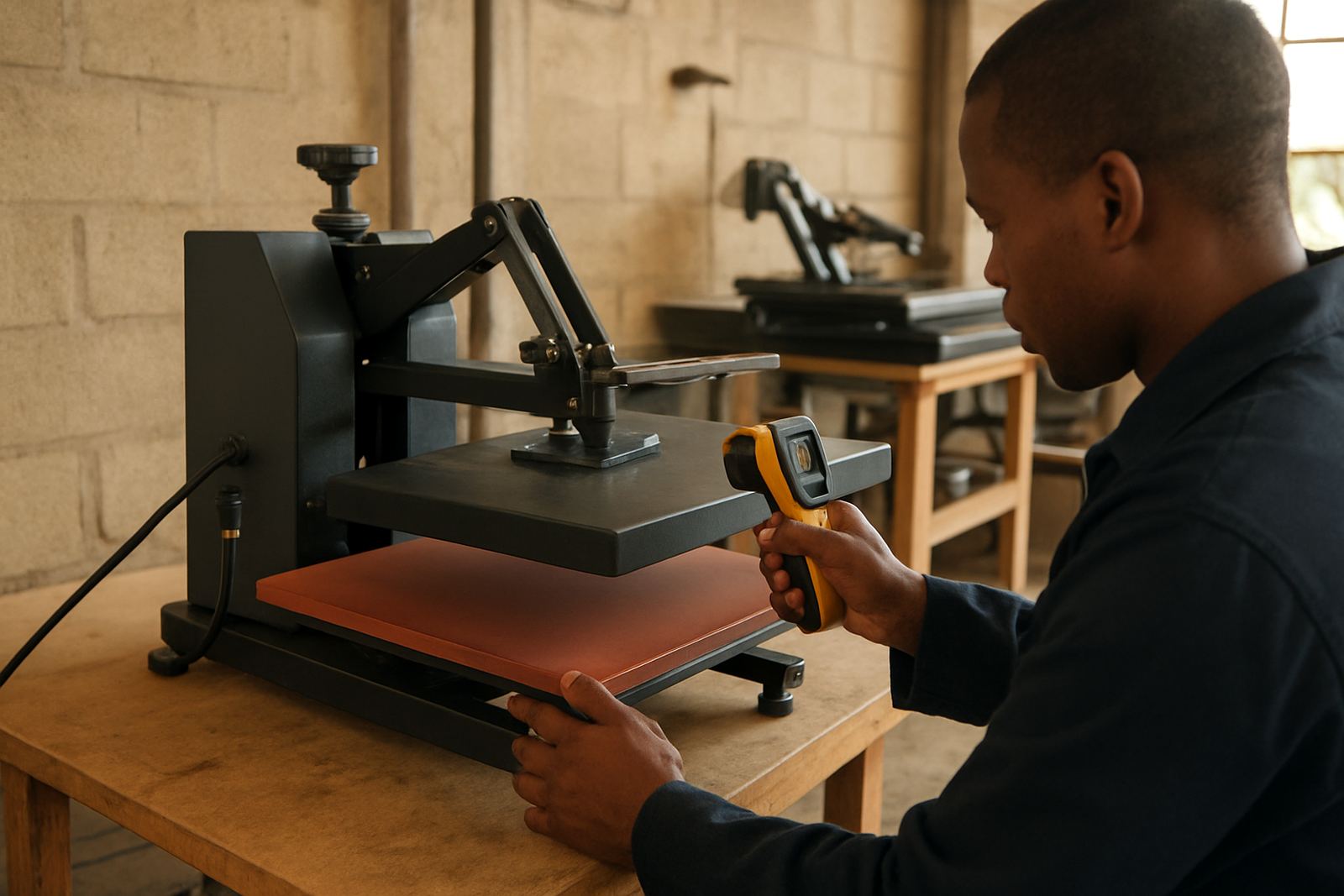
Once the unit is in front of us, Riaan and the technical team isolate the air supply, test the press through its cycle, and record the exact fault. If a hose is split, the replacement is cut to length and fitted properly. If a cylinder or actuator seal is tired, it is stripped and assessed before any parts are ordered. We do not guess at pressure related faults, because a press that closes too hard can damage garments and a weak one can cause poor transfer bonding.
- Initial fault assessment and pressure reading
- Isolation of the air supply for safety
- Visual and physical inspection of lines and fittings
- Test cycle under load and no-load conditions
- Repair, replacement or reseating of worn parts
- Final pressure and return stroke verification
Parts and specs we check on air-operated presses
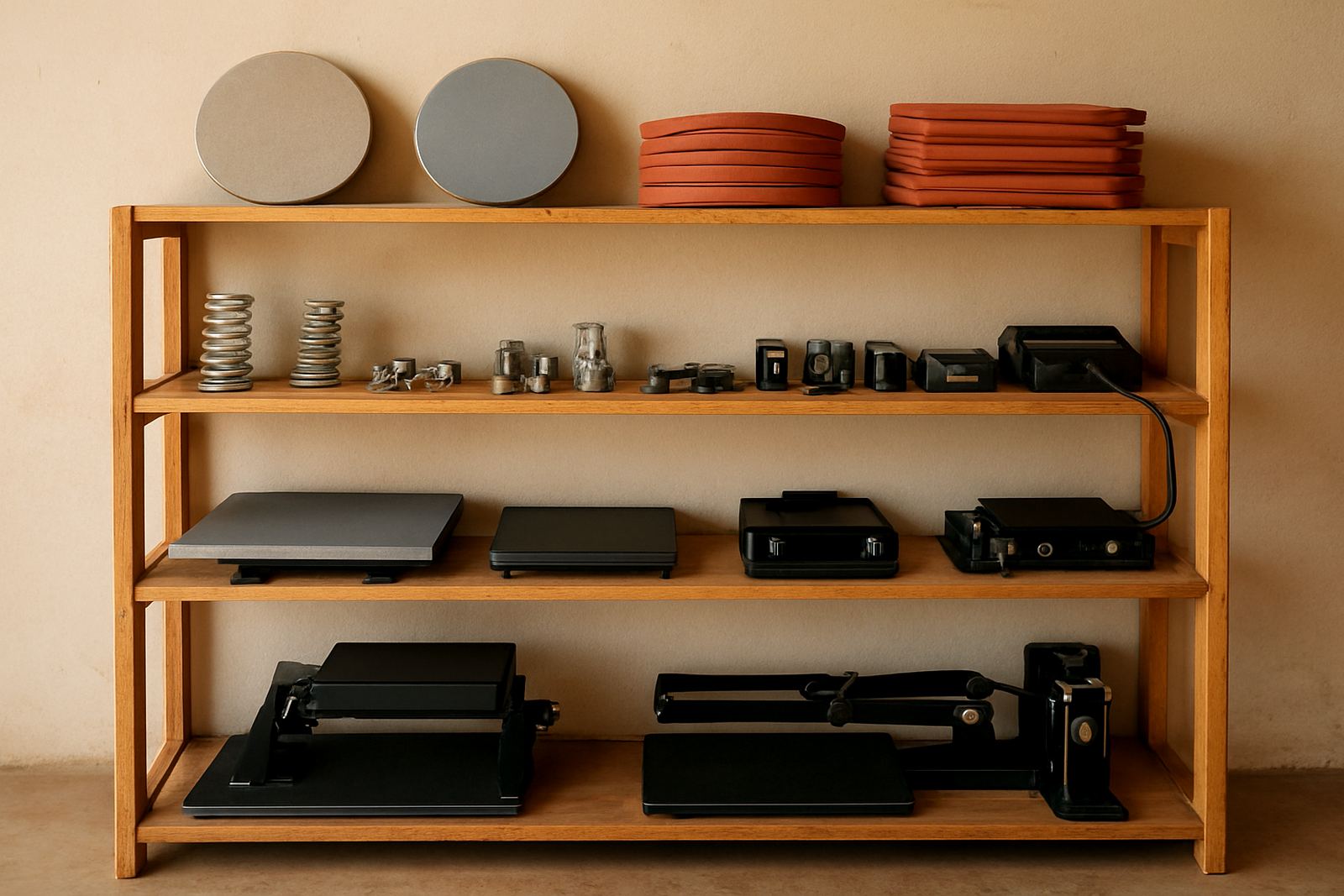
Pneumatic systems on flat heat presses are generally simple but they must be matched correctly to the machine. We check the line size, fitting type and actuator condition against the press specification so the repair lasts. If a workshop has several presses, we can also review whether the air delivery is suitable for the load being placed on it, especially where more than one unit is running from the same compressor.
The most common issues are low line pressure, slow cylinder return, air leaks at the coupler and damaged tubing near the moving arm. In some cases the problem is not the press itself but the compressor output or the line routing. Long hose runs, undersized fittings and poor drainage can all cause pressure drop. That is why we look at the full setup, not only the visible fault.
- Working pressure range: typically 4 to 8 bar, subject to press model
- Common hose size: 6 mm or 8 mm pneumatic tubing
- Fittings checked: push-in, threaded and quick-release types
- Actuator travel: checked for smooth full stroke and return
- Regulation: pressure and flow adjusted to suit the platen action
- Moisture control: water traps and drainage points inspected
Turnaround times for Midrand and nationwide support
Turnaround depends on the fault, the age of the equipment and whether parts are on hand. A simple fitting change or pressure reset can often be handled quickly, while a worn actuator or controller-linked air fault may take longer if testing is needed. We keep clients updated so they know what is happening before the job stalls a production line.
For Gauteng clients, same-day assessment is sometimes possible when the schedule allows. Straightforward workshop repairs are often completed within 1 to 3 working days once the unit is booked in. Courier jobs from other provinces usually need additional transport time, which we factor into the return date. If a customer is under pressure with urgent work, loan unit support may be discussed where suitable.
- Simple adjustments: same day or next working day when possible
- Standard repair work: 1 to 3 working days after intake
- Parts dependent work: lead time advised after inspection
- Courier support: extra transit time added for national clients
- Urgent production faults: prioritised where workshop capacity allows
Pricing approach for pneumatic line repairs
We price pneumatic line service according to the actual fault and the labour involved. That keeps it fair for small decorators who only need a pressure correction, and it works just as well for larger shops with multiple presses. Before any major work starts, we explain what we found and what the repair path looks like so there are no surprises on the final invoice.
Minor inspections and adjustments are usually charged as service labour, while replacements are priced by the part and the time needed to fit and test it. If the job requires workshop stripping, custom hose work, or coordination with a compressor issue, we quote that separately. Clients often ask whether it is cheaper to repair or replace the full line assembly, and the answer depends on the age of the tubing, the condition of the actuator and whether the rest of the system is sound. We will say so plainly.
- Inspection based pricing for fault finding and assessment
- Labour charged on actual repair time
- Parts quoted separately where replacement is required
- Workshop and courier costs confirmed before booking
- Options explained when repair or replacement are both possible
Service intervals that keep air systems steady
For a small shop that runs a few jobs a week, a pneumatic check every 6 to 12 months is usually enough, provided the compressor and lines are maintained properly. Busy print rooms working daily, especially in hot or dusty conditions, should look at the air system more often. If a press starts behaving differently, do not wait for the next interval. A change in cycle speed, pressure or return action is usually the first sign of trouble.
Our team recommends a basic monthly visual check by the operator, plus a scheduled service at fixed intervals. That means looking for loose fittings, moisture in the line, damaged tubing and any hiss from the actuator area. If you run multiple presses from one compressor, line load should also be reviewed when output increases. It is cheaper to keep the pressure stable than to recover from damaged transfers or a press that is left out of service on a busy Friday.
- Monthly: quick check for leaks, moisture and loose fittings
- Every 6 months: service for regular production environments
- Every 12 months: service for lighter use and hobby setups
- After a major pressure fault: full inspection and retest
- After relocation: line routing and actuator check before resuming work
Key facts
| Service type | Inspection and repair of air lines, fittings and actuators on pneumatic heat presses |
|---|---|
| Coverage area | Midrand, Gauteng and nationwide by courier or scheduled visit |
| Typical pressure range | 4 to 8 bar, depending on press model and workshop setup |
| Common line sizes | 6 mm and 8 mm pneumatic tubing |
| Support options | On-site checks, workshop repair, phone tech support and loan unit support |
| Typical intervals | 6 to 12 months, or sooner for daily production and humid conditions |