

What our phone tech support covers
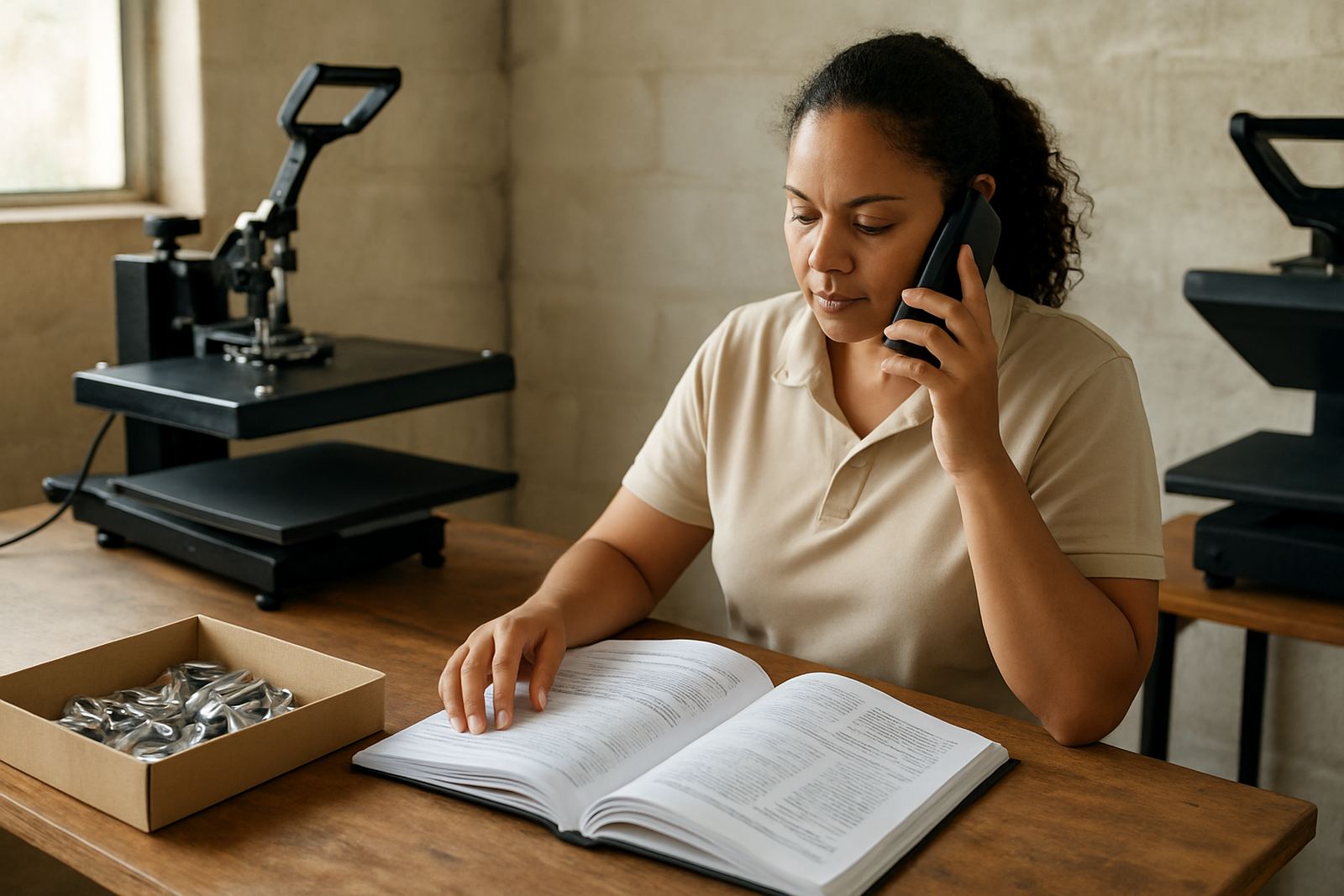
Our phone tech support is for small garment decorators, hobbyists and busy print shops that need practical help when a flat heat press stops behaving as it should. We guide you through the fault finding step by step, using the model details, symptoms and your production notes to narrow down the issue. This can save a wasted shift, bad transfers and avoidable call-out costs.
The support call can cover temperature drift, uneven heating, pressure that is too light or too heavy, controller errors, timer faults, tripping supplies, damaged pads, worn covers and general set-up checks. If the machine is unsafe to run, we will tell you straight and help you isolate it until a technician or part replacement is arranged. It is practical support, and honest feedback from your side helps us get to the point.
- Common operating errors and user setup problems
- Production faults such as scorching, ghosting and poor transfer adhesion
- Temperature, pressure and timing checks
- Basic controller and wiring symptom checks
- Advice on whether the issue can be solved remotely or needs workshop attention
How the remote troubleshooting process works
You contact us through the enquiry form on our contact page and give us the press model, the fault description, and what the machine is doing on the platen. We may ask for photos, a short video, the current temperature reading and the settings you are using for the garment and transfer type. Temperature readings and a short video usually show where the press fault sits.
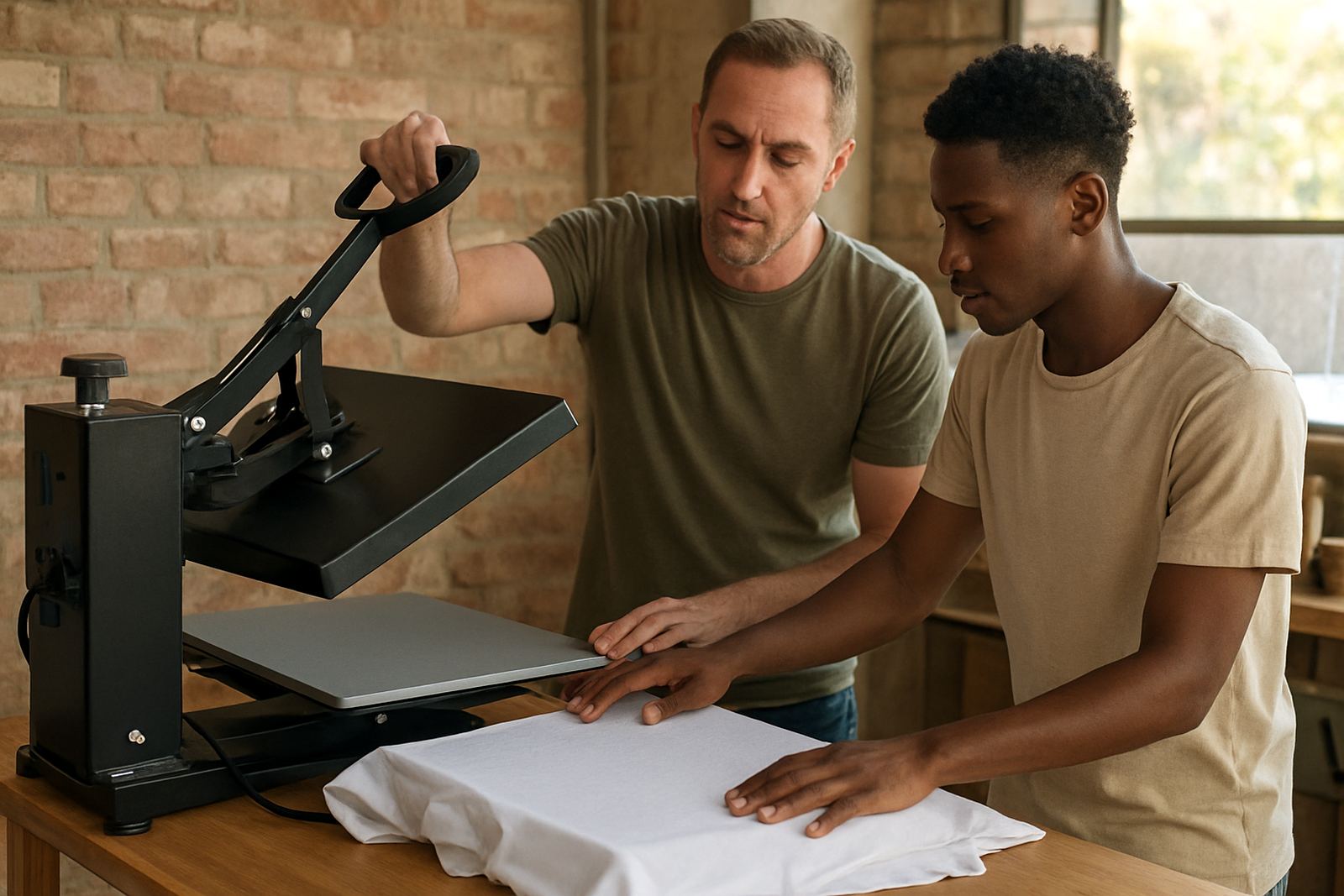
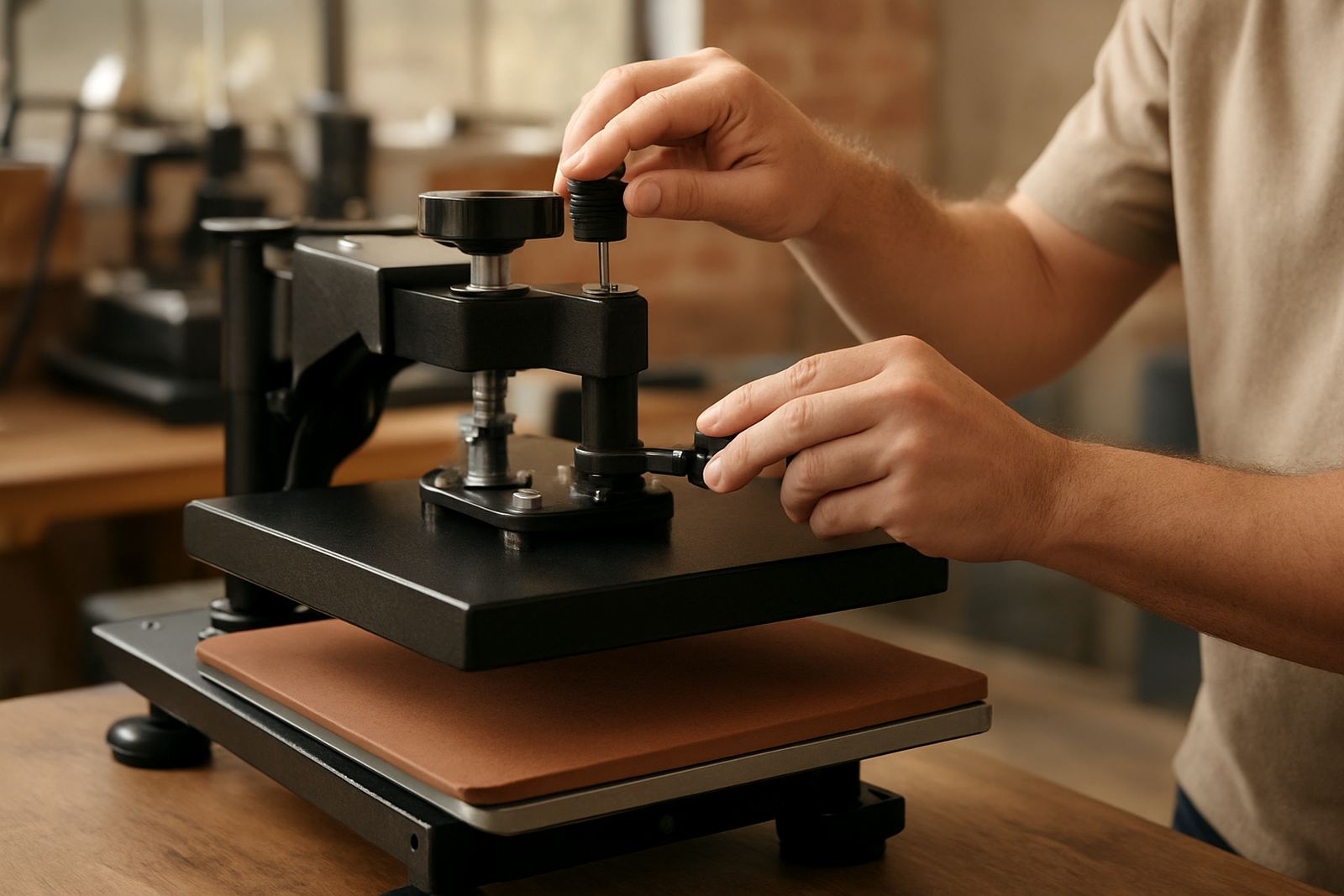
We then talk you through a sequence of checks in a clear order. That usually starts with power supply, controller settings, element behaviour, pressure balance and the condition of the pad and covering. If the machine is in a workshop with several operators, we also look at whether the fault is repeatable across shifts or only showing up with one operator, which often points to setup rather than hardware. Sometimes the fix is a small adjustment, sometimes it is a part change, and sometimes it is a service visit. We keep the process plain and direct.
- Submit an enquiry with the machine details and fault notes
- Share photos, video or readings if requested
- Work through guided checks with our technical team
- Receive next-step advice for repair, replacement or servicing
Typical faults we solve over the phone
Phone support is most effective when the press still runs but the result is wrong, inconsistent or unstable. That includes presses running too cool at one side, temperature overshoot after warm-up, pressure not transferring evenly across the pad, transfer film lifting on one corner, and the controller not matching the actual platen temperature. In many cases the machine is not broken, it is simply out of tolerance and needs a proper check.
We also help with the problems that cause repeated spoilage in production. If garments are sticking, prints are blurring, vinyl is lifting at the edges, or the press is leaving shiny marks on certain fabrics, we can help you work through material settings, dwell time and pressure. On humid coastal jobs, or in Midrand and Pretoria workshops where machines work long hours, we often find issues linked to worn covers, weak pressure or incorrect warm-up routines. A good call can prevent a week of bad output, no joke.
- Uneven heat across the platen
- Incorrect dwell time or temperature settings
- Transfer release problems and edge lift
- Pressure loss from worn pads, cushions or coverings
- Controller reading faults and tripping issues
Turnaround and response expectations
For straightforward faults, we provide guidance once your enquiry and machine details have been checked. More complex cases may need a second call after you have completed one or two checks or after you have sent a photo of the controller display or platen surface. If a spare part is needed, we will advise on the likely lead time and whether courier delivery makes sense to your area.
We support clients in Midrand, Johannesburg, Pretoria, the East Rand, the West Rand, Durban, Cape Town and Bloemfontein, and we also assist nationwide by courier when parts or loan unit support are required. Where load shedding is affecting the workshop, we will help you test safely after power returns so you do not chase a fault that came from a voltage dip rather than the press itself. Turnaround depends on the fault and the information you give us, but the goal is always to keep your line moving.
Pricing approach for support calls
Phone tech support is priced according to the time needed, the complexity of the fault and whether the issue can be resolved in one guided session or needs follow-up. Simple operator checks and setting corrections are usually easier to resolve than controller faults or intermittent heat problems. If the issue points to a failed element, damaged controller or pressure assembly problem, we will explain the next step before anything is ordered.
We keep pricing practical because small shops need certainty. You should know whether you are looking at a short support call, a spare part, or a repair that needs a workshop bench. If the machine can be saved with a phone session and a basic adjustment, that is usually the cheapest route. If it needs a proper strip-down, we will not pretend otherwise. Clarity matters more than sales talk.
- Charges depend on fault complexity and time spent
- Follow-up support is quoted if the issue returns
- Parts and courier costs are discussed before dispatch
- Workshop repairs are only recommended when remote correction is not enough
Keeping your press on schedule with regular checks
A flat heat press that is used every day should not wait for a breakdown before it gets attention. We normally advise a preventative check every 6 to 12 months, or sooner if the machine is in heavy daily use, running long shifts or operating in a dusty or humid environment. Shops doing high volume work should also keep a simple log of temperature, pressure settings and any recurring faults so changes are easy to spot.
Regular checks help catch worn pads, loose controller readings, uneven pressure and cover damage before they turn into spoilage. If your team changes often, a refresher support call can also help standardise how the machine is used across operators. That matters in busy shops where one person sets the press one way and another person sets it another way. Preventive care saves time, materials and a lot of back-and-forth later.
Who handles your support and what equipment details we need
Your support query is handled by our Midrand team, with technical guidance from Riaan Ferreira and customer support coordination by Nandi Dlamini. Sales and service queries are managed by the rest of the team as needed, including training, workshop support and logistics. Mandla van Rensburg oversees the business direction and service standards so the advice stays practical and consistent.
To help us assist you properly, have the press model, platen size, power supply details, current settings and a clear description of the problem ready before the call. If possible, note whether the machine is a single platen or a dual setup, whether it uses a manual or pneumatic action, and whether the fault started after a power cut, cleaning or part replacement. That little bit of prep can cut the call time right down and get you back to work quicker.
We support flat heat presses used for T-shirts, transfers and similar garment work, and we are set up to help clients across Gauteng and nationwide through the enquiry form on our contact page.
Key facts
| Service type | Remote phone troubleshooting for flat heat presses |
|---|---|
| Typical support scope | Temperature, pressure, controller, timer and production faults |
| Supported press sizes | Common flat platen sizes from 23 x 30 cm to 40 x 50 cm and larger |
| Power systems | Single phase workshop supplies and standard South African plug-in setups |
| Response target | Guidance for clear faults with complete enquiry details |
| Maintenance interval | Preventive checks every 6 to 12 months, sooner for heavy use |