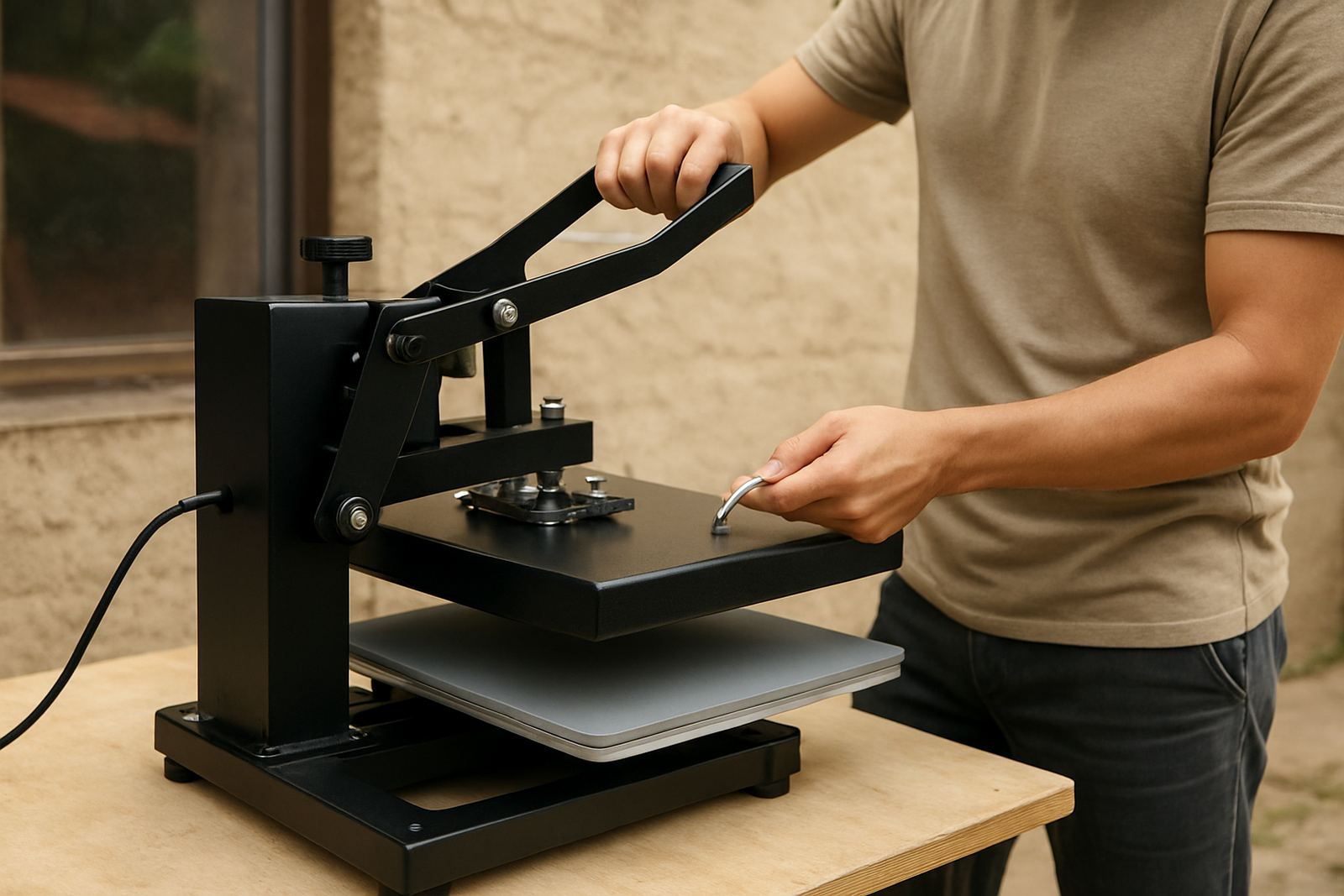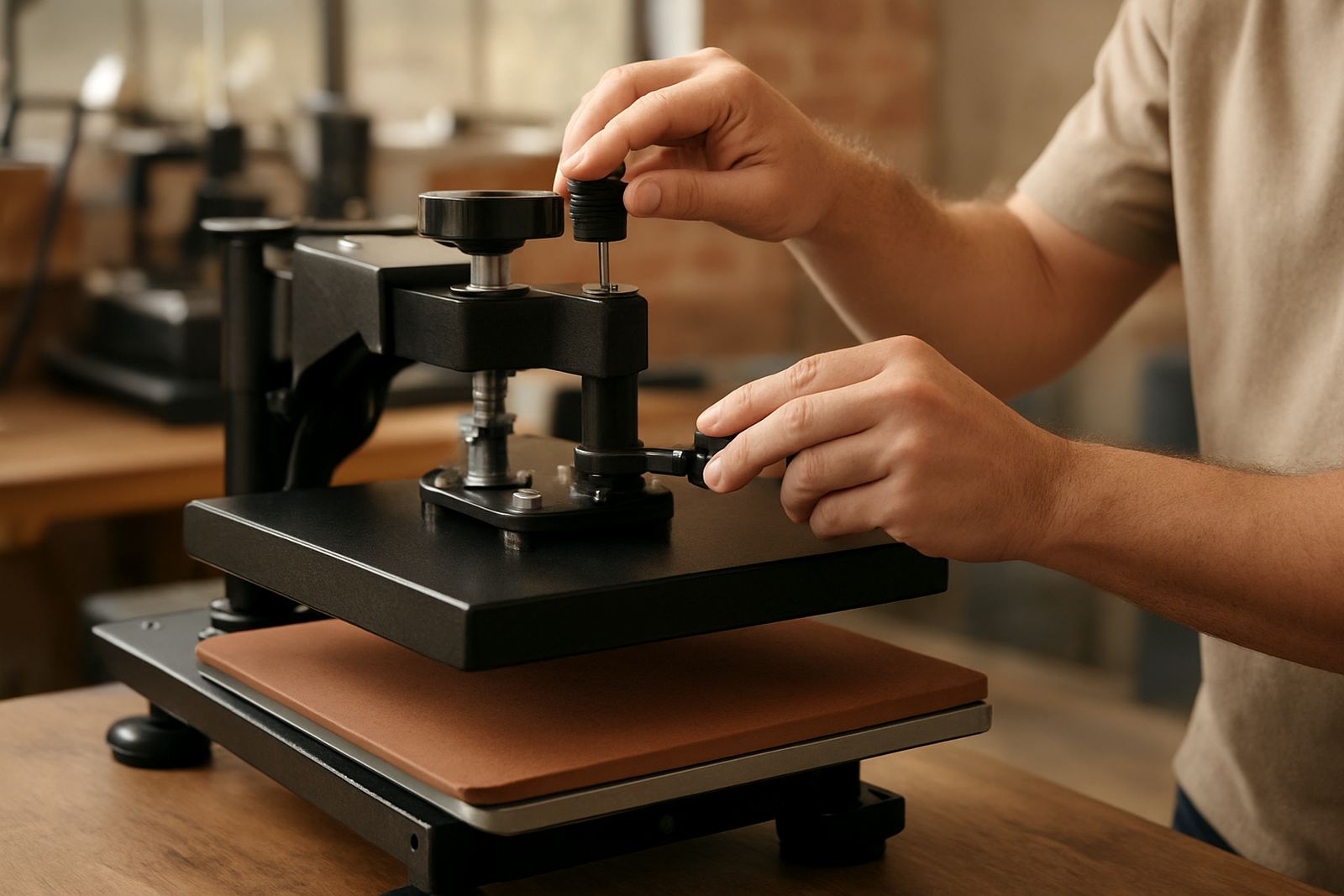

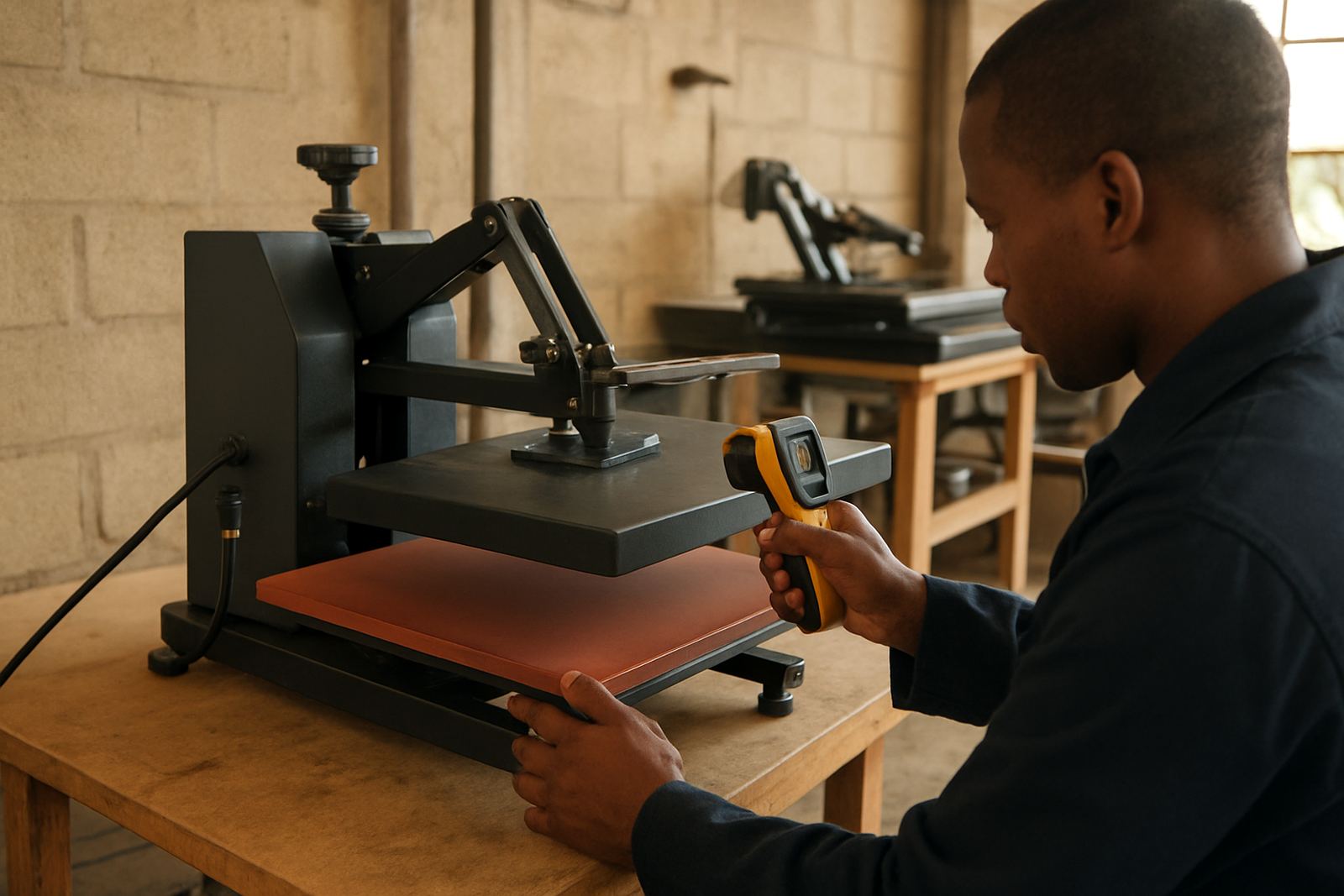

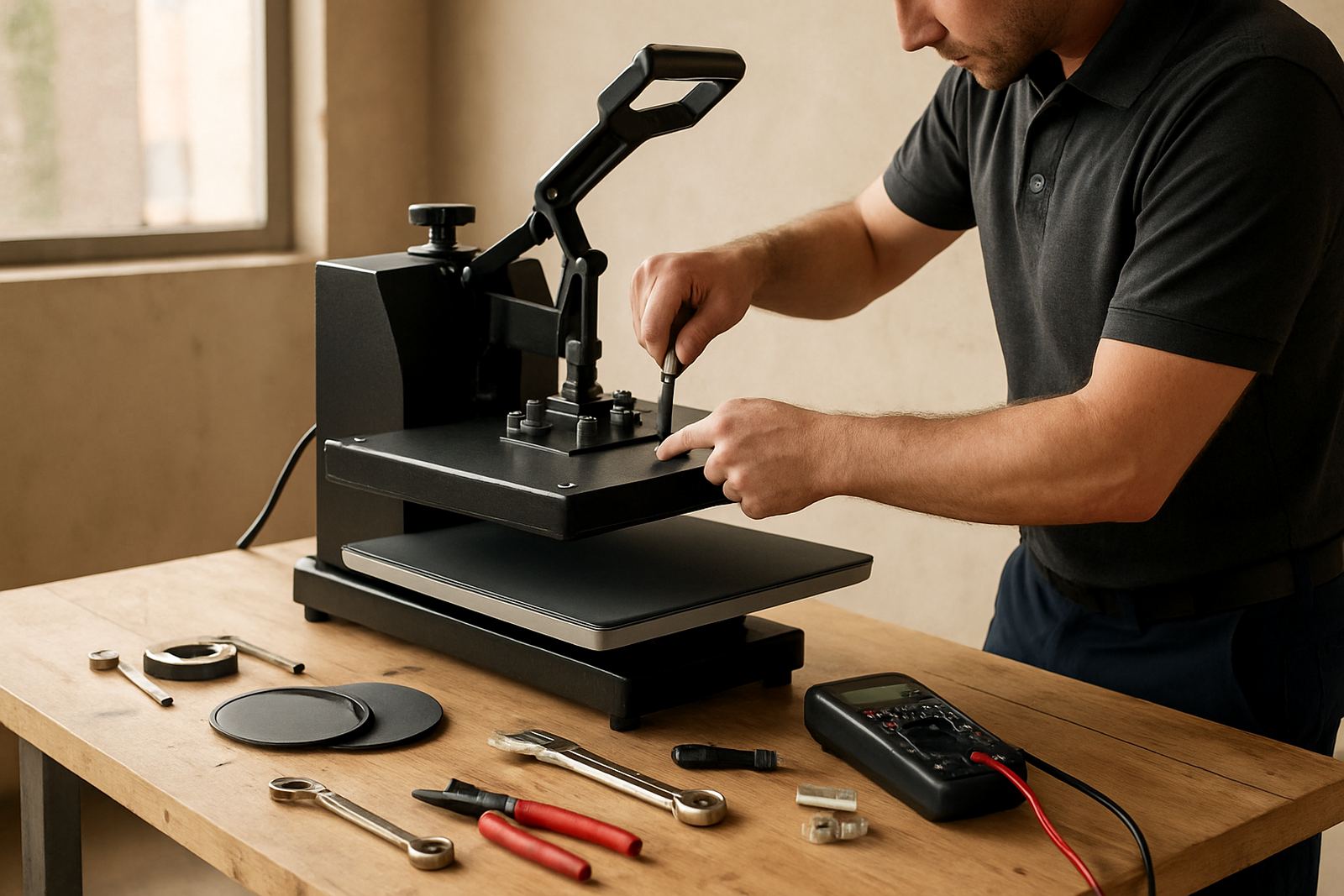
What A Temperature Check Covers On Your Press
A proper temperature check is more than looking at the display and taking a guess. We measure the working surface of the platen at several points, compare those readings to the set temperature, and check how evenly the heat spreads across the full press area. On many presses the centre, front edge and corners do not all behave the same, especially after long use or if the element has started to drift.
Our checks are suited to flat heat presses used for T-shirts, transfers, vinyl, sublimation sheets and similar garment decoration work. The service is practical and focused on real shop use, not just a lab number. If the press is running too cool on one side or overshooting in one area, you will see it in lighter adhesion, ghosting, patchy finish, or transfers that lift after washing.
- Surface temperature readings across the platen
- Comparison between set point and actual heat
- Heat spread check from centre to edges
- Basic inspection of controller behaviour
- Advice on whether adjustment, repair or servicing is needed
How We Test Heat Consistency Across The Platen
We use a straightforward process that suits small workshops and busy print rooms. First we let the press warm up fully so the readings reflect normal working conditions. Then we take measurements across the platen in a grid pattern, usually including the middle, each corner and the edges. This helps show whether the heat is even or if there are cold spots that could affect pressure sensitive transfer work.
For standard flat presses, we normally check at least 5 points on smaller platens and up to 9 points on larger platens. If the machine has a digital controller, we also compare the displayed setting against the actual reading at the platen face. If needed, we repeat readings after a short recovery period to see how quickly the press comes back to temperature between cycles.
- Warm up and stabilise the press before readings are taken
- Measure multiple points across the platen
- Check heat recovery after opening and closing cycles
- Record variation in degrees and note any problem areas
For most presses, a variation of plus or minus 5 degree C is workable for general transfer work. Tighter tolerances are better for high volume production, though the exact acceptable range depends on the machine and the job being run. If the spread is outside normal limits, we will explain what that means in plain terms so you can decide on the next step.
When To Book A Temperature Check
We recommend a temperature check if your transfers are curing unevenly, if you are getting inconsistent adhesion, or if you have had the press for a while and have never had it measured properly. It is also a good idea after an element replacement, controller repair, or if the press has been moved from one site to another. In Gauteng, a lot of presses are running in garages, small studios and industrial units where power interruptions and dust can affect performance over time.
Coastal humidity in Durban and parts of Cape Town can also change how materials behave, so it helps to know whether the problem is the press or the environment. If your shop is seeing more rejects during winter or during load shedding recovery, temperature variation may be part of it. A check is also useful before training new operators so they learn on a machine that is actually heating properly.
- Transfers lifting after washing
- Patchy colour or dull finish on one side
- Longer press times than usual
- Digital reading does not match real output
- Newly installed or recently repaired press
What Happens During The Service Call
Once your job is booked through the enquiry form, we confirm the press type, platen size and the symptoms you are seeing. For Midrand and the surrounding Gauteng areas, we can often arrange workshop handling or an on site visit depending on the machine and urgency. For customers further afield, we can advise on courier collection where appropriate, then test and report back with our findings.
The service normally includes a visual inspection, a heat consistency test, a short discussion on operating conditions and a written summary of the readings. If we find that the controller is reading accurately but the platen is uneven, the element or insulation may need attention. If the readings are drifting all over the place, the control system may need more work. We do not push unnecessary repairs, we simply tell you what the press needs and what can wait.
- Booking confirmation and machine details collected
- Temperature readings taken across the platen
- Findings explained with practical next steps
- Repair or service quote supplied if needed
Turnaround, Pricing And What Affects The Cost
Turnaround depends on how the press arrives, what we find and whether any parts are needed. A simple check can often be completed quickly, while a press that needs testing after repair or replacement parts may take longer. If the machine is in for a broader service, we will combine the checks so you do not pay for repeated handling. That keeps the process fair for small businesses and print shops working to a budget.
Pricing is based on the press size, service location, and whether the job is done on site or in our Midrand base. If a press needs calibration, repair, or follow up support, we quote that separately so you know exactly what you are paying for. Couriered units are assessed once received, and we keep you updated before any extra work goes ahead. For production shops, we can also look at planned maintenance blocks to reduce down time.
If your press is still under a recent setup or service with us, the temperature check may be quicker because we already know the machine’s history. That makes a difference when you are trying to get back to production without delay.
Maintenance Intervals That Keep The Platen Honest
For a small shop running a press a few times a week, a temperature check every 6 to 12 months is usually sensible. For busy print rooms, especially where the press is on most days or used for long runs, quarterly checks can save money by picking up drift before it causes waste. If the machine is old, or if it has had repeated element work, more regular testing is worth it.
We also suggest a check after any of these events: power faults, controller replacement, element replacement, moving the press between branches, or a period of heavy use during peak season. In South Africa, where load shedding and voltage changes can affect equipment, it is better to check than assume. One degree or two may not sound like much, but over a full run it can change the finish on a shirt and the life of the transfer.
FlatPress supplies this service from Midrand to Johannesburg, Pretoria, the East Rand, West Rand, Durban, Cape Town and Bloemfontein, with nationwide support by courier for the rest of South Africa. If you need a straight answer on what your press is actually doing, we will measure it and tell you plainly.
Key facts
| Service type | Temperature checks for flat heat presses |
|---|---|
| Measured tolerance | Typically checked across 5 to 9 points |
| Useful for | T-shirts, transfers, vinyl and sublimation work |
| Typical variation target | About ±5 degree C for general use |
| Turnaround | Depends on condition, location and parts required |
| Coverage | Midrand, Gauteng and nationwide by courier |