
What Our Operator Training Covers
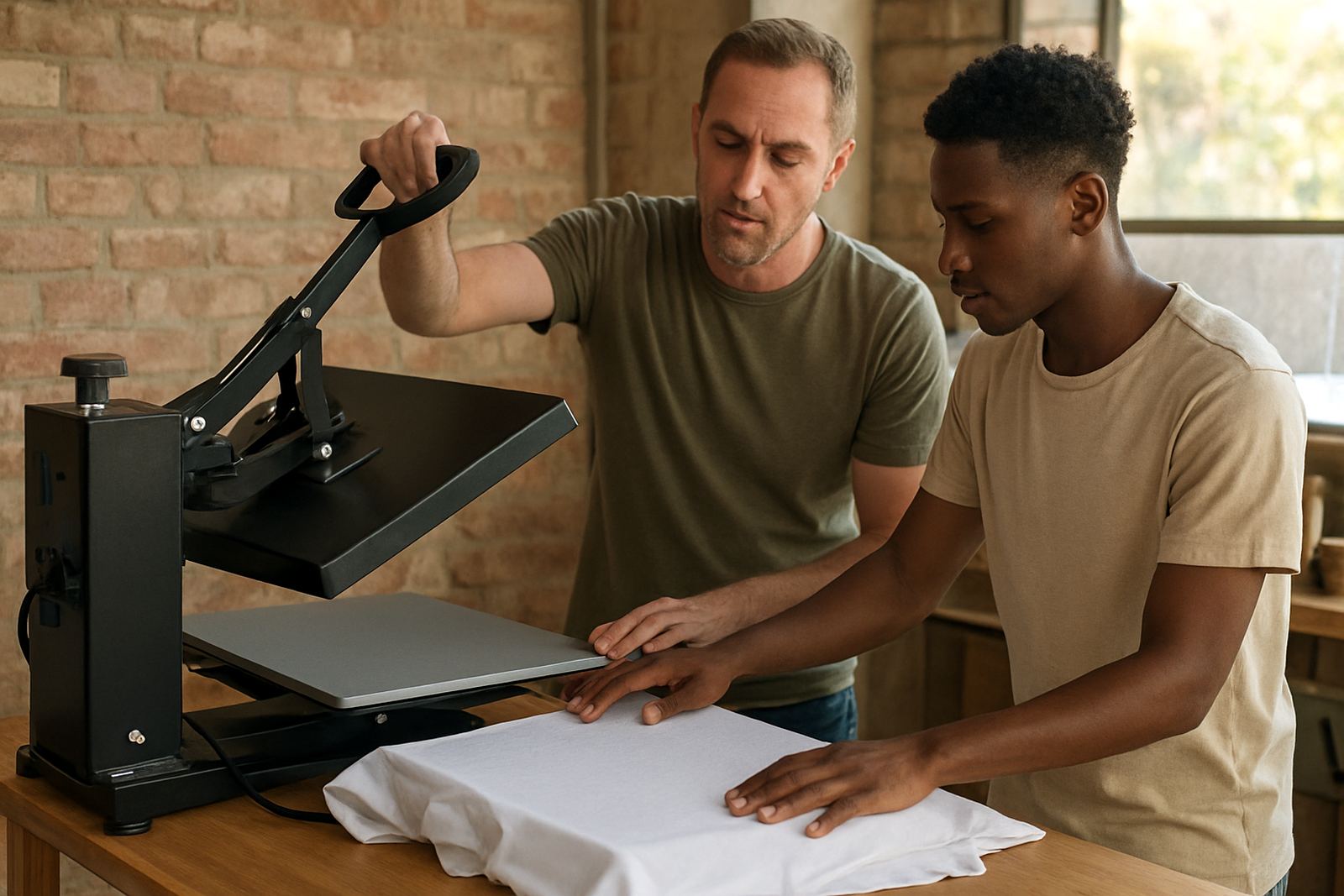
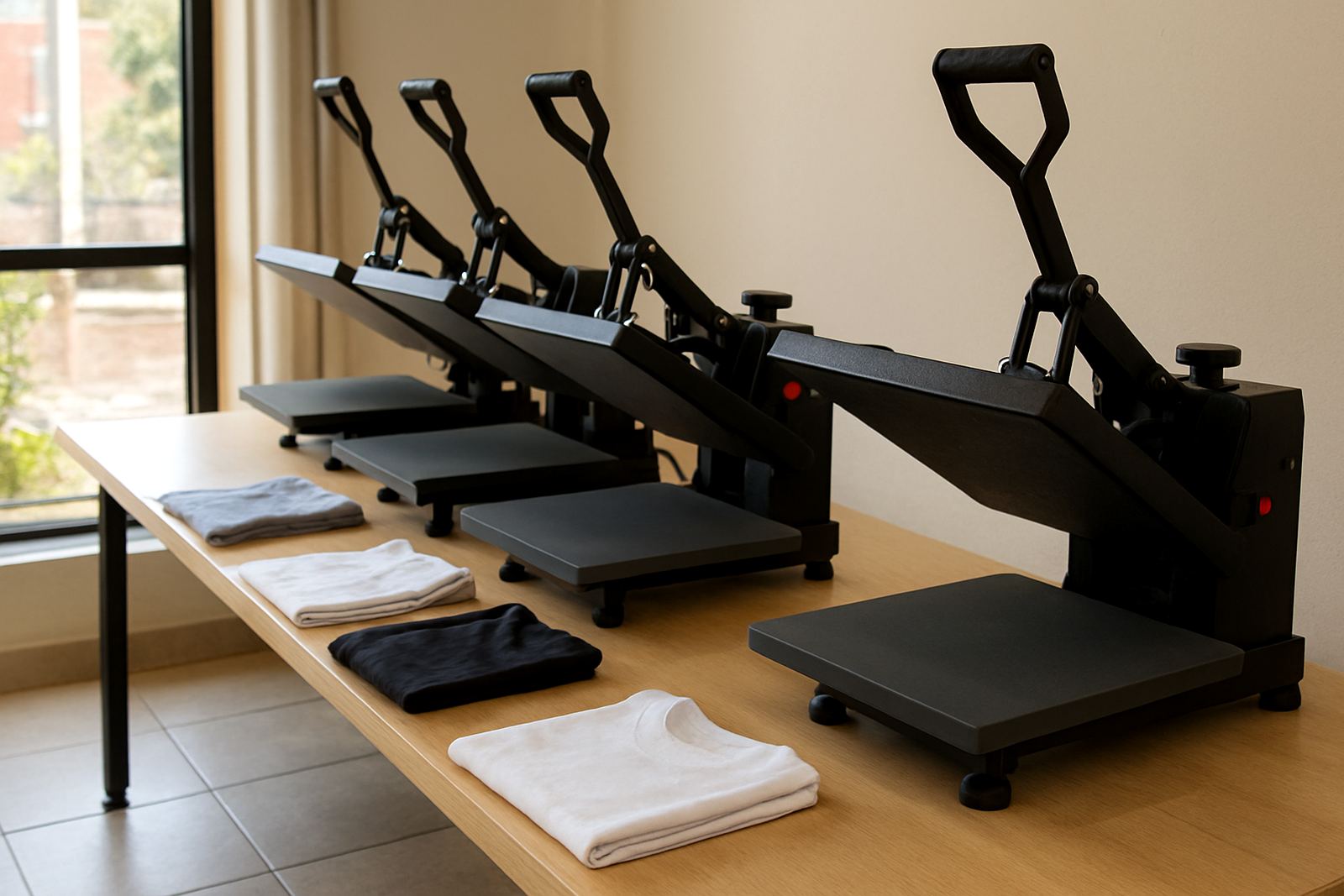
Our operator training is practical and is done on the actual press you use in your shop, workshop or home studio. We cover the full working routine, from switching on and checking the controller to loading garments, aligning transfers and removing finished items without scorching or ghosting.
Each session is aimed at the people who will run the machine every day. That includes new staff, a business owner learning the process, or a print shop team that needs consistent output across shifts. We also cover common problem points such as uneven pressure, under-cured transfers, damp garments and the effect of humidity in places like Durban and coastal Cape Town.
- Temperature setting and controller reading checks
- Dwell time for different transfer types and fabrics
- Pressure adjustment for light, medium and firm contact
- Garment loading, alignment and pre-press routine
- Cooling, peel timing and post-press handling
How the Training Session Is Done
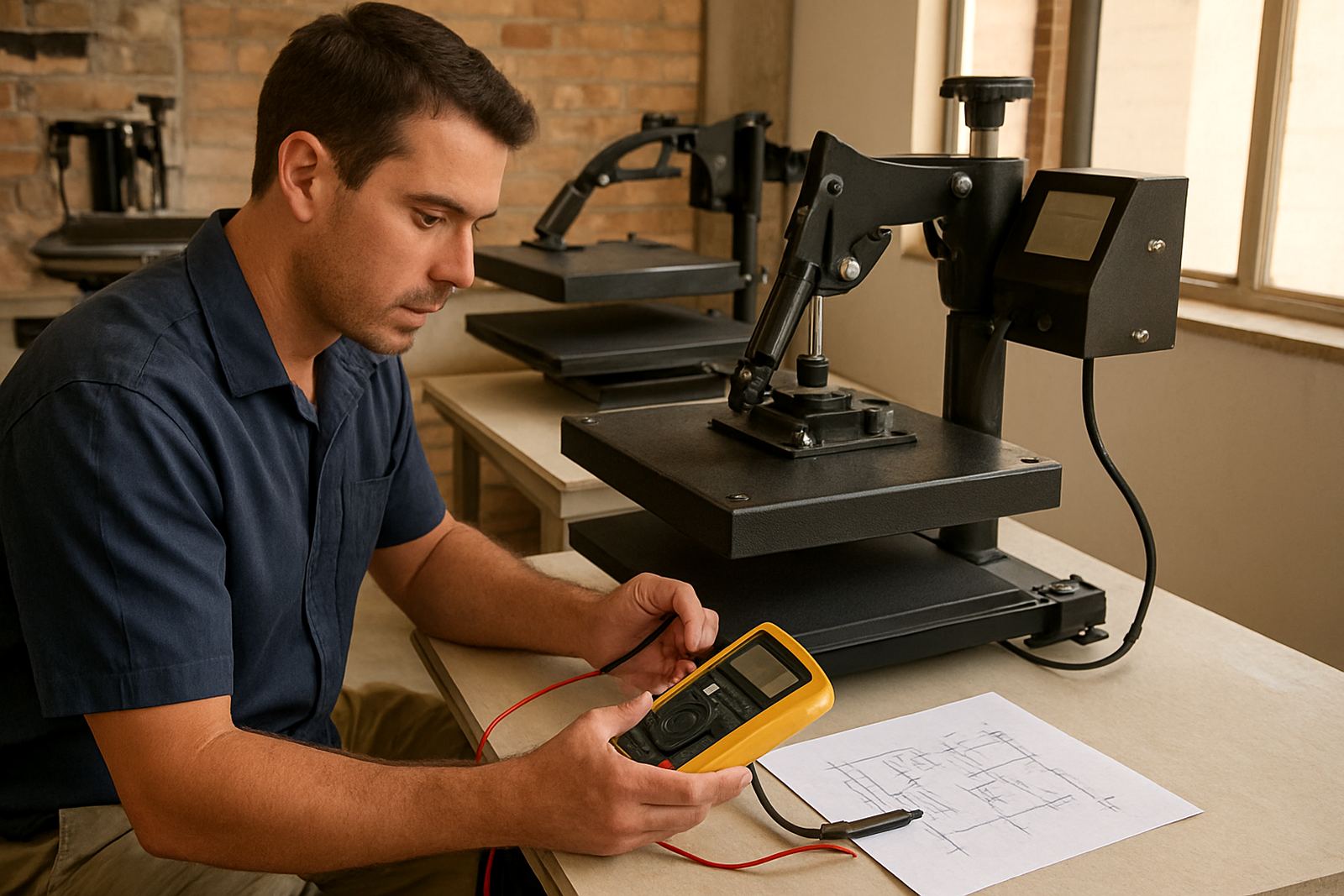
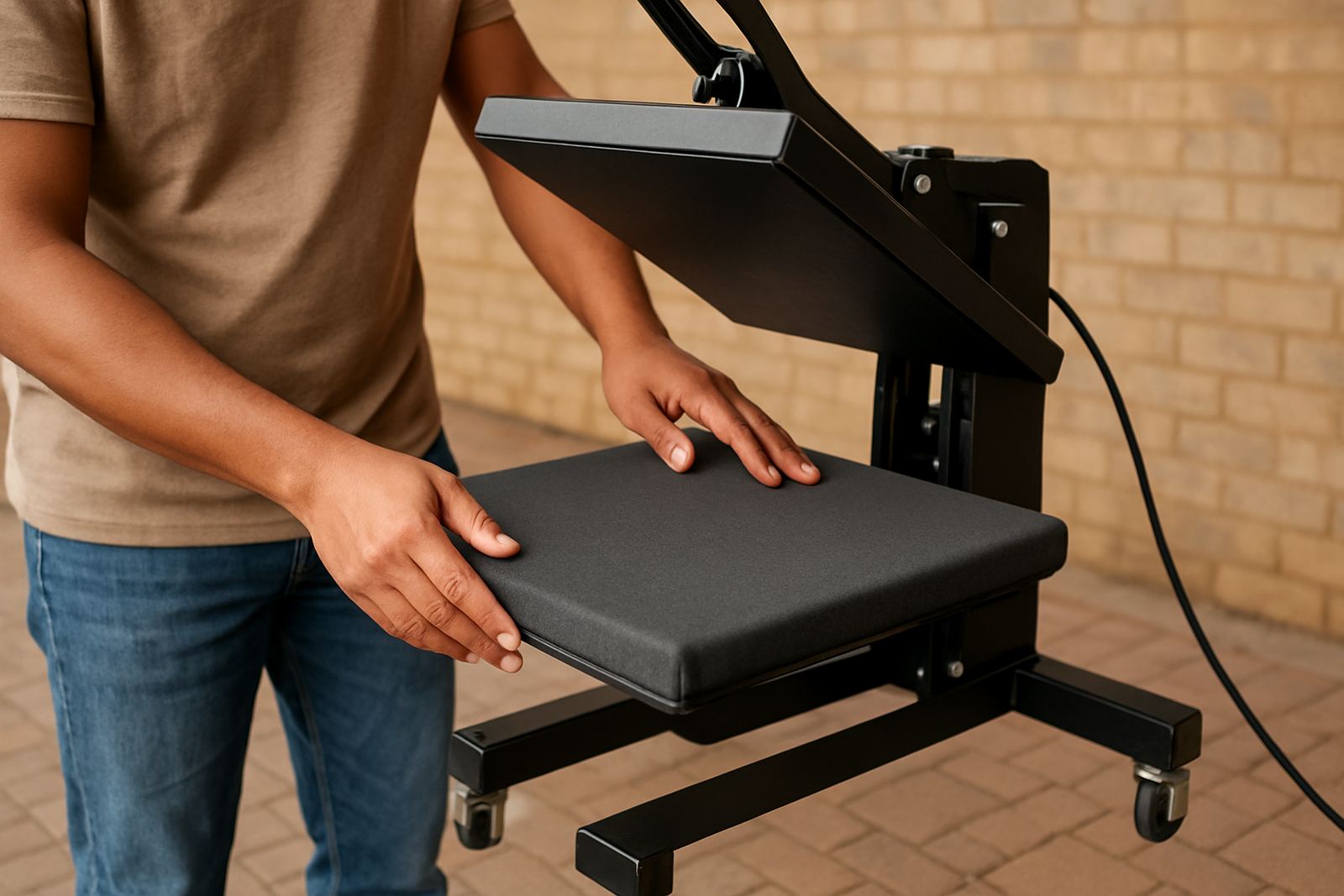
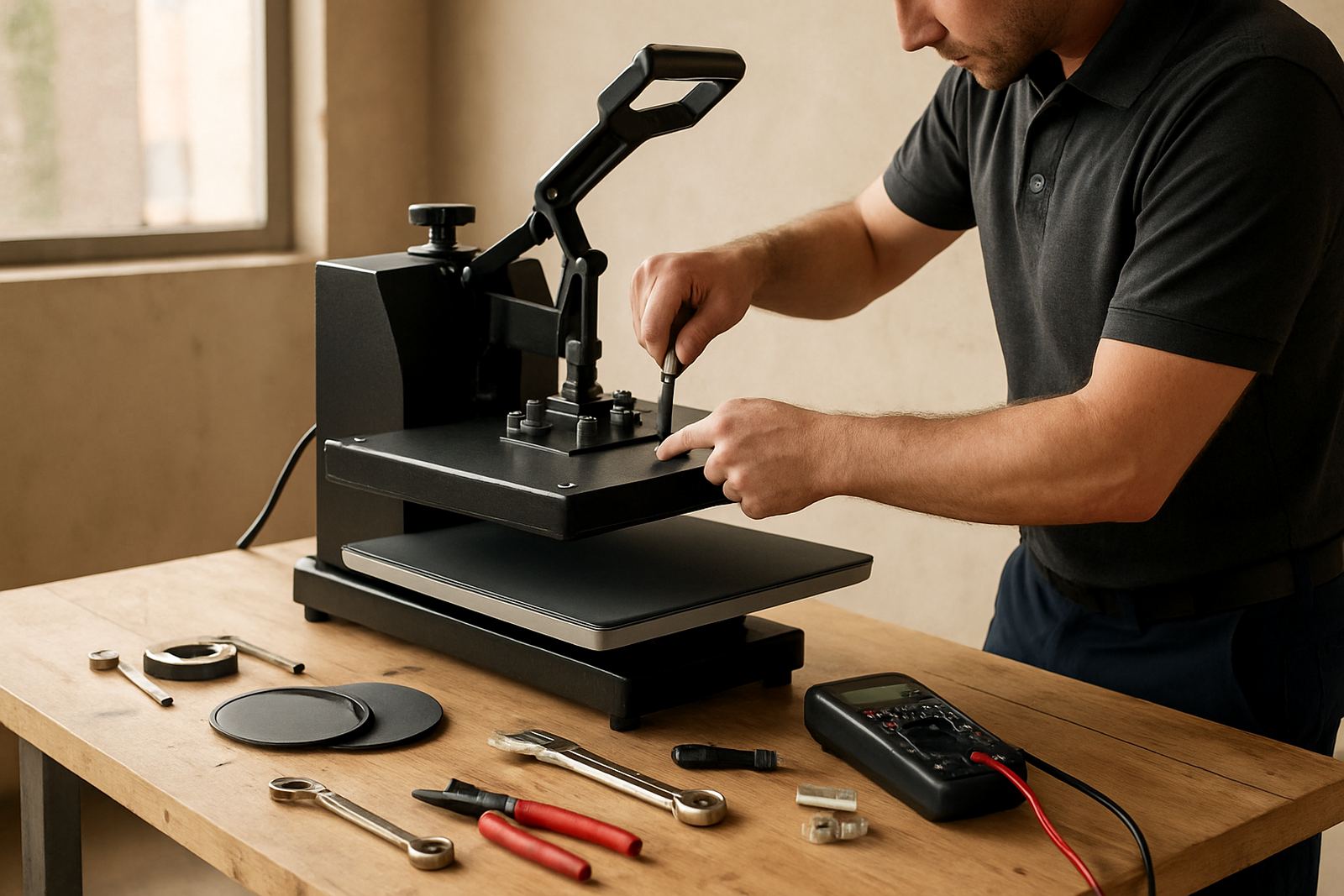
We start with a short machine inspection so we can confirm the platen size, controller behaviour and basic condition of the pad and covering. After that, the trainer explains the sequence step by step, then each operator does the process under supervision. This is not just theory, it is repeated until the user can run the press without help.
For Gauteng clients, training can be arranged at our Midrand base or on site in Johannesburg, Pretoria, the East Rand and West Rand. For shops in Durban, Cape Town, Bloemfontein and other areas, we can arrange support through scheduled visits or by couriering replacement parts ahead of time if the machine needs a small fix before the visit. We keep the training practical and direct, with plain instruction and clear checks at each stage.
- Pre-training assessment of the press and controller
- Demonstration run by the trainer
- Hands-on operator practice with guidance
- Basic fault spotting and correction tips
- Final check of output and repeatability
Press Settings We Teach Your Team To Control
Good output depends on the right balance between temperature, time and pressure. If one setting is off, the result can be patchy, lifted at the edges or overdone on the fabric. We teach your team how to make small adjustments for different materials, from cotton tees to polyester blends and transfer paper jobs.
We also explain how to work with actual shop conditions. In winter a cold room may need a longer warm-up and extra pre-press time. In summer, especially in small rooms with poor airflow, the heat press can behave differently and need slightly different dwell times. We show operators how to test safely and keep notes so results stay predictable week after week.
- Temperature range checks for common garment work
- Pressure test methods for thick and thin items
- Dwell time adjustment for light and heavy transfers
- Pre-press timing for moisture removal
- Simple record keeping for repeat jobs
Support After Training
Training does not end when the session ends. If your team has a question after a first production run, we can assist by phone with quick checks on settings, loading or output quality. This is useful when you are busy with orders and need clear guidance rather than losing half a day on trial and error.
If the issue is mechanical, we can advise on pressure loss, controller faults, platen wear or damaged coverings and arrange the next step. That may be a workshop repair, an element replacement, or a spare part sent by courier. Where possible, we keep downtime short so your press can get back into service without a long wait.
- Phone-based aftercare for trained operators
- Troubleshooting on temperature, pressure and peel issues
- Workshop follow-up where a repair is needed
- Spare parts supply for common wear items
- Loan unit support on selected jobs when available
Turnaround Times and Pricing Approach
Training bookings are usually arranged within a few working days, depending on your area and whether the session is on site or at our Midrand base. For Gauteng clients, shorter lead times are often possible. For national jobs, we plan around courier timing, route scheduling and technician availability so the visit is worthwhile and properly prepared.
Our pricing is based on the time needed, the number of operators, the location and whether the job includes setup checks or minor adjustments. We do not push a one-size-fits-all fee. A single operator refresher on one press is priced differently from a full day training session for a busy print shop with several machines. If a machine needs extra attention before training can start, we explain that upfront so there are no surprises.
- Single operator refresher sessions
- Small team training for shops with one to three presses
- Full production training for larger print rooms
- On site or Midrand base options
- Clear quotation before the session is confirmed
Maintenance Intervals That Keep Output Consistent
Operator training works best when the machine is also looked after on a proper schedule. Heat presses that run daily should have pressure and temperature checks at regular intervals, especially if you are doing long shifts, working near the coast, or running through load-shedding interruptions that can affect routine and warm-up consistency. A press that is checked often is less likely to surprise the operator in the middle of a rush.
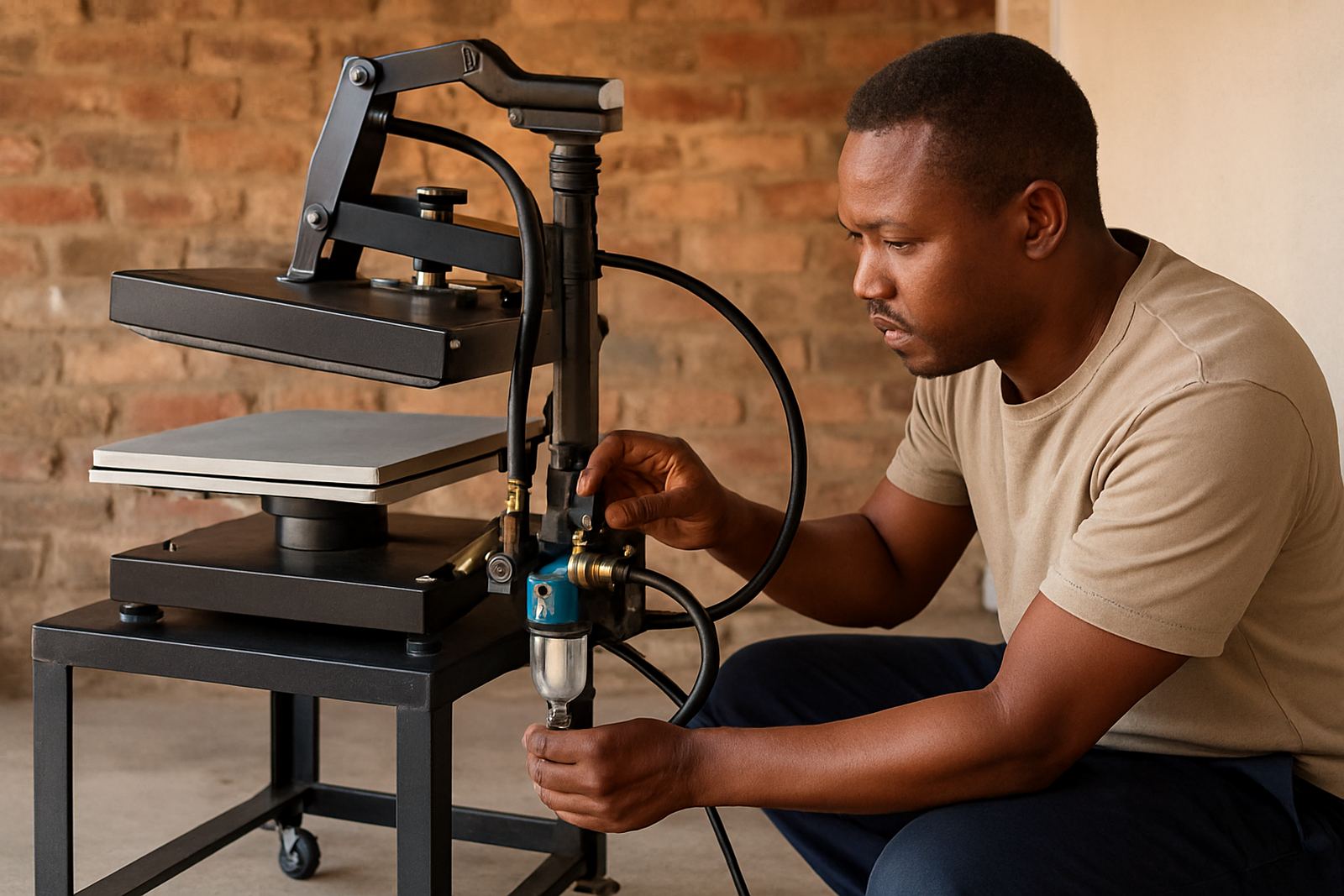
We recommend a simple maintenance rhythm based on use. Light users can do basic checks monthly, while busy shops should inspect the press weekly and book preventative servicing every six to twelve months. This includes checking the pad, covering, controller reading, alignment and general wear. If the unit has a pneumatic system or is used for high-volume production, the intervals may need to be shorter. A bit of routine care now saves a lot of downtime later.
- Weekly visual checks for busy production sites
- Monthly checks for light or home-based users
- Six to twelve month preventative servicing cycle
- Earlier inspection if temperature readings drift
- Immediate attention if pressure, heat or closing action changes
Key facts
| Service type | Hands-on operator training for flat heat presses |
|---|---|
| Typical session size | 1 to 5 operators per session |
| Coverage area | Midrand, Gauteng and nationwide by arrangement |
| Focus | Temperature, dwell time, pressure and garment loading |
| Training format | On site or at the Midrand base |
| Follow-up support | Phone technical support and workshop assistance |