

When a heat press controller needs attention
A controller problem shows up in a few ways. The press may not heat to the set temperature, the timer may count down too fast or not at all, the display can flicker, or the unit may switch off mid job. On a busy print floor that means lost time, uneven transfers and extra wastage.
We repair controller faults on flat heat presses used for T-shirts, number prints, transfer papers, vinyl applications and light production work. The aim is to get the machine back to a stable and repeatable setting, so the same garment gets the same heat and dwell time every run.
- Timer faults and inaccurate countdowns
- Blank, dim or flashing digital displays
- Temperature reading errors or unstable control
- Buttons, membrane panels and selector issues
- Loose wiring, burnt terminals or intermittent power faults
What the repair service includes
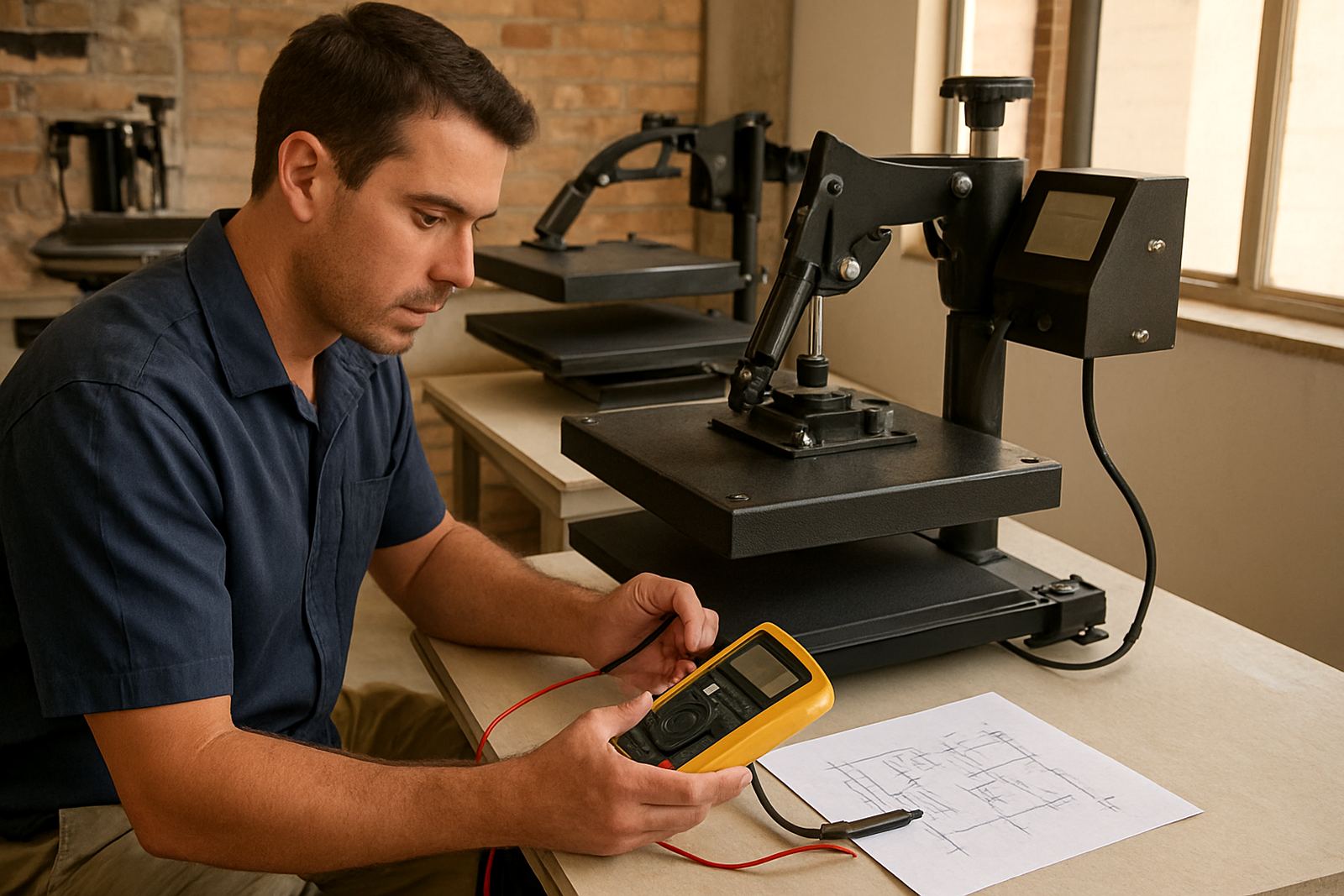
Our controller repair work covers fault finding, replacement of failed parts where needed, testing and re commissioning. We check the controller against the heating element, probe, wiring and power feed, because a bad reading is not always caused by the control box itself.
Where the original control unit is beyond repair, we replace it with a suitable unit matched to the press size and power load. This can include separate timer and temperature control, combined digital modules, relay checks and sensor confirmation. We also test the press under heat and pressure before it goes back into service.
- Initial fault diagnosis and visual inspection
- Controller, probe and wiring checks
- Repair or replacement of failed control parts
- Temperature and timer verification under load
- Safety check on connections, terminals and earthing
Our repair process from booking to handover
You start by sending an enquiry through the contact page with the press model, fault symptoms and your location. If the unit is in Midrand, Johannesburg, Pretoria, the East Rand or West Rand, we can often arrange a quicker drop off or collection plan. For Durban, Cape Town, Bloemfontein and other areas, we work through courier in most cases.
Once the press arrives, Riaan Ferreira or Ridwaan Peters carries out the assessment and confirms what failed and what still tests correctly. If parts are needed, we check stock first. If a special controller must be sourced, we give you the expected lead time and keep you updated. Before release, we run a final heat cycle and verify the set point, timer function and recovery. Sometimes a controller fault is linked to low voltage or a damaged element, so we always test the full system not just the box.
- Log the fault and inspect the press
- Test controller, sensor and power path
- Repair, replace or rewire as needed
- Run heat and timer checks under load
- Handover with practical use notes
Turnaround times and practical downtime planning
Turnaround depends on the fault and parts required. Simple timer or display repairs can often be handled quickly, while a full control unit replacement or wiring issue may take longer. If your shop runs daily jobs, ask about loan unit support so you can keep printing while your own machine is being worked on.
For many faults, the real delay is not the repair itself but the time spent using a press that is already drifting. A controller that runs 8 to 10 degrees out can ruin transfers before the operator notices. Early repair usually saves more production time than waiting for a complete failure.
- Basic faults: often same day or next working day once inspected
- Replacement controller work: depends on stock and model
- Courier jobs: allow for transport time in both directions
- Rush jobs: assessed case by case, depending on workshop load
Pricing approach for controller work
We price controller repairs according to the amount of fault finding required, the parts needed, and whether the unit can be repaired or must be replaced. That keeps the quote fair for small hobby users and for high volume print shops that need a faster turnaround.
Before work starts, we explain the options clearly. If the controller is repairable, we recommend that first. If it is not economical to fix, we say so and propose the most practical replacement path. We do not push unnecessary parts. On older presses, a sensible repair can extend working life by years if the heating system and frame are still sound.
- Diagnostic assessment first, then a quote
- Labour and parts listed separately where needed
- Replacement options explained before approval
- No unnecessary changes to working components
Keeping the controller stable after repair
Once the press is back in use, the operator should watch for temperature swings, slow recovery and repeated resets. These are early signs that a controller, sensor or relay is under strain. Coastal humidity in places like Durban and some parts of Cape Town can also affect connectors over time, while dusty workshop conditions in Gauteng can build up heat around the control box.
We recommend a basic service interval every 6 to 12 months for presses in regular use, or sooner if the machine runs all day. During preventive servicing we can check the controller, clean terminals, inspect wiring, confirm pressure and test the element. In load shedding conditions, voltage fluctuation can also expose weak control parts, so it helps to have the press checked after repeated power interruptions.
- Watch for drifting temperature or delayed heat-up
- Keep vents and control areas free of dust
- Unplug during long idle periods and storms
- Book preventive servicing every 6 to 12 months
Key facts
| Repair scope | Timers, displays, relays, control units, probes and related wiring |
|---|---|
| Supported press type | Flat heat presses for T-shirts, transfers, vinyl and similar garment work |
| Typical service area | Midrand, Johannesburg, Pretoria, Durban, Cape Town, Bloemfontein and nationwide courier support |
| Turnaround | Varies by fault, stock and courier timing; simple issues may be handled quickly |
| Price method | Quoted after diagnosis, based on labour, parts and model complexity |
| Maintenance interval | Every 6 to 12 months for regular use, sooner in dusty, coastal or high-volume environments |