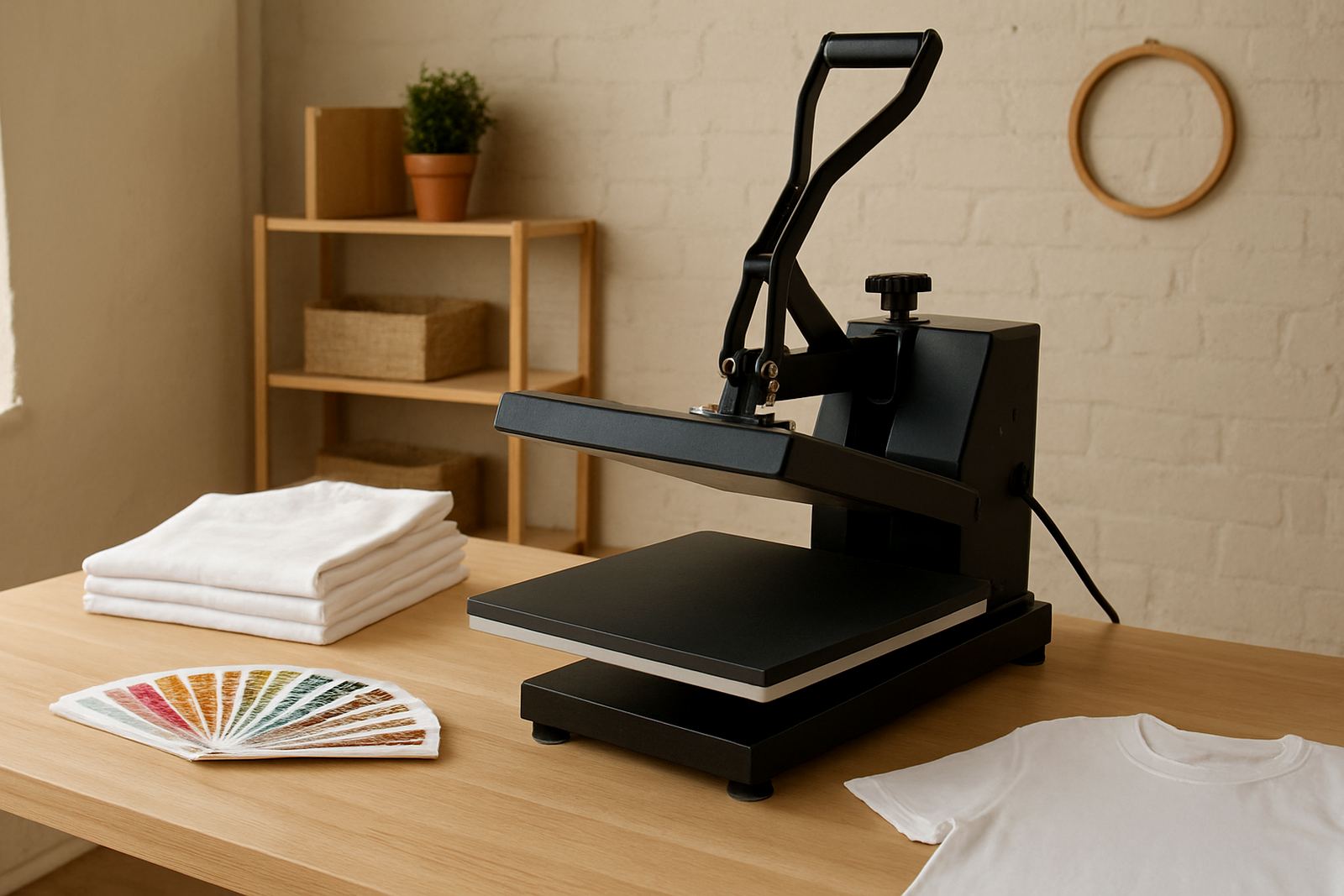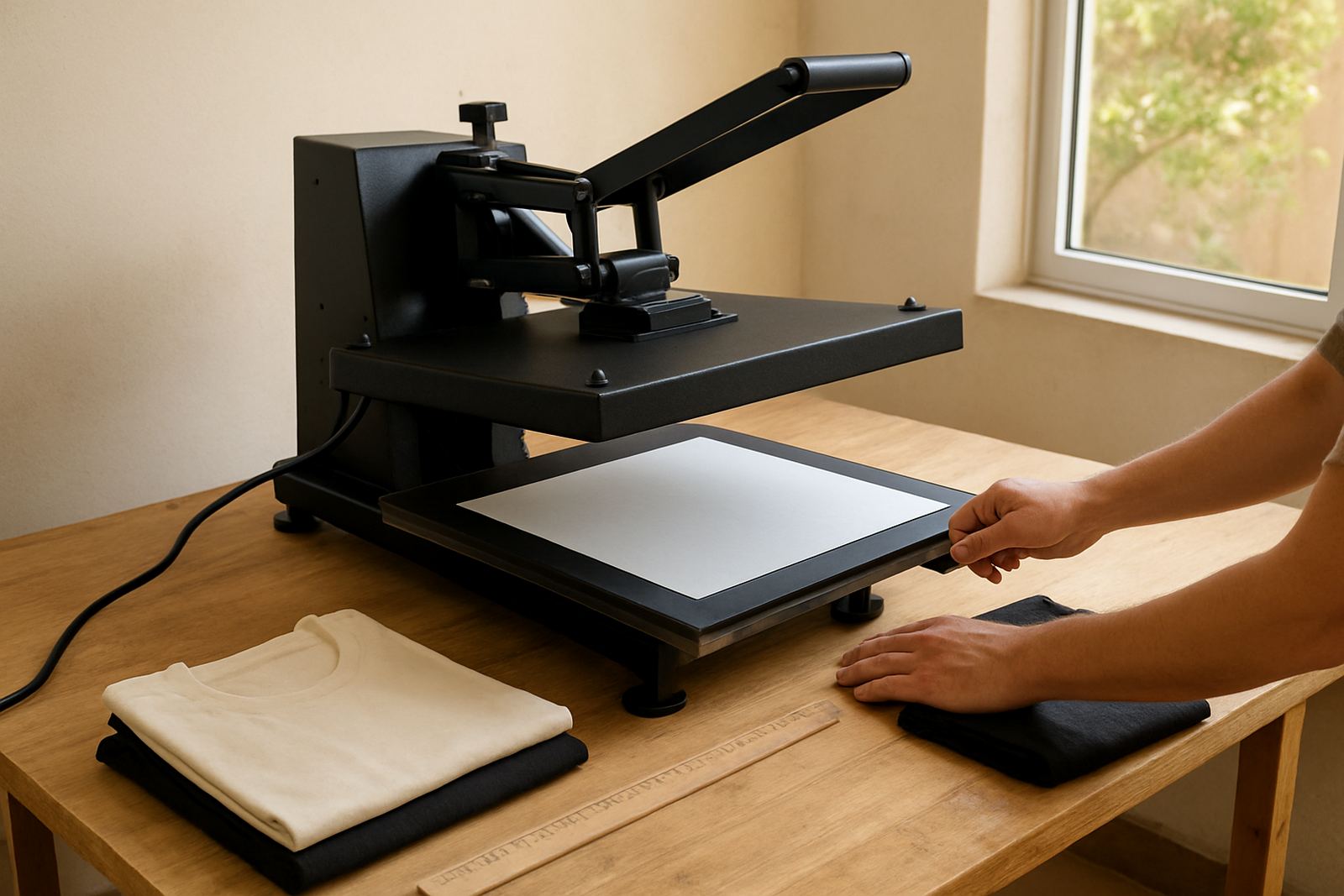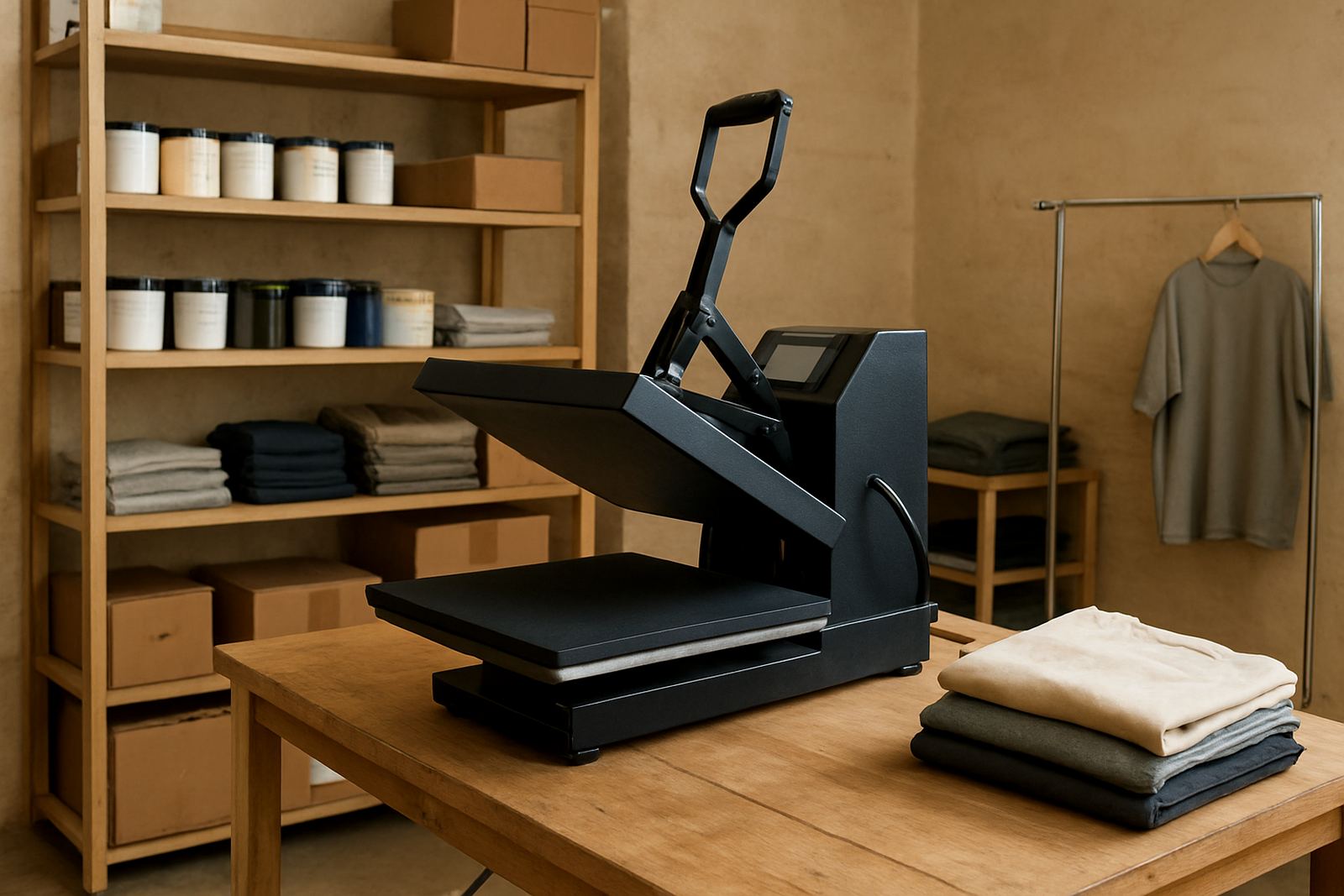

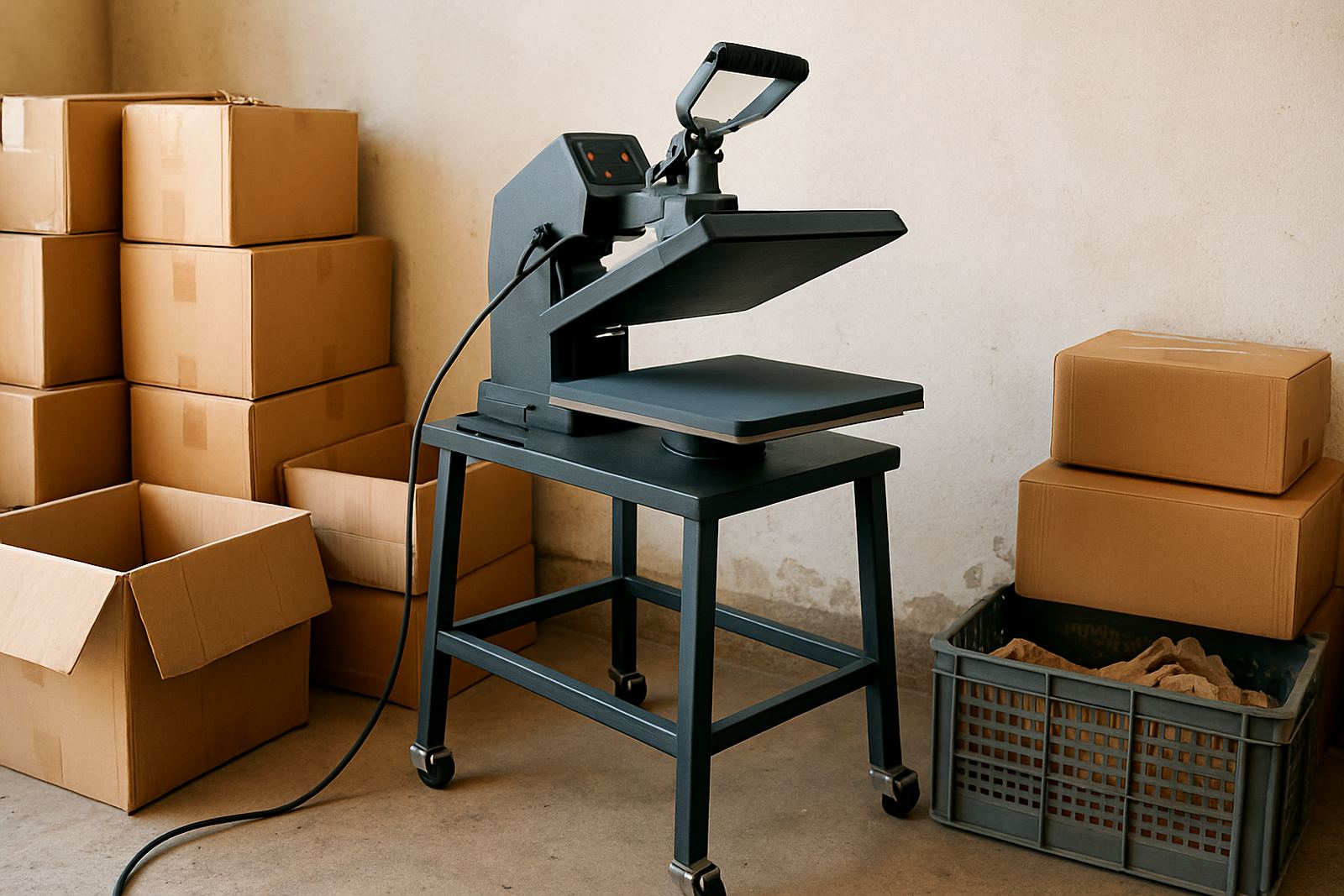
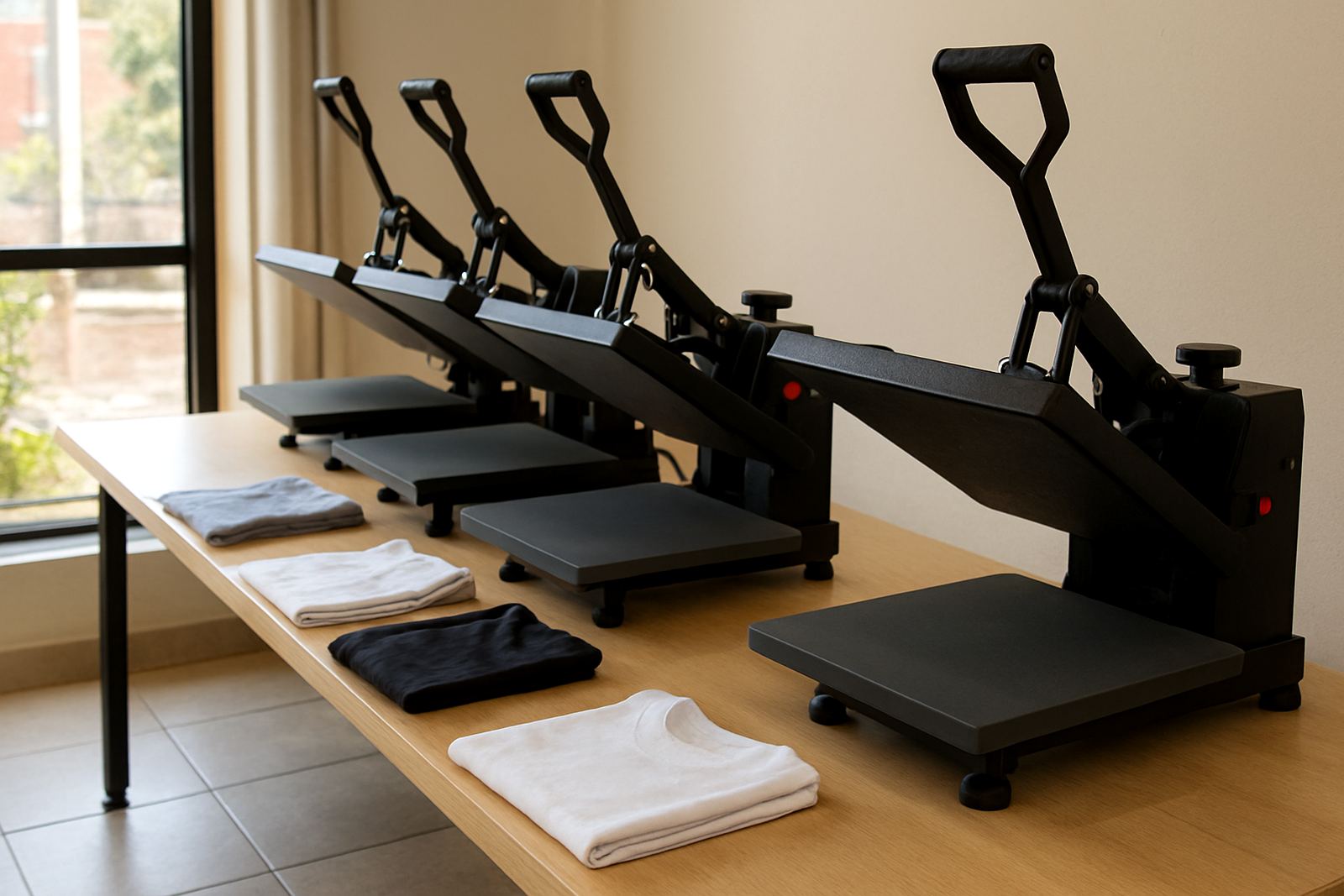
Built for daily transfer work in busy print rooms
The Shop Floor Press is made for operators who press shirts all day and need a unit that stays consistent from the first job to the last. It is a flat heat press for transfers on cotton, polycotton and many coated garments, with a heated upper platen and a lower pad that gives even contact across the full print area. For shops in Midrand, Johannesburg, Pretoria and the wider Gauteng market, it suits everyday production where speed, repeatability and proper pressure matter more than bells and whistles.
This unit works well for direct to film transfers, heat transfer vinyl, sublimation on suitable blanks and general garment decoration. It is a practical shop floor machine for work that must be clean, properly aligned and repeatable. If your team handles mixed runs, reorders and samples in the same week, the press gives you a steady base for getting the job done without fighting the machine.
Because South African workshops often deal with load shedding and variable site conditions, the Shop Floor Press is selected and commissioned with that reality in mind. Stable power, correct earthing and sensible placement make a real difference to output and element life. Our team can help with new press setup, operator training and routine checks so the press is ready for proper production from day one.
Sizes and options for different production volumes
Shop Floor Press units are available in practical flat platen sizes for shirt fronts, left chest work, hoodies, tote bags and other flat items. The right size depends on the transfers you run most often, the amount of space on your bench or stand and whether you need a manual unit for short runs or a more controlled setup for regular production. A smaller platen is easier to place in tighter rooms, while a larger platen gives more working area for full front prints and repeated batch work.
Typical size choices include compact, mid size and full work area presses, with pressure adjustment that suits light transfers as well as heavier garments. Many shops start with one press for production and one smaller unit for sample work or overflow. If you are in Durban or Cape Town, coastal humidity can also affect how you store transfers and garments, so the size and layout should support neat staging around the machine.
- Flat platen format for T-shirts, hoodies, tote bags and similar flat items
- Manual pressure control for varied garment thickness
- Digital temperature and timer controls on standard units
- Optional stand or bench mounting depending on shop layout
- Replacement pad and covering support for long term use
Where the Shop Floor Press suits best
This product is a strong fit for print shops that need a reliable all day press rather than a light hobby machine. It suits garment decorators, transfer printers, embroidery add on rooms, schoolwear suppliers, sportswear finishers and side-line print businesses that want a dependable workhorse. For East Rand and West Rand workshops, it is also a practical option where stock moves between production and delivery in the same premises.
The Shop Floor Press is especially useful where operators need a machine that can keep up with repeat jobs, branding contracts and customer samples. It is commonly chosen for shops producing teamwear, promotional shirts, workwear and event clothing. If your business takes orders from Johannesburg, Pretoria, Bloemfontein or nationwide by courier, the press gives you a production base that can handle both local walk-in work and remote fulfilment.
- Small garment decorators scaling from home work into a proper workshop
- Print shops adding a second press for backup and peak periods
- Training rooms and production floors needing a straightforward unit
- Businesses that run transfers on a regular daily schedule
Installation, power and workshop requirements
Before ordering, check the available bench space, operator access and electrical supply. A flat heat press needs a level surface, enough room for loading and unloading, and a plug point that suits the unit rating. Most workshops use standard single phase power, but the exact requirement must be confirmed before installation. Correct cabling, earthing and protection are important and if a site has frequent power cuts or unstable supply, surge protection should be considered.
The press should be placed where the operator can work without reaching over stock or blocking walkways. In busy shops, the loading side must allow easy garment placement and clean transfer alignment. If your line includes pneumatic add ons or special holding setups, we can advise on line service and fitment where needed. Installation in Gauteng is typically done from Midrand, while courier supply to other provinces is arranged with clear packing and handover notes.
For new setups, we also help with basic process checks so the machine is matched to the job. That includes confirming the press cycle, pressure feel, transfer timing and temperature settings for the materials you use most. A press that is correctly installed saves time, reduces waste and gives cleaner results right away.
Care, servicing and keeping output consistent
A flat press lasts longer when the pad, covering and controller are looked after properly. The platen should be kept clean, the pad should not be crushed or badly worn and the heating surface should be checked for even temperature. In day to day use, keep adhesive residue, lint and transfer film build-up off the machine. Simple cleaning after each shift can prevent marks on garments and keep the press closing properly.
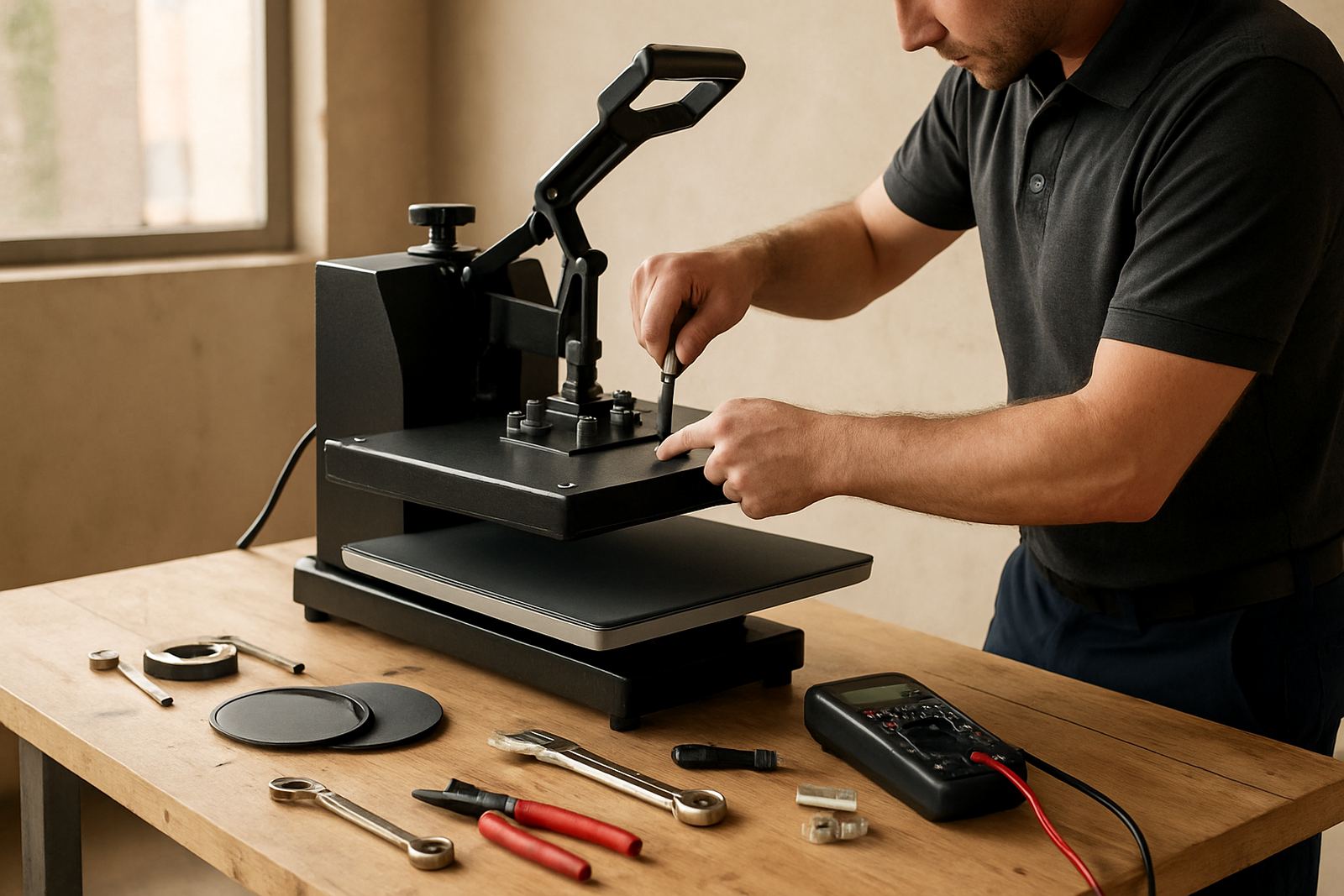
We support preventive servicing, temperature checks, pressure adjustments, element replacements, controller repairs and pad and covering work. That is important for shops that press every day because small faults grow into downtime quickly. If a controller starts drifting or a platen heats unevenly, the quality drop shows up in rejected jobs and reprints. A regular service schedule helps avoid that and keeps production moving. Some shops only call when the press stops, but planned checks are cheaper and less stressful.
- Wipe the platen and work pad after each shift
- Check pressure feel weekly, especially on heavy garment runs
- Inspect cables, plugs and switchgear for wear
- Replace worn pad covers before marks start appearing on garments
- Book temperature checks if the press starts behaving oddly or the results vary
What to confirm when you order
When ordering a Shop Floor Press, the most useful details are the type of transfers you use, the garments you print most often and the daily output you expect. Tell us whether you need front prints only, mixed job sizes or a wider working area for fuller designs. If you plan to run the machine in a home workshop, shared production room or a commercial shop, that helps us match the setup and advise on space, power and training.
It also helps to confirm whether you want a new press setup, operator training, phone tech support or ongoing spare parts supply. Shops in Midrand, Johannesburg, Pretoria, Durban, Cape Town and Bloemfontein can reach us through the enquiry form on our contact page for guidance before dispatch. We can also discuss loan unit support where production continuity matters. A few details upfront makes delivery and commissioning far smoother, and avoids the kind of last minute surprises that slow a job down.
When the right model is chosen, the Shop Floor Press becomes a dependable part of the production line. It is straightforward to run, practical to maintain and suited to South African print shop conditions where weather, power and workload can change from one week to the next.
Key facts
| Product type | Flat heat press for garment transfers and print shop production |
|---|---|
| Working format | Manual flat platen press with adjustable pressure |
| Typical uses | T-shirts, hoodies, tote bags, schoolwear and workwear transfers |
| Controls | Digital temperature, timer and pressure adjustment on standard units |
| Power | Single phase workshop supply, exact rating confirmed per unit |
| Support | Setup, training, spares, servicing and technical support from Midrand |