
Air-assisted pressing for repeatable output
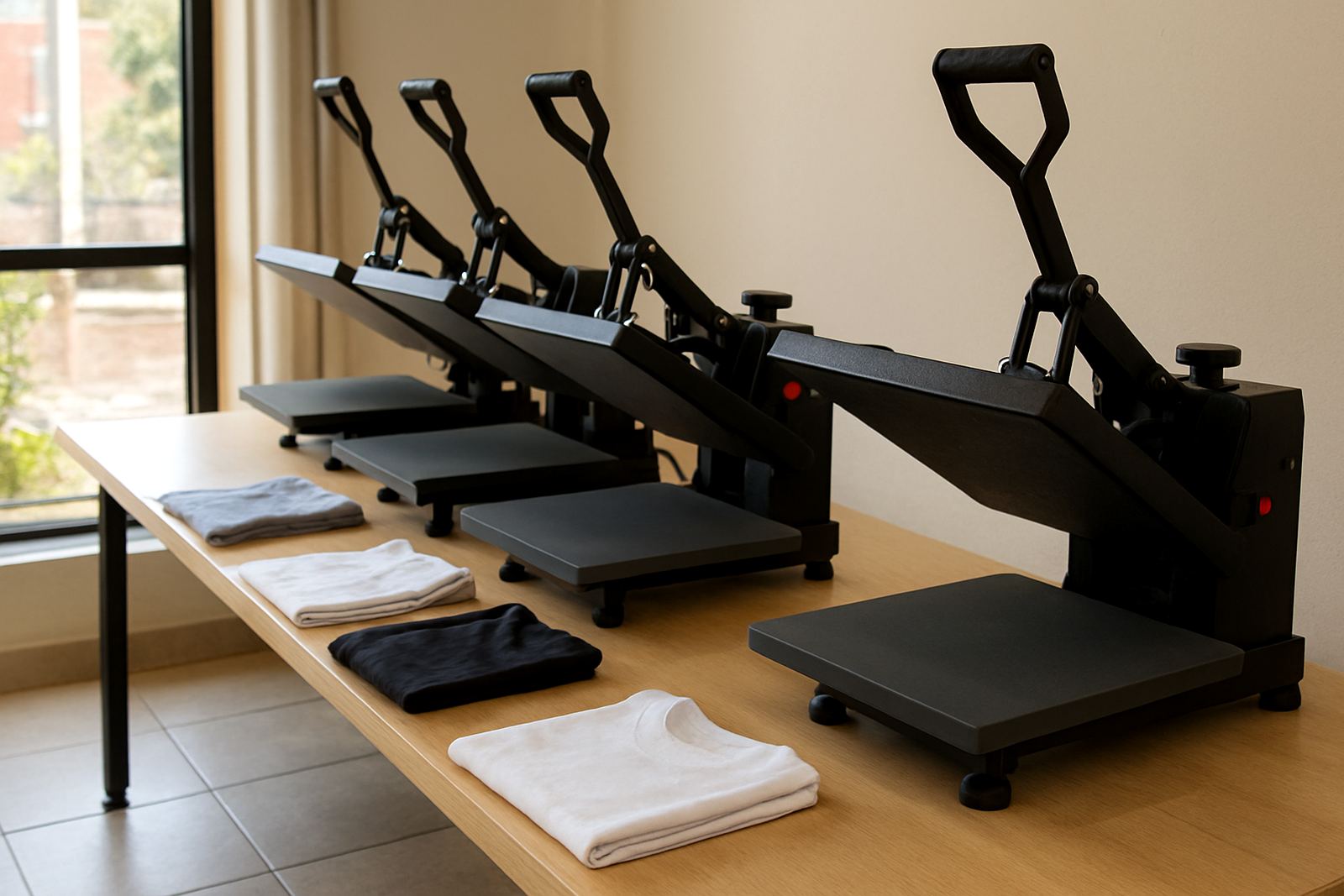
The 40x50 pneumatic press uses compressed air to drive the pressing motion and apply pressure more evenly than a manual lever unit. That makes it a practical choice for shops that run the same job all day, or for teams where more than one operator shares the machine and you need the setting to stay the same from shift to shift.
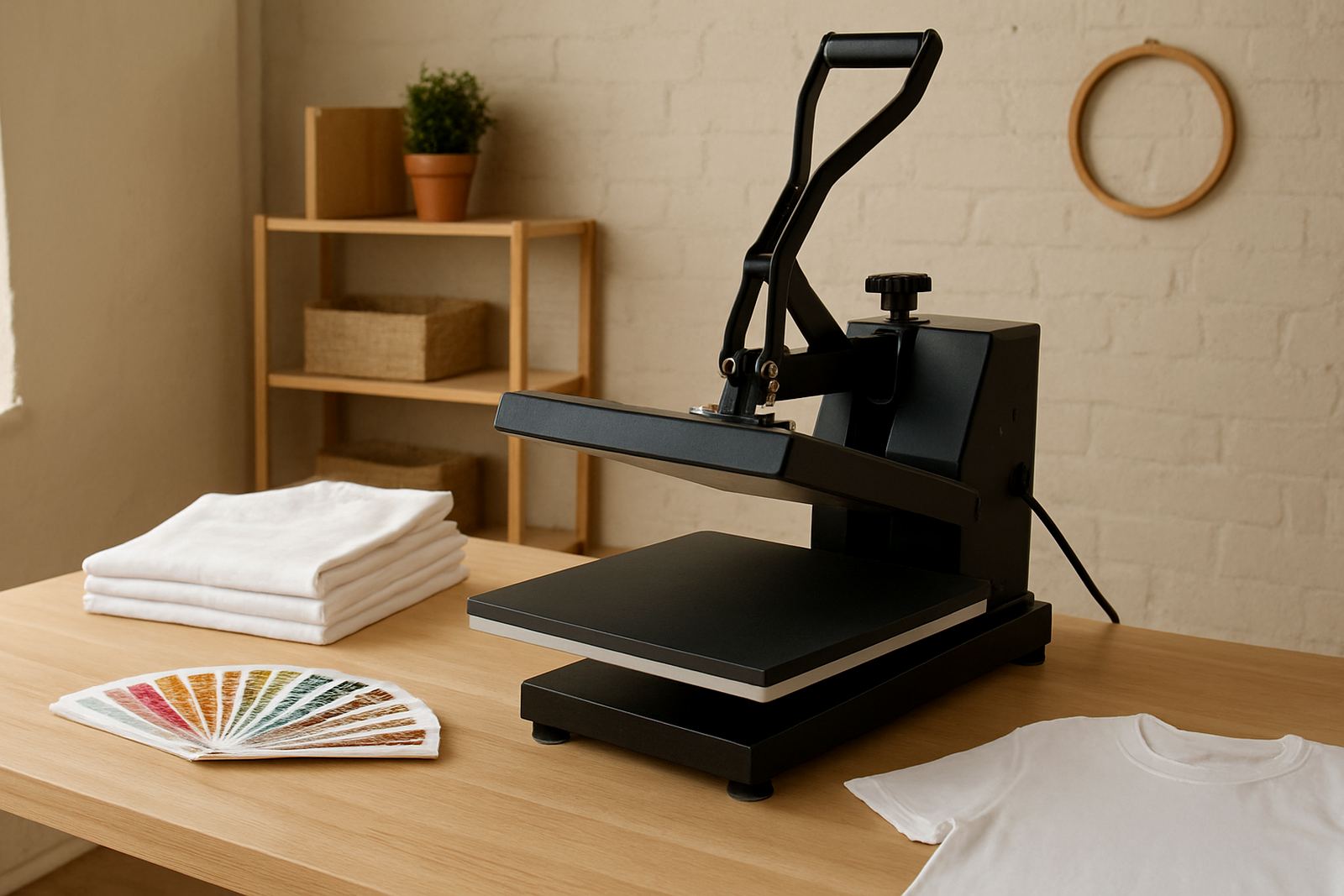
The 400 x 500 mm platen gives you space for larger prints, adult T-shirts, oversized transfer artwork and position-sensitive jobs where you want a clean press area. It is especially useful when you are handling a steady flow of work and do not want operators straining on every cycle. The result is better consistency and less fatigue on the floor, which matters in the heat and pressure of a real production room.
Many small and medium print shops in Gauteng use this size as a main press for cotton T-shirts, cotton-rich blends and transfer work on flat items. It also suits start-up decorators who want a machine that can grow with the business, rather than replacing it after a few months.
Sizes and option choices to match the job
The standard 40x50 format is the main choice for this model, but the way it is configured can make a big difference to daily use. You should look at the platen surface, the control layout and the air setup to make sure it fits the kind of work you produce most often.
- Working area: 400 x 500 mm for T-shirts, panels and larger transfers
- Heat control: digital temperature setting for steady pressing temperatures
- Timer control: adjustable cycle timing for different transfer materials
- Pressure control: air pressure setting for lighter or firmer pressing needs
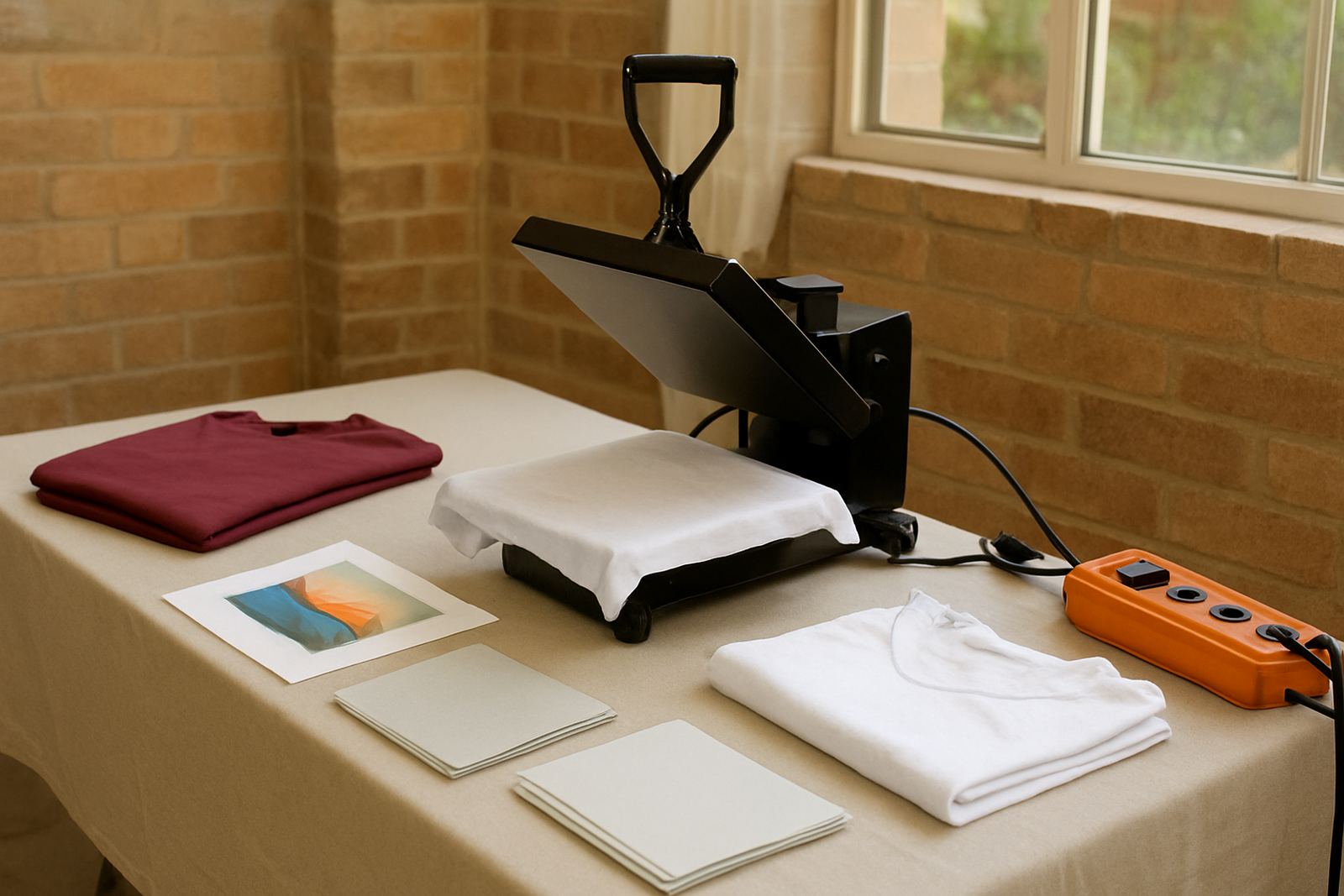
- Platen covers: protective covering for cleaner finishes and easier cleaning
- Stand or trolley setup: useful where the machine needs to move within the shop floor
If you press mixed jobs, such as DTF transfers, vinyl, sublimation on coated items or standard heat-applied graphics, the right platen covering and pressure range matter. A machine that is too light on pressure or too hot on the upper plate will cost you time in rework, and that becomes expensive fast.
Best fit for garment shops, schools and production rooms
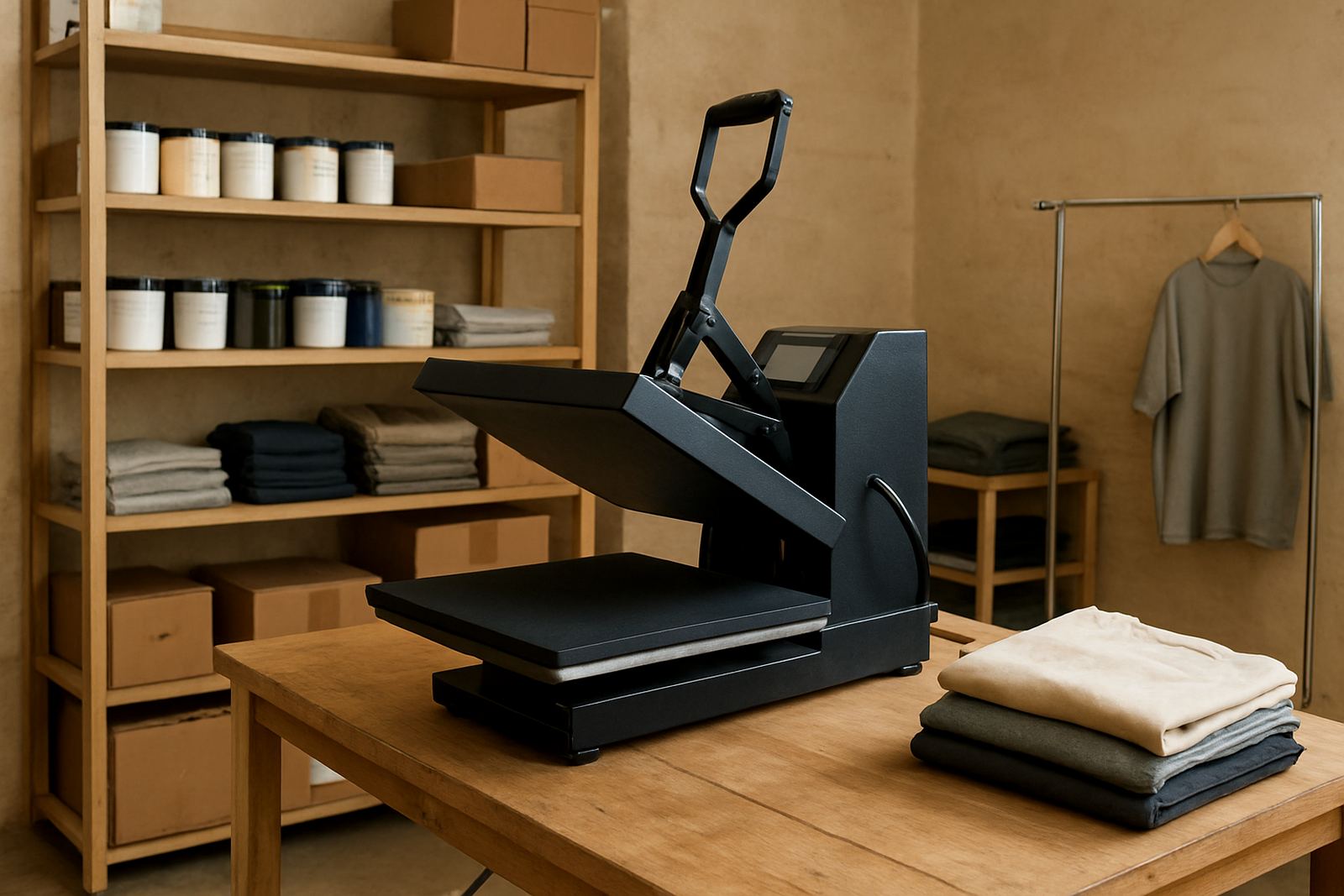
This press suits small garment decorators, hobbyists moving into paid work, uniform suppliers, signage teams and professional print shops. It is also a strong fit for schools, churches and sports clubs that run regular apparel orders and need a dependable machine that can handle batch pressing.
In Johannesburg, Pretoria and the East Rand, we often see this type of press used where volume is growing but floor space is still tight. In Durban and other coastal areas, operators should think carefully about humidity, storage and corrosion prevention. If the machine sits near an open roller door or in a damp room, routine cleaning and cabinet care become more important.
- Good for repeat work with the same print size and placement
- Useful where operator fatigue is a problem on manual presses
- Works well in a production room with regular batch jobs
- Suitable for new shops that want a machine with room to grow
- Can support training for more than one operator on the same setup
It is not the right choice if you only press a few items a month and do not have access to compressed air. In that case, a manual model may be simpler. But if you are doing daily output, the air-assisted action can save time and reduce strain on the team.
Installation, air supply and power needs
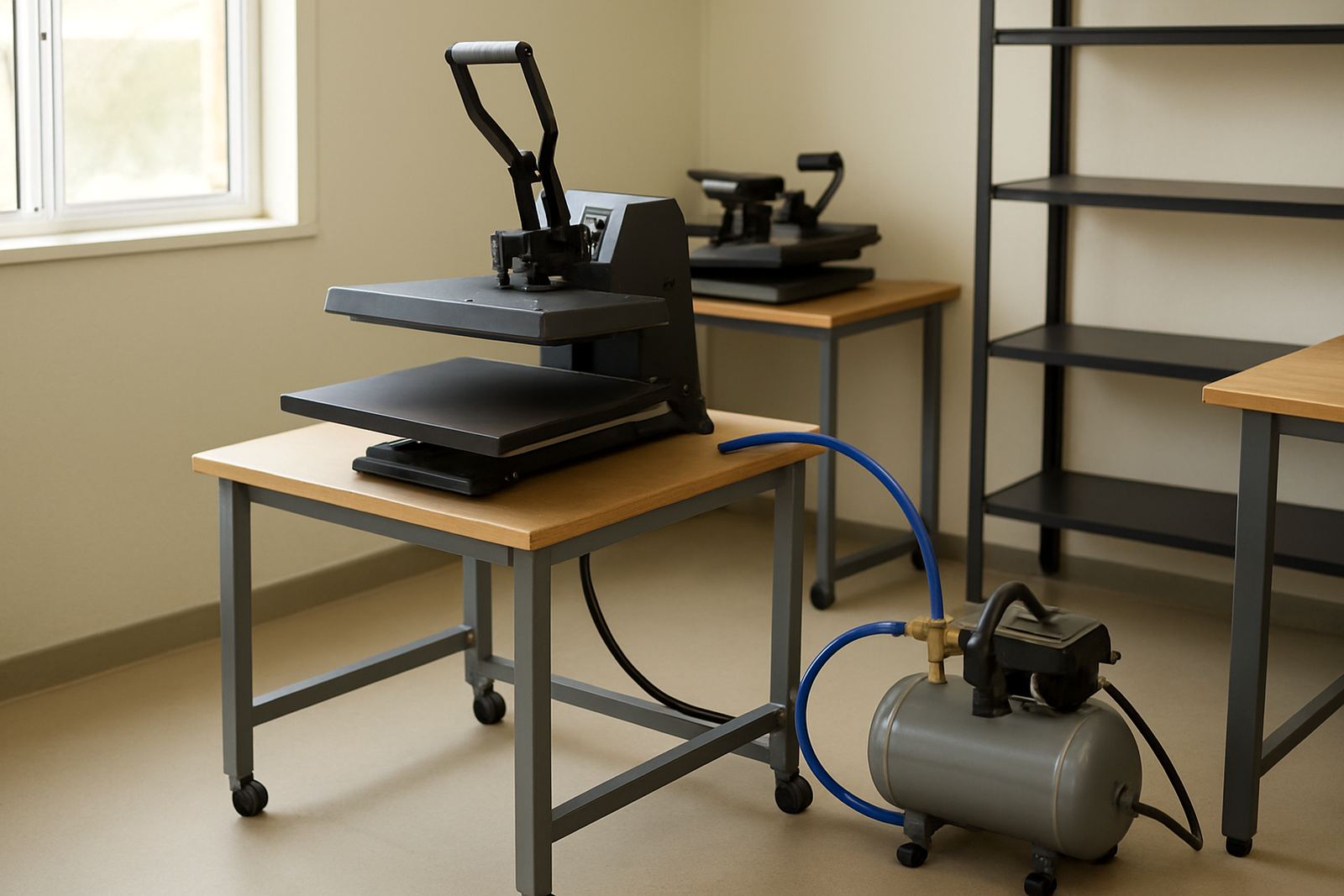
For installation, the press should be positioned on a level, stable surface with enough room around the operator side and the service side. Because this is a pneumatic unit, it needs a reliable compressed air supply. The air line should be clean and dry, with correct pressure and proper fittings, otherwise the press will not cycle properly or the movement may become uneven.
Power requirements are straightforward for the heating and controls, but the machine must be connected safely and checked before first use. In South Africa, load-shedding makes it worth planning where the press will sit, especially if you run a generator or inverter backup. Heat presses do not like unstable power, and sudden interruptions can affect temperature control and production flow.
During setup we check the heat calibration, pressure action and platen alignment so the machine is ready for day-to-day use. If your workshop is in Midrand, Johannesburg, Pretoria or further afield, we can arrange installation support and talk through the air line layout before the press arrives. For national deliveries by courier, it helps if the receiving area is prepared and the operator knows where the compressor will sit.
Care, servicing and parts that need attention
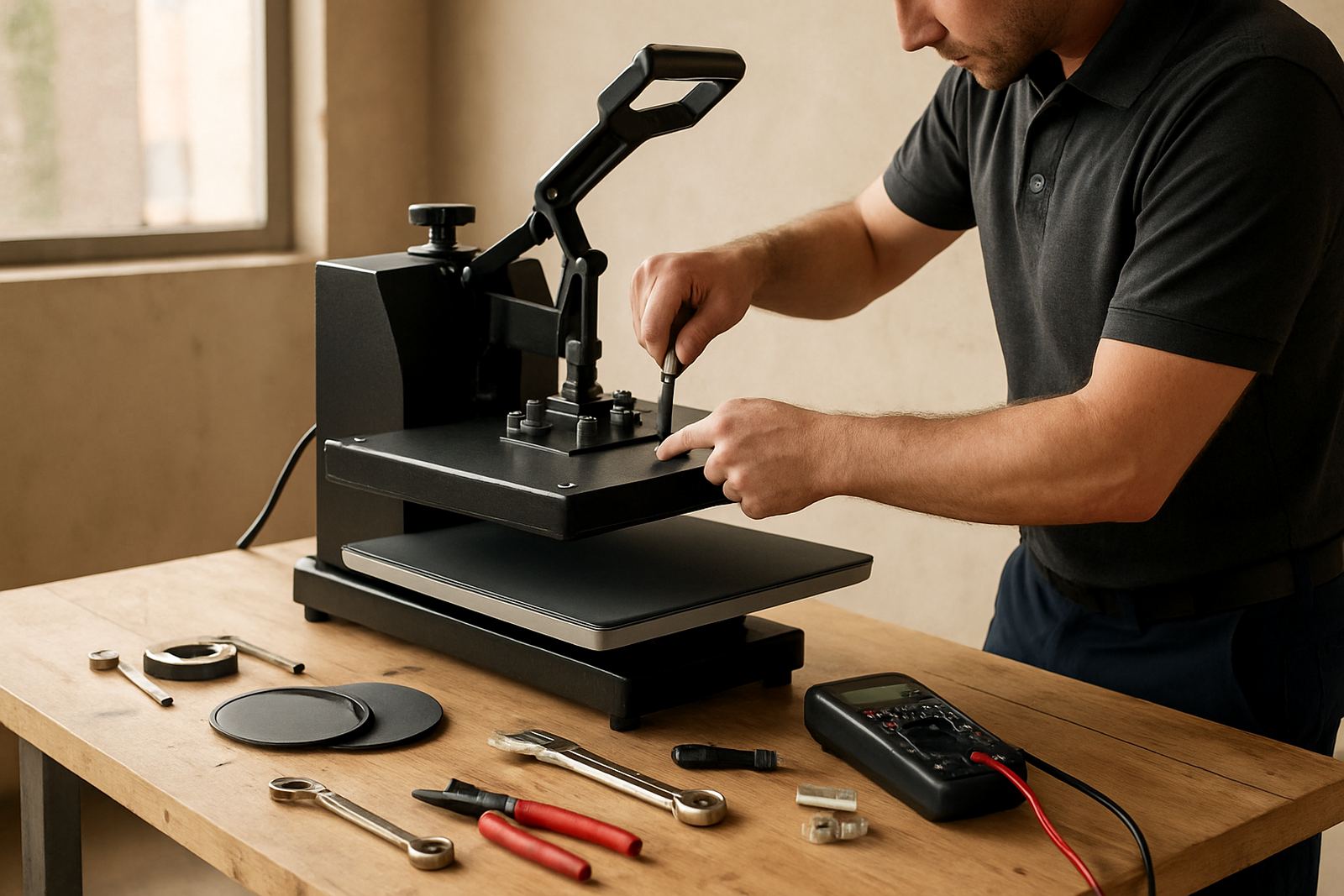
Like any heat press, this unit works better when it is cleaned and checked on a schedule. The platen covering should be kept free of adhesive build-up, fabric fibres and transfer residue. Temperature checks should be done regularly because a press that runs too hot or too cool will give inconsistent results, and that shows up quickly on garments.
The pneumatic system also needs attention. If the line is leaking, the pressure is weak, or the movement feels sluggish, the machine needs servicing before the fault gets worse. Preventive servicing reduces downtime, and that matters when orders are lined up and the customer is waiting. On busy production floors, a small fault can stop a whole run.
- Check the temperature control for accuracy
- Inspect pressure setting and pneumatic line condition
- Replace worn pad covering before it marks garments
- Test the timer and controller response
- Keep the heat platen clean and free of residue
- Book servicing ahead of peak season rather than after a stoppage
We supply spares and handle element replacements, controller repairs, pad and covering work, and general pressure adjustments. If a shop in Cape Town, Bloemfontein or Durban needs help, we can support remotely first and then arrange the next step if parts or workshop work are needed.
What to confirm before ordering this press
Before ordering a 40x50 pneumatic press, make sure the machine matches your production setup. The most common mistake is choosing the size first and only later checking the air supply, available power, or the kind of transfers being used. That leads to delays and extra cost.
You should also think about who will operate the press, how often it will run, and whether you need training at handover. A proper handover saves time because operators learn the right pressure, dwell time and cooling process for the jobs they do most. If the staff are switched on and off the machine without training, error rates rise quickly.
- Confirm the working size you need for your garments
- Check that compressed air is available and properly sized
- Make sure the electrical supply suits the heating controls
- Ask about setup, operator training and phone tech support
- Confirm spare parts support and servicing options
- Tell us if you need local delivery or courier supply nationwide
If you are unsure, send through your enquiry and we will help you match the press to your work, whether you are in Midrand, the West Rand or anywhere else in South Africa. A well matched machine saves time, lowers waste and keeps production moving.
Key facts
| Working area | 400 x 500 mm |
|---|---|
| Press type | Air-assisted pneumatic flat heat press |
| Use case | T-shirts, transfers and other flat garment applications |
| Control system | Digital temperature and time control |
| Pressure control | Adjustable pneumatic pressure |
| Supply needs | Compressed air plus suitable electrical connection |