
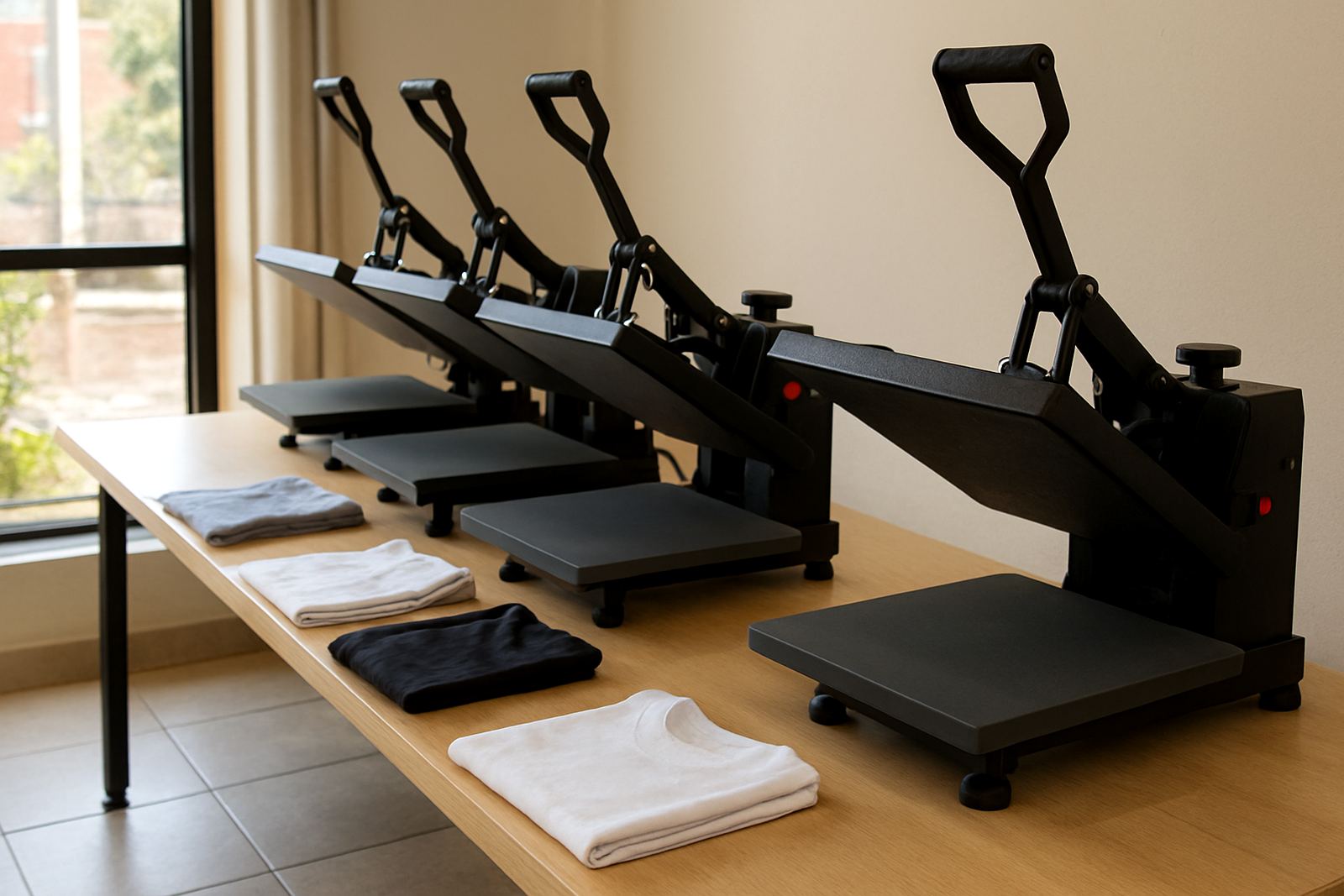
Built for large graphics and wider press areas
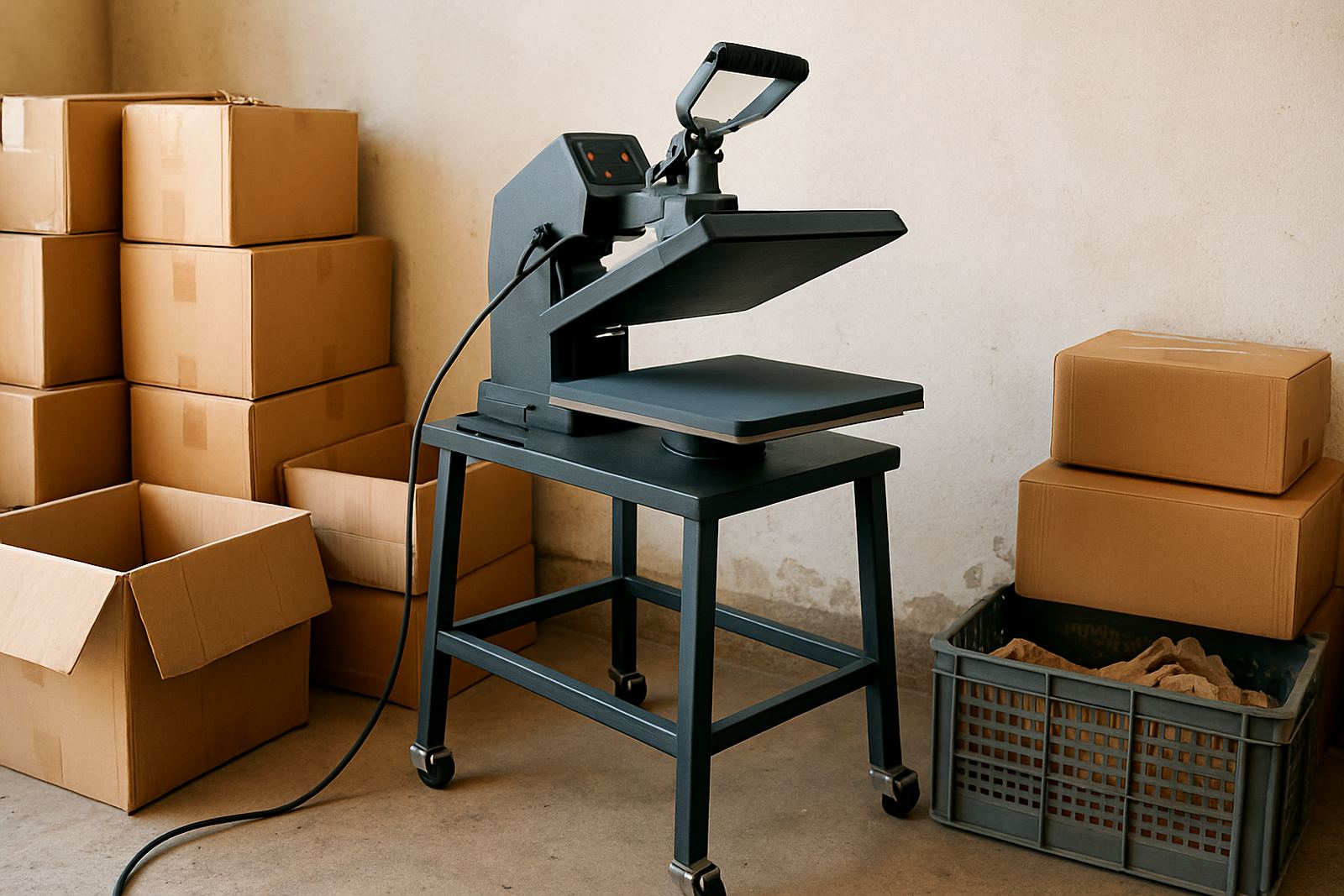
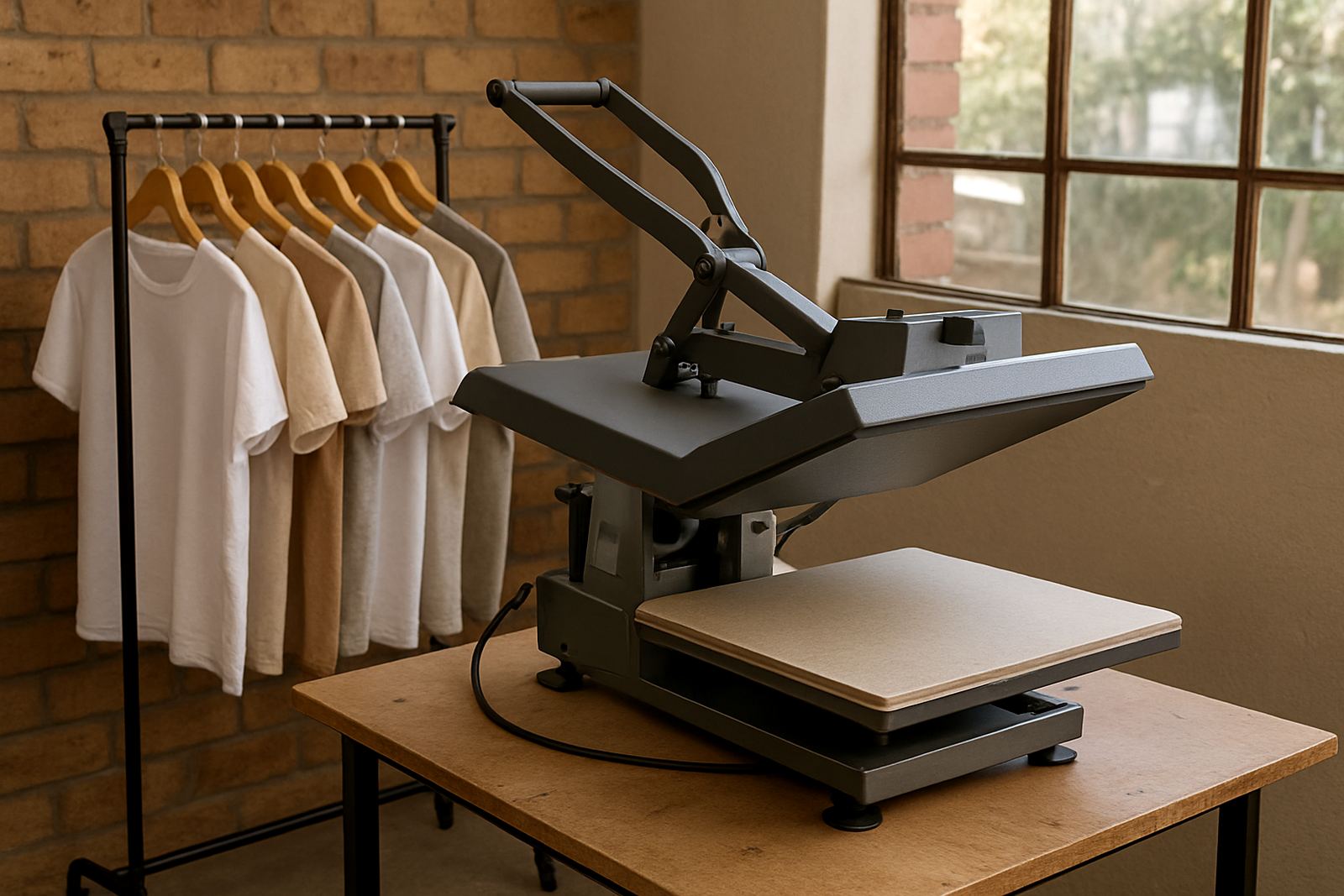
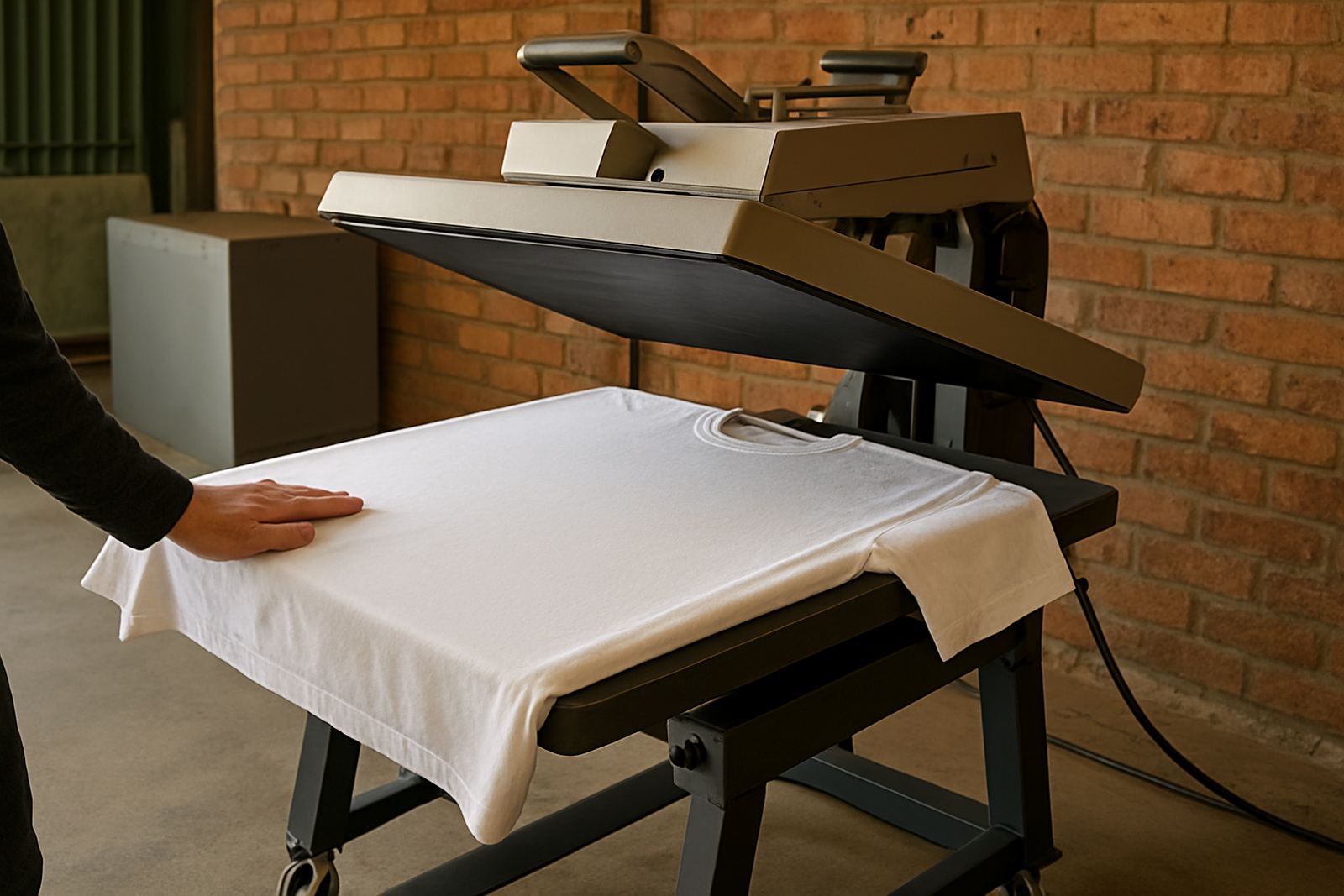
An oversize garment press is a flat heat press with a larger platen than the common entry-level units. It is used when the artwork sits wide across the chest, when you need to press left and right at once, or when you are working with oversized garments that do not sit properly on a small platen. For print shops in Gauteng, coastal towns, and inland areas alike, this saves time and cuts down on misaligned transfers.
Most oversize models are suited to direct-to-film transfers, vinyl, sublimation on suitable blanks, heat transfer papers, and other flat garment applications. The larger surface also helps when you need to position repeated jobs, such as school wear, workwear and event shirts. If your work includes a lot of wide graphics, the bigger platen gives you more room to set the garment flat and get the heat where it must land.
- Wide chest prints and oversized logos
- Adult and youth T-shirts
- Hoodies, sweaters and pullovers
- Sports tops, event wear and promo garments
- Selected flat textile panels and transfer jobs
Size options and the working footprint
Oversize presses are usually chosen by platen size, press style and the amount of output you expect each day. A larger platen gives more coverage, but it also needs more bench space and a steadier operator setup. In a busy Midrand workshop or a garage-based side hustle in Pretoria East, the footprint matters just as much as the heating plate.
Common working sizes include 40 x 50 cm, 40 x 60 cm and 45 x 60 cm platen formats. Some operators prefer a swing-away frame for easier garment loading, while others want a clamshell style for tighter work areas. If you run many short jobs, the quicker close-and-release action can help. If you do thicker garments, a swing-away body usually gives better access and reduces hand heat exposure. Either way, pressure should be even across the full platen, not heavy at one side and light at the other.
- Platen sizes generally range from 40 x 50 cm to 45 x 60 cm
- Manual or pneumatic closing options can be selected
- Digital temperature and timer control is standard on most units
- Even pressure across the full surface is essential for clean transfers
Where this press fits in South African production
This type of press suits small garment decorators, embroidery shops that add transfer work, market traders growing into a proper workshop, and print shops handling volume for schools, clubs and corporates. It is especially useful where customers want large front prints, back prints or oversized branding for promotional runs. In Durban and other humid coastal areas, a dependable heated platen helps keep pressing consistent when garments and transfers pick up moisture.
It also works well for operators doing mixed work. One order may be 12 youth T-shirts, the next may be hoodies and work shirts for a contractor, and then a batch of event tops for a weekend function. The extra surface area means you can centre larger designs without fighting the garment edge. For many shops, this is the point where production starts feeling less cramped and a bit more predictable.
Good use cases include:
- Broad chest designs for fashion and promo wear
- Large back prints on adult garments
- Club shirts, staff wear and campaign clothing
- Short-run transfer work where speed and repeatability matter
- Training new operators on larger-format pressing
Installation, power needs and workshop setup
Before ordering, check your workshop space, power supply and bench height. Most oversize flat presses run on standard single-phase mains power, usually 220V to 240V, but you should confirm the exact current draw before final installation. A dedicated socket is best, especially where other equipment is already on the same circuit. In areas affected by load-shedding, many operators pair the press with a properly sized inverter, generator or backup power plan so the heat cycle is not interrupted mid-job.
Allow enough room for the platen to open fully and for the operator to load garments without knocking against shelving or cutting tables. A firm, level surface matters, and it should not wobble when the press closes. If the unit has a pneumatic closing system, you will also need suitable compressed air at the required pressure, along with clean lines and drained moisture traps. A poor air supply can cause uneven closing and weak pressure, which then affects the print.
- Standard single-phase power is commonly used
- A dedicated circuit is recommended for steadier performance
- Allow space for full opening, loading and safe movement around the press
- Air-driven models need a suitable compressor and clean line setup
Care, servicing and long-term print quality
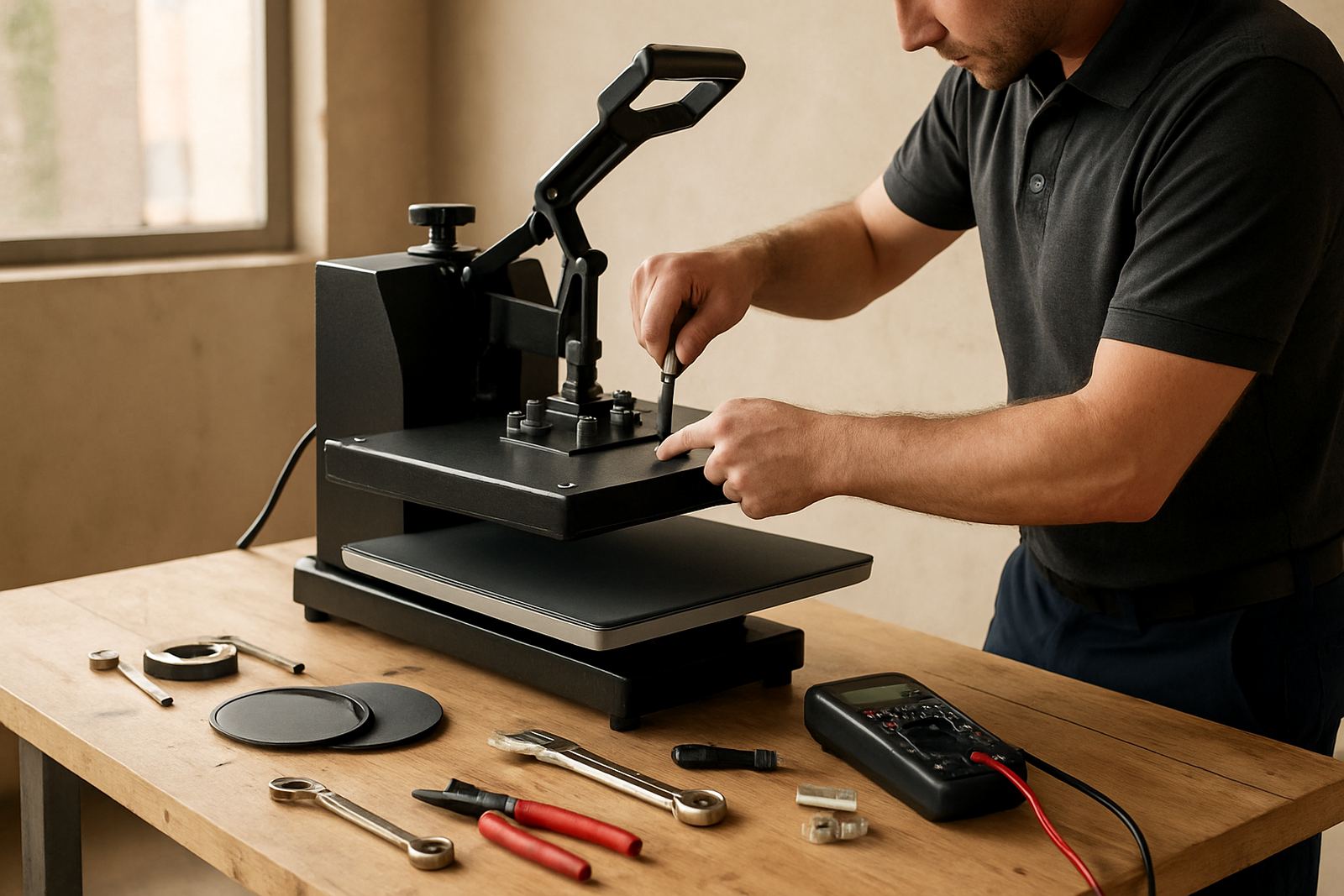
A flat heat press works best when the platen stays clean, the cover remains in good condition, and the temperature reads accurately. If the surface gets dirty, heat can transfer unevenly and leave marks on lighter garments. If the pressure drifts, transfers may lift at the corners or show incomplete adhesion. Regular checks help prevent those headaches, and they are cheaper than replacing a batch of spoiled stock.
We recommend routine checks on temperature accuracy, pressure settings, controller function, heating element condition and the press pad. On higher-output workshops, it makes sense to schedule preventive servicing before the busy season instead of waiting for a fault. Keep an eye on the cover where glue, vinyl residue or transfer film can build up. In humid coastal conditions, storing transfers and garments in dry containers also helps reduce moisture-related issues.
- Check temperature consistency with a proper test method
- Inspect pressure and alignment regularly
- Replace worn pads and covers before they affect output
- Keep the platen clean and the surrounding area dry
What to confirm before ordering this press
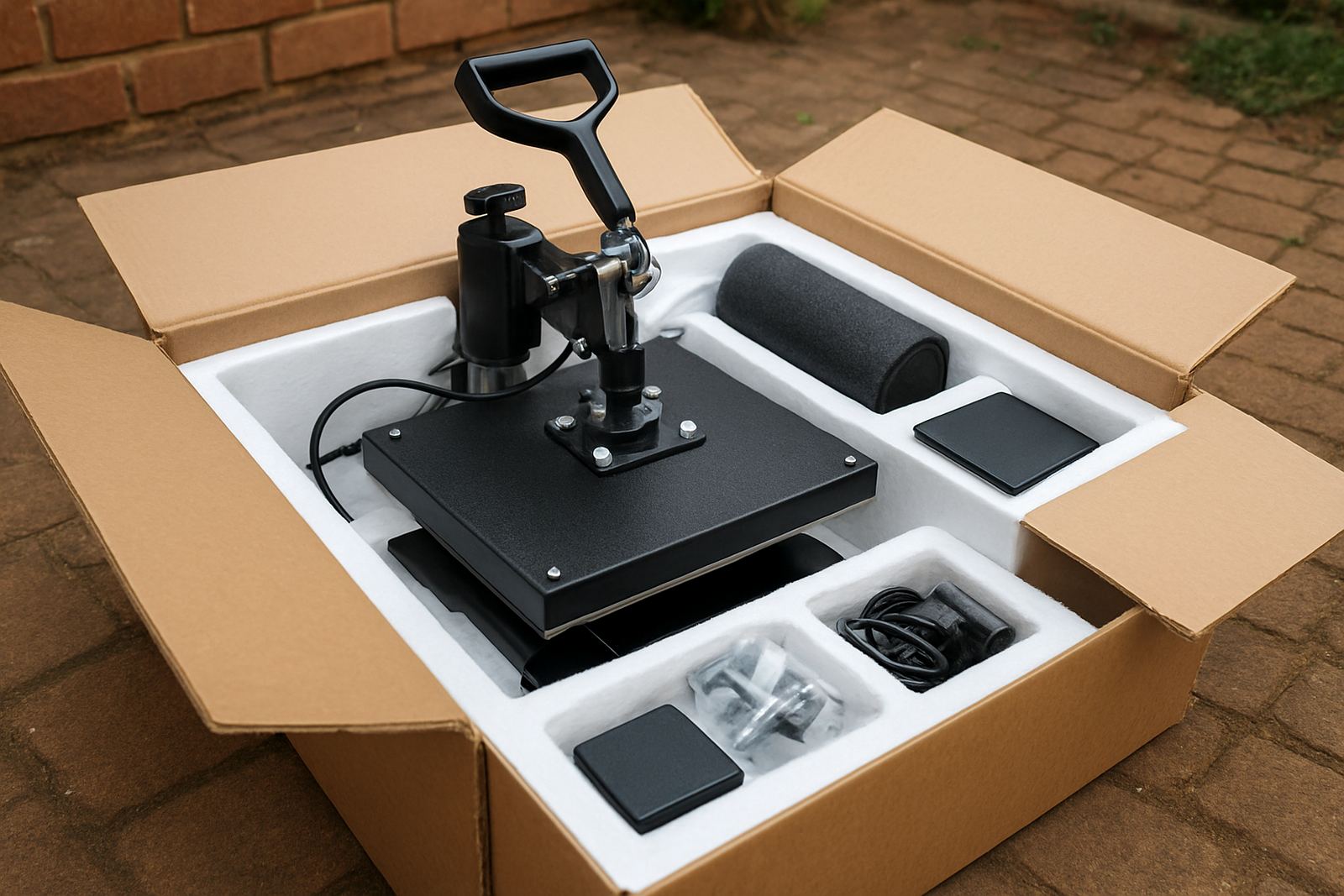
Ordering the right oversize press starts with the kind of work you do now and the work you expect in the next 12 months. A hobbyist doing weekend T-shirt jobs does not need the same setup as a print shop pushing daily production. If you are unsure, it helps to list your garment types, common print sizes, average daily volume, and whether you need manual or pneumatic operation. That gives a clearer picture than guessing from a catalogue photo.
It is also wise to check the spare parts support behind the machine. A good press should have available elements, controllers, pads, covers and other consumables when needed. Training is just as important as the machine itself, because the best press still needs correct time, temperature and pressure settings. If you are working from Johannesburg, Bloemfontein, Cape Town or anywhere else in South Africa, courier delivery and setup advice can make the purchase far easier.
- Garment type and print size range
- Daily or weekly production volume
- Manual or pneumatic operation preference
- Available power supply and workshop space
- Need for setup, training and after-sales support
Key facts
| Product type | Flat oversize garment heat press |
|---|---|
| Common platen sizes | 40 x 50 cm, 40 x 60 cm, 45 x 60 cm |
| Power supply | Single-phase 220V to 240V, model dependent |
| Control system | Digital temperature and timer control |
| Operation | Manual or pneumatic closing options |
| Typical uses | Large chest prints, back prints, transfers and workwear branding |