
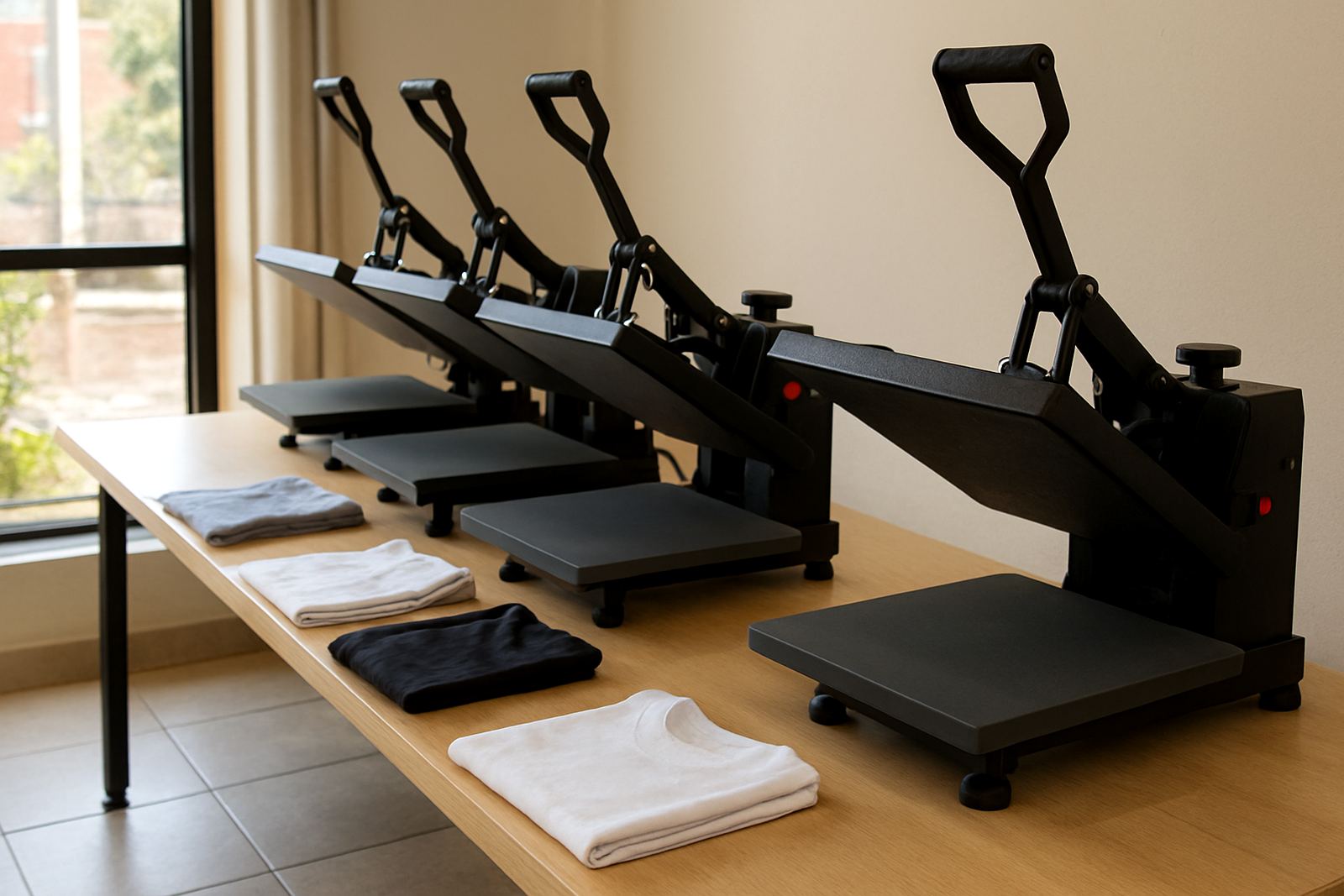
What Our Warranty Support Covers
Warranty support is there for faults linked to the press as supplied, including manufacturing defects and issues that appear during normal use when the machine has been installed and operated correctly. For customers in Johannesburg, Pretoria, Durban, Cape Town, Bloemfontein and surrounding areas, the first step is always to stop using the press as soon as a fault is noticed so the problem does not spread to the controller, element or wiring.
Our team reviews the issue and confirms whether it falls within warranty, needs a service repair, or is caused by wear, misuse or power-related damage. In South Africa, load shedding and unstable supply can affect electronics and heating parts, so it helps to tell us if the press was in use during an outage or surge. A clear explanation from the start saves time and avoids extra courier movement.
How to Log a Warranty Fault
Clients reach us through the enquiry form on our contact page, and that is the best way to start a warranty case. Include the press model, purchase date if available, the fault symptoms and where the unit is located. If the machine is in Midrand, on the East Rand or West Rand, we can often guide the next step quickly, while out of province clients are given courier instructions where needed.
- Describe exactly what the press is doing, such as not heating, overheating, uneven pressure or controller errors.
- Send clear photos or a short video if requested, especially of the display, wiring area and platen surface.
- Tell us if the fault started after a power cut, surge, transport damage or a recent adjustment.
- Keep all accessories and packing material until the assessment is complete.
If a machine is opened, altered or repaired by someone else before we assess it, warranty cover may be affected, so rather speak to us first.
Assessment Before Any Repair Work
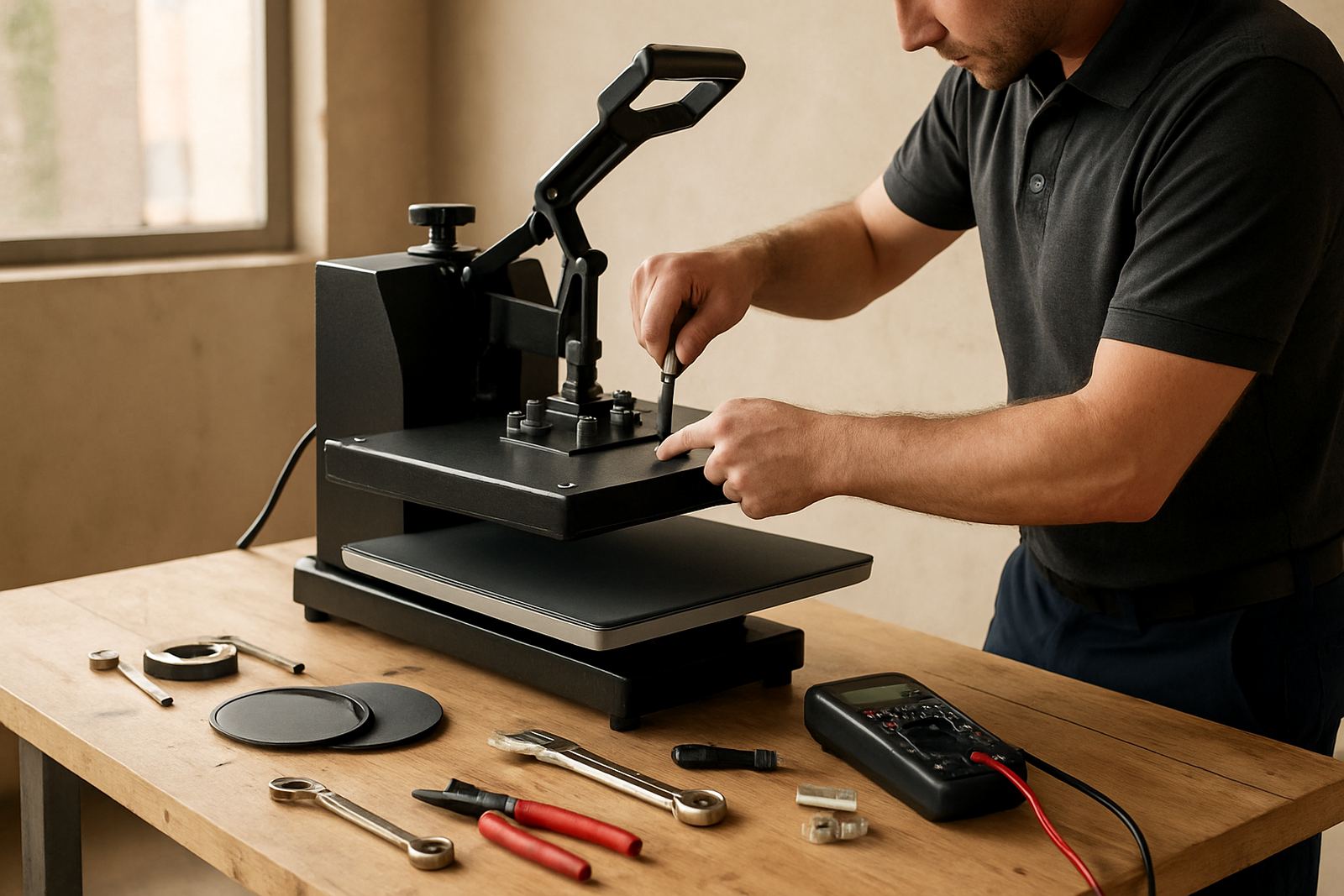
Warranty decisions are based on assessment, not guesswork. Riaan Ferreira and the workshop team check the symptoms, test the controller and look at the heating element, pressure system and general condition of the press. If the unit is in Gauteng, we can sometimes arrange a local look at the machine. For other areas, courier assessment is often the quickest route.
During assessment we look for signs of burnt connectors, loose terminals, damaged plugs, incorrect settings, worn pads or uneven platen contact. If the issue is covered, the repair route is confirmed and the work proceeds under warranty. If the fault is outside scope, we explain the cause and quote the repair before anything moves forward. This keeps things fair and predictable, which matters when a shop is trying to keep orders moving.
What Usually Affects Warranty Scope
Warranty cover is not the same as a blanket promise on every fault. Some problems come from external causes, and those are usually not covered. We are direct about this so there is no confusion later.
- Power surges, bad plugs, or unstable supply from load shedding and reconnection spikes.
- Physical damage from dropping, over-tightening, transport knocks or incorrect installation.
- Wear items such as pads, covers and elements when the failure is due to normal use over time.
- Incorrect temperature, pressure or timing settings that caused the transfer process to overwork the machine.
- Unauthorised repairs, parts changes or adjustments by someone not approved to work on the press.
If you are not sure whether a problem is covered, send the details through the enquiry form and we will talk it through with you before you spend money on courier or replacement parts.
Courier, Collection and Turnaround
For clients outside Midrand, especially in Durban, Cape Town and Bloemfontein, courier handling is often the simplest way to get a warranty unit back to us. Willem Botha manages logistics and will advise on safe packaging, collection options and the documents to include. Please clean the machine, secure loose parts and pack it well so the press is not damaged in transit. A badly packed machine can arrive with extra faults and that slows everything down.
Once the press reaches us, we confirm receipt and the assessment starts. If a part needs to be ordered, Nandi Dlamini and the support team keep the client updated so there are no long silences. We understand that a print shop cannot afford uncertainty, especially when garment orders are booked for the week.
Aftercare, Spares and Keeping Coverage Intact
Once the warranty matter is closed, we can help with preventive servicing, temperature checks, pressure adjustments and operator training so the same fault does not return. Kelebogile Mabena also assists with training guidance for new operators who need to understand correct heat, dwell time and pressure on different transfer materials. That matters for shops with new staff and for hobby users who only press part time.
Keeping the machine clean, dry and correctly adjusted helps protect both performance and your cover. In coastal areas like Cape Town and Durban, humidity can affect storage and exposed metal parts, so a dry workspace and covered machine make a difference. In Gauteng, stable power protection is worth the investment. If you need spare parts, we can supply those separately, but we always confirm whether they are part of the warranty case first.
- Use the press within the rated settings for heat and pressure.
- Keep the platen and pad covered and free from adhesive build-up.
- Report faults early instead of forcing the machine to carry on.
- Book regular servicing if the press is used daily or in a busy shop.